

Is the biggest chest protector the safest choice for junior goalies?
Not usually.
At youth and junior levels, too much bulk slows movement and teaches bad habits.
Mobility matters more than maximum padding because goalies are still learning to move—drop into the butterfly, track rebounds, and fight the next forecheck.
This review breaks down four repeat winners—Warrior X3, Vaughn Velocity V9, Bauer GSX, and CCM Phenom—
and tells you which one fits each age, shot speed, and budget so you don’t buy the wrong protector.
Top Junior Goalie Chest Protector Picks and Full Review Breakdown
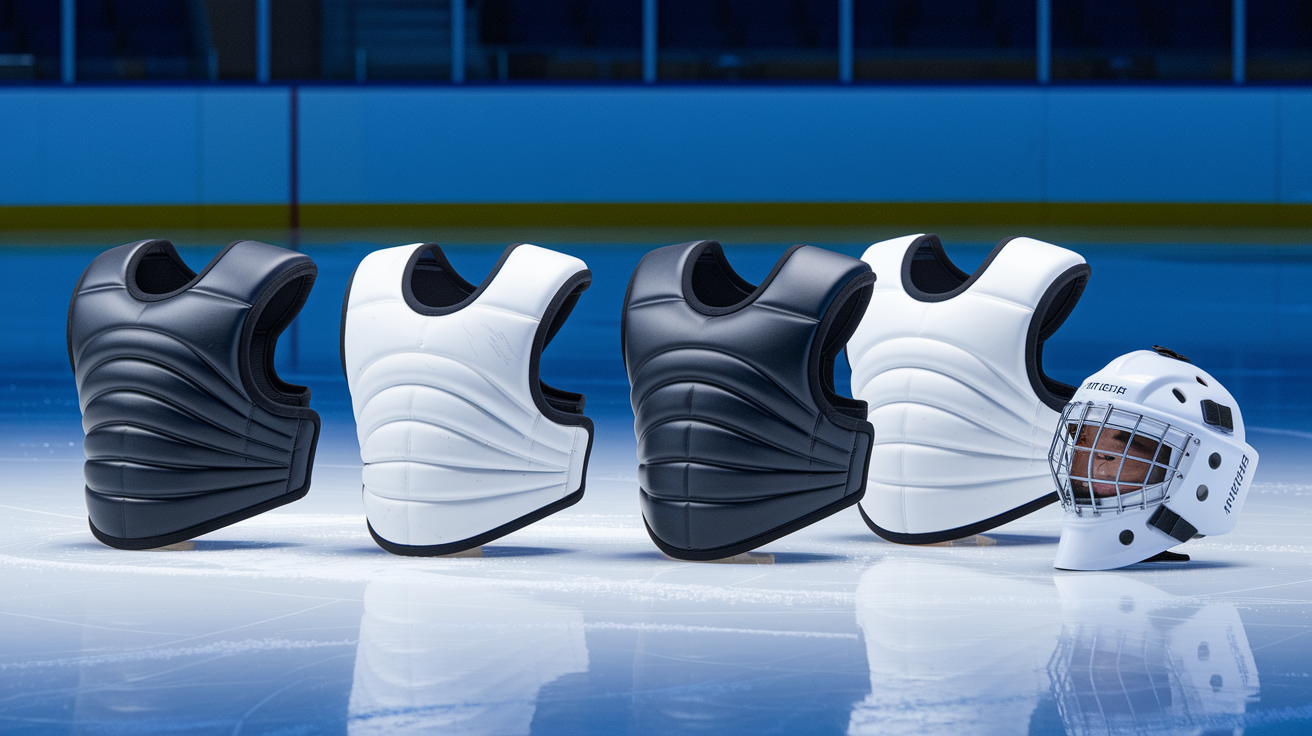
Four models keep showing up when junior goalies look for chest protectors that actually work. The Warrior X3, Vaughn Velocity V9, Bauer GSX, and CCM Phenom each solve the same core problem: how do you protect a young goalie without turning them into a stiff, slow-moving target who can’t develop proper technique?
Here’s what matters. A 60 mph wrist shot to the chest hurts. But a chest protector that locks up your shoulders teaches bad habits that stick around for years. Mobility beats maximum padding at the junior level because you’re still learning how to move, and gear that fights you makes everything harder.
Youth, Junior, and Intermediate sizes exist for a reason. A 9-year-old and a 13-year-old don’t have the same torso shape, and trying to make one chest protector work for both doesn’t end well. Youth models stay light and flexible for smaller frames facing slower shots. Junior models add thicker padding where it counts (chest, ribs, shoulders) while keeping the belly and underarms flexible. Intermediate units basically copy senior construction methods and work for 11 to 14-year-olds dealing with actual game speed.
Don’t just buy the heaviest thing you can find. Match the chest protector to what your goalie actually faces on the ice. A 10-year-old in house league getting 40 mph shots doesn’t need Intermediate protection. The extra weight slows them down and makes saves harder, not easier. Budget matters, sure. But a chest protector that fits right and lasts two seasons costs less per game than something cheap that falls apart in six months.
Top four picks:
- Warrior X3 — Best overall, balances mobility and protection across all three size tiers
- Vaughn Velocity V9 — Premium build, best for advanced juniors facing fast shots regularly
- Bauer GSX — Budget winner for beginners and smaller goalies who need light gear
- CCM Phenom — Youth-specific design, ages 7 to 10, with segmented flex and upgraded padding
Warrior X3 Junior Chest Protector: Model-by-Model Evaluation
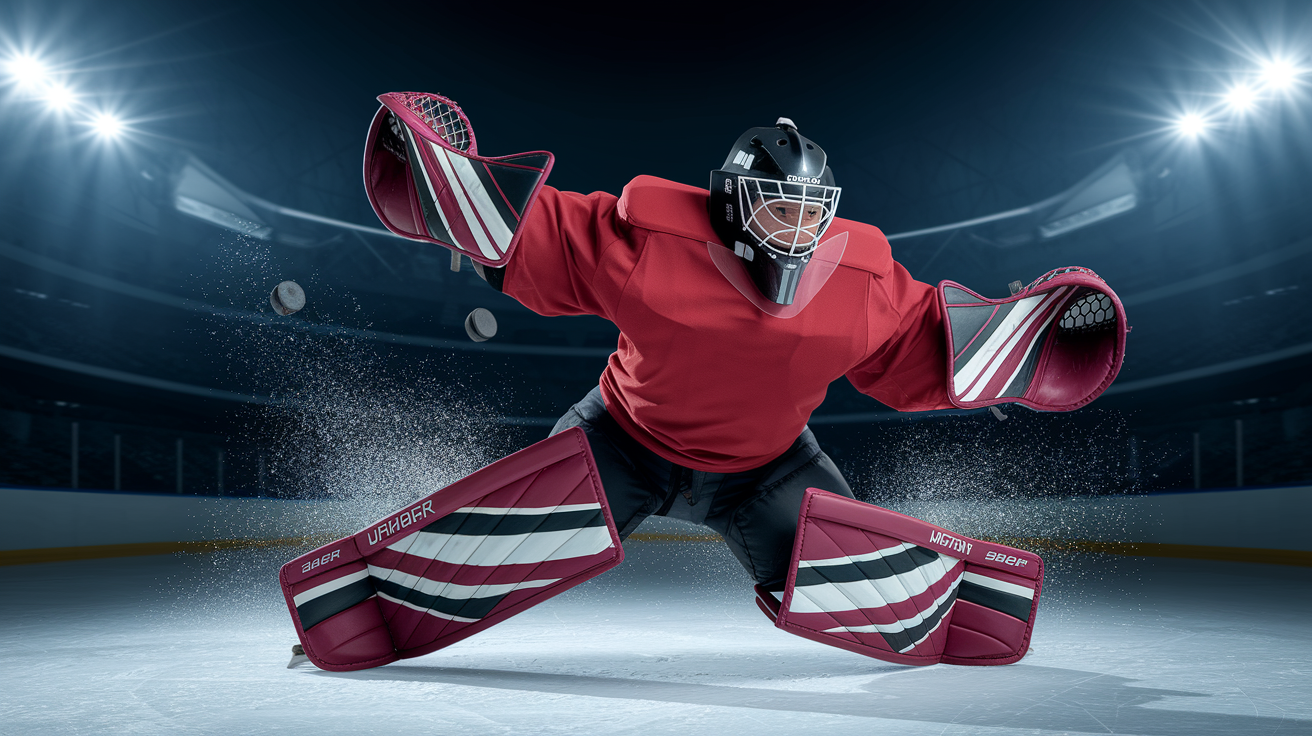
Warrior built the X3 with one focus: don’t restrict the goalie. The foam covers everything it should (sternum, collarbone, ribs, arms), but the weight stays low and flex zones in the belly and underarms let you drop into butterfly and track rebounds without fighting your own gear. Protection that moves with you instead of against you. That’s why the X3 works for most junior goalies across multiple seasons and skill levels.
Picking between Youth, Junior, and Intermediate X3 models isn’t really about age. It’s about torso length and how hard the shots are coming. A 10-year-old playing AA with faster shots might need Junior sizing. A smaller 12-year-old still developing could stay in Junior longer. Intermediate models add thicker foam in the chest and shoulder caps, which makes sense when you hit Bantam or higher and slap shots become normal. Warrior offers all three tiers so you can size correctly now and know there’s a clear path forward as your goalie grows.
X3 key features:
- Flex zones in belly and underarm panels allow full butterfly drops and lateral pushes without restriction
- Reinforced sternum plate and collarbone coverage add protection without stiffness
- Youth, Junior, and Intermediate sizing covers ages 8 through mid-teens
- Age range runs roughly 9 years old in Youth up to 14 or 15 in Intermediate for competitive play
- Mid-range price with durability and fit that matches more expensive models
| Model | Best For |
|---|---|
| Youth X3 | Beginners needing maximum mobility |
| Junior/Intermediate X3 | Players progressing into harder shots |
Vaughn Velocity V9 Junior Chest Protector: Premium Durability Review
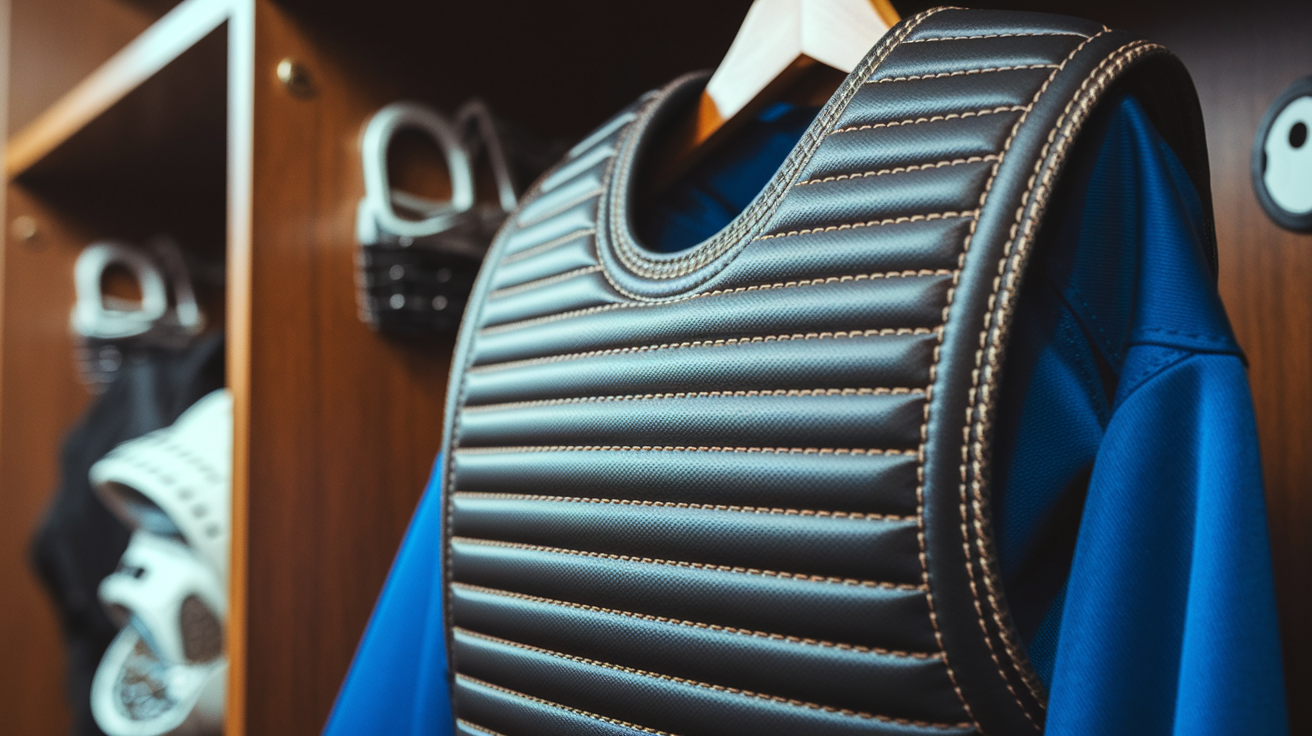
The V9 uses construction methods from Vaughn’s pro lineup, which means junior goalies get near-senior protection in a package that actually fits them. High-density foam across the whole torso. Reinforced stitching at stress points. This thing holds up through multiple seasons of heavy use without the foam compressing or straps failing. Parents pass V9 units to younger siblings or resell them after two or three years with barely any wear showing. Higher cost upfront, yes. But when it lasts that long, the math works out better than replacing cheaper gear every year.
The foam feels stiff out of the box compared to lighter youth models. Breaks in after a few practices though, and then it delivers consistent impact absorption everywhere it needs to. Chest, shoulders, arms, all covered.
Here’s the thing about heavier protection. It helps advanced junior goalies facing competitive shots. It slows down beginners who don’t need that much padding yet. A 12-year-old in AA hockey with regular slap shots benefits from the V9’s thicker sternum and rib coverage because the extra foam prevents sting and reduces flinching when you’re tracking screens or deflections. A 9-year-old in house league? Probably too restrictive. Better off in something lighter like the X3 or Phenom where you can actually move.
The V9 makes sense when you’re investing in a chest protector that’ll grow with a goalie committed to playing higher levels. If it lasts three full seasons and supports the jump from Peewee AA through Bantam AAA, you’re actually spending less per season than many cheaper options that need replacement after year one. Weigh durability and long-term fit against your budget and current skill level. If your goalie plays two or three times weekly and plans to keep advancing, the V9’s worth it. Lighter usage or uncertain commitment? Go mid-range.
Bauer GSX: Best Budget-Friendly Junior Chest Protector

Bauer designed the GSX as entry-level gear that covers what you need without adding features most beginners don’t use yet. Lighter, thinner foam than premium models keeps the weight low, which makes it easier for small-framed goalies to move quickly and learn good positioning. Simple strap systems and basic Velcro adjustments mean parents can dial in fit without complicated buckles or multi-step closures.
Trade-off for lower cost? Shorter lifespan. GSX foam compresses faster under heavy use. Stitching might loosen after a full season of three practices per week. But if your goalie’s just starting or you’re testing whether the position sticks, the GSX delivers enough protection to stay safe while keeping the money commitment manageable.
The price gap between Youth and Junior GSX models runs around $100, which matters when you’re budgeting for a full goalie setup. Youth sizing works well for ages 7 to 10 who need maximum mobility and face slower shots. Junior sizing adds more foam thickness in the chest and shoulders, better for 11 to 13-year-olds moving into faster game environments. The GSX won’t last as long as a Vaughn or Warrior unit. But it performs well for one or two seasons and you can replace it without major financial stress when your goalie outgrows it or needs an upgrade.
GSX highlights:
- Low weight and high mobility from simplified foam construction, perfect for learning technique
- Most affordable option in this category, often $100 to $150 below mid-range models
- Ages 7 to 12, house league or recreational play
- Basic Velcro straps and elastic panels handle growth spurts but offer less precision than premium adjustability
CCM Phenom Youth Chest Protector: Fit, Mobility, and Upgrade Details
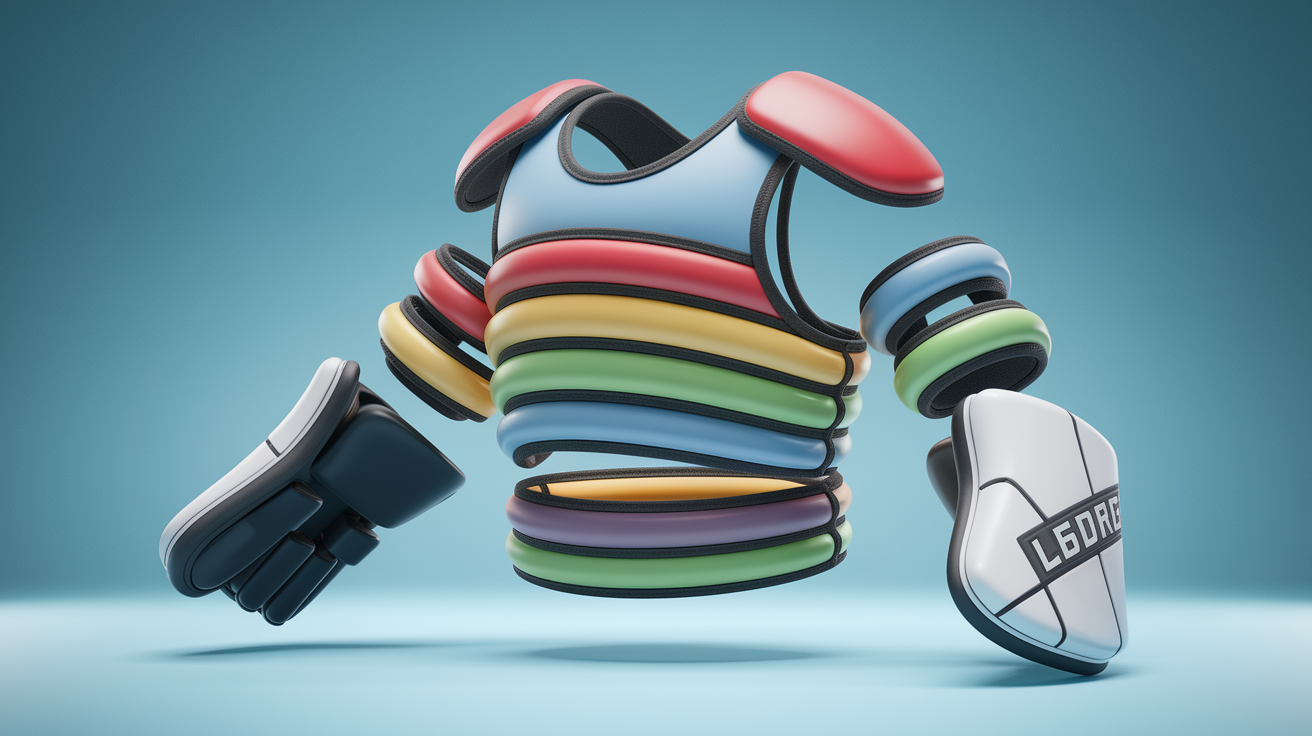
CCM built the Phenom as dedicated youth gear instead of shrinking down a senior model. You can tell the difference in how it moves on the ice. Segmented belly pad flexes when you bend forward or rotate through butterfly slides, which stops the chest protector from riding up or pinching at your waist. CCM borrowed design pieces from the 7.9 model to add adjustability that lets the Phenom grow with you across a full season or more. Overall thickness increased compared to the older 6.5 model for better impact resistance without adding stiffness. Reviewers say the Phenom feels similar to the pro-level EFlex 7 in terms of movement and presentation, just lighter and more mobile to match youth body mechanics.
Fit process for the Phenom follows an arms-first method. Put arm pads on, pull the chest protector over the top, attach suspenders. This layering keeps the arm pads aligned and stops them from twisting during play, which happens a lot with simpler designs. Adjustable Velcro straps at the shoulders and along the arms let parents fine-tune fit as you grow. Hard plastic elbow caps protect against falls and boards without limiting arm extension. The Phenom works best for ages 7 to around 10, with four size options (Small, Medium, Large, Extra Large) covering most youth torso lengths in that range. Once you approach 11 or move into higher shot speed environments, stepping up to Junior or Intermediate makes more sense.
On-ice mobility with the Phenom stands out because the chest protector doesn’t fight your natural movements. Segmented belly and flexible shoulders allow full range of motion during butterfly recoveries, lateral shuffles, and high glove saves. Helps younger goalies focus on developing proper technique without compensating for stiff gear. Choose the Phenom when your goalie needs upgraded protection over basic entry-level models but isn’t ready for the weight or cost of Junior or Intermediate units. The Phenom bridges the gap between beginner gear and competitive equipment, right call for house-league goalies moving into travel hockey or recreational players getting more serious about the position.
| Feature | Improvement Over Prior Model |
|---|---|
| Belly pad construction | Segmented design adds forward-bend flex compared with one-piece 6.5 torso panel |
| Sternum and collarbone padding | Thicker foam provides better impact resistance and reduces sting on chest-height shots |
| Elbow protection | Hard plastic caps replace soft foam to prevent bruising from falls and boards contact |
| Back-arm coverage | Added protection panels cover tricep area during butterfly and recovery movements |
Sizing and Measurement Guide for Junior Goalie Chest Protectors
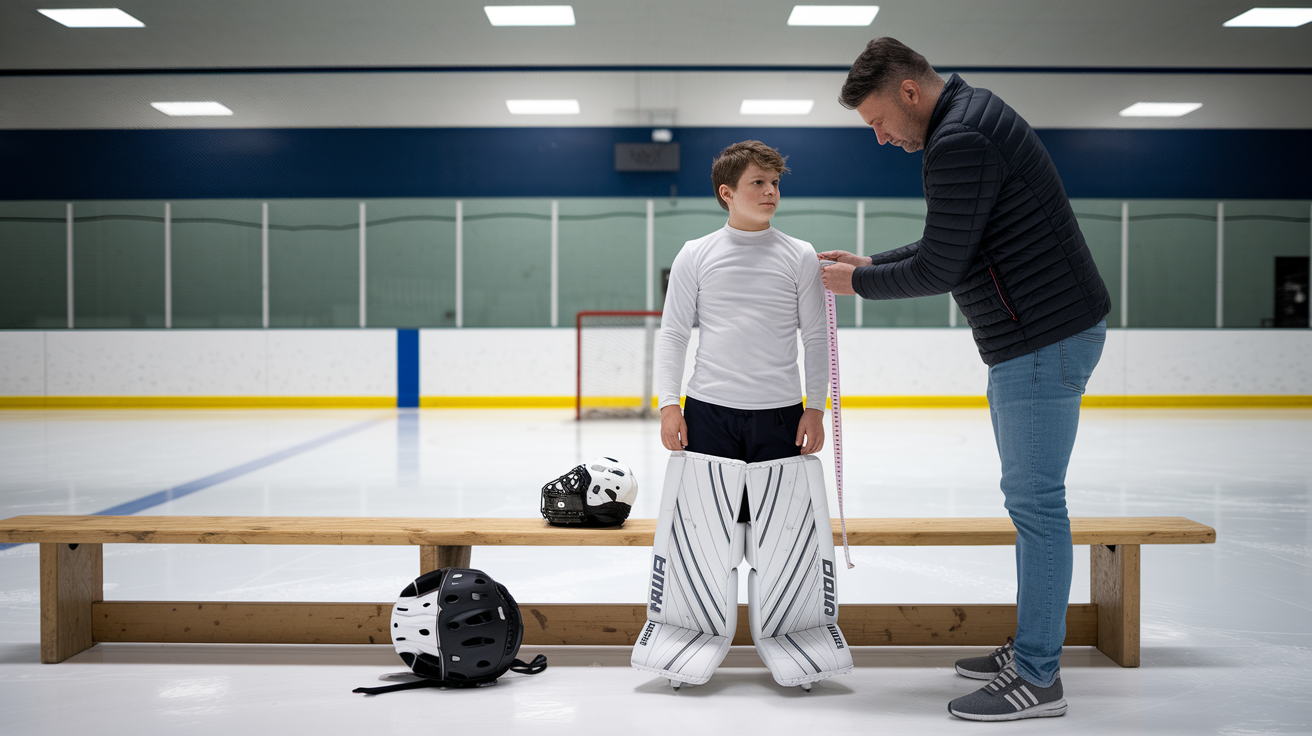
Correct sizing starts with torso length. Measure from top of shoulder to top of hip when standing upright. Use a soft measuring tape and have the player wear a base layer or practice jersey so the measurement reflects real on-ice fit. Shoulder width matters as a secondary check. The shoulder caps should sit directly on top of the shoulders without hanging forward or pulling back. No gap between the bottom of the chest protector and top of the pants when you’re in a ready stance. Arm length determines whether the arm pads reach the elbow and provide full coverage without restricting wrist movement. Quick sternum check confirms the thickest chest padding aligns with the center of your breastbone.
Youth sizing generally covers ages 7 to 10. Junior fits 10 to 13. Intermediate works for 12 to 15. But these are guidelines, not rules. A fast-growing 9-year-old might jump straight to Junior if their torso length exceeds the Youth range. A smaller-framed 12-year-old could stay in Junior instead of moving to Intermediate. Around ages 9 to 12, many goalies can reasonably use Intermediate instead of Junior if their torso length and shot environment support the upgrade. Match size to body dimensions and game speed rather than defaulting to age-based charts that don’t account for individual growth.
Five-step measurement process:
- Measure torso length from top of shoulder to top of hip while standing, record in inches, compare to manufacturer chart.
- Check shoulder width by confirming shoulder caps sit centered without forward sag or backward pull.
- Verify arm length by ensuring arm pads reach elbow and overlap with elbow pads when arms extend forward.
- Align sternum padding with center of breastbone and confirm full coverage across collarbone and upper ribs.
- Mobility test: drop into butterfly, push laterally, raise arms overhead to confirm no pinching, riding up, or restricted movement.
| Size Tier | Typical Age Range | Torso Length Range |
|---|---|---|
| Youth | 7 to 10 years | 12 to 15 inches |
| Junior | 10 to 13 years | 15 to 17 inches |
| Intermediate | 12 to 15 years | 17 to 19 inches |
Protection Technology Breakdown in Junior Chest Protectors
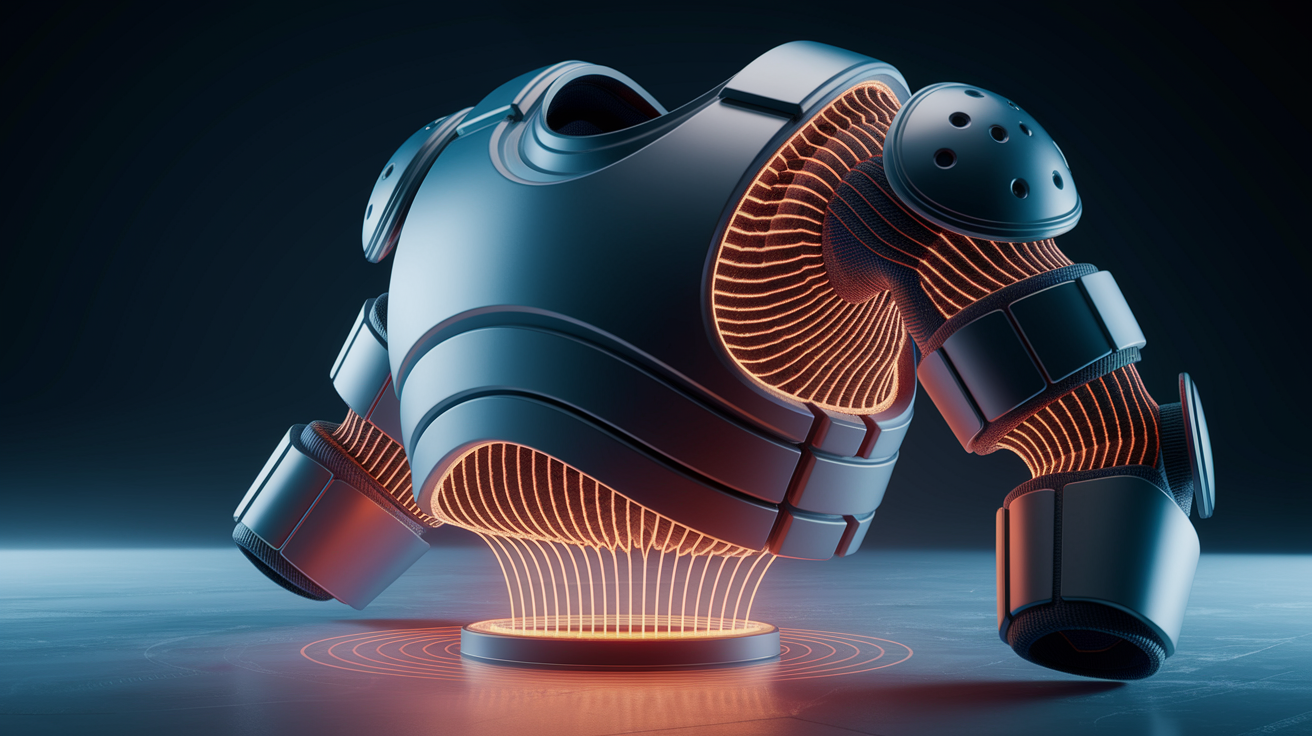
High-density foam forms the foundation of most junior chest protectors because it absorbs impact without adding excessive weight or stiffness. HD foam uses tightly packed cells that compress under force and spring back to original shape, which means the material can take repeated hits without breaking down quickly. Layered construction stacks multiple densities. Softer outer layers for initial impact absorption. Firmer inner layers for final energy dispersion. This spreads force across a wider area instead of concentrating it at the point of contact. Bauer’s Vapor 2X uses multi-layer HD foam across chest, shoulders, and arms. Reviewers describe it as incredible protection despite lacking full carbon or composite chest plates found in some premium adult models.
Plastic inserts and caps show up in strategic locations to handle specific impacts that foam alone can’t fully address. Hard plastic sternum plates protect the breastbone from direct shots. Elbow caps prevent bruising when goalies fall or slide into boards. The CCM Phenom includes plastic elbow caps sitting over softer arm foam, balancing mobility with hard-shell protection where it’s needed most. Some higher-end models use carbon-fiber or composite chest plates to maximize impact resistance while minimizing weight. But most junior chest protectors stick with HD foam and selective plastic reinforcement because the combination delivers enough protection for youth shot speeds without the cost or stiffness of advanced composite materials.
Youth chest protectors prioritize mobility over maximum impact resistance because younger goalies face slower shots and need equipment that encourages proper technique development. Junior models step up foam thickness in chest, shoulders, and ribs to handle faster wrist shots and occasional slap shots. Intermediate units push protection levels close to senior gear with thicker padding, larger coverage zones, and reinforced sternum plates. The jump from Youth to Junior typically adds 10 to 15 percent more foam volume in high-impact zones. Junior to Intermediate adds another 10 to 15 percent while also introducing stiffer construction that trades some mobility for better puck-stopping performance at competitive levels.
Mobility, Range of Motion, and Agility Factors in Junior Chest Protectors

Mobility technology centers on keeping shoulders, torso, and arms free to move through the full range required for saves without the gear pulling, pinching, or restricting natural body mechanics. Bauer’s Dynamic 3 Flex system uses split foam sections in chest and arms that move independently. When you rotate your torso to track a rebound, the chest protector flexes with the movement instead of forcing your shoulders to fight stiff padding. Free-Flex Edge and Arch Adjust Systems work together to improve vision and shoulder clearance by shaping the collar and shoulder caps to sit flatter and allow your head to move freely when tracking high shots or looking through screens.
Segmented belly pads, like those in the CCM Phenom, allow the chest protector to bend when you lean forward or drop into butterfly. Prevents the bottom edge from riding up and exposing your waist or digging into your hips. A one-piece torso panel might offer slightly better impact protection in theory. In practice it locks you into a more upright posture and makes it harder to get low in the crease or recover quickly after a save. Segmentation trades a small amount of overlap coverage for significant gains in functional mobility, which matters more at junior level where developing clean movement patterns is a higher priority than stopping 90 mph slap shots.
Weight distribution affects agility because a chest protector that’s front-heavy or shoulder-heavy pulls your posture forward and makes it harder to stay balanced through lateral pushes and rapid direction changes. Well-designed junior chest protectors distribute foam and reinforcement evenly so the weight sits close to your body’s center of gravity. Keeps the gear from throwing off your natural balance. Lighter overall weight helps, but proper distribution matters more. A slightly heavier chest protector with balanced weight will feel more agile than a lighter model that concentrates mass in the shoulders or chest.
Key mobility features:
- Shoulder articulation through split foam caps and flexible collar construction allows full arm extension and overhead reaches
- Torso segmentation via multi-panel belly design bends with forward lean and butterfly drops without riding up or pinching
- Arm adjustability using Velcro straps and elastic inserts lets arm pads move independently and rotate naturally during saves
- Weight distribution balanced across chest, shoulders, and back maintains center of gravity and supports quick lateral movement
Durability, Lifespan, and Replacement Timing for Junior Chest Protectors
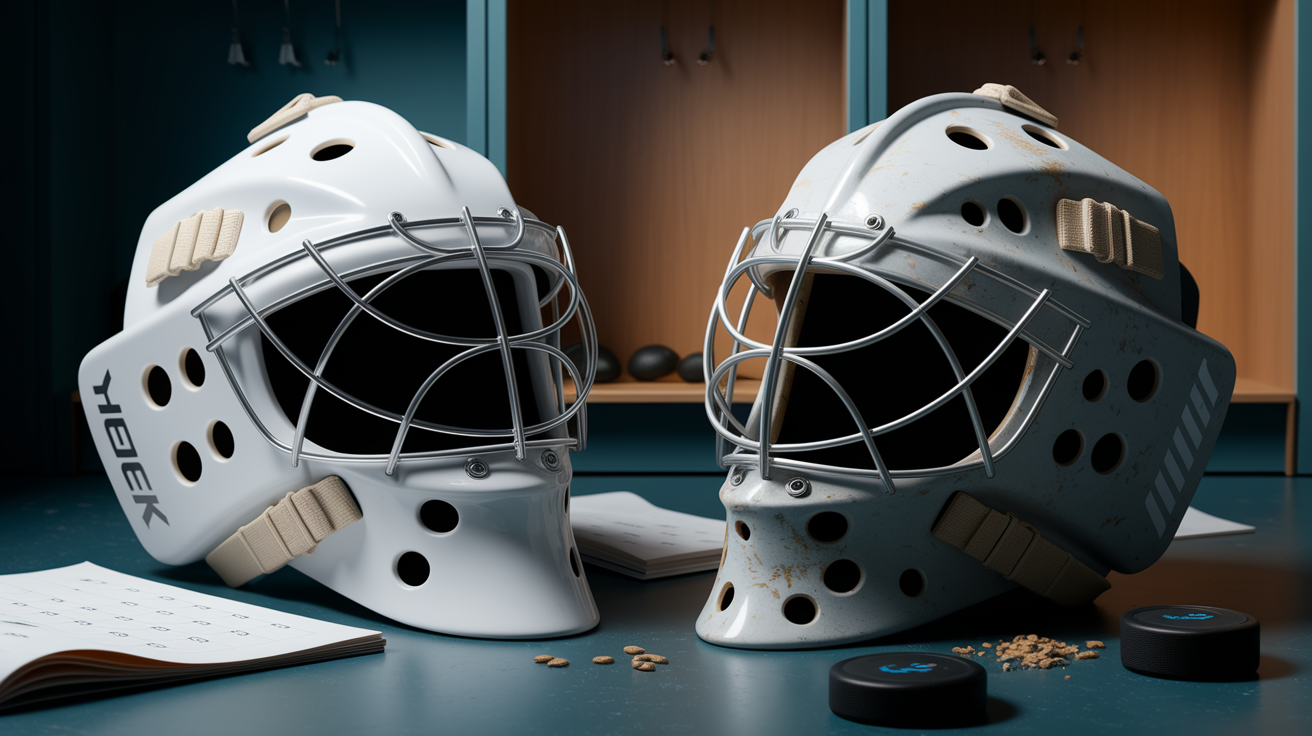
Junior chest protector lifespan depends on usage frequency, shot volume, and construction quality. Most units should last one to three full seasons before foam compression or strap wear requires replacement. Vaughn Velocity V9 models earn durability praise because the high-density foam and reinforced stitching hold up through two or three years of heavy use. Parents often report passing them to younger siblings with minimal loss in protective performance. Bauer’s Vapor 2X has been in service since 2018 with consistent user feedback noting no early breakdown, which suggests the multi-layer HD foam construction maintains its shape and impact resistance longer than typical youth gear. Budget models like the GSX trade some durability for lower cost. Expect to replace them after one or two seasons if your goalie plays regularly.
Foam compression is the first failure point. When the chest padding no longer springs back to full thickness after a shot, time to replace the chest protector even if the outer shell and straps still look good. Compressed foam reduces impact absorption and increases the chance of sting or bruising. Not safe to keep using a chest protector that’s lost its protective cushion. Stitching quality determines whether straps and Velcro attachments stay secure through a full season. Inspect high-stress areas like shoulder straps and belly closures every few months to catch loose threads before they turn into full tears.
Growth cycles complicate replacement timing because a chest protector might still be structurally sound when your goalie outgrows it. If the bottom edge rides up more than an inch above the pants, or if the shoulder caps no longer sit centered on the shoulders, the unit’s too small regardless of foam condition. Sizing up early beats waiting until the chest protector clearly doesn’t fit. An undersized unit leaves gaps in coverage and restricts movement, both of which hurt development and increase injury risk. Plan to replace youth and junior chest protectors every 12 to 18 months during heavy growth phases, and every 24 to 36 months once growth rate slows in mid-teens.
Budget Tiers: Under $100, Mid-Range, and Premium Junior Chest Protectors
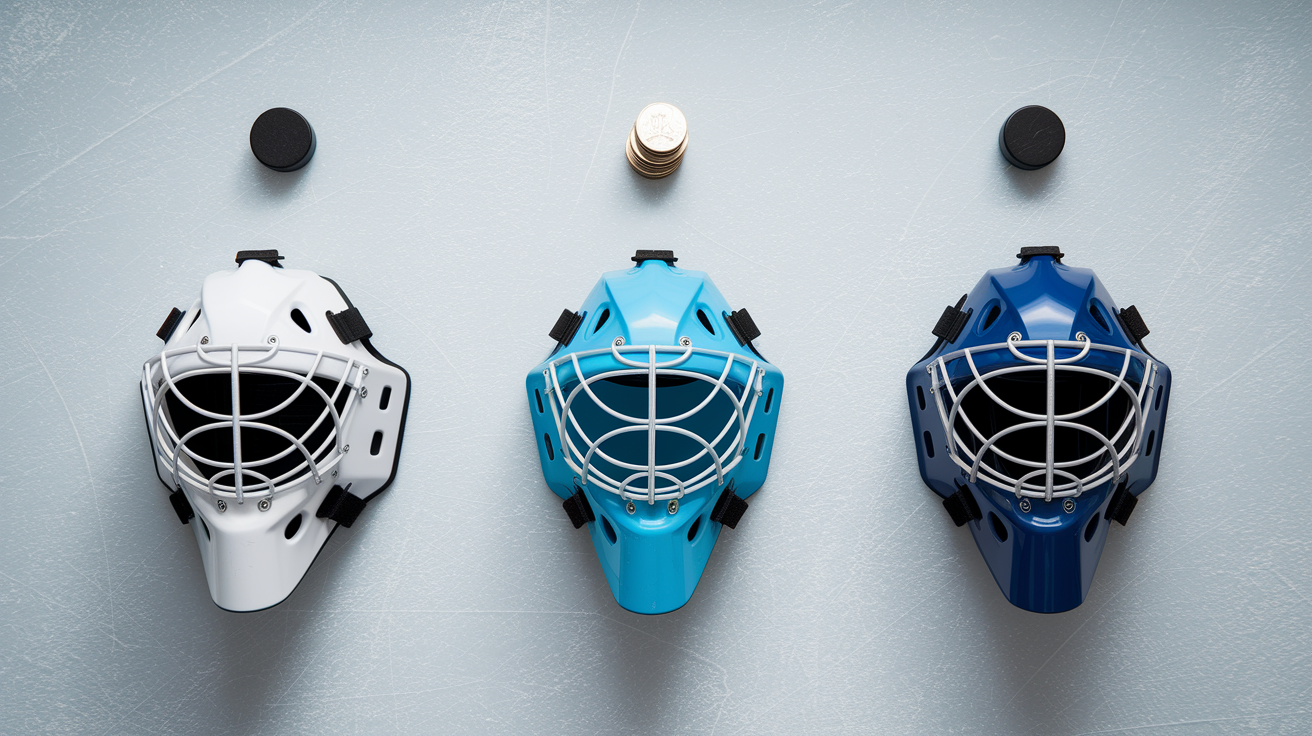
Entry-level chest protectors under $100 focus on basic protection and simple fit systems. Right choice for beginner goalies or families testing the position before committing to higher-end gear. The Bauer GSX sits at the top of this tier, delivering lightweight foam construction and straightforward adjustability at a price that won’t break the budget. Units in this range typically use thinner foam layers and less reinforced stitching, so durability runs shorter. But for a goalie playing one or two seasons in house league or recreational hockey, the lower cost and adequate protection make sense. Expect to replace under-$100 models after one full season of regular use or when your goalie outgrows the current size.
Mid-range chest protectors between $100 and $220 balance protection, mobility, and durability without pushing into premium pricing. The Warrior X3 and CCM Phenom both land here, offering purpose-built youth designs with segmented mobility features, thicker foam than budget models, and construction quality supporting two or more seasons of competitive play. Mid-range units often include adjustability features that let the chest protector grow with the player, which extends useful life and improves cost-per-season value compared to cheaper models needing earlier replacement. This tier makes the most sense for goalies playing travel hockey, club teams, or house league with plans to continue developing.
Premium chest protectors above $220 deliver pro-level construction, maximum durability, and advanced protection features aimed at competitive junior goalies facing fast shots and high game volume. The Vaughn Velocity V9 represents this tier, with high-density foam layouts, reinforced stitching, and build quality supporting three or more seasons of heavy use. Premium models cost more upfront but often outlast two or three cheaper units, which narrows the total cost gap over time. Invest in premium gear when your goalie plays year-round, participates in showcases or tournaments, or competes at AA or AAA levels where shot speed and game intensity justify the extra protection and durability.
Budget tier breakdown:
- Under $100 — Entry-level like Bauer GSX, basic protection, shorter lifespan, ideal for beginners or one-season use
- Mid-range ($100–$220) — Warrior X3 and CCM Phenom, balanced mobility and durability, best value for travel or competitive youth goalies
- Premium ($220+) — Vaughn Velocity V9, pro-level construction, multi-season durability, recommended for advanced junior players with high game volume
Final Words
Right in the action: we ranked four protectors that balance mobility, protection, durability, and value. Warrior X3 is best overall, Vaughn V9 is premium, Bauer GSX is the budget choice, CCM Phenom fits younger skaters.
We covered sizing, protection tech, mobility, durability, and budgets so you know what to try on the bench and on ice. Measure torso, test motion, match model to age and shot level.
Use this best goalie chest protectors for junior players review to compare options and pick the right fit. They’ll be safer and more confident on the ice.
FAQ
Q: What is the best junior goalie chest protector?
A: The best junior goalie chest protector is the Warrior X3, offering a strong balance of mobility, protection, and multiple youth/junior sizes for better long-term fit and on-ice performance.
Q: What size goalie chest protector for 10 year old?
A: The size for a 10-year-old goalie is usually Youth or small Junior depending on torso length; measure torso, shoulder, and arm to choose Youth (ages ~7–10) or move up if taller.
Q: What size chest protector for a 12 year old?
A: A 12-year-old typically needs a Junior or Intermediate chest protector depending on torso length and game level; many 9–12-year-olds move into Intermediate for longer torsos or higher shot speeds.
Q: What chest protectors do pros use?
A: Pros use pro-model chest protectors like the Vaughn Velocity V9 or top-tier Bauer/CCM pro series, featuring pro-style foam layouts, plastic plates, and the highest durability for heavy shot exposure.