

Ever scream at the ref when he keeps his arm up instead of blowing the whistle?
Delayed offsides is that moment when an attacker beats the puck across the blue line but the linesman lets play continue while holding one arm up.
It matters because it keeps the game moving, rewards quick defensive clears and smart tagging up, and often decides whether a scoring chance lives or dies.
This post breaks down the rule, when the whistle will finally sound, and simple things players and coaches should do on the ice.
Core Mechanics of the Delayed Offsides Rule in Hockey

Delayed offsides happens when an attacking player crosses into the offensive zone before the puck but the linesman doesn’t blow the whistle right away. Instead, the official raises one arm straight up to signal that an offside violation exists but play can continue if things work out. The raised arm stays up until attackers clear the zone or until someone who was offside touches the puck. Then the whistle stops everything. The signal tells everyone on the ice, both benches, and the crowd that the play’s hanging in balance.
The rule exists to keep hockey moving. If the defending team can clear the puck or if attacking players can retreat and reset their position legally, there’s no reason to stop play for a technical violation that can fix itself. This rewards smart puck management by defenders and quick awareness by attackers. It also prevents the game from turning into a series of faceoffs every time a player misjudges the blue line by half a step. The linesman watches the sequence closely and will only stop play if the advantage gained by the offside becomes unfair or if attackers force involvement before they’ve legally reset.
A whistle during a delayed offsides comes when attackers who were offside touch the puck before fixing their position, or when they stay in the zone long enough that the linesman determines they can’t or won’t clear properly. The arm goes down, the whistle sounds, and the next faceoff happens in the neutral zone.
Core triggers that activate a delayed offsides situation:
- An attacker enters the offensive zone completely before the puck crosses the blue line.
- The linesman judges that the attacking team hasn’t gained an unfair advantage yet.
- The defending team has possession or the ability to play the puck out.
- No offside attacker has touched the puck or interfered with a defender.
- Attacking players have a reasonable opportunity to retreat and tag up before involvement.
Blue-Line Positioning, Skate Requirements, and the Tagging-Up Process
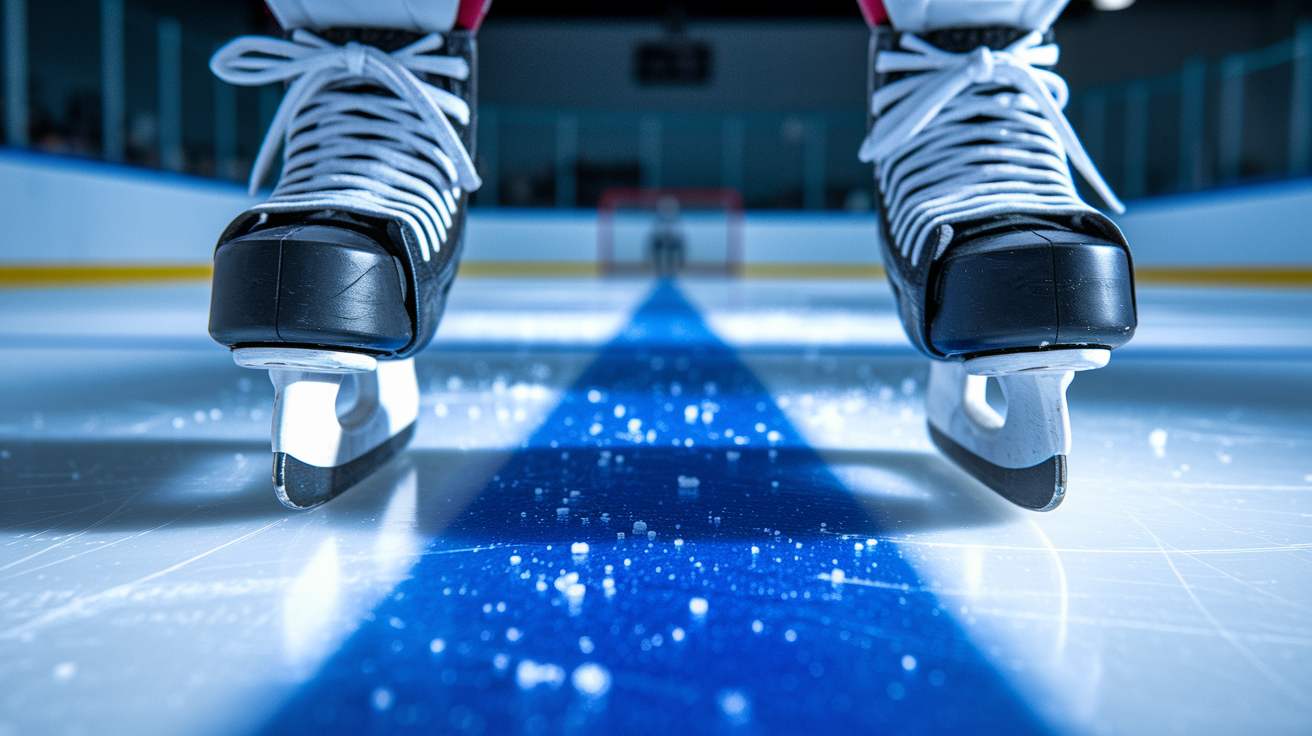
The blue line is the boundary. The leading edge of that line, the edge facing the offensive zone, is the measuring point. When the puck crosses that leading edge into the attacking zone, every attacking player must already be onside. That means at the moment the puck crosses, each attacker’s body position gets judged by where their skates are. If both skates have fully crossed the leading edge before the puck does, that player’s offside.
Both skates matter. If one skate’s still on the blue line or on the neutral zone side of the line when the puck crosses, the player’s onside. Even if the trailing skate is an inch behind the line, that’s enough. The stick doesn’t count in this calculation. A player can reach a stick across the blue line to receive a pass or deflect the puck and still be onside if at least one skate remains on or behind the line. This skate-only standard keeps the rule consistent and easier for officials to judge in real time.
When a delayed offsides is signaled, tagging up becomes the reset mechanism. All attackers who were offside must leave the offensive zone completely so both of their skates cross back over the blue line into the neutral zone or further back. Until every offside player has done that, the delayed signal stays active. If an offside player touches the puck before clearing, the whistle stops play immediately. Tagging up is the only way attackers can legally re-enter and continue the attack without a stoppage.
The process looks like this: the linesman raises the arm, attackers recognize the signal and skate hard back toward the blue line, each offside player gets both skates fully across the line to the neutral zone side, the linesman confirms all attackers are clear, the arm comes down, and play continues normally. Players who were never offside can stay in the zone during this sequence, but they can’t touch the puck until their teammates have tagged up.
Frequent skate position errors players make:
- Leaving one skate in the zone while trying to tag up, thinking partial clearance is enough.
- Entering the zone with the trailing skate dragging on the line but the lead skate already over, then touching the puck before the trailing foot fully crosses.
- Assuming a stick deflection or toe drag counts the same as skate position when determining onside status.
When Officials Stop Play During a Delayed Offside Sequence
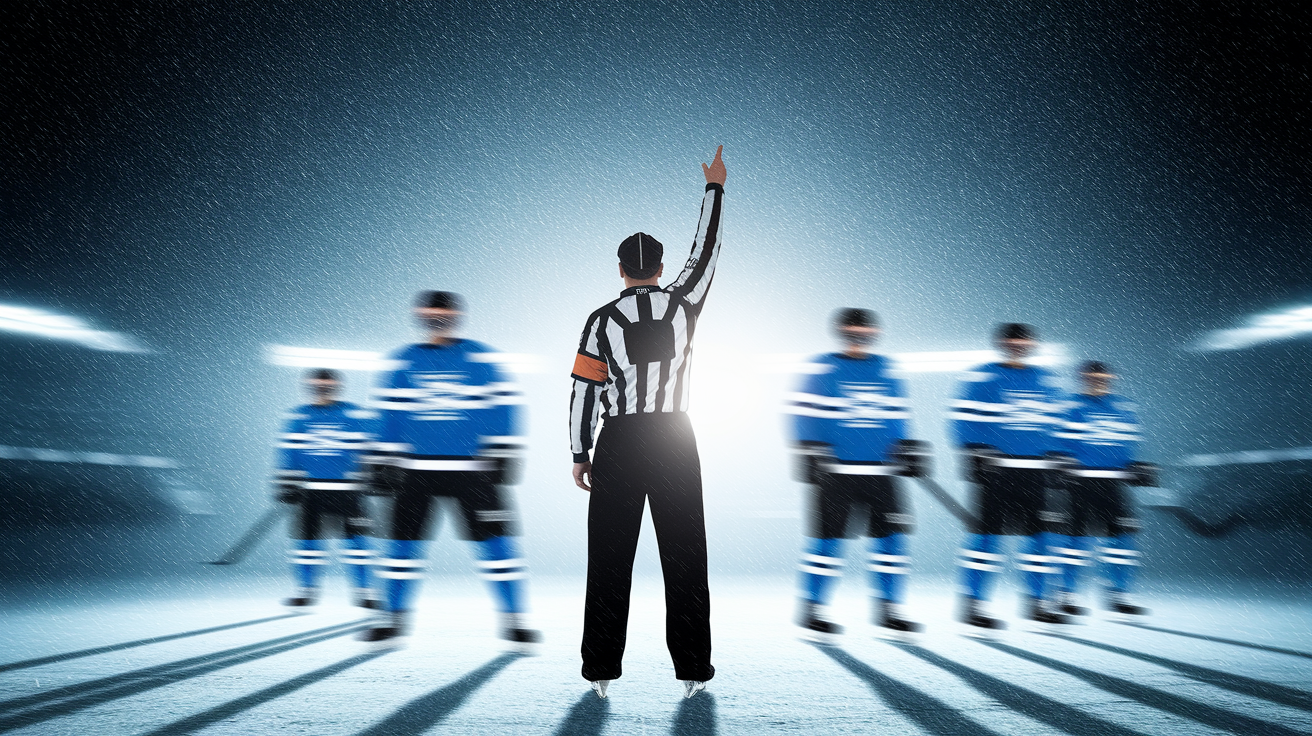
The arm-up signal buys time, but it doesn’t last forever. Play stops when an attacker who was offside makes contact with the puck or interferes with a defender before completing the tag-up. The moment that touch or interference happens, the linesman drops the arm and blows the whistle. Play also stops if attackers fail to clear the zone within a reasonable time or if the linesman determines that continuing play would give the attacking team an unfair advantage despite the offside.
The faceoff location after the whistle depends on the nature of the stoppage. A standard delayed offsides that results in a whistle typically sends the faceoff to the nearest neutral zone dot. If the linesman judges the offside was intentional, used to buy time for a line change, or deliberately caused to stop play, the faceoff can be moved back into the offending team’s defensive zone as a penalty for gaming the rule.
| Stoppage Reason | Resulting Faceoff Location |
|---|---|
| Offside attacker touches puck before tagging up | Nearest neutral-zone faceoff dot |
| Offside attacker interferes with defender during delayed sequence | Nearest neutral-zone faceoff dot |
| Attackers fail to clear zone in reasonable time | Nearest neutral-zone faceoff dot |
| Intentional offside or deliberate stoppage for advantage | Offending team’s defensive-zone faceoff dot |
Immediate Offsides vs Delayed Offsides: Key Differences That Affect Play
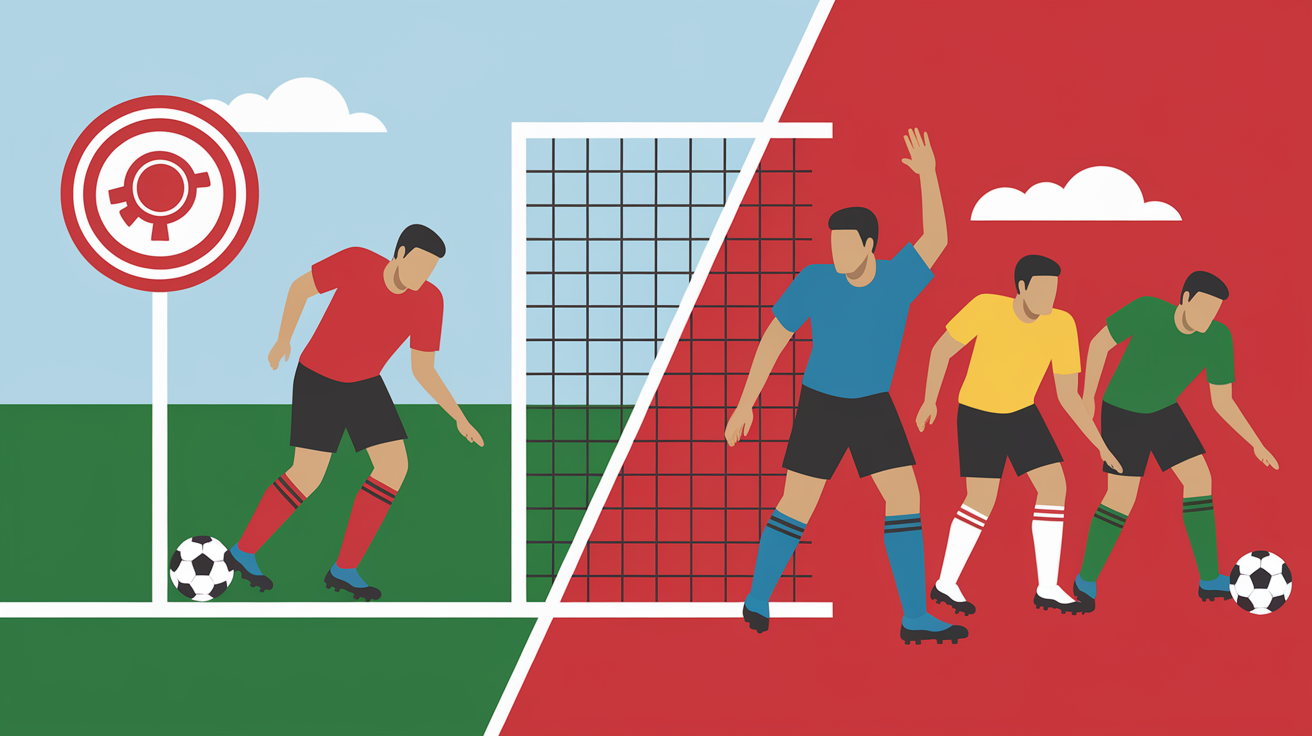
Immediate offside means the whistle blows the instant the puck enters the offensive zone while an attacking player’s already inside. There’s no arm-up signal, no continuation, and no chance for the attackers to reset. The linesman sees the violation, stops play right away, and sets up the faceoff in the neutral zone. This call gets used when the offside is clear-cut and allowing play to continue would create an unfair situation or confusion.
Delayed offsides gives everyone a chance. The linesman recognizes that an attacker entered early but judges that stopping play immediately isn’t necessary because the attacking team hasn’t gained a material advantage yet and the situation can resolve itself. The arm goes up as a warning and a holding pattern. If attackers retreat and tag up, or if the defending team clears the puck out of the zone, the arm comes down and play flows on without interruption. If attackers break the rules by touching the puck too soon, then the whistle ends it.
The benefit to game flow is obvious. Delayed offsides prevents dozens of unnecessary stoppages every game for minor line infractions that don’t affect the play. It rewards smart defending and disciplined attacking. It keeps shifts alive and lets teams battle through marginal situations without constantly resetting at the faceoff dot.
Six practical differences:
- Immediate offside stops play instantly, delayed offsides allows continuation as long as conditions permit.
- Immediate offside requires no signal beyond the whistle, delayed offsides uses the raised arm to communicate status.
- Immediate offside offers attackers no chance to recover, delayed offsides gives attackers the option to tag up and re-enter legally.
- Immediate offside typically happens on obvious early entries, delayed offsides occurs in closer judgment calls where resetting is possible.
- Immediate offside always results in a neutral zone faceoff, delayed offsides can result in a neutral zone dot or defensive zone dot depending on intent.
- Immediate offside ends the attacking sequence completely, delayed offsides preserves the sequence if attackers execute the reset correctly.
NHL-Specific Applications of the Delayed Offsides Rule
The NHL governs offside under Rule 83. That rule defines when a player’s offside, what constitutes legal entry, how officials signal and enforce the call, and what consequences follow. Rule 83 also addresses situations where delayed offsides interacts with other stoppages like icing and how video review applies when a goal is scored after a potential offside entry. The rule’s written to balance fair play with game flow, and the delayed offside provision is a core part of that balance.
When a delayed offsides signal is active, icing can’t be called. If the defending team dumps the puck down the ice while the linesman’s arm is raised for delayed offsides, the icing gets waved off because the offside situation takes priority. Play continues under the delayed offsides conditions until attackers clear or the puck is touched by an offside player. Defender possession also matters. If a defending player gains clear control of the puck and deliberately carries or passes it within the defensive zone, that can nullify the offside for attackers who were previously ahead of the play, depending on whether the official judges the defender’s action as a “deliberate play” rather than a deflection or accidental touch.
Video review for offside on scoring plays is routine in the NHL. If a goal is scored and there’s any question about whether an attacking player was offside before the puck entered the zone, referees can initiate a review or coaches can challenge the play. Review officials examine skate position frame by frame at the moment the puck crossed the blue line. Goals have been overturned because replay showed a skate a few inches over the line before the puck arrived. The delayed offsides signal doesn’t prevent review. If attackers appeared to tag up but video shows they didn’t fully clear before touching the puck, the goal can still be disallowed.
Four NHL-specific nuances:
- Rule 83 explicitly allows linesmen discretion to signal delayed offsides rather than immediately stopping play, emphasizing game flow priorities.
- Icing is automatically waived off during an active delayed offsides sequence, preventing teams from gaming two stoppages at once.
- Deliberate plays by defenders can reset onside status for attackers, but deflections or unintentional touches typically don’t.
- Video review of offside on goals examines the exact frame when the puck crosses the blue line and compares skate positions, making delayed offsides subject to the same frame-by-frame scrutiny as immediate offside.
Common Game Scenarios Involving Delayed Offsides

Line changes are a frequent trigger. A forward comes off the bench a half-second late while a teammate’s already carrying the puck toward the blue line. The late player crosses into the offensive zone before the puck does. The linesman raises the arm for delayed offsides. If the late player recognizes the signal and immediately skates back across the blue line without touching anything, the arm comes down and the rush continues. If the player keeps driving toward the net and touches the puck or interferes with a defender, the whistle blows and the faceoff goes back to the neutral zone.
Deflections off defenders create judgment calls. An attacking player enters the zone early. A defender tries to intercept a pass and the puck deflects off the defender’s stick or body into the zone. If the linesman determines the deflection was unintentional and the defender didn’t gain possession, delayed offsides stays in effect and attackers must still tag up. If the defender played the puck deliberately, controlled it, and then lost it, the attackers may be judged onside because the defender’s action reset the sequence. This distinction matters in fast scrambles where pucks bounce off multiple players in quick succession.
Rebound scrambles at the net are another common delayed offsides situation. The puck gets shot into the zone legally but an attacking player who was trailing the play crosses the blue line early before the puck arrived. The shot hits the goalie, the puck sits loose in the crease, and the early attacker’s still in the zone. The linesman’s arm is up. If that early attacker touches the rebound before tagging up, the whistle kills the play even if the puck is inches from the goal line. If a teammate who was onside touches the rebound first and the early attacker skates back to tag up during the scramble, play can continue.
Failed resets happen when attackers don’t execute the tag-up correctly or don’t move fast enough. The arm goes up, attackers start to retreat, but one player hesitates or doesn’t get both skates fully back across the line. That player then re-enters the zone or the puck comes to them while they’re still technically offside. The whistle stops play immediately. The resulting faceoff is in the neutral zone, and the attacking team loses possession and momentum because of the reset failure.
Recommended Visuals and Video Examples to Teach Delayed Offsides
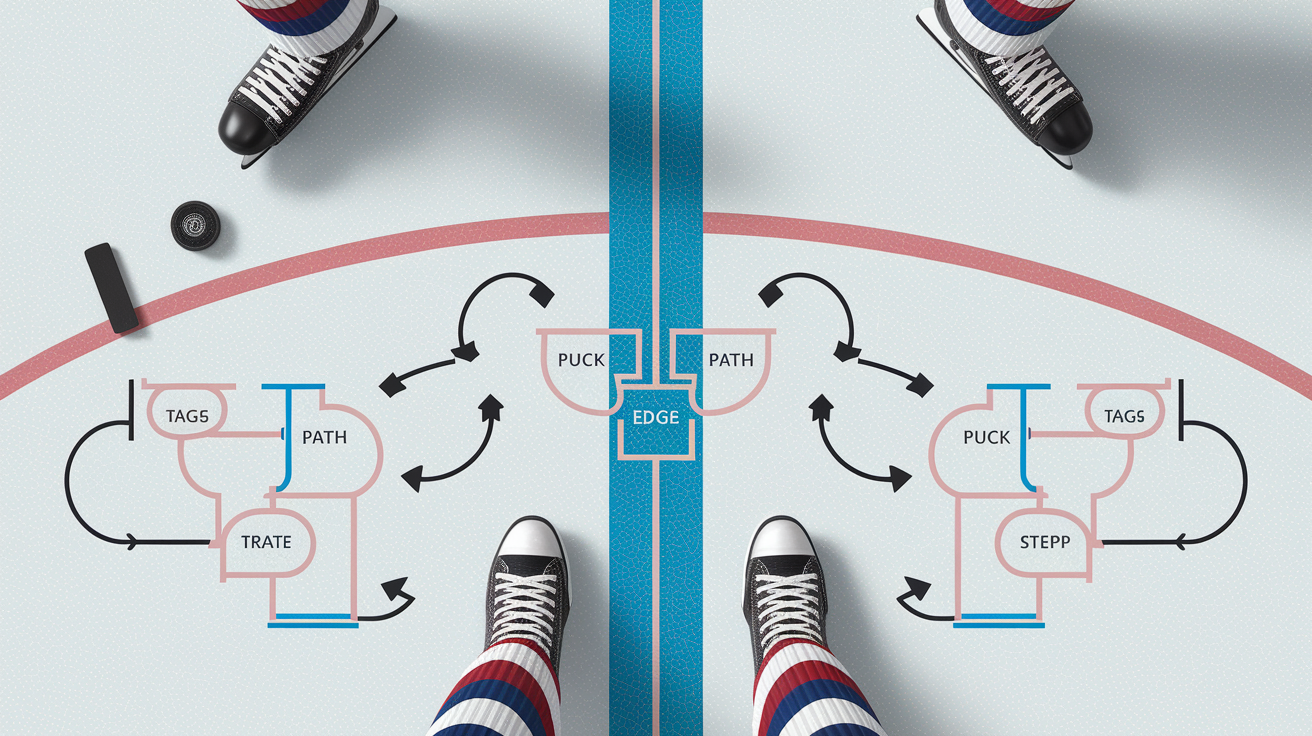
Diagrams work best when they show the blue line from above with clear markers for the leading edge, skate positions on both sides of the line, and the puck path. A static overhead view should illustrate one scenario where both skates are behind the line and onside, and another where both skates have crossed and the player’s offside. Adding arrows to show the direction of player movement and the puck path helps readers see the sequence. A second diagram can map the tagging-up process with numbered steps and skate position changes as a player retreats from the offensive zone back across the blue line.
Video clips bring the rule to life. Slow motion replays with freeze frames at the exact moment the puck crosses the blue line let viewers compare skate positions in real time. Clips should include at least one example of a delayed offsides that gets successfully negated by tagging up, one example where an offside player touches the puck and triggers the whistle, and one example of a goal review where frame-by-frame analysis shows an offside entry. Annotations on the video, like a line marking the blue line leading edge or a circle highlighting skate position, make the teaching point clear without requiring narration.
Five diagram and video types to include:
- Overhead static diagram showing skate position on vs over the blue line at the moment the puck crosses, with the leading edge clearly marked.
- Sequence diagram with three to four frames illustrating the tagging-up process from delayed signal through full clearance and re-entry.
- Slow motion video clip of a delayed offsides that gets negated, with freeze frame at puck crossing and again when attackers complete tag-up.
- Slow motion video clip of a delayed offsides whistle caused by an offside attacker touching the puck, with timestamp and skate position overlay.
- Video example of an NHL goal review for offside, showing side-by-side frames of puck position and skate position with official ruling explanation.
Final Words
Back on the ice, that raised arm is the trigger: delayed offsides lets play continue while attackers clear rather than an instant whistle.
This piece walked through the rule basics, blue-line skate standards and tagging up, when officials stop play, how delayed and immediate offsides differ, NHL specifics, game scenarios, and teaching visuals.
Watch for the arm signal, practice clean clears and smart resets, and use video clips to learn. With a little focus, delayed offsides becomes a tool, not a trap.
FAQ
Q: What is a delayed offside?
A: A delayed offside is when an attacking player enters the offensive zone before the puck, but play continues with a linesman’s raised arm until attackers legally reset or touching the puck stops play.
Q: What country invented hockey?
A: The modern game of ice hockey was developed in Canada in the mid-1800s; stick-and-ball games existed earlier elsewhere, but organized indoor ice hockey rules came from Canada.
Q: What is the rarest penalty in hockey?
A: The rarest penalty in hockey is a match penalty for deliberately trying to injure an opponent; it’s reserved for extreme, intentional acts and is seldom assessed.
Q: What is the Wayne Gretzky rule?
A: The Wayne Gretzky rule is the NHL policy retiring No. 99 league-wide, which bans any player from wearing Wayne Gretzky’s number across all teams.