

Want to win close games? Line matching often decides them.
This isn’t guesswork — it’s tactical deployment: who you send out against who, when, and why.
Matchups let you shut down top scorers, force turnovers with speed, protect leads, and create odd-man rushes.
In this post we’ll walk through scouting opponent tendencies, using last change (the final sub at stoppages), zone starts, and quick in-game counters.
Read on for a simple, repeatable plan coaches can use every shift to tilt ice time, possession, and scoring chances in their favor.
Core Principles of Effective Line Matching
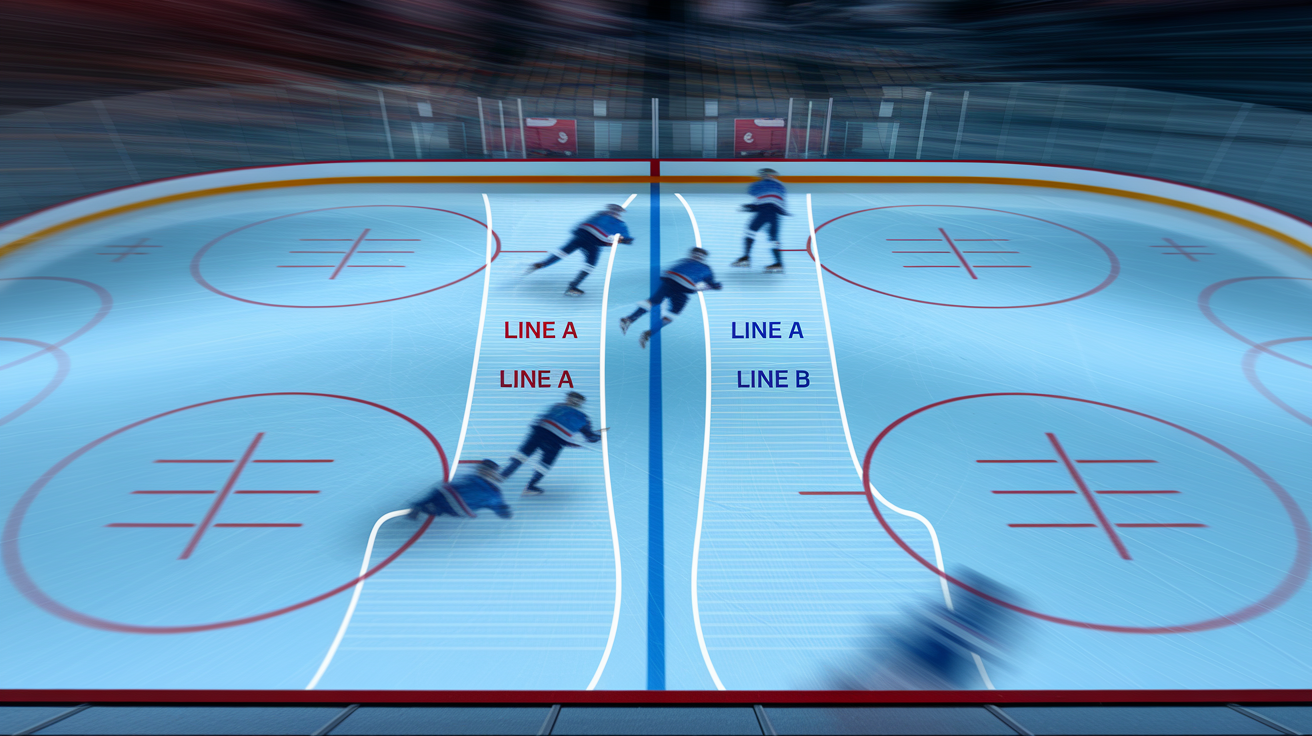
Line matching is about deliberately pairing your forwards and defensemen against specific opponent lines to grab tactical advantages during 5-on-5 play. Coaches use matchups to shut down the opponent’s best scorers, exploit defensive weaknesses, or dictate the pace and physical intensity of shifts. Every deployment decision tilts ice time, possession, and scoring chances in your favor.
Deployment choices ripple through every part of the game. Put your shutdown line against the opponent’s top scorers and you protect your net while buying space for your own offensive weapons to find softer matchups. Send your fastest forwards against slower defenders and you create odd-man rushes and transition pressure. Controlling which lines face which opponents also controls tempo. Energy lines accelerate the pace, defensive pairings slow it down, and deliberate rotation keeps both teams honest.
The core in-game decisions boil down to reading the opponent’s deployment and choosing your response. At every stoppage, a coach asks: who’s on the ice, what do they do well, and which of my lines counters that best? On the fly, the question shifts to timing. When to change during active play to disrupt rhythm, when to hold a line out longer to sustain pressure, and when to bail out a tired group before they give up a dangerous chance.
Common coaching objectives that drive matchup decisions:
Neutralize scoring threats. Match defensive forwards and stay-at-home defenders against the opponent’s top offensive players.
Exploit mismatches. Deploy speed and skill against slow or undisciplined opponent defenders.
Control physical tempo. Use energy or physical lines to change pace, wear down defenders, or answer opponent aggression.
Protect leads. Shorten the bench and deploy checking lines to limit opponent possession and high-danger chances.
Generate offense. Send scoring lines against weak defenders or after gaining offensive-zone faceoffs.
Manage fatigue. Rotate depth lines to keep top players fresh and avoid breakdowns caused by tired legs.
Understanding Opponent Tendencies and Player Profiles

Pre-game scouting and live observation give coaches the information they need to build favorable matchups. Start by identifying the opponent’s top three forward lines and their primary roles. Who scores, who forechecks aggressively, who plays primarily defensive minutes. Track their shift patterns: does the top line start most offensive-zone faceoffs? Does the third line get heavy defensive-zone deployment?
Notice which defensemen struggle on breakouts, which ones jump into the rush, and which pairings play passive or undisciplined in transition. Good scouting means knowing where the opponent wants to attack and where they’re vulnerable before puck drop.
During the game, watch for habits that reveal deployment cues. Does the opponent always send their top line after an icing? Do they change lines immediately after defensive-zone clears, or do they hold groups on for extended shifts when pushing for a goal? Pay attention to which forwards drive play. Who carries the puck on entries, who hunts for rebounds, who hangs back for defensive support.
Track penalty tendencies: which players draw calls, which ones commit them, and whether the opponent uses specific lines to goad physical responses or protect leads.
Use these insights to plan predictable counters and prepare backup responses. If the opponent’s top line always starts periods in the offensive zone, have your shutdown pairing ready at the bench. If their third-pairing defenseman struggles under forecheck pressure, queue your energy line to attack his breakouts. Preparation removes hesitation and keeps your bench one step ahead.
Last-Change Advantage and Bench Management

Last change is the home team’s ability to make the final line substitution at every stoppage. It lets you see which opponent line skates out, then respond with the matchup you want. Shutdown against their scorers, speed against their slow defenders, or physicality against their skill players. That control is worth one to three favorable shifts per period, which compounds into better possession, fewer high-danger chances against, and more offensive opportunities.
Use last change to force your preferred battles. When the opponent sends their top line, counter immediately with your best defensive forwards and a reliable stay-at-home pairing. When you see their weak third pairing, deploy your fastest offensive threats to create rush chances and zone entries. On offensive-zone faceoffs, match your best faceoff center and scoring forwards to capitalize on the draw.
Away from home, you lose last change, so rely on quick substitutions during play to create mismatches before the opponent can respond. Or build “umbrella” lines that perform well against multiple opponent styles.
| Situation | Coaching Goal |
|---|---|
| Opponent top line on ice at stoppage | Deploy shutdown line to neutralize scoring threats and protect defensive zone |
| Offensive-zone faceoff after icing | Send scoring line and best faceoff center to win draw and create immediate chance |
| Opponent weak defense pairing visible | Counter with speed line to exploit slow gap control and force odd-man rushes |
| Late-game protecting one-goal lead | Match every opponent scoring-line shift with checking forwards and defensive pairing |
| Early period, neutral game state | Deploy balanced lines to read opponent deployment before committing to aggressive matchups |
Zone Starts and Situational Deployments
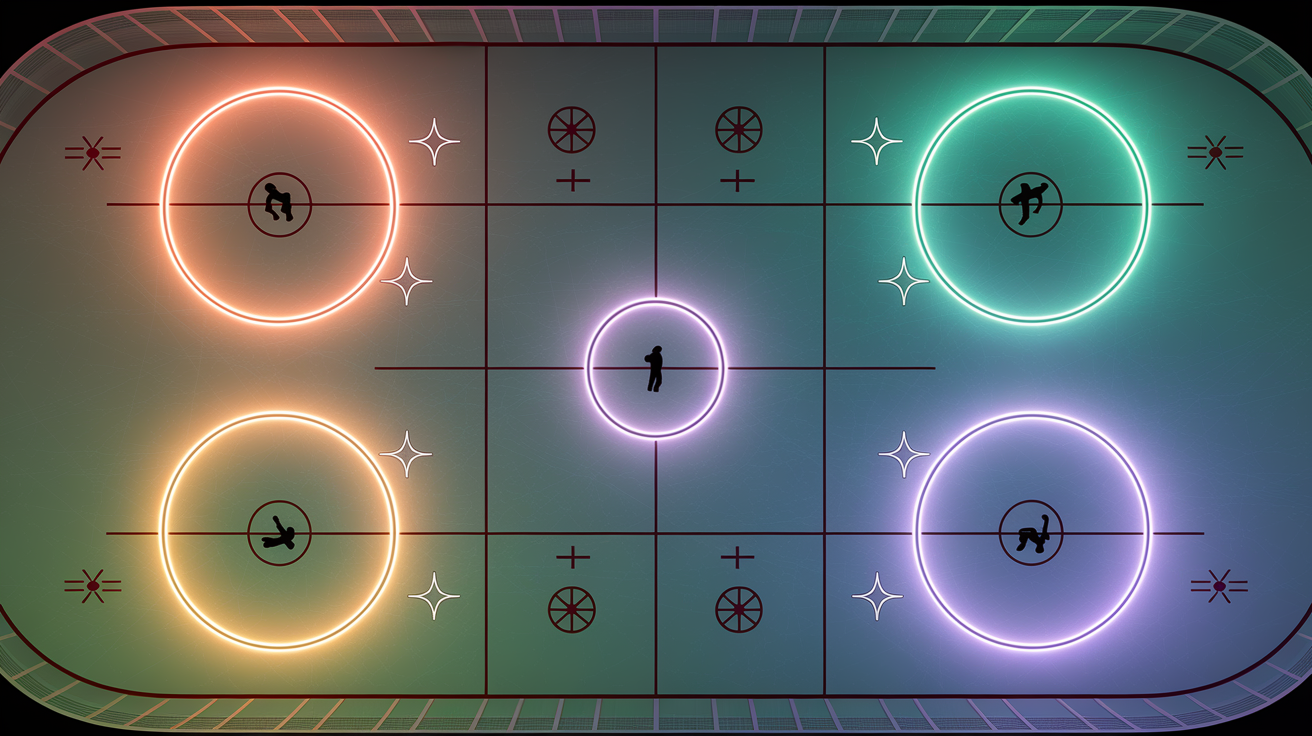
Zone starts determine which line begins a shift in the offensive zone, defensive zone, or after a neutral-zone faceoff. Coaches use zone deployment to stack advantages. Offensive-zone starts let scoring lines begin shifts with immediate possession and space to attack, while defensive-zone starts ask checking lines to clear the puck and neutralize threats before transitioning. Neutral-zone draws favor fast, physical forecheckers who can turn the first puck battle into a controlled entry or a turnover that leads to an odd-man chance.
Deployment decisions depend on game state, opponent tendencies, and your line’s strengths. If you’re chasing a goal, load offensive-zone starts with your best playmakers and shooters to maximize scoring chances per shift. Protecting a lead means giving your shutdown forwards heavy defensive-zone minutes to limit opponent possession and high-danger looks. Neutral starts are ideal for energy lines that thrive on pace and physicality. They can dictate tempo, win wall battles, and create chaos that disrupts structured opponent breakouts.
Zone-Start Decision Factors
Coaches rely on a few key metrics and cues to assign zone starts. Faceoff win percentage by center tells you who to trust on critical draws. Offensive-zone wins set up immediate chances, defensive-zone wins clear pressure and reset neutral ice. Puck-retrieval ability and board-work strength determine which forwards handle tough defensive starts where the opponent controls possession. Speed and transition skill guide neutral-zone deployments, especially against teams that struggle to contain fast entries or recover from turnovers.
Track these tendencies live and adjust every period. If a matchup is failing in defensive starts, swap personnel or shift zone responsibilities to stop the bleeding.
In-Game Adjustments and Counter-Matchup Tactics
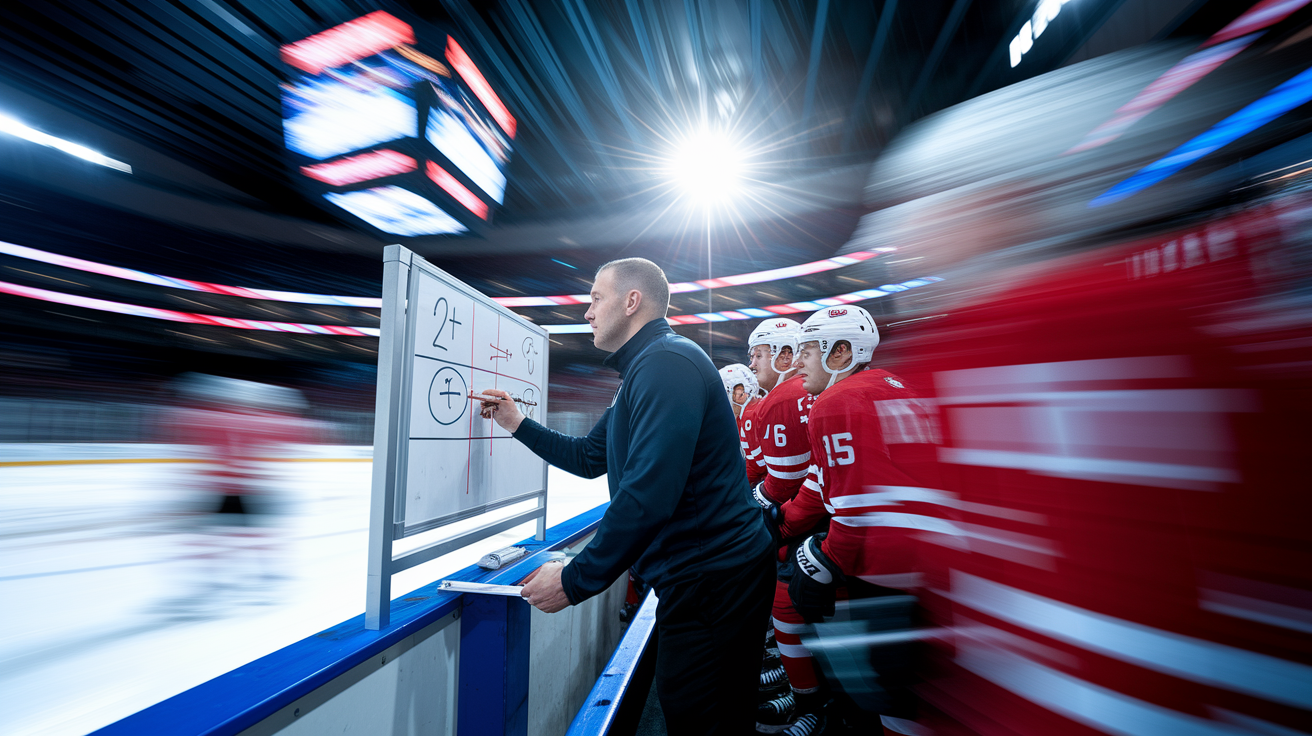
Matchups fail when the opponent generates two or more high-danger chances across consecutive shifts, or when your line can’t establish possession or create any offensive pressure over a full rotation. Recognize the signs early. Tired legs, turnovers in the neutral zone, defensive breakdowns that force your goalie into scramble saves. When a matchup isn’t working, change it immediately. Swap personnel, adjust zone starts, or insert a different line style to disrupt the opponent’s rhythm and give your group a chance to reset.
Shifting tempo lines and blending pairings keeps the opponent guessing and prevents them from settling into comfortable deployment patterns. If your checking line is getting worn down by a fast opponent top line, rotate in your energy forwards for one shift to change the physical tone and buy your shutdown group a breather. If a defensive pairing is struggling with gap control, slide in a more mobile partner or switch to a stay-at-home pair that can absorb pressure and simplify clears.
Tactical flexibility also means rotating responsibilities. Ask a normally offensive-minded defenseman to play conservative minutes when protecting a lead, or deploy a depth forward in a shutdown role for one critical shift.
Counter opponent adjustments by reading their bench and anticipating their next move. If they start loading offensive-zone faceoffs with their top unit, be ready with your best faceoff center and checking forwards to win the draw and kill possession. If they shorten the bench late in a tight game, mirror the move and match their top players shift for shift to deny space and limit their touches.
Quick in-game counter tactics coaches can deploy immediately:
Respond to opponent line changes during play. If the opponent swaps to their scoring line mid-shift, change your forwards on the fly to get your shutdown group on before the next faceoff.
Use time-outs to reset matchups. Call a stoppage when a bad matchup has lasted too long or when you need to communicate a specific tactical adjustment to your bench.
Rotate physical lines every two to three shifts. Insert energy forwards periodically to disrupt opponent rhythm, then return to your planned matchups without losing structure.
Switch defensive responsibilities between pairings. If one pairing is getting burned on rush chances, assign them safer zone starts and give the mobile pair more transition-heavy deployments.
Shorten shifts when a matchup is going poorly. Pull a struggling line after 30 to 40 seconds instead of waiting for a full rotation, especially if the opponent is generating sustained pressure.
Final Words
On the bench, the article walked you through the essentials: core principles of line matching, how to read opponent tendencies, using last change, choosing zone starts, and making in-game adjustments.
These sections give specific, practical choices. Who to deploy, when to chase matchups, and how to react when things shift. The bullet points and lists show common coaching goals and quick tactical fixes.
Keep practicing the approach. With line matching and matchup strategies explained for coaches, you’ll tilt more shifts in your favor and keep improving.
FAQ
Q: What four strategies and two coaching approaches do effective coaches use?
A: Effective coaches use four core strategies: clear role definition, matchup and line matching, simple structured systems, and timely in-game adjustments. They mix two approaches: system-first and player-first (development-focused).
Q: How do NHL coaches call line changes?
A: NHL coaches call line changes by running set bench rotations, using visual and verbal signals, and exploiting last change (home-ice) to quickly match, avoid, or target specific opposing lines.