

Think an emotional first email will win a coach over?
It won’t.
Coaches scan hundreds of messages and only reply to clear, fact-first introductions.
This post gives two ready-to-use email templates you can copy and customize, one general and one position specific, plus subject lines, timing tips, and exactly which stats and links to include.
Use these templates to get a response in one to two weeks, respect recruiting rules, and make it easy for a coach to say yes to a call.
Ready-to-Use College Hockey Coach Email Templates for First Contact
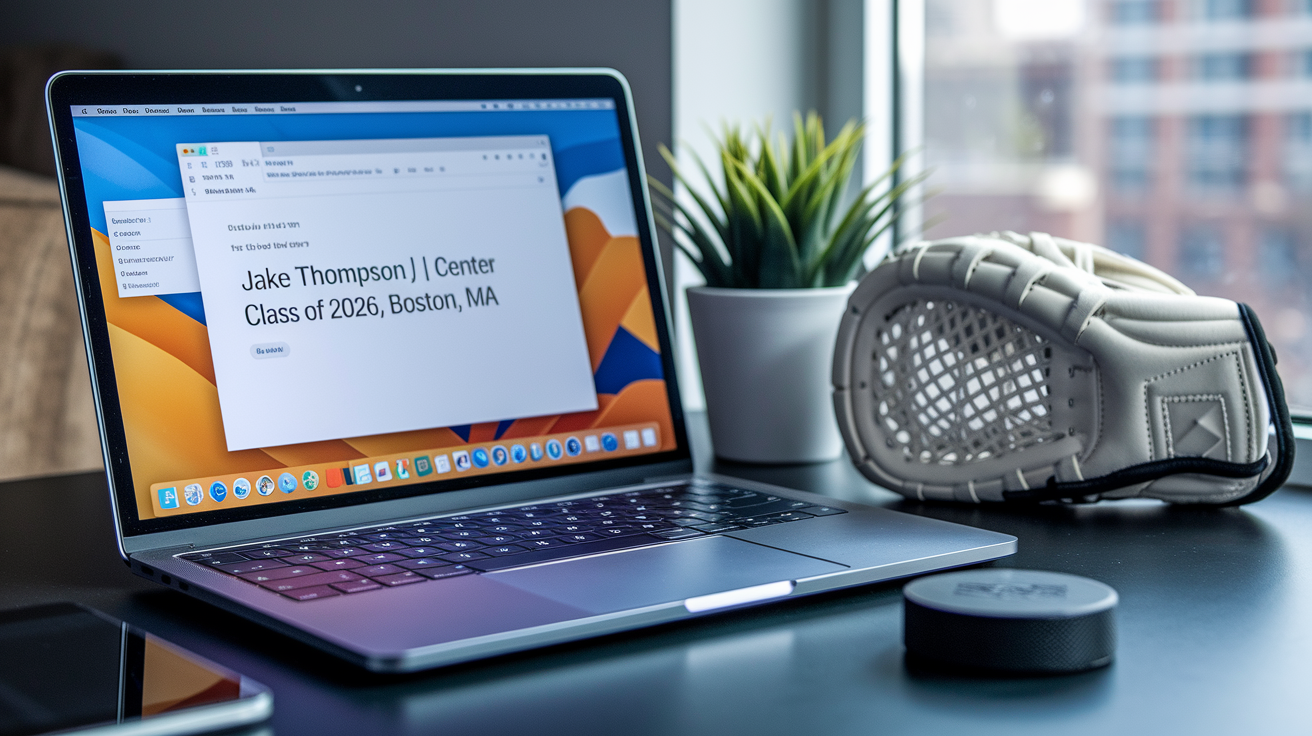
Your first recruiting email to a college hockey coach needs to work immediately. No opening story about your journey. No paragraphs about passion. Just the facts that help a coach decide if they want to know more.
Below are two complete first contact templates you can copy and customize. The first is a general framework that works for any player. The second is a position specific example that shows how to adapt the core structure when you play a specific role. Both include everything from subject line to signature and are designed to get a response within one to two weeks.
Template 1: General First Contact
Subject: Jake Thompson | Center | Class of 2026 | Boston, MA
Dear Coach [Last Name],
My name is Jake Thompson, a junior center at St. John’s Preparatory School in Boston, Massachusetts. I currently play for the Boston Jr. Bruins 18U AAA and am graduating in the Class of 2026. I maintain a 3.8 GPA and plan to study business administration.
This season, I’ve recorded 32 points (18 goals and 14 assists) in 28 games and was named to the All Conference First Team. I’m 6’0″, 185 lbs, and excel in two way play and faceoff situations. My highlight video is here: [Video Link].
I’m interested in your program because of your emphasis on defensive responsibility and your recent conference championship. I’d welcome the chance to discuss how I can contribute. I’m available to speak on March 12 at 4:00 p.m. or March 15 at 2:00 p.m. EST. My current coach is Mike O’Brien, who can be reached at mobrien@bostonjr.com or (617) 555-1234.
Our next showcase is the New England Classic March 18–20 in Providence, Rhode Island. We play March 19 at 11:00 a.m. on Rink 2 if you or an assistant can attend.
Thank you for your time.
Jake Thompson
Class of 2026 | Center
Phone: (617) 555-5678
Email: jthompson@email.com
[Profile Link]
Template 2: Position Specific (Goalie)
Subject: Emma Lee | Goalie | Class of 2027 | 1.95 GAA, .928 SV% | Video
Dear Coach [Last Name],
My name is Emma Lee, a sophomore goalie at Lakeside High School in Minneapolis, Minnesota. I play for the Minnesota Wild U16 Girls AAA program and am graduating in the Class of 2027. I hold a 3.9 GPA and plan to major in sports management.
This season, I’ve posted a 1.95 GAA and a .928 save percentage across 22 games, earning Goaltender of the Month twice. I’m 5’8″, 155 lbs, and specialize in positioning and rebound control. My highlight video is here: [Video Link].
I’m interested in your program because you’ve sent three goalies to the PWHL in the past five years and prioritize technical development. I’m available to speak on April 8 at 3:00 p.m. or April 10 at 5:00 p.m. CST. My current coach is Sarah Jennings, reachable at sjennings@mnwild.org or (612) 555-9876.
Our team will compete at the CCM Goalie Showcase April 14–16 in Detroit, Michigan. I play April 15 at 10:00 a.m. in Rink 3 if you’d like to evaluate in person.
Thank you.
Emma Lee
Class of 2027 | Goalie
Phone: (612) 555-3456
Email: elee@email.com
[Profile Link]
Both templates include a clear subject line with grad year, position, hometown, and key stat or credential. An introduction stating your name, school, club team, position, and graduation year. Athletic stats that matter for your position, plus height, weight, and standout strengths. Academic snapshot with GPA and intended major. Specific reason why you’re interested in that program, referencing something real about the team or coaching staff. A highlight video link, plus upcoming schedule details and contact information for your current coach.
Structuring a Professional College Hockey Recruiting Email

Every college hockey recruiting email needs the same three parts in the same order. Introduction, then athletic and academic snapshot, then call to action. No variation in sequence.
Coaches scan hundreds of emails during recruiting windows. They need to find the same information in the same place every time. If your structure forces them to hunt for your grad year or your video link, they close the email and move on.
The introduction takes one to two sentences. State your full name, your high school or prep school, your club or junior team, your city and state, your position, and your graduation year. Example: “My name is Alex Rivera, a junior forward at Westside High School in Denver, Colorado, playing for the Colorado Thunderbirds 18U AAA and graduating in the Class of 2026.” Nothing more. No backstory about when you started skating or why you love hockey. Coaches care about those details later, after they decide you might fit their program.
The athletic and academic snapshot takes three to five sentences. Include your season stats in the format coaches expect for your position: goals and assists for forwards, plus minus and blocked shots for defensemen, GAA and save percentage for goalies. Add height and weight if you’re not undersized for your position. State your GPA and test scores if you have them. Example for a forward: “This season, I recorded 30 goals and 20 assists in 35 games, finishing second in league scoring. I’m 6’1″, 190 lbs, and my skating speed ranks in the top 5 percent at regional combines. I maintain a 4.0 GPA and scored a 32 on the ACT.”
Then add one sentence about why you’re interested in that specific program. Reference a recent win, a coaching milestone, a playing style, or a team need.
Finally, your call to action. Ask the coach to review your highlight video, propose two specific dates and times for a phone call, include your upcoming tournament schedule with exact game times and rink numbers, and provide contact information for your current coach so they can follow up for a reference. End with your full contact details in your signature block.
Subject Lines for College Hockey Recruiting Emails That Get Coaches to Open
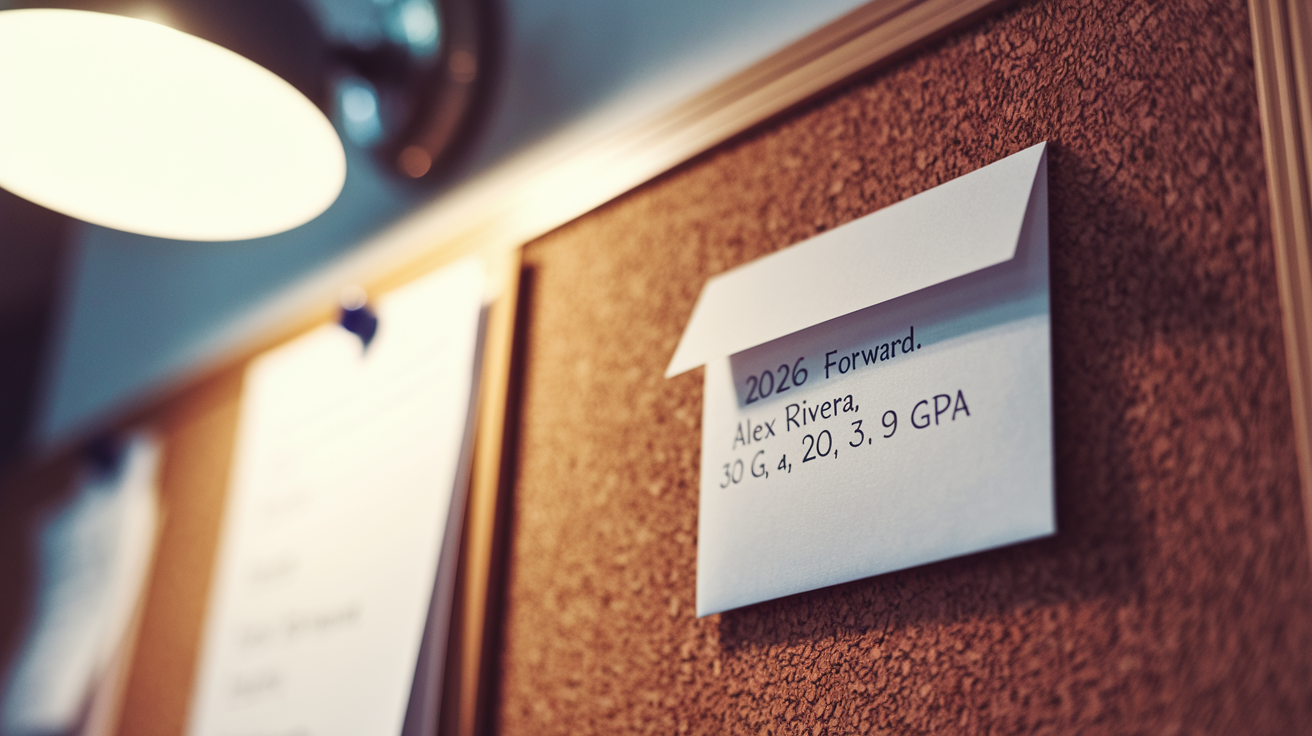
Your subject line determines whether a coach opens your email or ignores it. Keep it between 50 and 75 characters. Include your graduation year, your position, and one standout stat or academic metric. If you’re attaching or linking a highlight video, add the word “Video” at the end.
Example: “2026 Forward: Alex Rivera, 30 G, 20 A, 3.9 GPA, Video.”
That subject line tells a Division I coach exactly what they need to know before they click.
Six subject line formulas that consistently get opens:
“2026 FWD: Tyler Jones, 4.0 GPA, 28 ACT, Video”
“Class of 2025, D (Defense): 6’1″ 200 lbs, Hits & PIM Specialist”
“Goalie 2027: Emma Lee, 1.95 GAA, .928 SV%, Campus Visit 11/12”
“Follow Up: 2026 LW, 32 Points, 3.8 GPA, Video”
“2027 Center: Noah Davis, 4.4s 40 Yard Equivalent Skate, Video Inside”
“Class of 2026: Ava King, 3.9 GPA, 32 ACT, Highlights”
Personalized Email Template Variations for NCAA, ACHA, NAIA, and Transfers

NCAA Division I programs have contact restrictions. Division I coaches can respond to your email starting June 15 or September 1 of your junior year, depending on your sport. Check the NCAA recruiting calendar for ice hockey contact dates. You can email them earlier, but they may contact your club coach instead of replying directly.
Division II and Division III coaches have no email restriction dates and can reply any time.
When emailing a D1 program before the contact window opens, add one line: “I understand you may not be able to reply directly yet, but I wanted to introduce myself and share my video for when you’re able to evaluate recruits.” That shows you understand the rules and respect the process.
NCAA Division III Template (No Contact Restrictions):
Subject: 2026 Defenseman: Luke Martin, 3.9 GPA, 1200 SAT, Video.
Dear Coach [Last Name],
My name is Luke Martin, a junior defenseman at Lincoln Academy in Portland, Maine, playing for the Portland Jr. Pirates 18U and graduating in 2026. I maintain a 3.9 GPA and scored 1200 on the SAT. This season, I recorded 15 points, averaged a +12 plus minus, and led our team in blocked shots with 42. I’m 6’2″, 195 lbs. I’m interested in your program because you emphasize a physical defensive style and strong academics. My highlight video is here: [Link]. I’m available March 14 at 3:00 p.m. or March 16 at 5:00 p.m. EST. My coach is Jim Kelly at jkelly@portlandjr.com or (207) 555-4567. Our next tournament is the Boston College Showcase March 22–24.
Thank you,
Luke Martin | 2026 | D | (207) 555-8901 | lmartin@email.com.
ACHA/NAIA Template (Club and Small College Programs):
Subject: 2025 Forward: Ryan Cooper, 25 G, 18 A, Video.
Dear Coach [Last Name],
My name is Ryan Cooper, a senior forward at Cedar Rapids High School in Iowa, graduating in 2025. I played for the Cedar Rapids RoughRiders 18U this season and recorded 25 goals and 18 assists in 30 games. I’m 5’11”, 180 lbs, and maintain a 3.5 GPA. I’m interested in your ACHA program because of your competitive schedule and travel opportunities. My highlight video is here: [Link]. I can speak on April 5 at 4:00 p.m. or April 8 at 2:00 p.m. CST. My coach is Tom Harris at tharris@crroughriders.com or (319) 555-6789.
Thank you,
Ryan Cooper | 2025 | FWD | (319) 555-1122 | rcooper@email.com.
Transfer Player Template:
Subject: Transfer 2026 Goalie: Mia Chang, 2.10 GAA, .915 SV%, Video.
Dear Coach [Last Name],
My name is Mia Chang, a sophomore goalie currently at Northern State University, and I’m exploring transfer options for next season. This season, I posted a 2.10 GAA and a .915 save percentage in 18 games as a backup. I’m 5’9″, 160 lbs, and hold a 3.7 GPA in biology. I’m interested in your program because you have two senior goalies graduating and need depth. My highlight video is here: [Link]. I’m available to speak on May 10 at 6:00 p.m. or May 12 at 4:00 p.m. EST. My current coach is aware I’m exploring options and can provide a reference: Coach Steve Wilson at swilson@northernstate.edu or (605) 555-7890.
Thank you,
Mia Chang | 2026 | G | (605) 555-3344 | mchang@email.com.
Follow Up Email Templates and Timing for College Hockey Coaches

If a coach doesn’t reply to your first email, wait one to two weeks before sending your first follow up. Most coaches respond within that window if they’re interested. After your initial follow up, shift to a monthly update schedule or every four to six weeks during heavy recruiting periods like your junior year.
Each follow up should include a new reason for the coach to engage. Updated stats, a recent award, a new highlight video, or an upcoming tournament where they can watch you play.
Your first follow up should be short and polite. Example: “Hi Coach [Last Name], I wanted to follow up on my email from two weeks ago. I’m still very interested in your program. Quick update: I was named Player of the Week after recording 5 points this past weekend. Here’s my updated highlight video: [Link]. I’m available to speak on [two date/time options]. Thanks again, [Your Name].”
That message reminds the coach who you are, shows you’re still improving, and gives them an easy action to take.
| Follow Up Type | When to Send | What to Include |
|---|---|---|
| No Response | 1–2 weeks after initial email | Brief reminder, one new stat or achievement, updated video link, two call times |
| Monthly Update | Every 4–6 weeks during junior year | Recent game totals, new awards, updated GPA/test scores, upcoming tournament schedule |
| Camp/Showcase Follow Up | Within 48–72 hours after event | Thank coach for feedback, reference specific drill or conversation, updated video, propose next call |
Camp, Showcase, and Evaluation Request Email Templates
When you’re competing at a showcase or attending a college camp, send the coach a short email one week before the event. Include the event name, dates, your game schedule with exact times and rink numbers, and your jersey number.
Example: “Hi Coach [Last Name], I’ll be competing at the Desert Classic July 18–21 in Las Vegas. Our game is July 19 at 3:00 p.m. on Rink 4. I’ll be wearing #7. I’d welcome the chance for you to evaluate me in person. My highlight video is here: [Link]. Please let me know if you can attend. Thanks, [Your Name].”
That gives the coach everything they need to find you and watch your shifts.
Showcase Invitation Template:
Subject: Invite: CCM Elite Showcase, 2026 D Jake Miller, Video.
Dear Coach [Last Name],
I’ll be competing at the CCM Elite Showcase in Chicago July 9–11. Our schedule: July 10 at 10:00 a.m. on Rink 2 vs. Chicago Mission, and July 11 at 2:00 p.m. on Rink 3 vs. Honeybaked. I’ll be wearing #4. I’d appreciate the chance for you or an assistant to evaluate me. My highlight video is here: [Link]. Please let me know if you can attend.
Best,
Jake Miller | 2026 | D | (312) 555-6789 | jmiller@email.com.
Evaluation Request at a Game:
Subject: Evaluation Request: 2027 FWD Sara Lin, Home Game Feb 14.
Dear Coach [Last Name],
Our team hosts Lincoln Academy on February 14 at 7:00 p.m. at Riverside Ice Arena in Portland, Maine. I’ll be wearing #12 and typically play first and third line. I’d welcome the chance for you to evaluate me in person. My stats this season: 22 goals, 16 assists in 26 games. Highlight video: [Link]. If you’re able to attend, I’d appreciate a quick conversation after the game.
Thank you,
Sara Lin | 2027 | FWD | (207) 555-2345 | slin@email.com.
Position Specific College Hockey Email Templates (Forwards, Defensemen, Goalies)
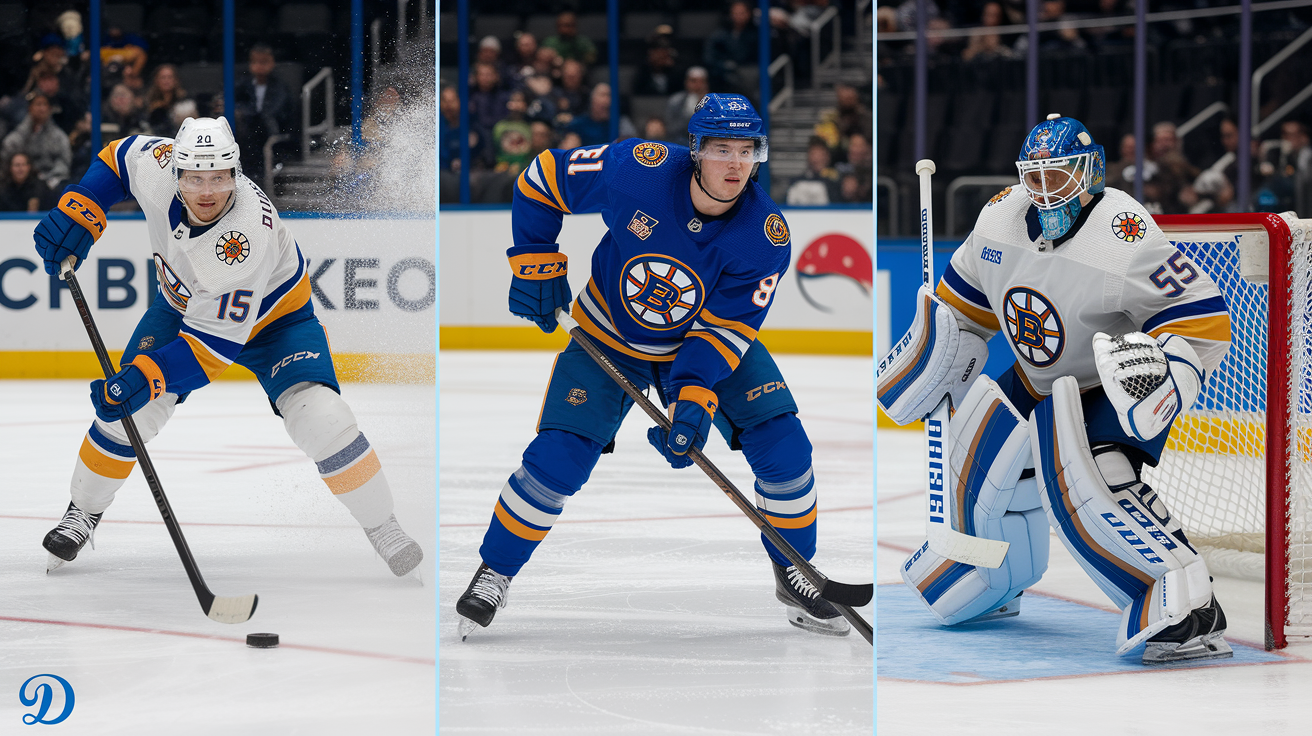
Forwards should emphasize offensive production and two way play. Include goals, assists, total points, and situational strengths like power play production or penalty kill work. Example stat line for a forward: “This season, I recorded 30 goals and 20 assists in 35 games, including 12 power play goals and 6 shorthanded goals.” Coaches want to know if you produce in critical moments and if you contribute defensively.
Defensemen should highlight plus minus, blocked shots, physical play, and defensive zone coverage. Example stat line for a defenseman: “This season, I posted a +18 plus minus, led our team with 52 blocked shots, and recorded 8 goals and 15 assists in 32 games.” Coaches evaluate defensemen on reliability first, offense second. If you play a physical style, include penalty minutes and hits. If you’re a puck moving defenseman, note your first pass accuracy or breakout efficiency.
Goalies need GAA, save percentage, shutouts, and games played. Example stat line for a goalie: “This season, I posted a 1.95 GAA and a .928 save percentage across 22 games, earning 3 shutouts.” Coaches want to see consistency and workload. If you played heavy minutes or faced high shot volumes, mention it. If you excel in specific situations like shootouts or overtime, add that detail.
Position specific metrics to include:
Forwards: Goals, assists, points per game, power play points, shorthanded points, faceoff percentage, plus minus
Defensemen: Plus minus, blocked shots, hits, penalty minutes (if physical style), goals and assists, breakout success rate
Goalies: GAA, save percentage, shutouts, games played, high danger save percentage, shootout record
All positions: Height, weight, skating speed (if measured at combines), penalty kill or power play time
Do’s and Don’ts for Emailing College Hockey Coaches

Your tone, timing, and technical execution matter as much as your stats. Coaches receive dozens of recruiting emails every week. Small mistakes make you easy to ignore. Professionalism signals that you understand how college programs work and that you’ll represent the team well off the ice.
Do:
Send emails between 4:00 and 8:00 p.m., Tuesday through Sunday, when coaches are most likely to check their inbox after practice or games.
Use the coach’s correct name and title. Spell the school name correctly.
Include a highlight video link, never a large video file attachment.
Provide your current coach’s name, email, and phone number so the college coach can request a reference.
Proofread every email for grammar, spelling, and punctuation errors before sending.
Turn on read receipts if your email system supports them to track which coaches open your messages.
Don’t:
Send mass emails with no personalization. Coaches recognize copy paste messages immediately.
Attach large video files. Use YouTube, Vimeo, or a recruiting profile link instead.
Send emails after midnight. Odd timestamps look unprofessional and suggest poor time management.
Omit your graduation year, position, or contact information. Coaches need that context to evaluate you.
Email heavily during the coach’s competitive season. Off season windows like spring and summer typically yield better response rates.
Follow up daily or multiple times per week. Monthly updates are appropriate, daily emails are annoying.
Updating Coaches: How to Send New Stats, Videos, and Achievements

Coaches want to see improvement over time. Send an update email every four to six weeks during your junior year and every month during your senior year. Each update should include new information, not a restatement of your original email. Focus on measurable changes: recent game stats, updated season totals, new awards, academic improvements, or a refreshed highlight video.
A good update email takes three to four sentences. Open with a brief reminder of who you are and when you last contacted them. State your new achievement or stat update. Provide the updated video link or schedule. Close with an offer to speak.
Example: “Hi Coach [Last Name], I wanted to update you following my initial email in January. I’ve added 8 goals and 6 assists over the past month, bringing my season total to 38 points in 30 games. My updated highlight video is here: [Link]. I’m available to speak on March 18 at 5:00 p.m. or March 20 at 3:00 p.m. EST. Thanks, [Your Name].”
Updates that matter to coaches:
New season totals or recent game performance, especially if you’re trending upward in production.
Recent awards like Player of the Week, All Conference selections, or tournament MVP honors.
Updated highlight video that includes footage from the past month.
Academic updates such as improved GPA, new standardized test scores, or honor roll recognition.
Upcoming tournament schedule with exact dates, times, and locations where coaches can watch you play live.
Building and Managing Your College Coach Contact List

Start building your contact list during your sophomore year. Use team websites, roster pages, and coaching staff directories to find the head coach and assistant coaches for each program. Create a simple spreadsheet with columns for school name, division, head coach name, assistant coach names, email addresses, phone numbers, date of first email, and follow up status. Update the spreadsheet every time you send an email or receive a reply.
Track your outreach systematically. When you send an email, log the date in your spreadsheet. When a coach replies, note what they asked for and when you need to follow up. If a coach opens your email but doesn’t reply within two weeks, send a polite follow up. If you still don’t hear back after a second follow up, move that program lower on your priority list and focus on schools that show interest.
Some recruiting platforms and messaging systems include read receipts, which tell you when a coach opens your message. Use that data to time your follow ups.
| Field | Why It Matters |
|---|---|
| School Name & Division | Helps you sort by competition level and prioritize targets |
| Coach Names & Titles | Ensures you address emails correctly and follow up with the right person |
| Email & Phone | Contact info for initial outreach and follow up calls |
| Date Sent & Follow Up Status | Tracks cadence so you follow up at the right intervals without annoying coaches |
Final Words
You now have ready-to-use first-contact templates, subject lines, position and program variations, follow-ups, event messages, and tracking tools — all copy‑and‑paste ready.
Use the templates, personalize each email, follow the timing rules, and keep a simple contact spreadsheet. Send updates with clear stats and video links when something changes.
This guide shows how to contact college hockey coaches email template in action. Stay organized and keep pushing — you’re set up to get noticed.
FAQ
Q: How do I write an email to a college hockey coach? How to write an email to a college coach sample?
A: Writing an email to a college hockey coach means opening with your name, position, grad year, hometown; then give athletic stats, academic snapshot (GPA), team, highlight link, upcoming schedule, and a one-line call to action.
Q: Can I email college coaches? Do D1 coaches respond to emails?
A: You can email college coaches; D1 coaches do read messages but get many inquiries, so responses vary. Personalize your note, include video and schedule, and follow up in 1–2 weeks if you don’t hear back.