

Think a hot streak proves your power play is elite? It doesn’t.
Goals can lie, but game data doesn’t.
Expected goals (xG), shot quality, controlled-entry rate, formation time, and per-60 rates show whether your unit creates real scoring chances or just lucked into goals.
This post explains the key metrics, how to collect and compare them, and what to coach next so your power play stays dangerous when shooting percentages normalize.
Key Metrics for Assessing Power Play Efficiency
Power play metrics break into four groups: shooting percentage, expected goals, zone entry data, and shot quality. Shooting percentage is straightforward. Goals divided by shots on net. It tells you how often you finish. Expected goals (xG) put a probability score on every shot attempt, factoring in location, shot type, and what happened before the shot. You’re not just counting shots anymore. You’re measuring actual danger. Zone entry tracking sorts entries into controlled carries, dump-ins, and clean possessions. Shot quality looks at distance, angle, traffic, rebounds, rush chances, all the stuff that makes a shot more likely to score.
These numbers show what goal totals can’t. A power play might score three times in a week but create almost nothing, riding a hot streak that won’t last. Another unit might generate high-danger looks every night and score nothing because the goalie stood on his head. xG and shot quality separate real dominance from luck. Entry and shot data show you the process before the result. When shooting percentages drop back to normal over time, the teams with strong process keep scoring.
Six common power play indicators:
Goals per 60 minutes – standardizes scoring to equal ice time
Shot attempts per 60 – total offensive volume, whether shots reach the net or not
Controlled-entry rate – percentage of entries that keep possession across the blue line
Expected goals per 60 – scoring probability per hour of power play time
High-danger shot rate – attempts from the slot or net-front where conversion rates are high
Power play formation time – seconds spent in structured offensive setup before a shot or turnover
Using these together gives you the full picture. Shot attempts show how often you generate offense. Controlled entries reveal if you’re getting in clean. Formation time means sustained pressure. xG validates whether that pressure creates real scoring threats. Shooting percentage measures how well you finish. And benchmarking against league averages tells you if you’re elite, average, or bad. Together they diagnose where things break down, whether it’s gaining the zone, setting up, creating danger, or finishing.
Collecting and Structuring Game Data

Most power play data comes from three places: official event logs from leagues, video-tracking platforms team analytics departments use, and wearable or optical tracking systems installed in arenas. Event logs capture every goal, shot attempt, faceoff, and penalty across a season. They’re time-stamped and tagged with game situation like 5-on-4 or 5-on-3. Video tracking adds spatial detail by recording player positions, puck locations, pass sequences, and zone entries frame by frame. Sometimes manual tagging, sometimes semi-automated software. Player tracking tech, chip sensors or camera arrays, generates high-frequency position data, acceleration, event counts like shot attempts and impacts. Coverage varies by league and venue. Combining these sources lets you cross-reference official stats with granular spatial and temporal context.
Before you analyze anything, raw data needs cleaning, standardizing, organizing into something usable. Event logs often have incomplete timestamps or miscoded situations that you need to validate against video. Tracking data arrives as streams of coordinates and sensor readings that need filtering for noise, transformation into readable event markers, syncing with game clocks and shift charts. Analysts merge these datasets into relational tables or data frames. Each shot attempt or zone entry gets a unique identifier linked to game state, personnel on ice, spatial attributes. Standardizing variable names, units, time formats keeps everything consistent when you’re comparing across games or seasons. Aggregating play-by-play records into summary stats like per-60 rates or rolling averages preps the data for visualization and modeling.
Analytical Methods and Software Tools
Specialized tools matter because power play analysis demands precision in calculating rates, modeling probabilities, isolating causal patterns in noisy game data. Spreadsheets can handle simple totals and percentages, but statistical software and video platforms automate complex operations like expected-goal modeling, multi-variable regression, frame-accurate event tagging. These tools also scale to handle thousands of events across full seasons, letting teams identify subtle trends that would be invisible in manual review.
Statistical Programming Languages
Analysts use R and Python to process event logs, compute metrics, build statistical models. Both languages have libraries for data manipulation. dplyr in R, pandas in Python, they filter, group, and aggregate play-by-play records efficiently. Expected-goals models typically use logistic regression or machine learning classifiers trained on historical shot outcomes. Inputs include distance, angle, shot type, preceding events. Clustering algorithms segment players or game situations by similarity in power-output profiles or zone-entry tendencies. Time-series analysis tracks rolling averages of shot rates or goals across games to detect performance shifts. Scripts in these languages can automate the entire pipeline from data import through metric calculation to report generation.
Video Analysis Platforms
Video-tagging software like Sportlogiq, InStat, and proprietary team systems allow manual or semi-automated annotation of game footage with event codes for passes, shots, entries, formation states. Analysts scrub through power play sequences, marking each controlled carry, dump-in, or broken play, then export tagged data as structured logs for statistical analysis. Advanced platforms use computer vision to track player and puck positions automatically. Less manual labor, better temporal precision. Video systems also generate clip libraries tagged by event type. Coaches can review all controlled entries or net-front shots in seconds instead of hours of unstructured tape.
Tracking-Data Systems
Optical tracking arrays and wearable sensors like PlayerTek devices measure acceleration, speed, power output, impact counts at high frequency. These systems compute PlayerLoad as the rate-of-change of acceleration scaled to around 1,000 units for a full-game benchmark. They count Power Plays as explosive movements exceeding 20 watts per kilogram. Session Score expresses training load relative to match targets. Impact thresholds flag high-contact sequences. Integrating tracking data with event logs enriches power play evaluation by showing whether high shot rates coincide with elevated power output or whether fatigue across a game correlates with declining shooting efficiency.
These tools combine to generate actionable insights by linking event counts with spatial context, physical-load profiles, and probabilistic models. A coach can see not only that shot attempts increased after a personnel change but also that controlled entries rose, formation time lengthened, expected goals climbed, and Power Score stayed stable. The adjustment improved process without overloading players. This multi-layered view separates luck from skill and identifies where to focus next.
Benchmarking and Comparative Evaluation
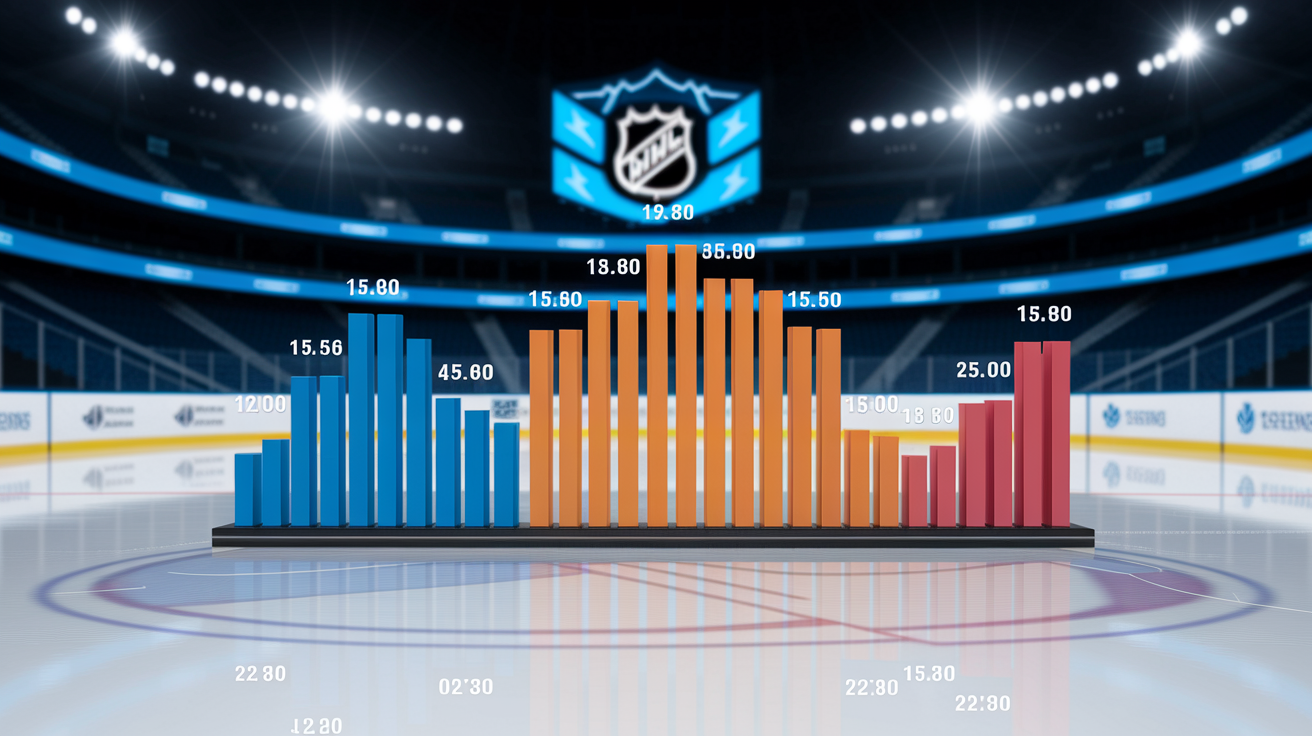
Benchmarking gives context by comparing your power play metrics against external standards. Raw numbers don’t mean much on their own. A 15 percent shooting rate or 9.2 expected goals per 60, is that good? You need reference points. League averages or historical team data turn those figures into performance judgments, telling you whether you’re elite, average, or struggling.
Five common comparison approaches:
League average and median – comparing your metrics to the midpoint of all teams in the same season
Percentile ranking – positioning each metric within the distribution of all league units, like 75th percentile for controlled-entry rate
Historical season trends – plotting current metrics against your team’s performance in prior years to detect improvement or decline
Per-60 normalization – standardizing output by ice time so you can compare fairly across teams with different power play opportunity counts
Z-scores and standard deviations – measuring how many standard deviations you sit above or below the league mean for each metric
Benchmarks contextualize strengths and weaknesses by showing where you excel relative to peers and where you lag. A team ranking 5th in shot volume but 22nd in expected goals per 60 learns it’s generating plenty of attempts from low-danger areas. You need to shift shooting locations or improve net-front presence. Tracking percentile ranks across a season reveals whether adjustments move the needle. Comparing against historical team data shows whether current personnel and tactics outperform past configurations. This layered benchmarking guides prioritization, focusing coaching attention on the gaps with the largest impact on overall efficiency.
Visualizing Power Play Data

Shot maps plot every attempt on a rink diagram. Color points by outcome or expected-goal value to reveal clustering in high-danger areas or overreliance on perimeter shots. Heat maps overlay density gradients showing where players spend time or where shots originate. Spatial patterns become visible at a glance. Time-series line charts track goals per 60, expected goals, or formation time across games. Rolling averages smooth noise and highlight trends like a mid-season surge or post-injury decline. Passing network diagrams illustrate puck movement by drawing arrows between players weighted by frequency. You can see whether a unit shares the puck broadly or funnels through one quarterback. Animations combine position tracking and event data to replay sequences in a top-down view, displaying how controlled entries develop into structured setups.
| Visualization Type | Best Use Case |
|---|---|
| Shot map | Identifying dangerous shooting locations and perimeter-heavy tendencies |
| Time-series chart | Tracking efficiency trends across a season or detecting slumps and surges |
| Heat map | Revealing player positioning patterns and zone coverage during power plays |
Clarity matters because coaches and players operate under time pressure. They need insights they can act on between periods or before the next game. Overly complex graphics with excessive color scales, overlapping data layers, unexplained statistical terms slow comprehension and reduce adoption. Effective visualizations answer a single focused question. “Are we shooting from better locations than last month?” or “Which entry method leads to more formation time?” Clean labels, consistent color schemes, annotations that highlight key takeaways turn raw data into decision support.
Case Studies and Practical Applications
One team tracked zone entries across 30 games and discovered that controlled carries accounted for 60 percent of entries but generated 85 percent of expected goals. Dump-ins yielded longer regrouping times and fewer quality shots. The coaching staff adjusted the breakout system to emphasize puck protection at the neutral-zone blue line. Dump reliance dropped from 40 percent to 25 percent over the next 15 games. Expected goals per 60 climbed from 8.1 to 10.3, shot attempts rose by 12 percent, power play conversion rate improved from 18 percent to 23 percent. Post-analysis video review confirmed that controlled entries led to cleaner formations with more passing options. The strategic shift paid off in both process and outcome gains.
Another organization noticed its power play ranked 3rd in shot volume but 18th in goals per 60. Poor shot selection or positioning. Heat maps revealed the majority of attempts originated from the top of the circles or farther out, areas with conversion probabilities below 5 percent. The staff redesigned the formation to station a net-front presence full-time and rotate the half-wall player lower to create passing lanes for one-timers from the slot. Over the following 20 games, high-danger shot rate per 60 increased from 4.2 to 7.8, expected goals jumped from 7.5 to 11.2, actual goals per 60 rose from 6.0 to 9.5. The unit maintained similar shot attempt totals but concentrated them in higher-danger zones. Formation adjustments translated directly into improved shot quality and finishing.
A third case involved a team with strong entry numbers and formation time but inconsistent shooting efficiency. Passing network analysis showed the puck cycled primarily between the two defensemen at the points. Forwards received fewer than 40 percent of passes before shot attempts. Limited puck movement allowed penalty killers to key on the point shooters, reducing shooting lanes and forcing lower-quality attempts. Coaches mandated rotation schemes that required at least two passes below the dots before any point shot. Forwards had to touch the puck and draw defenders. Shot quality metrics improved as one-timer opportunities increased. Expected goals per 60 rose from 9.0 to 11.8. Power Score remained stable, indicating players sustained the same physical intensity while executing a more effective passing structure. This intervention proved that analyzing micro-level passing patterns can unlock scoring improvements without demanding additional effort or personnel changes.
Final Words
You tracked controlled zone entries, shot maps, shooting percentage, expected goals, and shot quality to see what really drives power play results.
We explained how to collect and clean event and tracking data, the tools analysts use like R, Python, and video tagging, and why benchmarking and visualization make the numbers useful.
Put together, evaluating power play performance using game data turns raw events into clear fixes you can train. Use the metrics, test adjustments, and measure results. Small changes to entries or passing often pay off fast.
FAQ
Q: How do you calculate power play?
A: Power play percentage is calculated by dividing power-play goals by power-play opportunities, then multiplying by 100. For example, 10 goals on 50 chances equals a 20% power play rate.
Q: What percentage of goals are scored during a power play?
A: The share of goals scored on power plays varies, but in pro leagues like the NHL roughly 15–20% of total goals come during power plays; junior and youth levels can differ.
Q: What are common power play strategies?
A: Common power-play strategies include umbrella, overload, 1-3-1, quick puck movement with cross-ice passes, active point shots, and net-front screens to create high-danger chances and rebounds.
Q: What is an example of a power play?
A: A power-play example is a 5-on-4 situation after a minor penalty: the attacking team sets an umbrella, cycles the puck, the point shoots, and a forward tips home a rebound.