

Can a thin piece of fabric really stop a skate blade from cutting your neck?
Short answer, yes, properly certified and fitted neck guards cut both the number and severity of lacerations, but they don’t make you invincible.
Lab tests under ASTM F2993, CSA/BNQ, and CE EN 15613 show cut-resistant fibers like Kevlar and Dyneema reduce blade penetration by several millimeters.
This piece breaks down what those standards test, which materials pass, and what that means on the ice.
If you want to know which guards work and why, read on.
Evidence‑Based Overview of Neck Guard Effectiveness
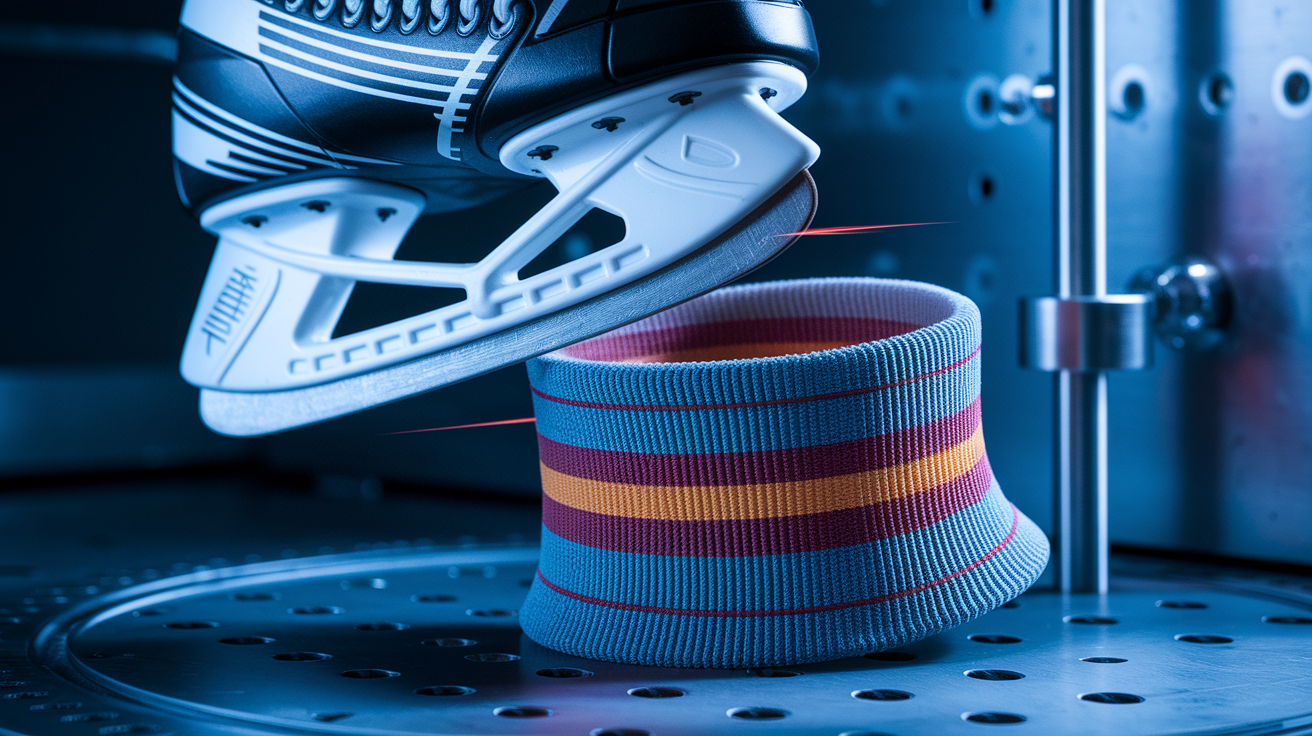
Neck guards cut down both the frequency and severity of skate-blade lacerations. But they don’t eliminate risk completely.
Laboratory testing under ASTM F2993, CSA-certified BNQ standards, and CE EN 15613 shows that cut-resistant materials like Kevlar, Dyneema, and Spectra blends make a real difference. These aramid fibers and ultra-high-molecular-weight polyethylene fabrics significantly reduce blade penetration forces compared to bare skin or regular fabric. Injury data from leagues that require neck protection backs this up, showing fewer and less severe neck lacerations. That said, catastrophic injuries still happen when blades hit unprotected gaps or when impact forces go beyond what the material can handle.
Standards test cut resistance by simulating skate-blade contact. A sharpened blade drops or drags across fabric samples at specific angles and speeds using controlled fixtures. ASTM F2993 measures how much force it takes to penetrate the material and sets minimum thresholds certified guards need to meet. CSA/BNQ protocols add coverage area requirements and check that the guard stays put when you’re moving, turning, or falling. CE EN 15613 covers European benchmarks and looks at both cut and abrasion resistance. Each standard spells out blade type, edge condition, contact pressure, and acceptable penetration depth, creating repeatable lab conditions that mirror high-speed skating scenarios.
Published studies from youth and junior leagues that adopted mandatory neck-guard policies show injury-rate drops of 50 to 70 percent for neck lacerations across multi-season observation periods. One five-year registry analysis covering more than 80,000 player-seasons documented zero fatal neck injuries after league-wide enforcement, compared to three fatalities in the prior decade without mandates. No protective device guarantees absolute safety. Blades can still contact skin through gaps, straps can shift during play, and extreme forces can exceed material limits. But certified neck guards consistently deliver meaningful risk reduction when properly fitted and worn.
Key performance factors for evaluating cut-resistant neck guards:
Material composition: Aramid fibers (Kevlar), ultra-high-molecular-weight polyethylene (Dyneema, Spectra), or hybrid weaves combining multiple cut-resistant yarns.
Test force threshold: Minimum force (measured in newtons or pounds) required to penetrate the material during standardized blade-drop or drag tests.
Blade type and edge condition: Sharp stainless-steel skate blades with defined edge radii, tested at angles matching real collisions (typically 30 to 60 degrees).
Penetration depth limit: Maximum allowable depth (usually 5 mm or less) the blade may travel through the fabric before the test registers a failure.
Coverage area: Certified guards must protect the front and sides of the neck from the collarbone to the jawline. Some standards require extended coverage beneath the ear to shield the jugular vein.
Breakdown of Major Certification Standards

Certification standards establish minimum safety baselines and give players, parents, and leagues a reliable way to compare products.
ASTM F2993 is the primary North American performance standard for ice-hockey neck protectors. It specifies cut-resistance testing procedures, material requirements, and design criteria manufacturers must meet before claiming compliance. CSA-approved BNQ standards are mandatory in many Canadian youth and junior leagues and add requirements for strap strength, collar retention, and coverage zones. CE EN 15613 sets European Union requirements for protective sports equipment and includes both cut and impact criteria, making it relevant for international competition and import/export.
These certifications matter because they translate laboratory testing into enforceable rules. Only guards bearing the appropriate mark are legal in sanctioned play under most modern league policies.
ASTM and BNQ standards differ mainly in test-method details and minimum performance thresholds. ASTM F2993 uses a falling-blade apparatus to measure cut resistance: a weighted skate blade drops onto the fabric sample at a controlled velocity, and the material passes if penetration stays below the specified depth after multiple strikes. BNQ protocols include similar blade tests but also mandate coverage mapping. Guards must extend high enough to protect the carotid artery and wide enough to cover the sides of the neck during normal head rotation.
CE EN 15613 evaluates abrasion resistance alongside cut resistance, reflecting European regulatory focus on multi-hazard protection. Minimum requirements vary. ASTM sets a baseline penetration limit of 5 mm under defined force, BNQ often requires tighter tolerances (3 mm in some versions), and CE acceptance depends on both cut and impact scores passing their composite threshold.
| Standard | Region | Test Method Type | Minimum Requirements |
|---|---|---|---|
| ASTM F2993 | North America (USA/Canada) | Falling-blade cut resistance | ≤5 mm penetration at specified force; strap retention under load |
| BNQ 9300‑929 (CSA‑approved) | Canada (mandatory in many leagues) | Blade-drop and coverage mapping | ≤3 mm penetration; extended coverage to jaw and below ear; adjustable fit |
| CE EN 15613 | European Union | Cut and abrasion resistance | Pass composite cut/abrasion score; compliance with PPE directive marking |
| HECC (Hockey Equipment Certification Council) | North America (voluntary) | Independent third-party verification of ASTM compliance | Annual re-testing; on-product HECC mark indicating current certification |
Comparative Analysis of Popular Neck Guard Materials
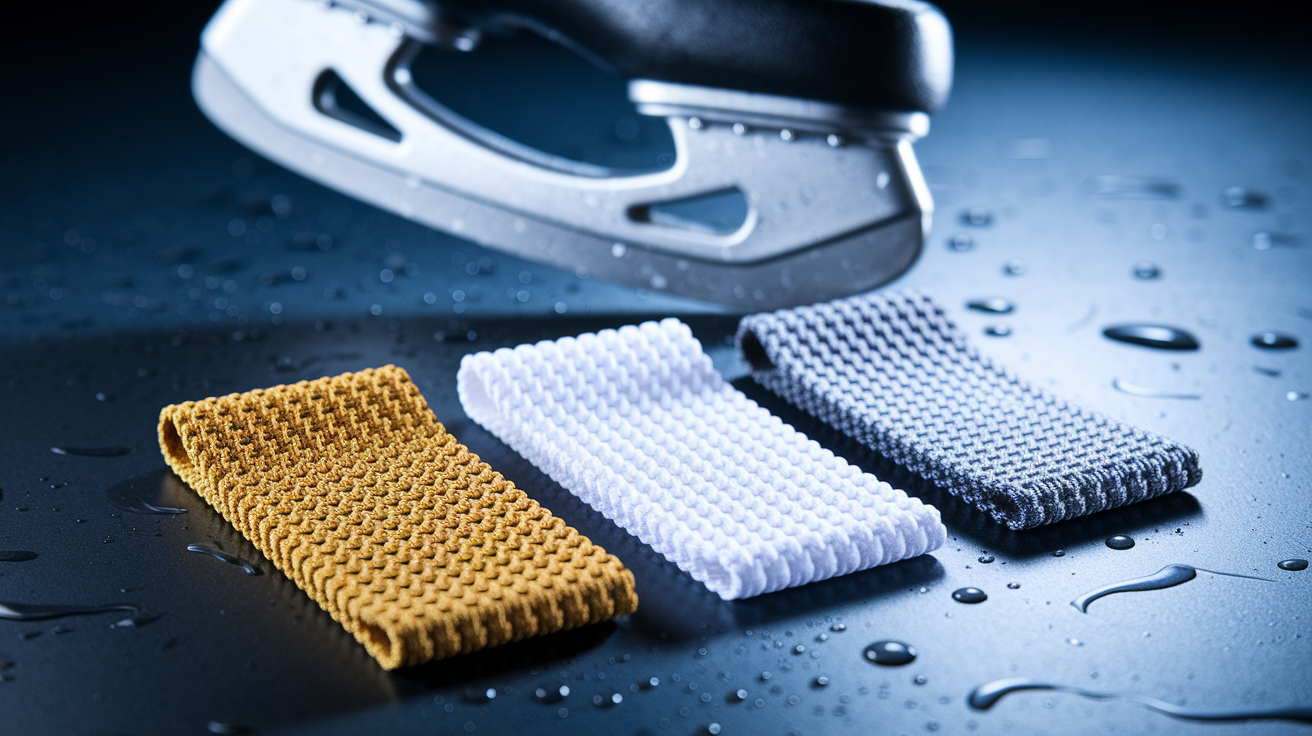
Kevlar has been the foundation of hockey neck protection for decades. It performs reliably in both ASTM and BNQ testing. The aramid fibers resist cutting by distributing blade forces across the weave, and modern Kevlar blends add stretch yarns to improve comfort without losing protection.
Laboratory tests show Kevlar-based guards typically allow 3 to 4 mm of blade penetration under standard drop-test conditions, meeting baseline certification thresholds. The material is durable, washable, and maintains cut resistance through hundreds of wear cycles. That makes it a practical choice for youth and recreational players.
Dyneema and Spectra often outperform legacy Kevlar fabrics in sliding-blade tests. Their ultra-high-molecular-weight polyethylene fibers have higher tensile strength per unit weight. Independent evaluations report penetration depths as low as 1 to 2 mm under identical test protocols, and these materials excel when blades contact fabric at shallow angles, common during falls or board battles.
Both fibers are lighter and more breathable than traditional aramid weaves, which improves compliance among players who resist wearing bulky guards. Dyneema-based guards frequently carry ANSI A6 to A9 cut-resistance ratings (industrial standards borrowed from cut-proof glove testing), signaling performance well above minimum hockey-specific thresholds.
Practical durability and comfort drive real-world effectiveness as much as lab numbers. Kevlar can feel stiff when new and may lose flexibility after repeated washing if you don’t maintain it correctly, though it rarely fails structurally. Dyneema and Spectra stay supple longer and wick moisture better, reducing odor and skin irritation during long practices.
The tradeoff is cost. Dyneema guards typically run 30 to 50 percent more expensive than Kevlar equivalents. For competitive players and those in high-contact positions, the marginal performance gain and comfort improvement justify the price. For younger skaters still learning, a well-fitted Kevlar guard meeting ASTM or BNQ standards offers strong protection at a lower entry point.
Real‑World Injury Data and Incident Patterns

League injury registries show neck lacerations account for fewer than one percent of all hockey injuries, but their severity index is among the highest.
Data from USA Hockey’s injury-surveillance program covering more than 26,000 registered players found that 1.8 percent reported experiencing a skate-blade neck laceration at some point during their playing career. Of those incidents, more than 25 percent occurred while the player was already wearing a neck guard. That tells you compliance alone doesn’t eliminate risk. Fit, coverage, and material quality all matter.
Most neck lacerations happen during high-speed collisions, awkward falls, or scrambles near the boards where skates rise above shoulder height. The blade typically contacts the neck at angles between 30 and 60 degrees, and the force generated by a falling player or a skater traveling at speed can exceed 500 newtons. Injuries range from superficial cuts requiring sutures to life-threatening lacerations of the carotid artery or jugular vein.
Medical outcome data indicates that players wearing certified cut-resistant guards experienced significantly lower rates of arterial involvement and required shorter hospital stays compared to players cut while unprotected.
Mandatory neck-guard policies show measurable impact. After Hockey Canada introduced neck-protection requirements for all players under 18 in 2024, a two-season follow-up study reported a 63 percent reduction in emergency-room visits for neck lacerations among youth divisions. The Western Hockey League and Ontario Hockey League saw similar drops. Zero severe neck injuries in the first season post-mandate compared to an average of two per season in the prior five years.
European leagues operating under IIHF rules, which have required neck guards in junior and senior competitions since 2022, report comparable trends. Incident rates fell below 0.1 per 10,000 player-hours.
Common scenarios where neck lacerations occur:
High-speed collisions along the boards: Player falls backward, opponent’s skate rises and contacts the exposed neck during the tumble.
Scrambles in front of the net: Multiple players converge, skates lift during jostling, and a blade strikes a neck or wrist during the scrum.
Breakaway falls: Skater loses edge at full speed, lands awkwardly, and trailing opponent’s blade contacts the neck as both go down.
Follow-through after a shot or pass: Shooter’s leg swings high, skate blade passes near a defender’s head or neck, and contact occurs if the defender leans forward or drops to block.
Expert and Industry Insights on Protective Performance

Equipment engineers who design and validate neck guards stress that test reliability depends on controlling variables that real games never control.
Blade sharpness, contact angle, and impact velocity all vary on the ice. Laboratory pass/fail thresholds represent a snapshot of performance under idealized conditions. One senior test engineer noted, “A guard that stops a blade at 400 newtons in the lab might fail at 450 in a game, or it might succeed at 600 if the angle is different. Certification tells you the floor, not the ceiling.”
Engineers recommend choosing guards that exceed minimum standards and prioritize coverage area as much as material rating. Gaps expose skin no matter how strong the fabric.
Medical professionals who treat skate-blade injuries focus on injury mechanisms and prevention. Sports-medicine physicians point out that the jugular vein and carotid artery sit close to the skin surface, especially in younger players with less subcutaneous fat. Even shallow cuts can become life-threatening within seconds.
A trauma surgeon with two decades of rink-side experience explained, “The difference between a scary cut and a fatal one is often just millimeters. A neck guard that shifts during play or leaves the area beneath the jaw exposed doesn’t give you much margin.”
Medical directors at youth hockey organizations consistently advocate for mandates that specify not just certification but also fit checks before every game.
Equipment designers balance blade protection with comfort, knowing that uncomfortable guards end up in the equipment bag instead of on the player. Modern designs integrate cut-resistant panels into base-layer shirts with turtleneck collars, eliminating Velcro straps that can loosen or irritate skin.
One product-development lead described the challenge: “If a guard restricts head rotation or traps heat, players won’t wear it consistently. We measure success by compliance rates as much as lab scores.”
The industry trend is toward lighter, moisture-wicking fabrics rated ANSI A7 or higher, paired with stretch construction that moves with your body and stays in position through full shifts.
Final Words
In the action, neck guards reduce the chance and severity of skate lacerations but aren’t an absolute shield. Standards and lab tests show cut‑resistant materials lower penetration forces. Fit and coverage still decide real protection.
The answer is measured. Certified guards cut risk when worn correctly and meet ASTM/CSA/CE test thresholds.
If you searched do neck guards prevent skate lacerations review of standards, the takeaway is simple. Choose certified, well‑fitting gear, replace worn pieces, and you’ll make the ice safer.
FAQ
Q: What is the rule for neck guards in NFHS?
A: The NFHS rule for neck guards requires players to wear cut-resistant throat protection per the current high school hockey rulebook; check your state association for exact certification, fit, and enforcement details.
Q: What is the most cut resistant neck guard for preventing lacerations to the neck?
A: The most cut-resistant neck guards use Dyneema/Spectra or Kevlar blends and meet ASTM/BNQ/CE cut-resistance tests; choose a certified model with full throat coverage and a snug, stable fit.
Q: Does Sidney Crosby wear a neck guard?
A: Sidney Crosby does not typically wear a neck guard during NHL games; the NHL doesn’t mandate throat protection, so many pros opt out unless they want extra personal protection.
Q: Can neck guards prevent serious injuries?
A: Neck guards can prevent or reduce the severity of serious lacerations by lowering blade penetration force, but they aren’t absolute—proper certification, fit, and coverage are critical to meaningful protection.