

Think stickhandling in open ice prepares you for every game moment?
It doesn’t. Players who skip pressure work freeze the first time a forechecker bursts through.
This post shows simple, repeatable training methods that pair cognitive-load drills, pressure simulation, and progressive stages so decisions and puck protection become automatic.
Read on for practical drills, mental checklists, and stage-by-stage progressions coaches and players can run at practice to cut turnovers, speed reads, and keep possession under real game stress.
Immediate Methods to Improve On‑Ice Decisions Under Pressure
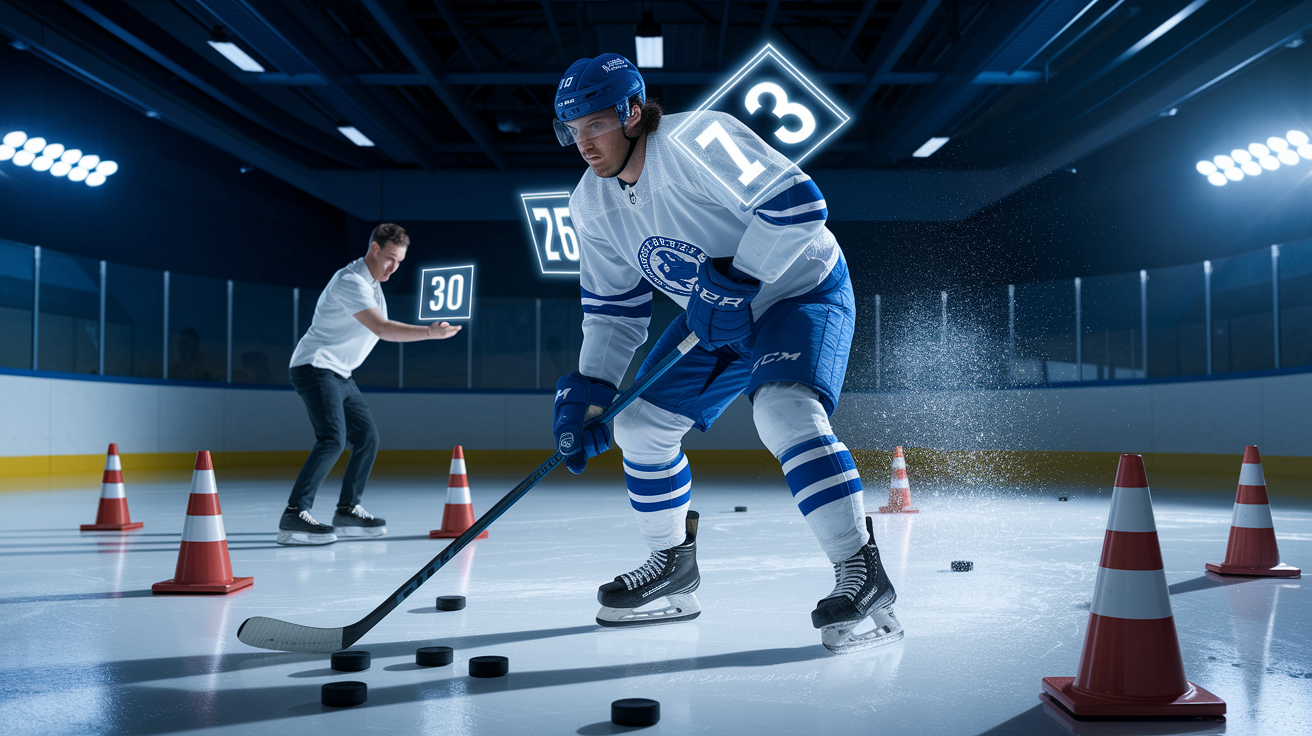
Cognitive load drills make players juggle multiple inputs at once. Defender position, teammate location, puck feel, ice conditions, all happening while making a split-second choice. The brain adapts by recognizing patterns faster and cutting out wasted mental steps. A player who trains with added stimuli (coach calling jersey numbers, switching targets mid-drill, reacting to whistle cues) learns to filter noise and lock onto the critical information. In games, this becomes calm, immediate choices when a forechecker arrives or a lane opens.
Scanning before receiving the puck cuts decision time in half. A player who checks twice (once early to map the ice, once late to confirm) already knows where the pressure’s coming from and which teammate’s open. When the puck arrives, the choice is pre-loaded. Without that habit, every reception becomes a scramble: catch, look, process, decide, act. With scanning, it compresses to catch and act. That 2-second pre-reception window is the difference between reactive play and dictating tempo.
Simple decision frameworks eliminate hesitation. Instead of evaluating every option from scratch, players use a mental checklist. Can I escape into space? If not, hold and protect. If pressured hard, bump pass to the nearest outlet. If the defender gives a gap, attack. Four choices, rehearsed until automatic, replace the paralysis that causes turnovers. Repetition under constrained time locks in the response so the player doesn’t think, just reads and executes.
Cognitive load drills to run in practice:
- Passing sequence with coach calling random numbers. Player must identify the jersey and deliver within two seconds.
- Cone weave with whistle change cues forcing immediate direction shifts while maintaining puck control.
- 3v2 rush where offensive players must verbally announce their next move before crossing the blue line.
- Board side protection drill with a second defender entering unpredictably, requiring instant re-scan and adjustment.
- Tight space keep away (4v2 in a small box) with a 3-second possession limit per player to force rapid decisions.
- Multi puck drill where players rotate between two pucks, processing which to receive based on coach’s signal.
Pressure Simulation Drills That Build Automatic Responses
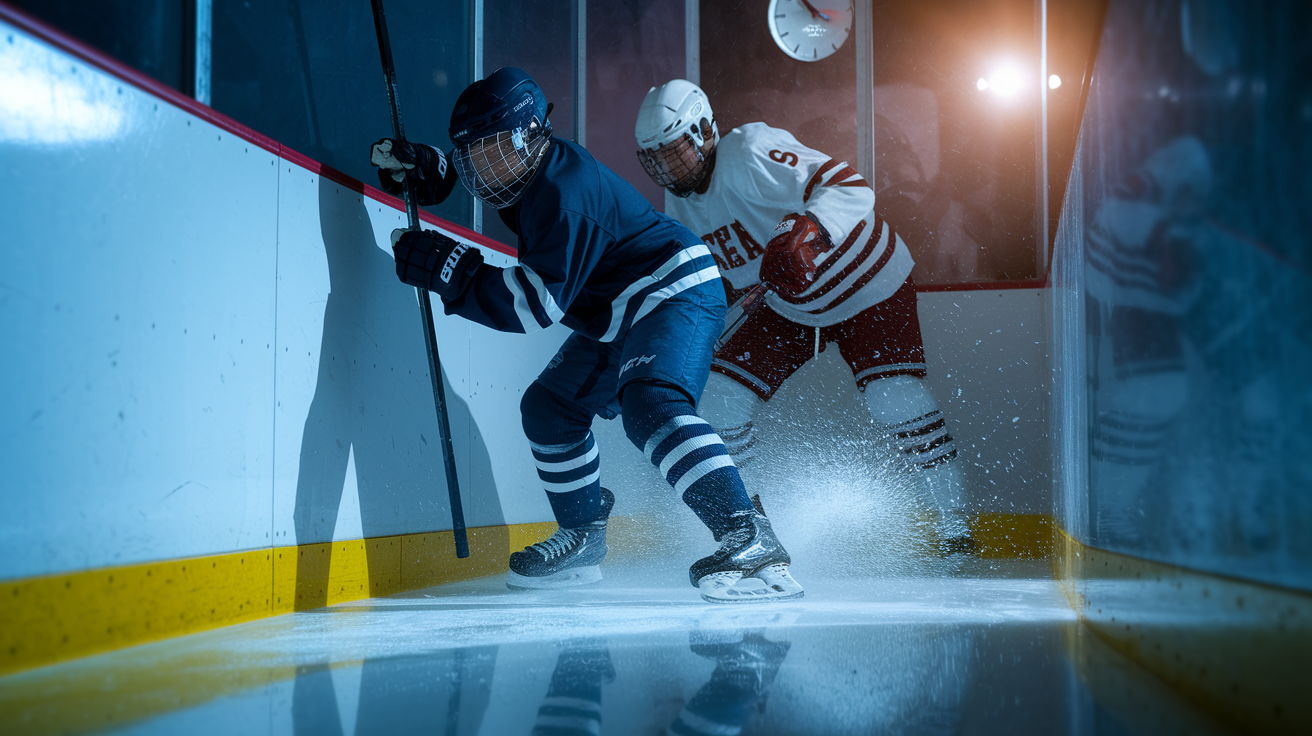
Game pressure arrives as unpredictable forechecks, tight gaps, shrinking time windows. Drills that replicate those conditions (shortened decision cycles, random cues, live defenders closing hard) train the nervous system to respond without conscious thought. A whistle change drill might have a player receiving a pass in the corner, then a whistle blows and the coach points left or right, forcing an instant escape or protect and pivot. After 10 reps, the player stops thinking and starts reacting. The same pressure that caused turnovers now triggers a trained response.
Defensive close out drills put a live forechecker on the puck carrier within one stride of reception. The defender’s job is to arrive fast and challenge immediately. The carrier must control, scan, and decide (bank it off the boards, spin away, or find the outlet) inside two seconds. Repetition under that stress builds trust in the hands and eyes working together. Tight space cycles in the corner or behind the net compress available time even further. Three players rotate in a 10-foot box, receiving and moving the puck under constant pressure from two defenders. Every touch is contested. Every decision is late game, down by one urgent.
These drills don’t teach new skills. They automate existing ones under the conditions that matter. A player who can stickhandle through cones but freezes when a real forechecker arrives hasn’t trained the right system. Pressure simulation bridges that gap.
Reading Defensive Patterns to Anticipate Better Options
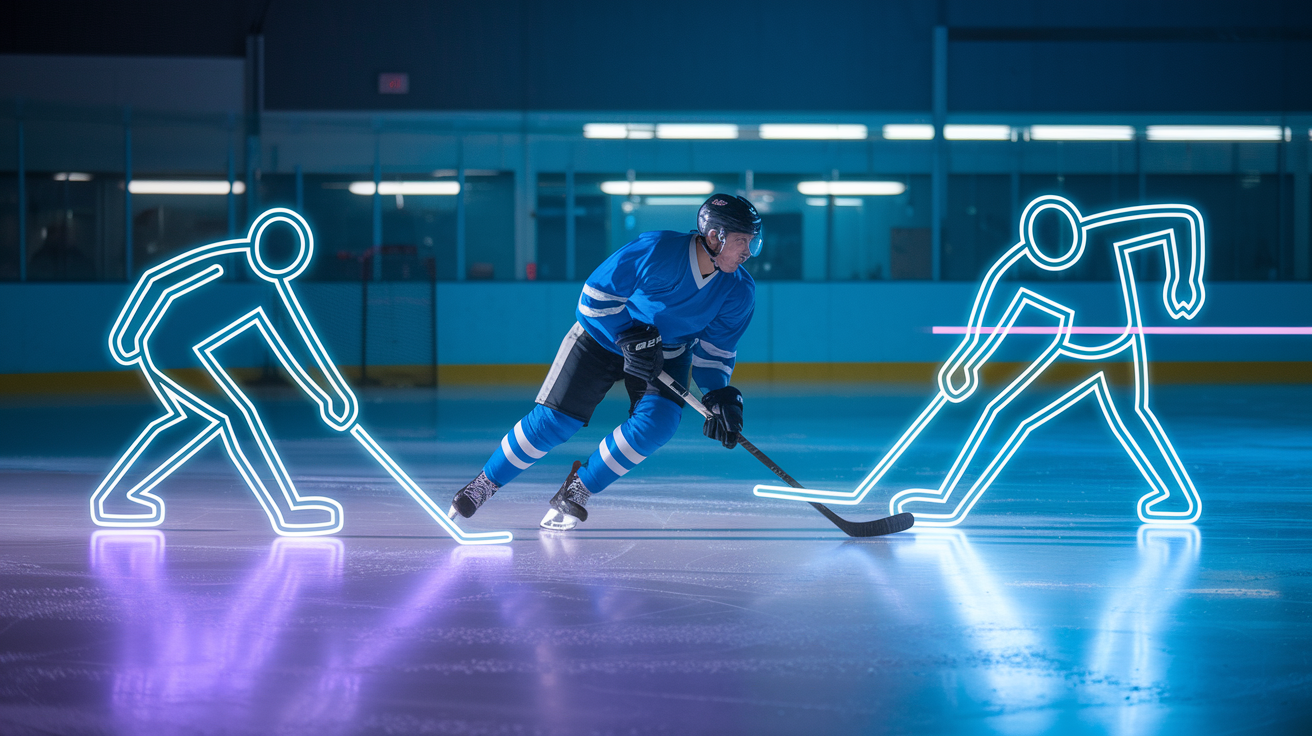
Predictable defender body angles telegraph the next move. A defender who commits their inside shoulder forward is selling out to cut the middle lane, so the play is wide, either a bank pass or a quick escape to the boards. A defender sitting back on their heels is protecting against speed, which opens up a controlled possession move or a lateral pass to pull them further out of position. Players who recognize these cues before the puck arrives already know which option will work. The decision’s made in the pre-scan, not after contact.
Coverage collapses create passing lanes. When a second defender pinches or a forward drops low to help, somewhere on the ice a teammate’s now open. The collapse is visible two strides before it happens. Defenders shifting weight, angling toward the puck, turning their shoulders. A trained player sees that shift and knows the weak side winger or trailing center’s about to have space. The pass is delivered into that opening before the defense can recover. Anticipation turns a 50-50 situation into an easy completion.
Opponent tendencies dictate puck protection angles. If a forechecker consistently attacks from the inside, the carrier protects with their body angled out and the puck on the outside edge of their reach. If the forechecker goes for sticks first, the puck stays tight to the body and the inside shoulder drops to absorb contact. Recognizing these habits (either from video review or live reads during the game) lets a player choose the protection method that works instead of guessing. Over a full game, that recognition saves three or four possessions that would otherwise be lost to predictable pressure.
Enhancing Mental Processing Speed for Faster Play
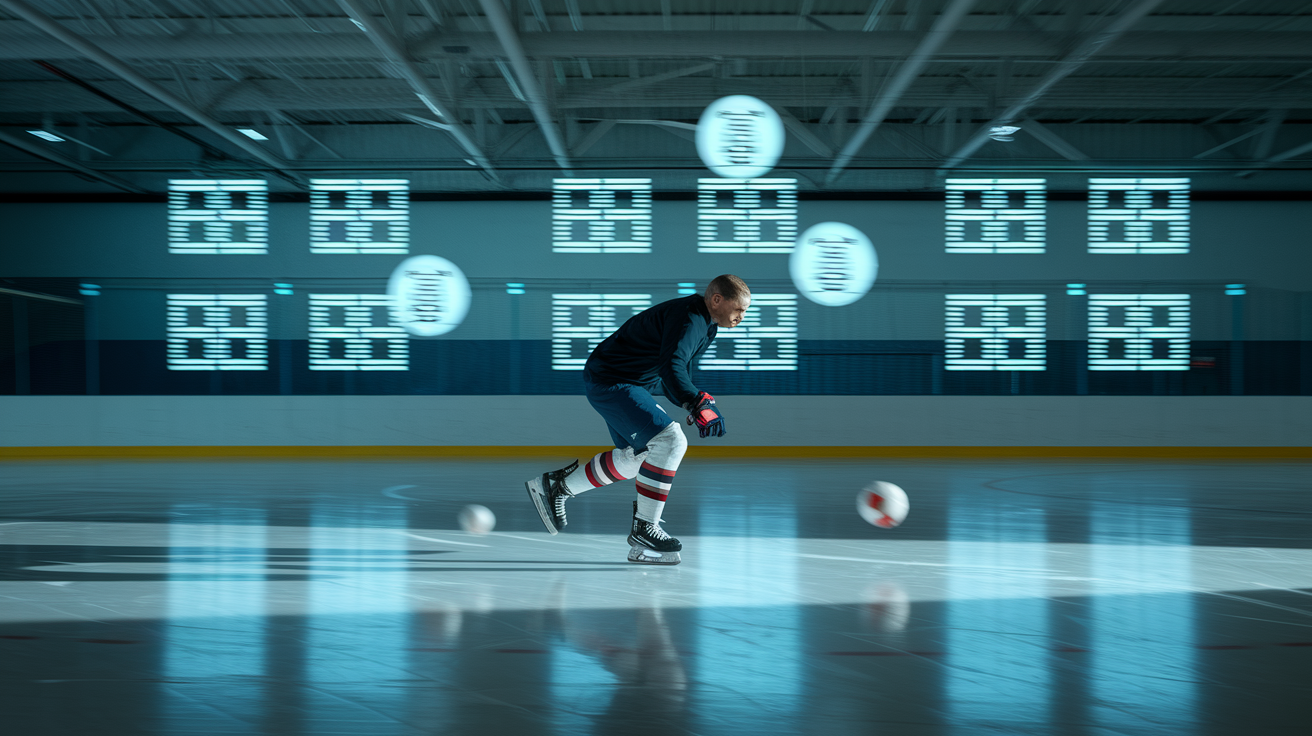
Visual tracking drills teach the brain to process multiple objects and rapid changes simultaneously. Off ice exercises like multi ball tracking apps or rapid number call games (coach flashes cards, player identifies and responds in under one second) build the neural pathways that filter relevant cues from background noise. On ice, these drills translate to a player who can track the puck, two defenders, and three passing options at once without losing focus. The faster the brain can sort inputs, the faster the decision arrives.
Pattern recognition circuits expose players to common game situations in rapid succession. A coach sets up four different forechecking looks (tight 1-1-3, aggressive 2-1-2, passive trap, overload on one side) and cycles through them with minimal rest. The player receives a pass, identifies the pattern, makes the correct read, executes, then resets for the next rep. After 12 reps, the recognition becomes automatic. In a game, the player doesn’t analyze the system. They see it, know it, and exploit it. Decision time drops from three seconds to one.
Cognitive and visual processing exercises to build mental speed:
- Rapid number cue calls. Coach holds up fingers or cards, player shouts the total and executes the corresponding drill option within one second.
- Multi object tracking apps (like NeuroTracker or similar tools) to improve peripheral awareness and simultaneous input processing.
- Reaction light training. Touch sensors or lights placed around the training area, player must respond to random activations while maintaining puck control.
- Pattern flash drills. Coach shows a diagram or setup for two seconds, removes it, player must verbally describe the open passing lane or best option.
- Overload scrimmage conditions. 4v5 or 5v6 small area games where offensive players must process extra defensive layers quickly to maintain possession.
Progressive Training Sequences for Reliable Puck Control
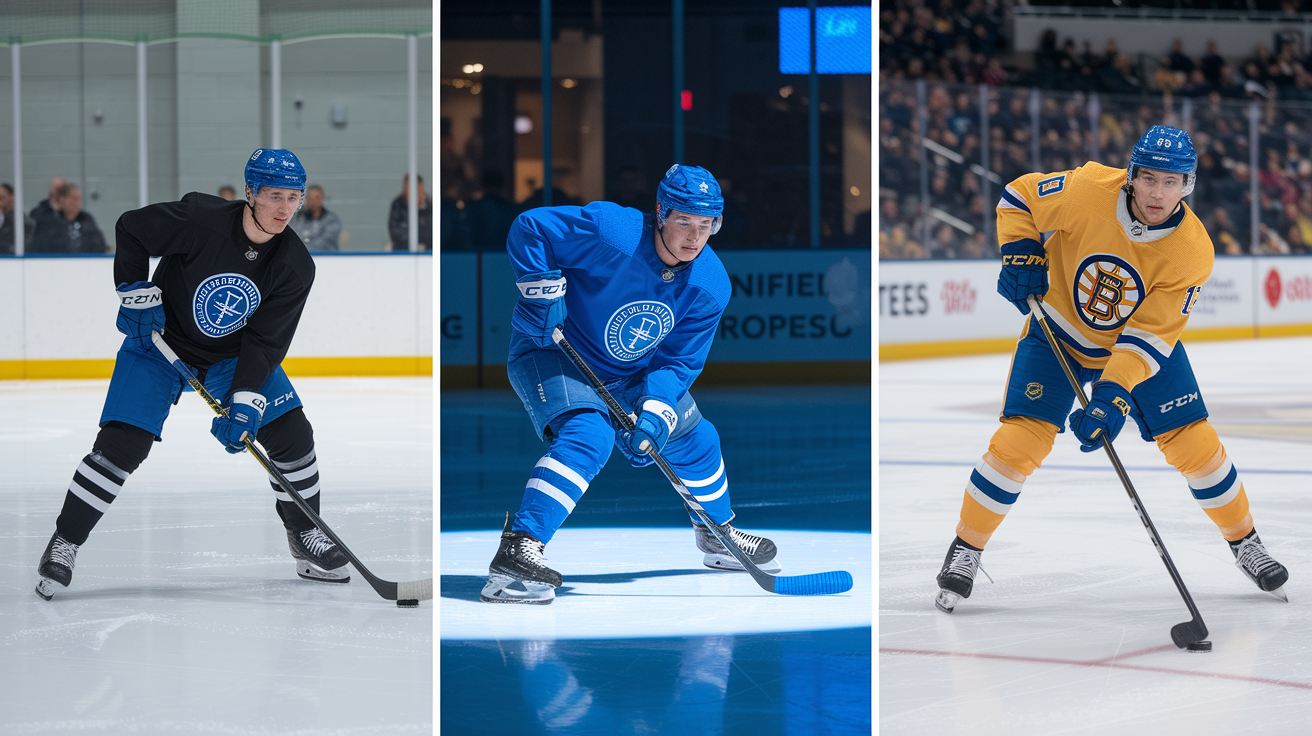
Structured progressions move players from controlled environments to full game pressure in stages that preserve good habits. Starting unpressured (stationary stickhandling, simple passing patterns, controlled receptions in open space) builds the foundation of soft hands and proper body positioning. Once those mechanics are consistent, semi-pressured drills introduce a passive defender or time constraint. The player practices the same skills but now with a defender approaching at half speed or a three-second window to complete the action. The final stage adds full pressure: live forechecking, tight spaces, random cues, and conditioning fatigue. Each stage locks in the previous one, so the player doesn’t revert to bad form when stress increases.
Skipping stages produces players who look skilled in warmup but fall apart in tight games. A winger who can dangle through cones but can’t protect the puck in a board battle hasn’t trained the middle step. Semi-pressured reps where they learn to keep the puck close while a defender contests. The progression teaches the brain and hands to maintain technique as difficulty rises. By the time the player reaches stage three, puck control under full pressure feels like an extension of the unpressured drill, not a separate skill.
| Stage | Training Focus |
|---|---|
| Stage 1: Unpressured | Stationary stickhandling, controlled passing, soft hands drills with no defenders; focus on mechanics, hand positioning, and puck feel. |
| Stage 2: Semi-Pressured | Passive or half speed defenders, time constraints (3-4 seconds), small obstacles; maintain technique while processing one additional input. |
| Stage 3: Fully Pressured | Live forechecking, tight spaces, random defensive angles, conditioning fatigue; execute all skills at game speed under unpredictable stress. |
Tools Coaches Can Use to Reinforce Fast Decisions
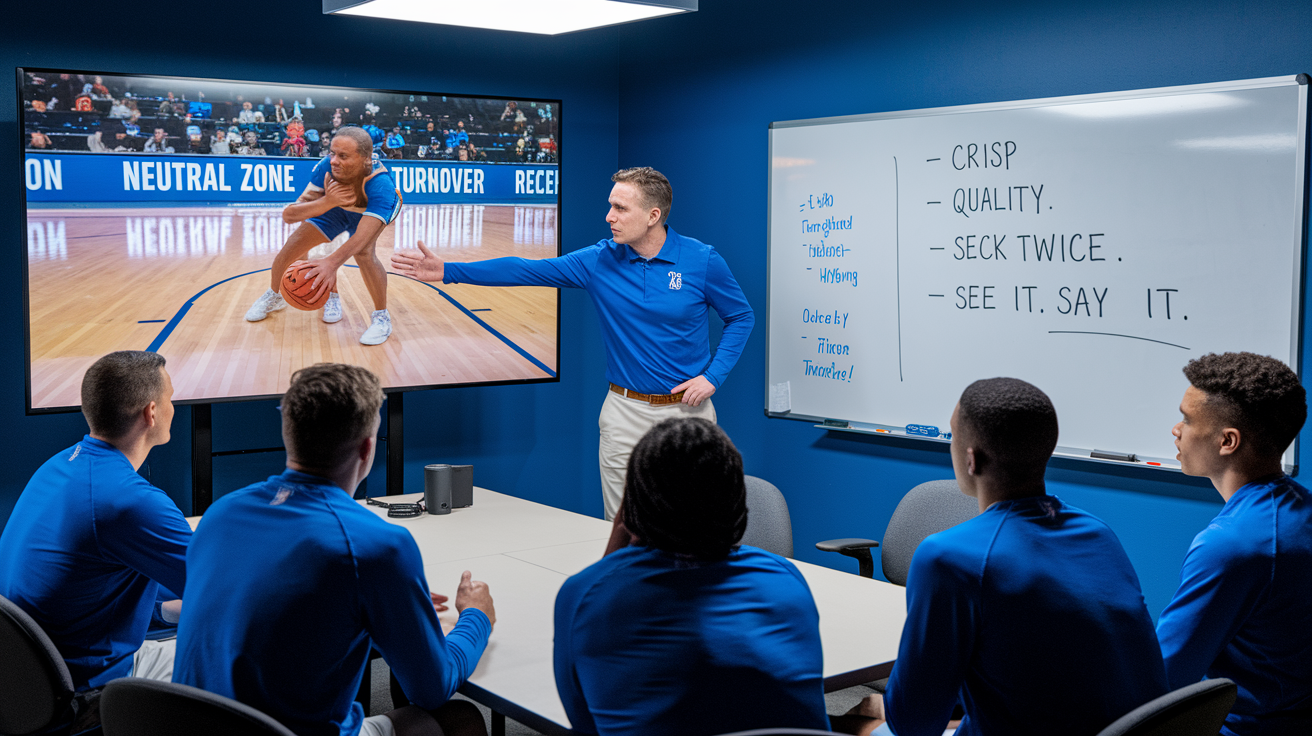
Video clips showing missed or executed decisions give players a reference point they can’t get from verbal feedback alone. A 30-second clip of a neutral zone turnover, slowed to half speed and paused at the moment of reception, shows exactly where the player failed to scan or chose the wrong option. Pair that clip with a second example from the same game where the player scanned early and hit the open man, and the lesson’s clear. Players see the difference in their own actions, not a generic coaching point. Reviewing two or three clips per week (each 60 to 90 seconds, annotated with decision point markers) builds a mental library of what works and what doesn’t.
Clear, repeatable cues simplify decision making under pressure. “Check twice before you catch” is a cue that reminds players to scan. “Puck on a string” reinforces keeping the puck close during protection. “See it, say it” encourages verbal communication of the next move, which forces the brain to commit to a choice. These cues work because they’re short, specific, and tied to a single action. A player who hears “check twice” before every drill eventually internalizes the habit and does it without prompting. Coaches who rotate through three or four core cues (rather than giving ten different instructions each practice) see faster retention.
Designing repeatable practice blocks aligned with game patterns ensures that drills translate to real shifts. A practice block might dedicate 12 minutes to neutral zone receptions under forecheck pressure, running the same 2v1 setup eight times with rotating players. The consistency lets players refine one decision pattern deeply instead of sampling ten different situations once. At the end of a six week cycle, the team’s practiced six or eight high frequency game situations dozens of times each, and those situations now trigger automatic, correct responses. The structure matters as much as the drills themselves.
Final Words
In the action, you ran cognitive-load drills, sharpened pre-touch scanning, and learned short decision frameworks. You added time-pressure reps, studied defensive patterns, and trained visual processing. Then you built those skills with step-by-step progressions and coach tools like video breakdowns and cue-based practice blocks.
Now take it to the ice in short, repeatable blocks. Focus on decision-making and puck control under game pressure as you move from low stress to full speed. Small, steady reps pay off. You’ll get faster and more reliable on the puck.
FAQ
Q: How does increasing cognitive load improve on-ice decision-making?
A: Increasing cognitive load improves on-ice decision-making by forcing players to process under pressure, speeding pattern recognition and execution. Repeated exposure transfers quicker choices into game-time automatic responses.
Q: What scanning habits should players develop before touching the puck?
A: Developing pre-touch scanning helps spot teammates, defenders, and escape lanes before the puck arrives. Check middle first, then weak side, give a last quick head check, and rehearse in warmups.
Q: What simple decision frameworks reduce hesitation with the puck?
A: A simple decision framework like escape, hold, bump-pass, attack reduces hesitation by giving four go-to choices. Teach the cues so players pick and act within a second.
Q: What cognitive-load drills can players run in practice?
A: Cognitive-load drills include timed wall battles, defender-plus-sprint reps, coach-visual-cue passing, two-puck chaos, numbers-in-small-area, and end-line pressure-to-exit circuits. Run each for 30–90 seconds.
Q: How do pressure-simulation drills build automatic responses?
A: Pressure-simulation drills build automatic responses by shortening decision windows and adding unpredictable cues so players execute without overthinking; repeated reps make correct reads habitual under game stress.
Q: What drill setups best mimic real-game pressure?
A: Drills that mimic game pressure use whistle-change cues, random pass sequences, fast defensive close-outs, and tight-space cycles to compress time and force immediate puck decisions.
Q: How can players read defensive patterns to anticipate options?
A: Reading defensive patterns helps anticipate options by spotting defender angles, pinch tendencies, and lane collapses so you choose safer protection angles or quick passing lanes before pressure arrives.
Q: What on-ice and off-ice techniques enhance mental processing speed?
A: Enhancing mental processing speed uses visual-tracking drills, rapid-cue games, pattern circuits, plus off-ice reaction work to speed recognition and reduce decision time on the ice.
Q: What specific cognitive and visual-processing exercises help faster play?
A: Specific exercises include rapid number-cue calls, multi-object tracking, strobe-ball drills, reaction-light systems, and video-pattern recognition sessions. Do them 2–3 times weekly.
Q: How should progressive training sequences be structured for puck control?
A: Progressive training sequences build reliable puck control by moving from unpressured drills to semi-pressured and full-pressure reps, locking skills through graduated stress and repetition.
Q: What are the stages and focus areas in a puck-control progression?
A: Stages are unpressured, semi-pressured, and fully-pressured, focusing respectively on fundamentals, added defender/time constraints, and game-like chaos to force decision speed and retention.
Q: What tools can coaches use to reinforce fast decisions?
A: Coaches can use video clips, simple cue phrases, and repeatable practice blocks aligned with game patterns to highlight decisions and program faster on-ice responses.