

Think goals tell the whole story? They don’t.
Expected goals, or xG, and shot quality change how we judge players and teams.
xG assigns a 0.00 to 1.00 chance to every shot based on distance, angle, shot type, traffic, and what led up to the play, so a high-slot one-timer looks very different from a point blast.
That number, added across a game or season, shows whether a player is creating real chances or just shooting a lot.
This intro explains how xG is built, what drives shot quality, and why coaches use it to separate skill from luck and make better decisions.
Core Explanation of Expected Goals in Hockey
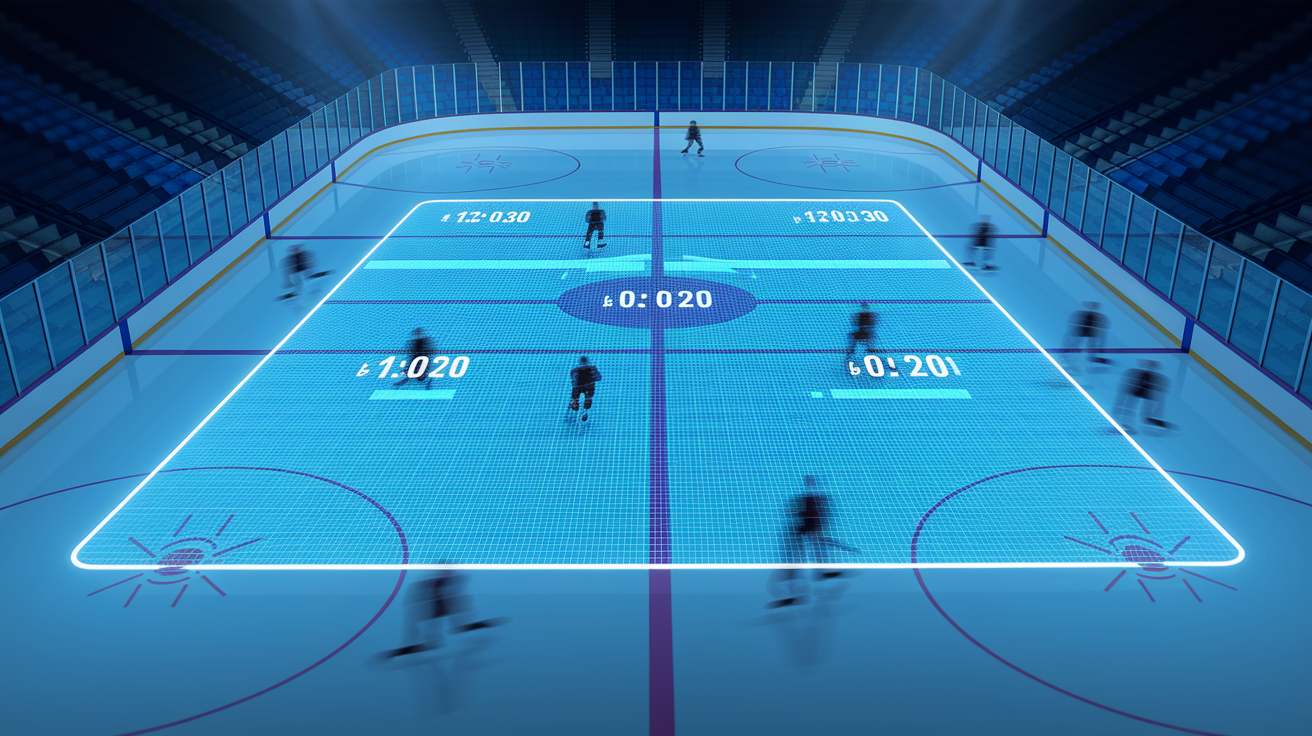
Expected goals (xG) puts a number between 0.00 and 1.00 on every shot. That number tells you how often a shot from that spot, under those conditions, actually goes in based on what’s happened historically. A wrist shot from the high slot with bodies in front might get tagged at 0.12, meaning about 12 percent of similar shots score. Clean breakaways usually land somewhere between 0.30 and 0.45. Point shots through traffic? Maybe 0.02. The model isn’t saying this shot will score. It’s estimating what happens if you take that exact shot a hundred times.
Add up all those shot probabilities and you get total expected goals for a player, line, or team. If a forward racks up 2.8 xG over ten games, the model’s basically saying his shots should’ve produced around three goals under normal finishing. Whether he actually scored one or five? That gap tells you something about luck, finishing ability, or how good the opposing goalie was. The difference between actual goals and expected goals helps you separate what’s repeatable from what’s just variance.
xG turns shot counts into something that actually measures offensive quality and defensive work. Old-school stats count a point slapper and a slot one-timer the same way. xG knows one of those chances is four times more dangerous. Coaches use it to figure out if their system’s creating good looks, whether a checking line’s shutting down high-danger chances, and if their goalie’s facing harder work than average. It’s the clearest single answer to “did we get better chances than they did?”
Key Factors That Influence Shot Quality and xG Values
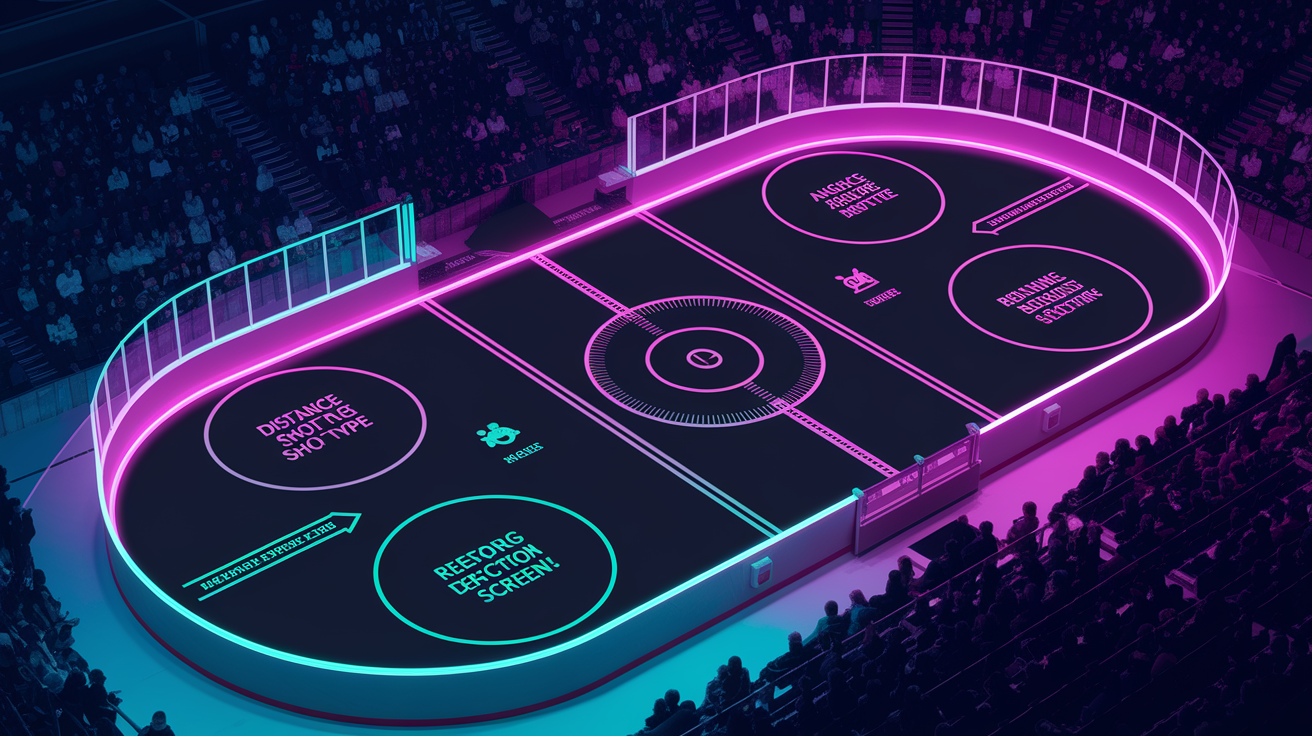
Distance and angle sit at the heart of every xG model. Get closer to the net and the goalie has less time to react, plus more net to shoot at. A shot from fifteen feet inside the top of the circle typically carries double or triple the xG of something from the point. Angle matters almost as much. Straight on, you see the whole net. Sharp angle from below the goal line? You’re looking at a sliver. Models combine distance and angle to weight location, then layer everything else on top.
Shot type changes how fast the puck arrives and how much setup time the goalie gets. One-timers come in hot and give goalies less chance to get set, so they score more often from the same spot. Deflections and tips redirect mid-flight and beat goalies who committed to the original path. Slap shots from distance are fast but easier to track. Backhands up close can be tricky but don’t have the same power or accuracy as forehands, so they take a small xG hit depending on where you are.
Traffic, screens, and rebounds make shots way more dangerous. A screen means the goalie picks up the puck late or loses it completely in a pile of bodies. A rebound means the goalie made the first save but left a loose puck in the slot while they’re scrambling or down. Rebounds score at two or three times the rate of first shots from the same area. Rush chances catch defenders and goalies still adjusting, which pushes xG higher compared to set plays where everyone’s in position.
Better models also track what happened before the shot. A cross-seam pass that forces the goalie to slide post-to-post opens up gaps. A shot right after a pass often catches the goalie in motion. But if you stickhandle forever or carry the puck too long, the defense and goalie have time to close you down. The best models know if the shot came off a pass, how many passes happened first, and how much the puck moved side to side before release.
The six biggest xG factors:
- Shot distance gets you closer to the net, probability goes up. Inside the slot beats the perimeter every time.
- Shooting angle matters because central shots see more net. Sharp angles near the goal line see almost nothing.
- Shot type counts since one-timers, tips, and deflections are harder to stop than wrist shots or backhands.
- Rebound status multiplies scoring rates because second chances find goalies out of position.
- Traffic and screens block sightlines and cut goalie reaction time.
- Rush context means odd-man breaks and quick entries catch everyone out of structure.
How Expected Goals Models Are Built

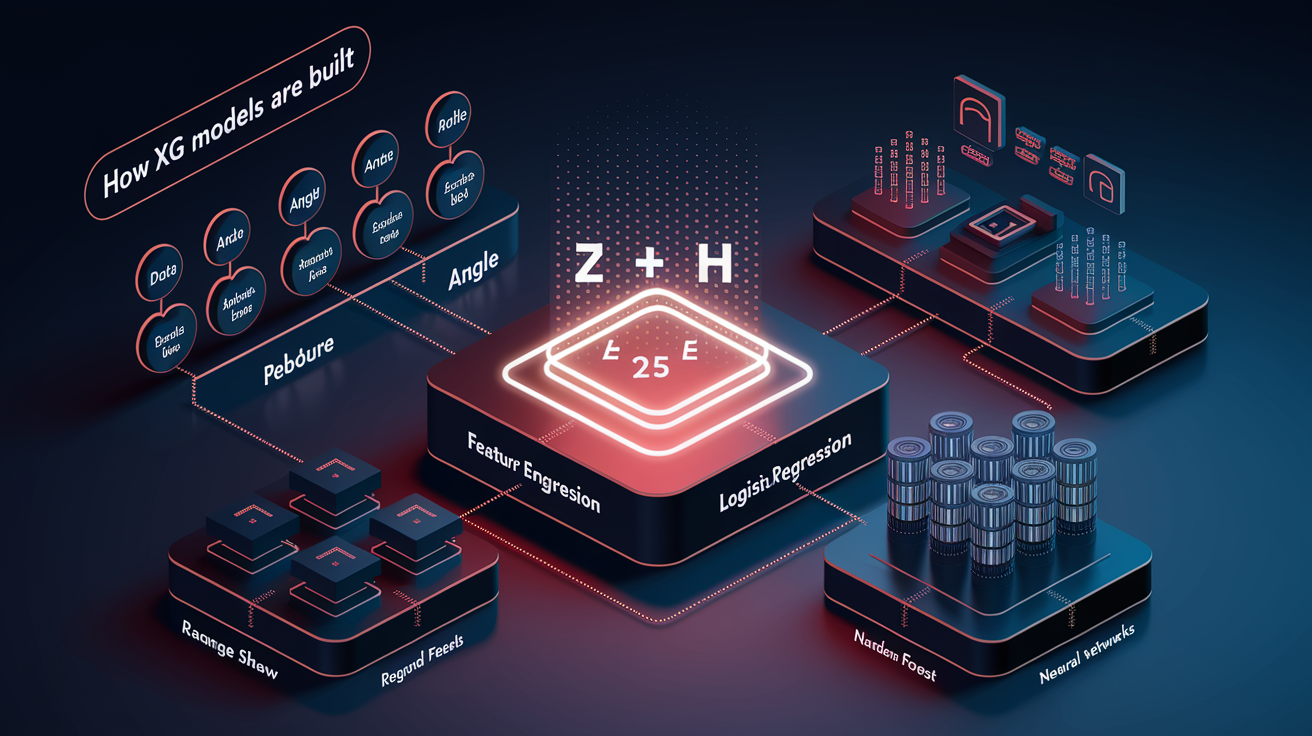
Most xG models start with a giant pile of historical shots, each one tagged goal or no goal, plus a bunch of details about the shot itself. Analysts build those details from play-by-play data, video tracking, or manual tagging. Distance, angle, shot type, rebound flag are standard. Richer datasets add pre-shot passes, rush markers, how many bodies were in front, and where the goalie was. The training process fits a statistical model that figures out which combinations of features lead to goals, then spits out a probability for any new shot that looks similar.
Logistic regression is still the go-to because it’s simple, stable, and works well when you’re predicting yes or no. Each feature gets a weight, positive if it raises goal probability, negative if it lowers it, and the model combines those into a single number between zero and one. Machine learning methods like random forests or neural networks can catch more complex patterns, but they need more data and careful tuning so they don’t just memorize the training set. Public models usually stick with simpler approaches because being transparent matters more than squeezing out another half percent of accuracy.
Public models and team models differ mostly in how much data they can access. Public versions use league play-by-play feeds and manual shot charts, which limits what features you can include. Team models plug into tracking cameras, sensors, and internal video review to get exact player positions, puck speed, passing sequences, and defensive pressure. Those extra inputs improve the model and help coaches understand how to create better chances, but they don’t always make predictions way better because goals are rare and random.
| Model Type | Core Characteristics |
|---|---|
| Logistic Regression | Transparent coefficients; stable across samples; common in public models; handles binary outcomes cleanly |
| Machine Learning (Random Forest, Gradient Boosting) | Captures non-linear interactions; requires larger datasets; risk of overfitting; used when feature complexity is high |
| Proprietary Team Models | Incorporates tracking sensors and internal data; updated continuously; prioritizes prescriptive insight over public accessibility |
Using xG to Evaluate Players and Teams
xG splits shot volume from shot quality, which makes it way easier to see if a player’s creating dangerous chances or just firing from anywhere. A winger with twenty shots and 1.5 xG is taking low-percentage stuff from the outside. A center with twelve shots and 2.4 xG is getting to the slot and finding clean looks. Finishing skill shows up in the gap between actual goals and xG. Elite shooters beat their expected totals by five or ten percent consistently. Average finishers hover right around expectation. That gap helps scouts tell pure snipers from volume shooters and tells coaches whether a cold streak is bad luck or a real problem with chance quality.
Defense works the same way, just flipped. A checking line that gives up fifteen shots but only 1.2 expected goals against (xGA) is doing exactly what you want. Opponents are shooting from distance or bad angles. A pairing that allows eight shots and 2.0 xGA is bleeding slot chances and needs help. xGA per sixty becomes a cleaner defensive measure than raw goals against because it removes goalie performance and finishing randomness. Coaches use it to figure out if a breakdown is positioning, gap control, or transition defense, then tweak assignments and systems.
Goalie evaluation uses xG as the baseline for save difficulty. A goalie facing 2.5 xGA per game who allows 2.2 goals is performing above average. He’s stopping more than expected. One facing 1.8 xGA who allows 2.0 is underperforming, even if his save percentage looks fine. Goals saved above expectation (GSAx) measures that difference and accounts for workload and shot quality. Teams use these numbers to pick between goalie options, track development, and set realistic expectations for a rookie facing tougher competition. xG turns “tough night for the goalie” into something you can actually track.
Comparing xG to Traditional Hockey Statistics

Corsi counts every shot attempt, shots on goal, misses, blocks, all of it, without caring about quality or location. It’s useful for measuring possession and territorial control, but it treats a point shot through traffic the same as a backdoor tap-in. You can dominate Corsi and lose because you’re generating low-danger volume while the other team cashes two breakaways. xG weights shot quality into the count, so five high-slot chances at 0.15 xG each show up as 0.75 expected goals instead of just five attempts. That weighting makes xG a better predictor of future scoring than raw Corsi or shot totals.
Goals and plus-minus get messy fast because of small samples and heavy influence from linemates, opponents, and goaltending. A player might pot four goals on six shots in three games because of hot shooting or weak goaltending, then go cold for two weeks when things even out. Plus-minus mixes individual defense with team structure, zone starts, and whether your goalie’s stopping pucks. xG smooths the noise by stacking probabilities across dozens or hundreds of events, which gives you a more stable read on what’s actually happening. Coaches and analysts pull actual results toward expected results to separate real performance from luck, especially early in the season or in short playoff runs.
Shot quality metrics like high-danger chances tried to do similar work before xG became standard. Those categories divided the ice into zones and counted attempts in each. xG refines that by giving continuous probabilities instead of buckets, which catches the difference between a shot from the top of the circle and one from the hash marks. You end up with a single number per shot and per player that travels across contexts, making it easier to compare players on different teams, systems, and deployment.
Real‑Game Examples of xG Application
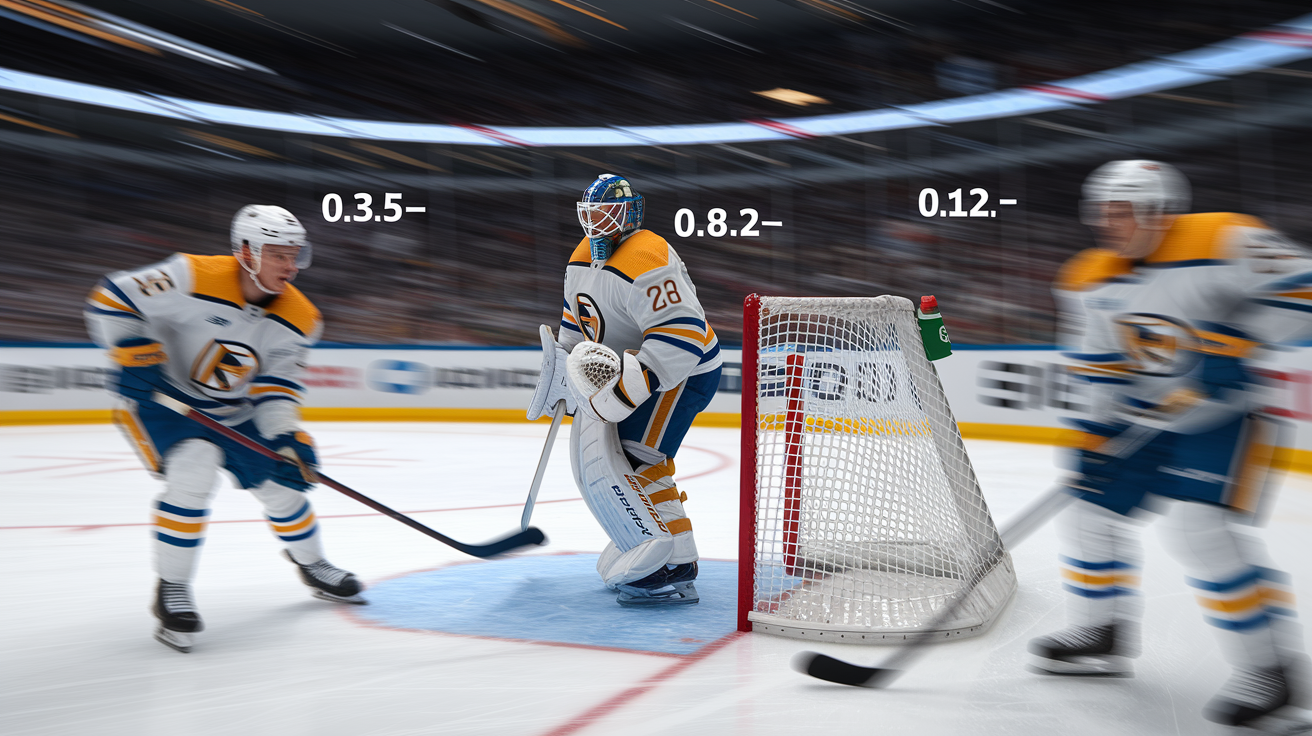
High-danger chances from the inner slot, roughly between the hash marks and within fifteen feet of the crease, typically register between 0.15 and 0.25 xG depending on traffic and shot type. A one-timer from the left circle off a cross-seam pass might hit 0.18. Same wrist shot with a screen in front pushes closer to 0.22. Point shots from the blue line, even with a clear lane, usually fall between 0.02 and 0.05 because distance and reaction time favor the goalie hard. If that point shot deflects off a stick in the slot, xG can double or triple. A deflection fifteen feet out might be around 0.12 even though the original release was 0.03.
Breakaways and penalty shots sit at the top of the xG range for single chances. A clean breakaway from center with no backchecker usually carries 0.30 to 0.45 xG, reflecting the one-on-one setup and the shooter’s ability to pick angle, deke, or shoot. Shootout attempts score at similar rates. Rebounds in tight, loose pucks within ten feet after the goalie made a save, often push past 0.20 xG because the goalie’s down, out of position, or scrambling. A rebound one-timer from the edge of the crease can hit 0.35 or higher if the net’s wide open.
Five scenario types and their xG values:
- Breakaway from neutral zone, no backcheck sits at 0.35 to 0.45 xG. Shooter’s got time and space to make a move.
- Slot one-timer off cross-ice pass, no screen lands at 0.15 to 0.18 xG. Fast release from a dangerous spot.
- Screened wrist shot from the top of the circle runs 0.10 to 0.14 xG. Blocked sightline pushes probability above a clean look from that distance.
- Point slap shot, clear lane falls at 0.02 to 0.05 xG. Distance and reaction time heavily favor the goalie.
- Rebound chance, tight to crease, goalie down ranges from 0.20 to 0.40 xG depending on net coverage. Second chances score at multiples of first-shot rates.
Limitations and Misinterpretations of xG

xG models can’t see everything that matters. Shooter skill varies wildly. Release speed, accuracy, deception, all different from player to player, but most public models treat every shooter the same at a given spot. A pure sniper with a quick release beats his xG over time. A grinder taking the same shots falls short. Passing precision and pre-shot movement affect whether a one-timer lands on the tape or forces a bobble, but many models don’t have frame-by-frame tracking to capture that. Defensive pressure, how tightly a checker contests the shot, how fast help arrives, all that changes decision time and shot quality, but pressure’s tough to measure without tracking sensors.
Data problems also limit accuracy. Manual shot charting brings subjectivity into whether something counts as a shot, rebound, or deflection. Different scorers might tag the same play differently. Definitions can shift across leagues or seasons. Rink tracking systems vary in camera angles, resolution, and setup, which affects distance and angle math. Public play-by-play feeds sometimes skip shot-type tags or miss rush indicators, forcing models to guess or drop variables. Those gaps mean two xG providers can give different probabilities to the same shot, and neither’s really “wrong.”
People mess up interpretation when they treat xG like a perfect measure of future performance instead of a probability with uncertainty baked in. A player who scores five goals on 3.2 xG over ten games isn’t guaranteed to come back down. Small samples swing wide, and elite finishers do beat expectation for real. A team that wins while getting out-chanced in xG didn’t necessarily luck out if their goalie’s legitimately elite or their system trades volume for transition defense. xG describes shot quality under average conditions. It doesn’t capture every tactical choice, roster edge, or situational factor that determines results. Use xG to spot patterns and ask better questions, not to predict single games or write off every outlier as noise.
Final Words
On the ice, expected goals (xG) turns shots into probabilities. You saw how xG quantifies shot quality using distance, angle, shot type, traffic, and rebounds, and how models assign values from historical shots.
We covered model building, player and team uses, real-game examples, and where xG can mislead when context or tracking data’s missing. Use xG alongside scouting, not instead of it.
This wraps up a practical view of how shot quality and expected goals (xG) work in hockey analysis, a tool to spot quality chances, guide coaching choices, and track progress.
FAQ
Q: How are xG expected goals calculated?
A: xG expected goals are calculated by assigning each shot a 0.00–1.00 probability based on historical scoring rates, using variables like distance, angle, shot type, rebounds, screens and modelled via logistic regression or ML.
Q: How is xG calculated in hockey?
A: xG in hockey is calculated by assigning each shot a probability of scoring (0.00–1.00) using factors such as shot distance, angle, type, traffic and historical outcomes, then summing those probabilities.
Q: Why is xG flawed?
A: xG is flawed because models miss context like shooter skill, pre-shot movement, defensive pressure and goalie quality; tracking errors and different model inputs also create variability and can mislead if used alone.
Q: What is the 80 20 rule in hockey?
A: The 80 20 rule in hockey usually means roughly 80% of outcomes come from 20% of plays—most goals stem from a small number of high-danger chances—so focus practice on creating and stopping those chances.