

If you skip a postgame report, you’re coaching by memory.
A fast, one-page template fixes that and keeps your team honest.
This post gives a ready-to-use 12-block layout that captures the game header, shots, faceoffs, special teams X-for-Y, a player table with ice time, shifts, goals, three-part 1–5 ratings for skill/effort/decisions, goalie notes, tactical observations, “what worked” and “needs improvement,” plus development actions and archive fields.
Use it in the locker room or as a PDF to turn every game into clear feedback, practice plans, and season-long development tracking.
Complete Youth Hockey Postgame Template (Ready-to-Use Core Layout)
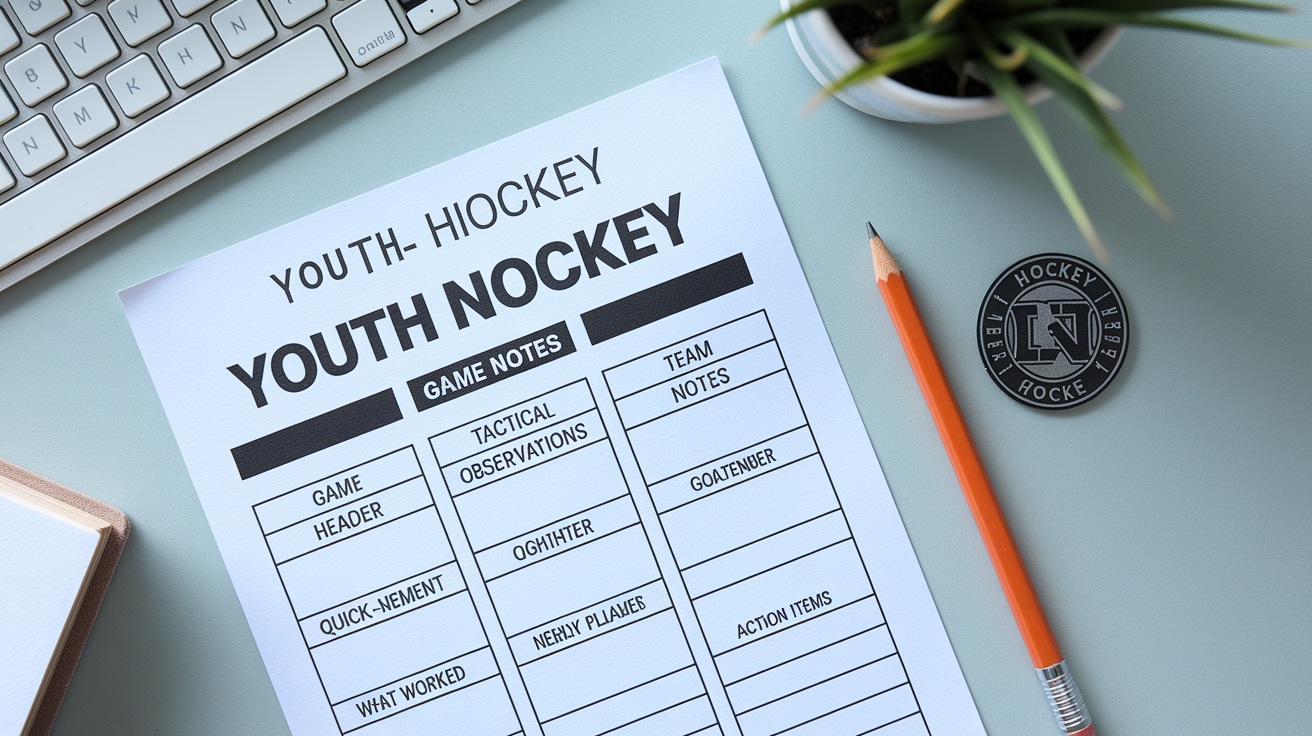
The postgame report template breaks down into 12 blocks that capture everything from a youth hockey game on one structured sheet. Game header sits at the top with date, opponent, rink, final score, and period totals. Right below that, a quick-stats row shows shots for and against, faceoff percentage, power play and penalty kill numbers (X-for-Y), and total penalty minutes. The player table handles up to 20 skaters, tracking ice time, shifts, goals, assists, shots, plus/minus, PIM, and a three-part 1–5 rating for skill, effort, and decision quality. Tactical observations, goalie summaries, “What Worked” and “Needs Improvement” sections, development plans, action items, communication logs, and archive notes round out the layout. Every field is labeled and ready to fill when the horn sounds.
Print the one-page version for parents or fill the digital spreadsheet on a tablet in the locker room. Most volunteer coaches knock out the header and team stats during intermission, then enter player data within 30 minutes of the buzzer. The template doesn’t need custom formulas or advanced software. Just basic spreadsheet skills and a willingness to watch. Save as PDF for email or upload to a team folder within 24 to 72 hours while the game’s still fresh. The full digital copy stays with coaching staff for season trends and practice planning.
Over a season, the template becomes a development journal tracking each player’s growth in skill execution, compete level, and on-ice decisions. Coaches reference old reports to set monthly goals, adjust lines, and build individualized off-ice drills. The archive section lets staff compare early-season ratings against midseason or playoff performance, making end-of-year feedback meetings faster and more evidence-based. Because the format stays consistent from game one through championships, parents, players, and staff all learn to read and trust the data.
Sections in the core template:
- Game header with date, opponent, location, level, final score, and game length
- Quick-stats row for goals, shots, faceoffs, power play, penalty kill, and total PIM
- Team notes with period-by-period flow summary
- Tactical observations covering forecheck, neutral zone, breakout, and special teams
- Goaltender summary tracking saves, goals, and positional strengths
- Player table with columns for number, name, position, TOI, shifts, G, A, SOG, plus/minus, PIM, and three-part rating
- “What Worked” bullet list backed by stats or play examples
- “Needs Improvement” list pairing each issue with a drill recommendation
Game Header & Summary Fields for Postgame Reports
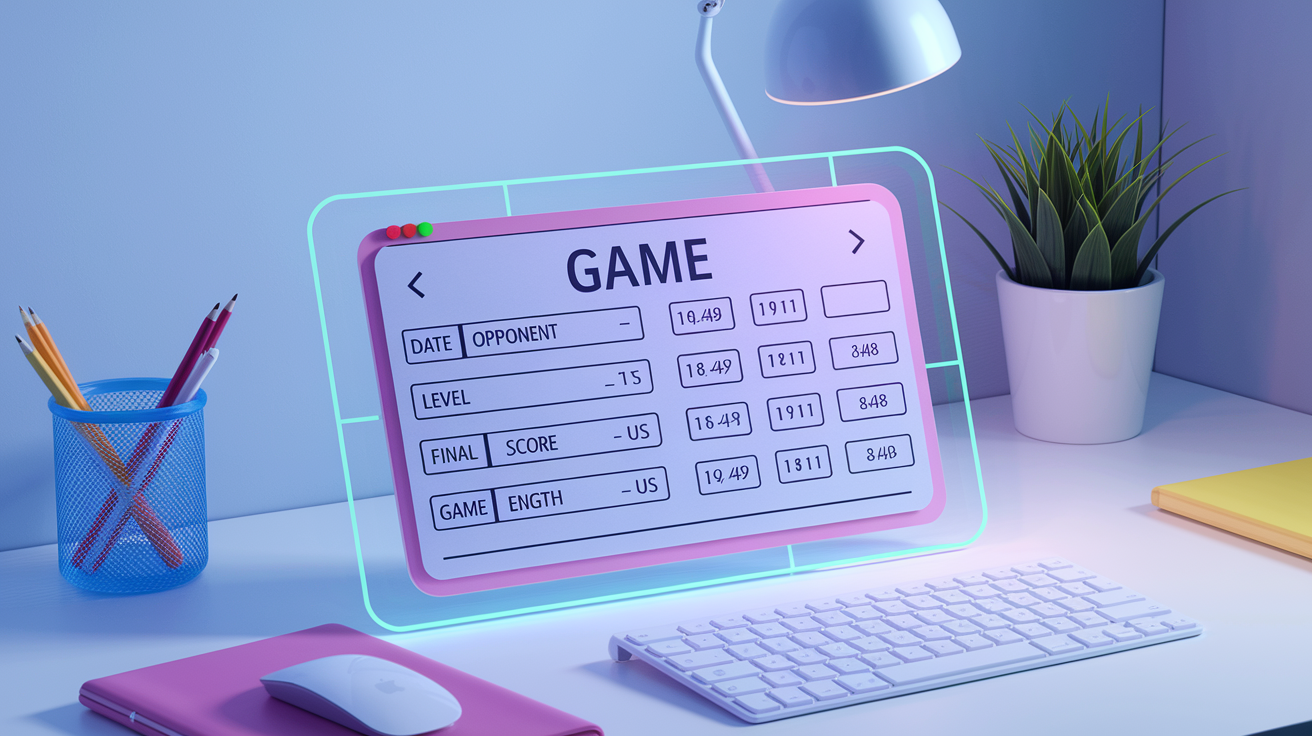
The header captures the facts that identify the game and establish context for every stat below. Date should be YYYY-MM-DD to keep digital files sortable and eliminate confusion. Opponent, location (rink name), level or division (U10, Bantam A, 14U AAA), final score in “Us – Them” notation, and total game length (3 × 12 min or 3 × 15 min stop time) complete the mandatory top row. Consistent formatting prevents mix-ups when multiple teams share the same Google Drive folder or when a parent receives reports from different coaches across multiple kids.
Clear headers make it possible to search a season archive by date range, opponent, or venue. Want to review all games against a specific rival or compare home versus away performance? Standardized fields turn that into a five-second filter instead of a manual hunt through file names. The header’s also the first thing parents see when they open the PDF on their phone, so accuracy here sets the tone for trust in everything below.
| Field | Description | Example |
|---|---|---|
| Date | Game date in YYYY-MM-DD | 2026-01-15 |
| Opponent | Full team name or abbreviation | Woburn Mites A2 |
| Location | Rink name and city | O’Brien Ice Rink, Woburn MA |
| Level/Division | Age group and tier | U12 A1 |
| Final Score | Us – Them | 4 – 2 |
| Game Length | Periods and minutes per | 3 × 12 min stop |
Player Evaluation Tables for Youth Postgame Reports

The player table is the most data-dense section, with one row per player and columns for jersey number, name, position, time on ice (estimated minutes), total shifts, goals, assists, shots on goal, plus/minus, penalty minutes, and a three-part rating. Most youth coaches estimate TOI by counting shifts and multiplying by average shift length (typically 45 to 90 seconds depending on age), which is accurate enough for development feedback. The table expands to handle rosters of 6 to 20 skaters. Every row should capture at least the player’s number, position, and rating even if counting shifts isn’t practical at the youngest levels.
The 1–5 rating system breaks individual performance into three parts: skill execution, effort and compete, and decision quality or positioning. A “3” in any category represents age-appropriate, expected performance. A “4” signals above-average play in that area. A “5” is reserved for standout moments coaches want to highlight in development conversations. Say a defenseman made quick, clean first passes under forecheck pressure all night. A “2” flags a teachable gap, and a “1” is rare, used only when a player was notably off in that specific area. This scale keeps feedback objective, repeatable across games, and easy for parents to understand without requiring deep hockey knowledge.
How to Score Skill/Effort/Decision-Making
Skill ratings evaluate execution: skating speed and edges, stick skills (passing, shooting, stickhandling), and body positioning in battles. Effort ratings measure compete level, backcheck intensity, willingness to block shots, and shift-to-shift energy. Decision ratings assess reads in the neutral zone, whether the player chose the right pass option, gap control as a defender, and awareness of linemates and opponents. Add a one-line comment per player in the notes field to explain a “5” or a “1” and tie the number to observable plays, making the rating useful for the next practice plan instead of just a report-card score.
Goaltender Postgame Assessment Template
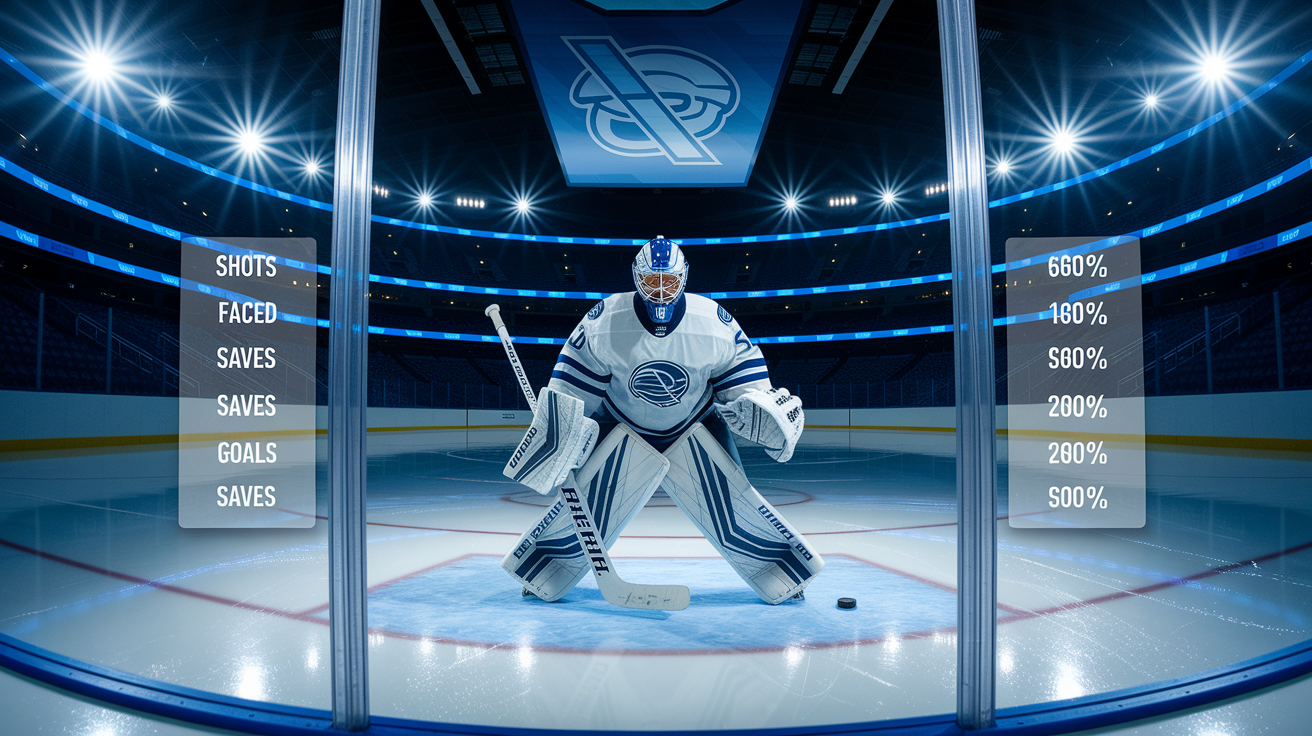
The goalie section tracks shots faced, saves made, goals against, save percentage (calculated automatically in a spreadsheet), and qualitative notes on rebound control, post integration, tracking through screens, and special-teams performance. Because most youth games involve one or two goalies, the template includes start/relief status and minutes played for each. If a goalie was pulled or relieved mid-game, record the time of the switch and note whether it was injury-related, performance-based, or part of a planned rotation.
Goaltender evaluation is less about the final save percentage and more about identifying patterns coaches can address in practice. Did the goalie struggle with low shots through traffic? Were rebounds left in the slot on the penalty kill? Did they challenge shooters effectively on breakaways, or did they retreat too deep into the crease? These observations belong in the short narrative box, and they should connect to specific situations so goalie coaches or parents understand what to work on during the week.
Core goalie KPIs to track postgame:
- Total shots faced and saves made (calculate save percentage)
- Goals against and period-by-period breakdown
- Rebound control: were second chances available in the slot?
- Post integration and depth management on odd-man rushes
- Performance on special teams (power play against, penalty kill)
Tactical & Team Systems Notes for Postgame Review
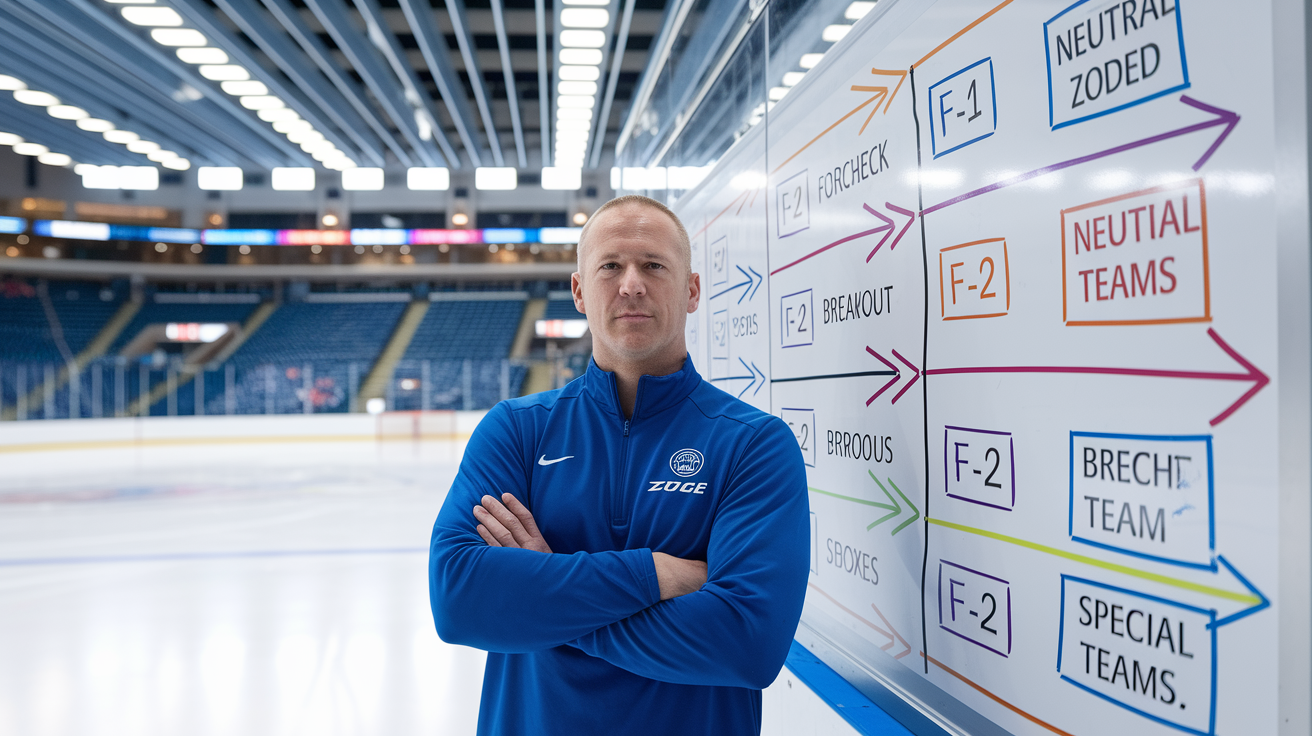
Tactical observations document how the team executed its systems and where breakdowns occurred. Coaches should write period-by-period notes capturing forecheck effectiveness, neutral-zone regroup quality, breakout patterns under pressure, and transition speed from defense to offense. If the power play went 0-for-3 because of repeated turnovers at the offensive blue line, that detail belongs here with enough context that an assistant coach reading the report three weeks later will remember the issue. If the penalty kill allowed only one shot in four opportunities, note what the box or diamond did well so the team can repeat it.
Special-teams analysis should include the conversion rate (X-for-Y) and at least one example of what worked or what failed. On the forecheck, note whether F1 applied pressure or got walked, whether F2 read the breakout pass, and whether F3 stayed high or pinched too early. In the neutral zone, observe whether the team regrouped with control or chipped pucks for a footrace. Breakout notes should name which D-to-D or D-to-forward patterns succeeded and which led to turnovers. These observations turn stats into teaching moments and make it easier to design the next practice.
Where Tactical Notes Fit in the Report
Tactical observations sit between the team quick-stats row and the individual player table, giving context before coaches dive into individual ratings. This placement lets parents and staff see the big picture (we lost faceoffs and gave up odd-man rushes in the second period) before they review which players struggled with gap control or which forwards failed to support the breakout. Tactical notes also feed directly into the “What Worked” and “Needs Improvement” sections, creating a flow from observation to evaluation to action plan.
What Worked & What Needs Improvement (Coach Bullet Sections)
These two sections translate observations and stats into concise, evidence-backed bullet points. “What Worked” should celebrate three to six strengths with specific references: “Power play 2-for-4; clean entries off the half wall and quick shots from the slot,” or “Defensive-zone exits: four of five breakouts in the first period were tape-to-tape D-to-D passes under pressure.” Parents appreciate seeing what their player and the team did well. Players gain confidence when coaches name the systems and individual efforts that produced results.
“Needs Improvement” must pair every issue with a drill recommendation or practice focus. Instead of writing “Too many turnovers,” a complete bullet reads “Turnovers in neutral zone: 8 giveaways on stretch passes; next practice will emphasize short support options and regroup patterns.” This structure keeps feedback constructive and assigns responsibility. If a coaching note says “Forecheck too passive; F1 must engage the D,” the action-items section should list a 10-minute drill on angling and stick-on-puck pressure with specific players assigned extra reps.
What Worked:
- Power play 2-for-3: clean entries, quick puck movement, net-front screens
- Penalty kill 4-for-4: aggressive box, blocked six shots, cleared rebounds
- Breakout execution in third period: 7 of 9 exits were controlled, tape-to-tape
- Individual effort: three players finished every check in the defensive zone
Needs Improvement:
- Neutral-zone turnovers: 9 stretch passes intercepted; drill short support next practice
- Gap control on rush: four odd-man chances against; assign 1-on-1 and 2-on-1 reps
- Faceoff losses in defensive zone: 3-for-10; book extra faceoff practice with center group
- Rebound control on penalty kill: two goals came from second chances in the slot
Action Items for Next Practice (Integrated Development Planning)
The action-items section converts game analysis into a prioritized practice plan, listing up to ten drills or skills with assigned responsibility and target completion dates. Each item should reference an observed issue from the game and name the drill, the players who need extra reps, and whether the focus is individual skill (shooting, stickhandling, hand-eye coordination) or team system (breakout, neutral-zone regroup, forecheck). Deadlines are set as “Week 1” (complete within seven days) or “Month 1” (integrate over the next four weeks), creating accountability without overwhelming volunteer staff.
Development goals tie individual player ratings to off-ice work. If a winger earned a “2” in decision quality because of poor reads in the neutral zone, the action item might assign that player 15 minutes of small-area games focused on give-and-go timing. If the goalie struggled with rebound control, the item directs the goalie coach to run 10 minutes of pad save and recovery drills before the next game. By linking every action to a specific game observation, coaches ensure practice time addresses real needs instead of generic skill work. Parents see a clear connection between the report and their player’s development path.
| Action Item | Assigned To | Target Date |
|---|---|---|
| 10 min neutral-zone regroup drill (short support) | Head Coach | Week 1 |
| 1-on-1 gap control station, 8 min | Assistant Coach | Week 1 |
| Faceoff technique review with centers (D-zone draws) | Head Coach | Week 1 |
| Goalie pad save and rebound control, 10 min | Goalie Coach | Week 1 |
| Power-play entry patterns, 12 min | Assistant Coach | Month 1 |
| Individual stickhandling (tight turns) for wingers #7, #12 | Players (off-ice) | Month 1 |
Communication Logs & Parent Updates After Games

The communication log tracks who received each report, the date and time it was sent, and any special notes about distribution. Standard recipients include all rostered players’ guardians, team managers, assistant coaches, and occasionally division coordinators or club administrators. Recording this prevents gaps in communication and provides a paper trail if a parent later claims they never saw feedback or game stats. The log also helps coaches stay consistent: if the expectation is to send reports within 48 hours, tracking send times makes that commitment measurable.
Best practice calls for two versions of every report. The condensed parent version is a one-page PDF highlighting the final score, top-level stats, “What Worked,” “Needs Improvement,” and the next practice focus. It strips out detailed player ratings and tactical notes to respect privacy and keep the message short enough to read on a phone. The full digital version stays with the coaching staff, archived in a shared folder that tracks season trends, individual development notes, and practice planning. Parents receive their copy via email or team app within 24 to 72 hours. The subject line should be clear and consistent so families can search their inbox by date or opponent.
Sample subject lines for postgame emails:
- [Team Name] Postgame Report – Jan 15 vs Opponent (W 4-2)
- U12 A1 Game Recap: Jan 15 at O’Brien (Final 4-2)
- Postgame Summary – [Date] vs [Opponent] – [Result]
- [Division] Report: [Opponent] Game ([Score]) + Next Practice Focus
- Quick Recap – [Date] Game vs [Team] – Action Items Inside
Season Archive, Trends & Long-Term Tracking

Every postgame report should be saved in a dedicated season folder, organized by date or opponent, so coaches can review multi-game trends at midseason and again before playoffs. When five or six reports show the same player earning a “2” in decision quality, that pattern signals a development priority worth addressing in a one-on-one conversation or targeted drill plan. When power-play conversion drops across four consecutive games, the coaching staff knows it’s time to redesign entries or adjust personnel. The archive turns individual game snapshots into a continuous development record.
Long-term tracking also supports end-of-season evaluations, tryout prep, and advancement recommendations. If a player’s skill rating climbed from a consistent “3” in October to a steady “4” by February, coaches can point to specific games and cite the improvement when writing reference letters or discussing team placement for next season. Parents appreciate concrete evidence of growth. Players benefit when feedback is grounded in observable data rather than subjective memory. The archive becomes proof of progress.
Digital spreadsheets make trend analysis simple. Coaches can add a summary tab that pulls player ratings from each game report, calculates season averages, and flags players who improved or declined in specific categories. Conditional formatting can highlight any rating below “3” in red and any “5” in green, making it easy to spot patterns at a glance. This level of detail is optional for younger age groups but becomes increasingly valuable at bantam and midget levels, where development decisions directly affect high school, junior, and college pathways.
Final Words
In the action, the one-page template packages header fields, team stats, a 20-player evaluation table, goalie KPIs, tactical notes, What Worked/Needs Improvement bullets, communication logs, and ten prioritized practice action items.
Use the ready-to-use layout right after the final horn: fill the printable for parents, keep the full digital sheet for coaches, and convert observations into next-practice drills.
This postgame report template for youth hockey coaches makes game-to-practice follow-through fast, keeps development focused, and improves communication. Try it next game—small habit, big payoff.
FAQ
Q: What are the 4 C’s of coaching hockey and what are the 3 C’s of coaching?
A: The 4 C’s of coaching hockey are commonly Communication, Commitment, Competence, and Character. The 3 C’s often emphasize Compete, Commitment, and Character, though exact wording varies by coach and program.
Q: What to write to your coach after a season ends?
A: After a season ends, write a brief thank-you, note one or two personal improvements, ask for one specific off-season focus, and invite feedback or next-step suggestions.
Q: What is the Gretzky rule in youth hockey?
A: The Gretzky rule in youth hockey is an informal guideline: play players where their development is maximized rather than just letting them dominate weaker competition; implementation varies by program and league.