

Think NCAA is the only way to get a hockey scholarship? Think again.
NCAA, ACHA, and NAIA handle eligibility and money very differently.
NCAA is the strictest on academics and amateur status and offers athletic aid at Division I and II.
ACHA runs as a club system, so there’s no centralized athletic scholarship program, and schools may offer academic or need-based aid instead.
NAIA sits between them, and it allows athletic scholarships with simpler eligibility checks.
This post breaks down those differences and what they mean for recruiting, finances, and your chances to play.
Key Differences Between NCAA, ACHA, and NAIA Hockey Eligibility and Scholarships
The NCAA, ACHA, and NAIA are three separate paths to college hockey. Each one’s got different rules, scholarship setups, and eligibility standards. The NCAA’s the strictest when it comes to academics and amateurism, and it offers regulated athletic scholarships at Division I and II. ACHA runs as a club system with no centralized athletic scholarships. Players depend on academic aid or whatever the school offers, and eligibility gets decided by individual institutions. NAIA sits somewhere in between, allowing athletic scholarships with looser eligibility rules than the NCAA. Fewer core-course requirements and simpler amateurism checks.
Your choice usually comes down to skill level, academic profile, and what you’re expecting for scholarships. NCAA Division I has the toughest competition and exposure, but also the hardest eligibility clearinghouse and recruiting rules. ACHA gives you a wide competitive range across its three divisions and lets players who might’ve lost NCAA eligibility (like former major junior players) keep playing organized hockey. NAIA schools can offer athletic scholarships and recruit year-round, which makes the process more straightforward and often less time-sensitive than NCAA recruiting.
| Organization | Eligibility Strictness | Scholarship Availability |
|---|---|---|
| NCAA (D-I, D-II, D-III) | Strict. Centralized clearinghouse, core-course GPA, test scores (D-I/D-II), amateurism verification. | D-I and D-II offer athletic scholarships (equivalency). D-III does not offer athletic scholarships. |
| ACHA (D-I, D-II, D-III) | Flexible. Set by institution and club. No centralized clearinghouse. | No athletic scholarships. Academic, need-based, or institutional aid available at some schools. |
| NAIA | Moderate. NAIA Eligibility Center required. Fewer core courses, simpler amateurism rules. | Athletic scholarships allowed (equivalency model). Flexible award splits. |
Getting clear on these differences early helps families and players focus their recruiting efforts, academic prep, and eligibility registration on whatever path fits best. If you’re aiming for pro exposure and have the academics and amateur status to clear NCAA hurdles, Division I or II makes sense. If you’re balancing academics and playing time or have eligibility complications, ACHA or NAIA might offer better fit and flexibility.
Eligibility Requirements Across NCAA, ACHA, and NAIA
Eligibility standards vary because each organization has different goals, member institutions, and competitive missions. The NCAA enforces uniform national standards to keep things balanced and preserve amateurism across more than 1,100 schools. ACHA leaves eligibility decisions to individual institutions and club programs, focusing on access and participation. NAIA uses a centralized eligibility center but applies less restrictive academic and amateurism rules than the NCAA, reflecting its smaller membership and institutional flexibility.
NCAA Standards
NCAA Division I and II require all prospective student-athletes to register with the NCAA Eligibility Center before competing. You need to complete 16 core high school courses (English, math, lab science, social science, and additional core classes), earn a minimum core-course GPA, and meet SAT or ACT requirements on a sliding scale. Division I uses a stricter sliding scale. Higher test scores can offset a lower GPA and vice versa. Division III doesn’t require test scores for initial eligibility and sets its own admissions standards school by school, but still requires high school graduation and enrollment in good academic standing.
Amateurism rules are strict across all NCAA divisions. Playing for pay, signing with an agent, or competing in certain professionalized leagues (like the CHL) typically ends NCAA eligibility. Division I also has a five-year clock starting from first full-time college enrollment to use four seasons of competition. Division III commonly limits participation to ten semesters or fifteen quarters.
ACHA Standards
ACHA programs don’t use a national eligibility clearinghouse. Academic requirements get set by each school’s admissions office and the club team’s bylaws. Players must meet regular student admission standards and stay in good academic standing to compete. Because ACHA is club-based, eligibility rules around amateurism and outside competition are way more permissive. Former major junior players, older students, and those who played in paid leagues can often join ACHA rosters as long as they meet institutional enrollment rules. Age limits and seasons-of-competition caps vary by division and team policy, making ACHA a flexible option for non-traditional paths.
NAIA Standards
NAIA requires first-time college athletes to register with the NAIA Eligibility Center and submit transcripts, test scores (if applicable), and documentation of prior competition. NAIA academic requirements are generally less restrictive than NCAA. There are fewer mandated core courses, and the GPA threshold is often more achievable for late bloomers. Amateurism rules exist but get applied more leniently. Some major junior participation may still allow NAIA eligibility depending on the circumstances. NAIA doesn’t impose a universal five-year enrollment clock, giving older or delayed-enrollment athletes more flexibility. Eligibility approval is typically faster and less bureaucratic than NCAA clearance.
Scholarship Structures and Financial Aid Options
NCAA Division I and II programs can offer athletic scholarships. Men’s Division I hockey is capped at 18 equivalency scholarships per team, and Division II is capped at 13.5. Coaches split these equivalencies as full or partial awards depending on roster needs and budget. Division III schools can’t offer athletic scholarships. Athletes rely entirely on academic merit aid, need-based federal or institutional aid, and other non-athletic sources. Division III rosters often include strong students who prioritize academics alongside hockey.
ACHA teams don’t offer athletic scholarships. Because ACHA programs operate as student clubs, any financial support comes from the institution’s academic scholarships, need-based aid, or occasional institutional discounts for club athletes. Some schools provide modest tuition support or stipends to ACHA players, but these arrangements aren’t governed by ACHA nationally and vary widely. Players considering ACHA should research school-specific aid policies and apply for academic and need-based aid early.
NAIA schools can offer athletic scholarships using an equivalency model, meaning coaches can split awards across multiple players. NAIA institutions collectively award over $1.3 billion in scholarships annually across all sports. NAIA hockey programs have flexibility in how they allocate funds, and many schools combine athletic scholarships with academic or institutional aid to create competitive financial packages. Awards are typically renewed annually at the coach’s discretion, so maintaining good academic and athletic standing is important.
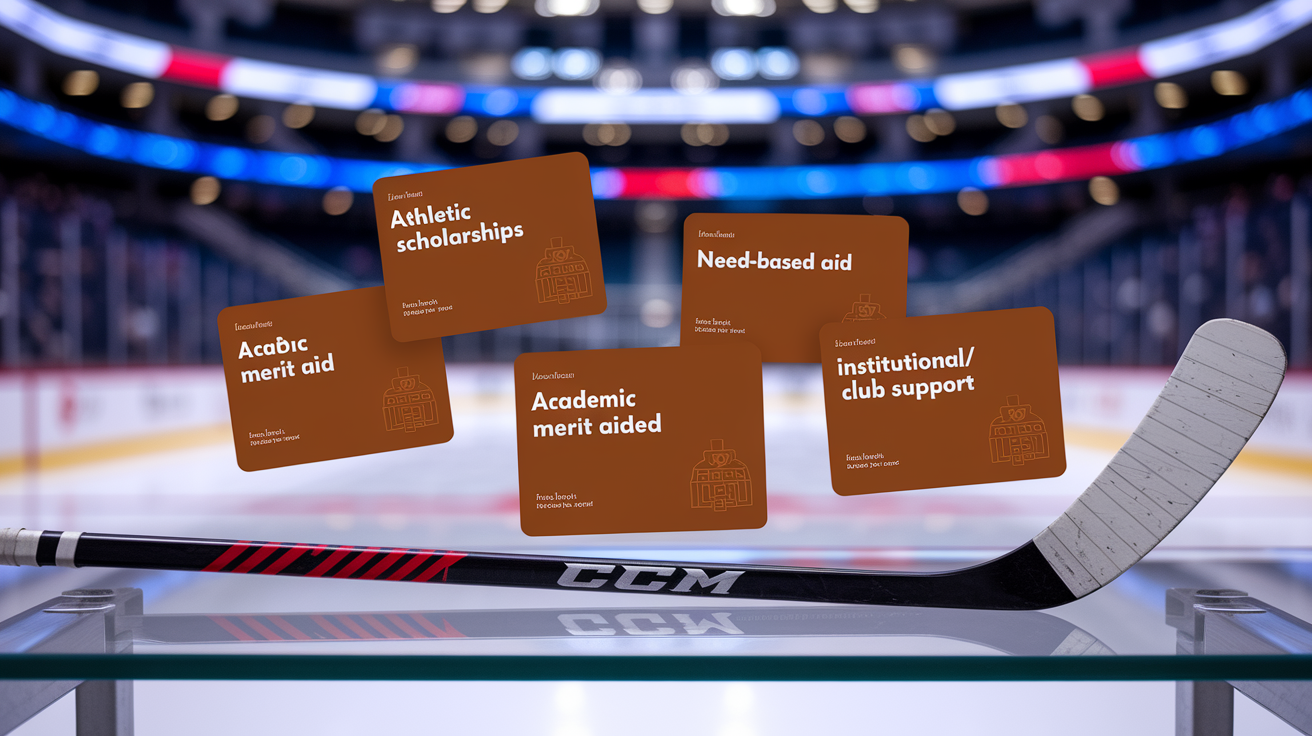
The four main types of aid available across these pathways:
- Athletic scholarships. NCAA D-I and D-II, and NAIA programs offer these. Amounts and renewal depend on team budgets and coach decisions.
- Academic merit aid. Available at all three levels. Especially critical for NCAA D-III and ACHA players.
- Need-based aid. Federal and institutional aid based on FAFSA. Accessible regardless of athletic status.
- Institutional or club support. Some ACHA programs and NAIA schools offer tuition discounts, stipends, or other financial incentives outside traditional scholarships.
Competition Levels and Program Structure
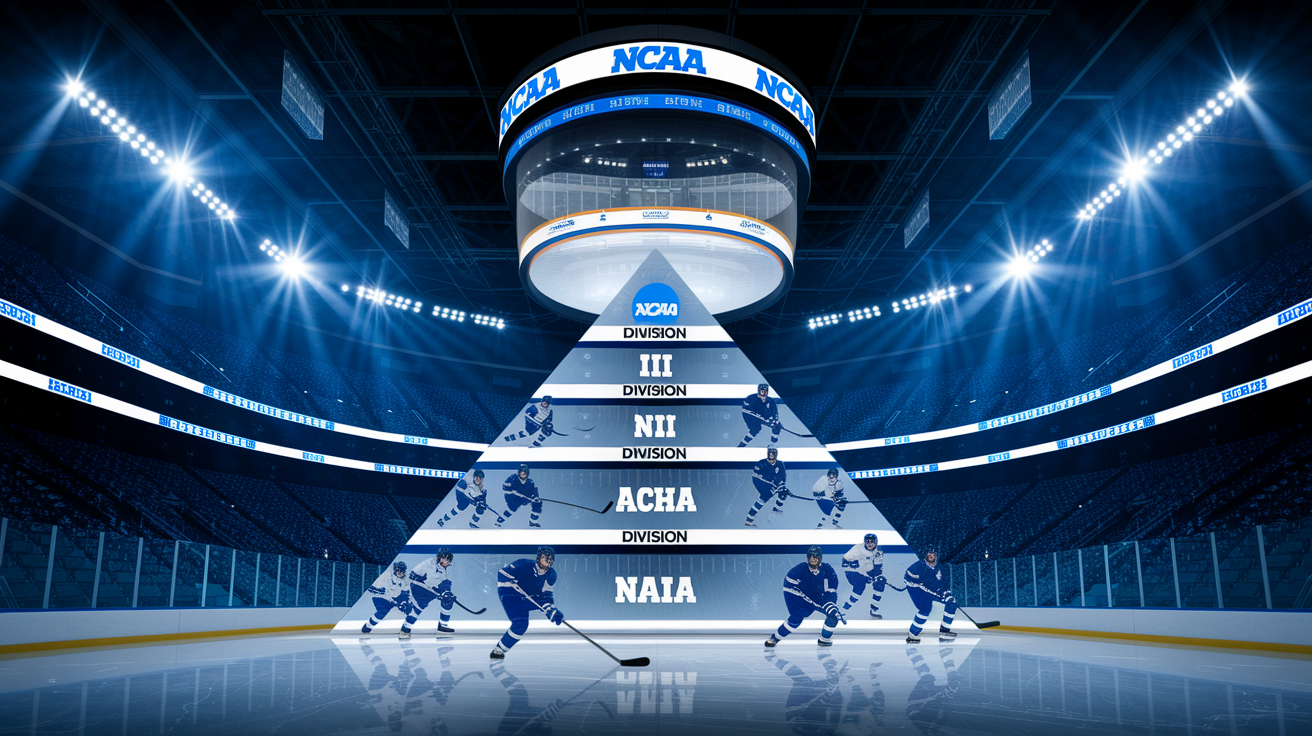
NCAA Division I represents the highest level of college hockey competition in the United States. Rosters typically carry 25 to 28 players, and programs operate with full-time coaching staffs, strength and conditioning coordinators, video analysts, and significant travel budgets. Division I teams play a full season schedule with frequent weekend travel, mandated practice and competition hour limits, and strict compliance oversight. The time commitment approaches a full-time job. Division I hockey is the primary pipeline to professional leagues, including the NHL, and scouts attend games regularly. Most players have competed in the USHL or other elite junior leagues before arriving on campus.
NCAA Division III features 84 teams (more than Division I and II combined) and offers a wide competitive range. Many Division III programs are highly competitive and well-funded, while others emphasize balance between academics and athletics. Practice and competition hours are similar to Division I, but without the same level of media exposure or professional scouting. Division III players often come from strong high school programs, prep schools, or lower-tier junior leagues. Because Division III doesn’t offer athletic scholarships, rosters tend to include academically driven players who want to compete at a high level while pursuing rigorous degrees.
ACHA programs span three divisions with significant variation in competitiveness and structure. ACHA Division I programs at schools like Arizona State (before its NCAA transition), Michigan, and Penn State operate nearly like varsity teams, with dedicated coaching, ice time, and travel budgets. ACHA Division II and III programs range from competitive club teams to more recreational setups. Time commitment varies from 8 to 20 hours per week depending on the program. ACHA rosters often include a mix of ages and backgrounds. Players who left junior hockey, former NCAA-eligible athletes, and students balancing academics or work.
NAIA hockey competitiveness varies by program but generally sits between lower NCAA Division I, strong Division III, and high-level ACHA Division I teams. NAIA programs emphasize regional competition and often have smaller rosters and more playing-time opportunities than Division I programs.
Recruiting Processes and Timelines

NCAA recruiting is the most regulated. Division I and II coaches can only contact recruits during specific evaluation periods and must follow strict dead periods when no contact is allowed. For most sports, June 15 after a prospect’s sophomore year marks the beginning of more direct communication, though hockey-specific rules may differ slightly. Official visits are limited, and prospects must register with the NCAA Eligibility Center early (ideally by the start of junior year) to ensure transcripts, test scores, and amateurism documentation are processed in time. Recruiting peaks during junior and senior years, and National Letter of Intent signing periods create formal commitment deadlines. NCAA coaches recruit heavily at showcases, USHL games, and elite tournaments where they can evaluate multiple prospects efficiently.
The three major recruiting differences:
- NCAA. Strict contact periods, limited official visits, formal signing periods, and clearinghouse registration required months in advance.
- ACHA. Flexible year-round recruiting, informal offers, tryouts typically held in August or early fall, and rosters finalized close to the start of the school year.
- NAIA. No enforced recruiting calendars or dead periods. Coaches can contact prospects any time and often recruit later into senior year or after graduation.
Navigating these systems requires planning. NCAA prospects should start building a recruiting profile early, attend showcases, register with the Eligibility Center, and maintain proactive contact with coaches during open periods. ACHA recruits can reach out to club coaches directly, attend tryouts, and commit later in the process without worrying about clearinghouse deadlines. NAIA prospects benefit from the flexible timeline. Many NAIA coaches pursue unsigned NCAA-level talent after NCAA signing periods close, and offers can come throughout the year. Athletes exploring multiple pathways should register with both the NCAA and NAIA Eligibility Centers to keep all options open.
Transfer Rules and Player Movement

NCAA transfer rules require athletes to enter the Transfer Portal to explore opportunities at other schools. Since 2021, a one-time transfer exception allows most athletes to transfer once and compete immediately without sitting out a season, provided they meet academic and notification requirements. Division I athletes remain subject to the five-year enrollment clock regardless of how many schools they attend, so transferring doesn’t extend eligibility. Division III transfers are generally governed by conference and institutional rules, which can vary. NCAA transfers must notify their current school, receive a release or clearance, and work through compliance offices at both institutions.
ACHA transfer rules are more flexible and vary by division and team. Because ACHA is club-based, transfers are typically governed by the institution’s policies and the receiving team’s tryout or roster processes. Athletes can usually move between ACHA programs without sitting out or losing eligibility, as long as they meet enrollment and academic-standing requirements. Movement between ACHA divisions (Division I to II, for example) is common and generally unrestricted.
NAIA has its own transfer rules tied to academic standing and prior participation. NAIA transfers must meet institutional admission standards and NAIA Eligibility Center requirements. Immediate eligibility is often available when the athlete receives a proper release from their previous school and meets NAIA academic benchmarks. NAIA doesn’t enforce the same strict portal and notification timelines as the NCAA, making the process more straightforward.
Cross-organization movement (such as ACHA to NCAA, NCAA to NAIA, or NAIA to ACHA) depends on eligibility status. Former NCAA athletes who exhausted eligibility or violated amateurism rules may find opportunities in ACHA or NAIA if those organizations’ rules allow. ACHA athletes who maintain NCAA amateur status can transfer to NCAA or NAIA programs if they meet academic and eligibility standards.
Choosing the Best Pathway for Your Hockey Career

The best pathway depends on skill level, academic goals, scholarship needs, and timeline. NCAA Division I suits elite players aiming for professional opportunities and NHL draft exposure. The competition is the highest, the scholarship pool is the largest (18 equivalency scholarships per team), and scouts attend games regularly. Division I requires early commitment to recruiting, strict eligibility clearance, and the ability to handle a near-professional training and travel schedule.
NCAA Division III and top ACHA programs fit academically focused players or those who developed later and want competitive hockey without the Division I grind. Division III offers strong academics and high-level competition but no athletic scholarships, so players need academic merit or need-based aid. ACHA Division I and II programs provide similar competition and flexibility for players with eligibility complications, older students, or those who played major junior and lost NCAA status.
NAIA offers a middle path. Competitive hockey with athletic scholarships, flexible recruiting timelines, and more achievable academic requirements. NAIA programs often recruit later and provide opportunities for unsigned NCAA prospects or athletes who want playing time at a smaller school.
Typical athlete profiles for each pathway:
NCAA Division I. Elite junior or prep school players with high skill, strong academics, and clear amateur status aiming for pro exposure.
NCAA Division III or ACHA Division I. Strong players who prioritize academics, need playing time, or have eligibility issues that rule out NCAA Division I or II.
NAIA. Competitive players seeking athletic scholarships at smaller schools, late bloomers, or athletes who want flexible recruiting and straightforward eligibility processes.
Final Words
On the ice, choices show up as rosters, offers, and paperwork. NCAA has strict eligibility checks and regulated athletic scholarships. ACHA leans on academic or institution aid and has looser rules. NAIA offers athletic aid with more flexible standards.
Use the sections above: eligibility, scholarships, competition, recruiting, transfers to weigh what matters. Keep hockey scholarship eligibility NCAA vs ACHA vs NAIA handy when you talk with coaches and parents so questions get specific. Pick the path that fits your goals and you’ll keep improving.
FAQ
Q: Does NAIA eligibility count against NCAA eligibility?
A: NAIA eligibility can count against NCAA eligibility: seasons of varsity competition at NAIA usually consume NCAA seasons of eligibility, so athletes must confirm transfer rules and Eligibility Center requirements before switching.
Q: Do ACHA hockey players get scholarships?
A: ACHA hockey players generally don’t get athletic scholarships. Most aid is academic, need-based, or institutional club support, so confirm with each school—some campuses provide non-athletic financial help tied to club involvement.
Q: Is it harder to get into NAIA or NCAA?
A: It’s generally harder to get into the NCAA than the NAIA. NCAA Division I and II enforce stricter academic and amateurism standards, while NAIA is typically more flexible though competitiveness varies by program.
Q: What is the difference between ACHA and NCAA hockey?
A: The difference between ACHA and NCAA hockey is that NCAA is varsity-level with stricter eligibility, recruiting, and scholarship rules, while ACHA is club-level with looser rules and limited athletic aid.