

Shooting from the slot is overrated.
Positioning and shot choice win close-in battles.
The slot is the highest-value real estate on the ice, but your window to act is a fraction of a second.
Cross-slot feeds and on-goal attempts convert at way higher rates than center-lane plays, so being first to the soft spot pays off.
This post shows the exact tactics like net-front leverage and screens, quick release mechanics, tip and redirect technique, and rebound timing you can train to score in tight, high-traffic slot situations.
Core Slot-Scoring Concepts for Tight, Close‑Quarters Situations

The slot sits between the faceoff circles, running from the crease to the top of those circles. Back in 2022–23, cross-slot passes converted at 21.2%. When those shots actually reached the net, that number jumped to 27.6%. Compare that to center-lane plays—10.9% overall, 16.2% on goal—and behind-the-net setups at 11.0% shooting percentage, climbing to 14.9% for on-goal attempts. Those numbers show you exactly why coaches obsess over slot touches. The return’s higher than anywhere else on the ice, even though your execution window shrinks to fractions of a second.
Close quarters compress everything. You’re operating inside tight boxes with defenders draped on your hips and goalies reading every tiny movement you make. Lateral goalie movement becomes a real weapon here. Force a netminder to shift across the crease before you shoot and you’ll create scoring lanes and open far-post seams. Cross-slot feeds exploit that movement best, but those passes need timing, velocity, and chemistry. The roughly 2,000 center-lane shot assists recorded in 2022–23 outnumbered the 1,049 cross-slot and 1,229 behind-net assists combined. But the conversion rates? They tell you where the premium chances actually live.
High-priority actions when you’re working compressed slot space:
Rebound attack: Crash within 0.5–1.0 seconds of the shot. Stick on ice, shoulders squared to where the puck came from.
Tip mechanics: Vertical blade across the shot lane. Accept contact with a smaller surface area. Redirect, don’t guide.
Lateral pass timing: Your catch-and-shoot window’s under 1.5 seconds. Train to release in 0.2–0.5 seconds.
Protective puck positioning: Toe-drag shields, forehand walls, micro-turns to evade stick checks.
Tight-space footwork patterns: Inside-foot anchors for balance, outside-foot escape steps, edge control to open passing lanes and shooting angles.
Net-Front Physical Tactics: Screens, Leverage, and Positioning Control

Effective screening happens inside a 1.5–2.0 metre radius box centered on the crease. Hard screens lock defenders out and block the goalie’s sightline. Soft screens leave your stick and eyes free to tip or redirect. Which one you choose depends on puck position and shooter timing. When the puck’s in motion toward the net from the point or half-wall, a soft screen with an active stick and visual contact on the shooter raises your tip success. When the shooter needs time to set up or the goalie’s tracking laterally, a hard screen that seals vision creates more problems for the netminder.
Rebound and second-chance positioning sits 1–2 metres directly in front of the net, shoulders squared to the puck’s origin. Micro-movements shed coverage. A quick shoulder check reveals defender stick placement, and edge-control shifts open small passing or shooting lanes without sacrificing inside position. Maintaining leverage means keeping your inside foot between the defender and the net, using your outside shoulder and forearm to create separation, and timing small repositioning steps to arrive in the rebound lane just as the shot releases.
| Positioning Cue | Purpose |
|---|---|
| Inside-foot anchor | Holds net-side balance; prevents defender from pushing you out of prime rebound zone |
| Stick/hand placement | Stick on ice maintains tip readiness; top hand free to shield and fend off checks |
| Micro-movement lane changes | Small edge shifts create visual confusion for goalie and open seam for redirects or rebounds |
Unified Shooting Mechanics: Quick Release, One‑Timers, and Close‑Range Snapshots

NHL-caliber pass-to-shot timing runs 0.2–0.5 seconds. That window forces defenders to react on instinct rather than technique, and goalies rarely have time to square or push laterally. Quick-release mechanics start with minimal windup. Load from hips and shoulders, keep the blade on ice or just above it pre-shot, and commit your weight transfer through the puck rather than pulling back into a long weight shift. One-timers become dangerous when puck speed reaches 60–90+ km/h and you time the swing to intercept the pass at peak velocity, converting momentum into shot power without resetting.
Close-range snapshots strip the weight-transfer step down to a compact hip snap and shoulder rotation. Your lower body absorbs pressure from contact, the top hand guides blade angle, and the bottom hand accelerates through the release. Off-leg releases—shooting while standing on the leg opposite your shooting side—help when space is tight or you’re moving laterally. Practice loading the puck on either foot, especially when crossing through the slot or receiving a pass while drifting toward the far post.
Six mechanical keys for close-range quick releases:
- Pre-load blade on ice to eliminate wasted motion
- Hip snap drives power; shoulders follow rotation
- Hands stay close to body for control under pressure
- Top-hand wrist roll controls blade angle and elevation
- Release within 0.2–0.5 seconds of receiving puck
- Follow through toward target even when contact arrives
D-to-D low-to-high sequences show the timing best. When a defenseman receives a cross-point pass and immediately fires low to high toward the net, you’ve got to read that play and position for tips or rebounds within that same 0.2–0.5 second window. Practice that sequence at game speed, starting with coach-fed passes at controlled velocity and building to live point-to-point feeds.
Deflections, Redirects, and Tip-In Mastery in High-Traffic Areas
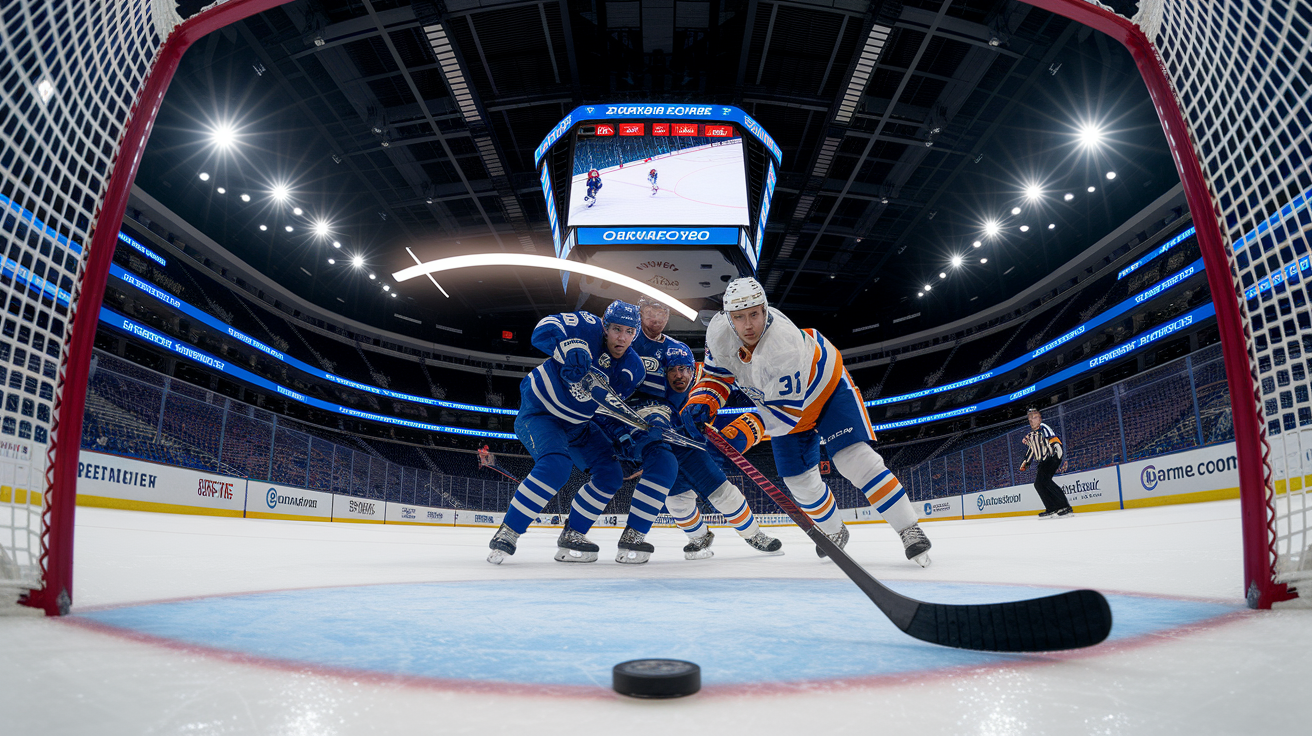
Tip training starts with 20–30 mph shots so you can learn blade placement and hand-eye coordination before puck speed forces pure reaction. Hold the blade vertical or angled across the shot lane, accept contact with a smaller surface area, and let the puck redirect off the blade rather than trying to guide it. Blade angle dictates trajectory. Open the face slightly for elevation, close it to keep the puck low. Hand speed matters when the shot arrives faster than expected. Micro-adjustments to stick angle happen in hundredths of a second.
High-danger passing sequences that end in redirects convert at elevated percentages because the goalie commits to the initial pass vector and struggles to adjust when the puck changes direction close to the crease. Position your body so you can see both the shooter and the goalie’s eyes. That dual read lets you time your stick placement to intercept the shot while staying ready to pull the blade back if the goalie reads the tip early and shifts.
Four primary tip mechanics to drill:
Blade vertical across shot lane: Maximizes interception surface and maintains control under contact.
Small contact surface for precision: Use the middle third of the blade to avoid wild redirects.
Wrist snap on contact: Micro-rotation to steer puck rather than absorbing and reshooting.
Eye tracking from puck to net: Follow the shot all the way to contact, then shift eyes to rebound position.
Creating Scoring Lanes: Lateral Movement, Soft Spots, and Cross-Slot Timing
Center-lane passes occur nearly twice as often as cross-slot plays in 5v5 situations. But cross-slot attempts convert at the highest rate—21.2% overall, 27.6% when on goal. Half of all cross-slot passes happen off the rush, and those rush-origin setups convert at 23.0% compared to 19.1% on forecheck cycles. The difference comes down to defender recovery time and goalie positioning. On the rush, defenders are transitioning and goalies are squaring to the initial carrier. A sharp cross-slot pass forces lateral movement the goalie hasn’t prepared for.
Timing and puck velocity drive cross-slot success. You’ve got to deliver the puck hard enough to beat sticks and skates in the passing lane, and the receiver needs to release within 1.0–1.5 seconds. Soft spots appear when defenders commit to the puck carrier or overplay the center lane. Reading those gaps requires scanning before you receive the puck. Know where the defender’s stick is, where the goalie’s eyes are tracking, and where your shooting lane will open if you drift two feet in either direction.
Behind-the-net to slot sequences exploit delayed soft-spot reads. When you cycle behind the net, defenders typically collapse toward the net-front or overcommit to the wall. The slot player drifts into the seam between defenders, often starting higher in the zone and timing a downward curl to arrive in the mid-slot just as the pass threads out. Manipulating defenders through pacing works best here. Pause at the top of the circles to freeze a defender’s feet, then accelerate into the soft spot as the pass releases. The goalie tracks the behind-net movement and struggles to reset when the puck appears in the slot half a second later.
Rebound Hunting, Second-Chance Creation, and Chaos-Zone Efficiency
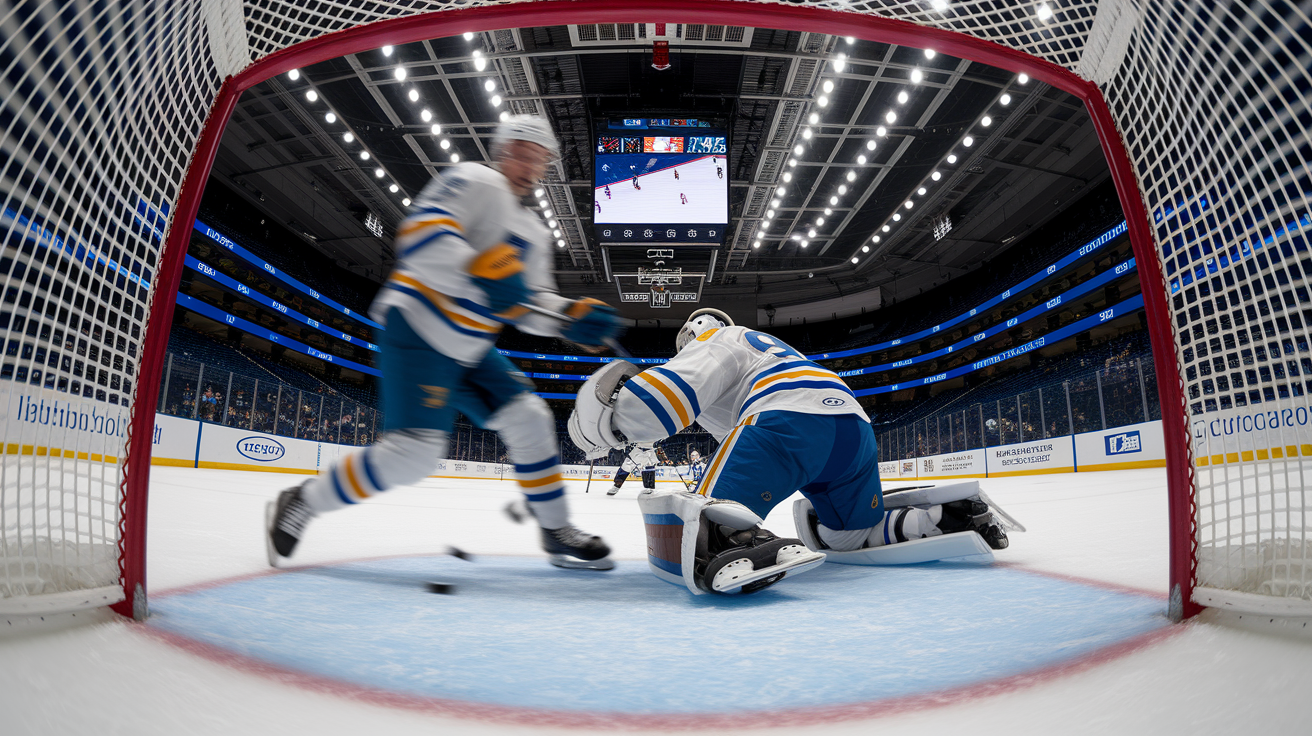
Rebound attack requires a lane crash within 0.5–1.0 seconds of the shot. Position 1–2 metres inside the slot box, stick on ice, shoulders squared to where the puck originated. Most rebounds carrom at angles relative to the shot’s incoming vector, so reading the shooter’s release point and the goalie’s pad angle gives you a jump on where the puck will land. Commit to the crash path early. Hesitation costs you half a step, and that’s often the difference between a grade-A second chance and a covered puck.
Chaos drills use 15–20 rapid sequences to train rebound instincts under fatigue and traffic. Set up with two shooters rotating from different angles, one net-front forward, and a goalie. Shooters fire within three seconds of each other, forcing the forward to read, react, crash, and reset continuously. That volume builds the muscle memory to track pucks through screens and recover position when the first rebound gets tied up.
Five second-chance mechanics to prioritize:
- Anticipate rebound angle by reading shooter’s blade and goalie’s pad placement.
- Stick active on ice so any loose puck can be corralled or jammed immediately.
- Crash with inside foot forward to maintain balance and protect your lane against contact.
- Eyes up after first rebound to locate follow-up opportunities or late-arriving teammates.
- Reset position within one second if the goalie covers; return to soft spot for next cycle.
Protective Puck Control and Escape Skills in Tight Quarters

Protection in tight quarters relies on 1v1 and 2v1 cycle habits trained at high speed. Toe-drag shields pull the puck away from a reaching stick while your body blocks the defender’s path. Micro-turns—small pivots on inside edges—create separation without losing forward momentum, and escape steps off the outside foot let you change direction faster than a defender can adjust. Train those sequences in 4 circuits of 6 reps each, with 20–30 second shifts to simulate game fatigue.
Shoulder-checking improves stick-read accuracy. A quick glance over your inside shoulder before receiving a pass tells you where pressure’s coming from and whether you need to shield immediately or have a clean catch-and-shoot lane. When contact arrives as you receive the puck, absorb it through your hips and lower back rather than your upper body. That keeps your hands and stick free to make the next play. Wall play in the slot means using the boards or defender’s body as an anchor point. Lean into contact to create a static base, then execute a short pass or quick shot off that stable platform.
The best slot finishers protect the puck without stalling the play. Practice receiving passes while moving laterally, shield for half a second to freeze the defender’s stick, then release a quick shot or return pass before help arrives. That rhythm—catch, shield, shoot—becomes automatic with repetition, and the entire sequence should take less than two seconds from puck reception to release.
Slot-Specific Passing: Precision, Pop Passes, and Small-Area Sequences

High-danger passing demands chemistry and velocity. Five to ten rep sets per practice session improve timing between linemates, especially on cross-slot feeds that require both players to read defensive coverage and anticipate the passing lane simultaneously. Cross-slot passes that lead to catch-and-shoot finishes work best when the total sequence stays under 1.5 seconds. Any longer and defenders recover or goalies reset their angle.
Pop passes are short, sharp feeds delivered from tight spaces, often while you’re under pressure. The puck travels three to six feet, usually tape-to-tape, and the receiver needs to be ready to one-time or quick-release immediately. Train pop passes in small-area 3v2 or 2v1 drills where space is compressed and every pass requires precision. You’ll use a short wrist flick rather than a full follow-through, prioritizing accuracy and speed over distance.
Elite passers in the slot create opportunities others don’t see. But that skill can decline after age 30 as processing speed and hands slow slightly. The best small-area playmakers maintain their vision by constantly scanning—before they receive the puck, while they’re controlling it, and even as they’re releasing a pass or shot. Give-and-go sequences in tight quarters rely on that scanning habit. You deliver the puck, immediately relocate to a new soft spot, and become a shooting option again within two seconds. Cycle that pattern in practice until it becomes instinctive, and you’ll generate second and third grade-A chances from the same possession.
Drills: High-Rep Scoring Progressions for Slot Finishing

Cross-slot timing drill: Set up one passer on each half-wall, one shooter in the mid-slot. The shooter rotates between the two passers, receiving cross-slot feeds and releasing within 1.0–1.5 seconds. Run 5–10 reps per side, alternating which passer initiates. Focus on pass velocity—pucks should arrive at 60+ km/h—and shooter’s ability to catch and shoot without resetting feet. Progress by adding a passive defender who mirrors the shooter’s movement, then an active defender who applies stick pressure.
Behind-the-net threading drill: Position one passer behind the net, one shooter in the low slot, and one high-slot option. The passer cycles the puck behind the net under light forecheck pressure, then threads a seam pass to either the low or high slot. The receiver one-times or quick-releases. Run 8–12 reps, rotating passers and shooters. Coaching cue: passer must lift eyes and identify the open seam before releasing the pass; shooter must have stick ready and weight pre-loaded.
Rush-to-cross sequencing: Full-ice progression starting with a 2v1 or 3v2 rush. As the rush enters the offensive zone, the puck carrier attacks the middle and delivers a cross-slot pass for a one-timer or tip. If the initial chance doesn’t convert, reset into a forecheck cycle and create a second cross-slot look off the cycle. Run 10 reps each side, alternating rush setups (odd-man and even-strength). This drill trains both off-rush and cycle creation in one sequence.
Net-front chaos drill: Set up two shooters at different angles (one point, one half-wall), two forwards in the slot (one net-front, one mid-slot), and a goalie. Shooters alternate rapid shots within three seconds of each other. Forwards work screens, tips, and rebound crashes with contact. Run 15–20 sequences per set, rest 90 seconds between sets, complete three sets per session. Add a defender on the net-front forward in later progressions to simulate real clearout battles.
Four consolidated drill progressions to integrate into team sessions:
- Cross-slot timing (5–10 reps/side): Rapid catch-and-shoot from alternating passers; add passive then active defender.
- Behind-net threading (8–12 reps): Seam passes under cycle pressure; rotate passer and finisher roles.
- Rush-to-cross sequencing (10 reps each side): Off-rush then cycle reset; simulate both creation modes.
- Net-front chaos (15–20 sequences × 3 sets): Screens, tips, rebounds under traffic; increase contact and defensive pressure each week.
Final Words
You’re in the action. The slot is the highest-value patch on ice, where split-second positioning, micro-movements, and protective puck work win chances.
This piece walked through the must-haves – cross-slot timing, net-front leverage, quick-release mechanics, redirect skills, rebound hunting, and tight-area passing. Practice the specific drills and reps to make those reads automatic.
Use these close quarters tactics for scoring in the slot and get rewarded shift after shift.
FAQ
Q: What is the $20 method at the casino?
A: The $20 method at the casino is a short-session bankroll plan: bring $20, set a stop-loss and modest win goal, play low-denomination machines and limit spins to control losses and force quick decisions.
Q: What is the 5 spin rule in slots?
A: The 5 spin rule in slots is a myth: waiting five spins doesn’t change odds. Slots use random number generators, so focus on bankroll limits, bet size, and stopping rules instead of timing spins.
Q: How to outsmart slot machines?
A: To outsmart slot machines is impossible long-term because RNGs prevent prediction. Instead, protect your money: pick lower-variance games, set strict session bankroll and time limits, and use comps to get value.
Q: What time do slots hit the most?
A: The time slots hit the most is not predictable; slot outcomes are independent of clock time. Don’t chase “hot” hours—manage bet size, machine volatility, and session limits for better control.