

Is it smarter to protect a one-goal lead by attacking or by stalling?
Late-game offensive-zone stalling—cycling below the goal line, pinning the puck to the boards, and using safe rim-and-reset plays—burns clock and keeps dangerous turnovers away from center ice.
This post breaks down six practical stall tactics, clear positioning roles, and clock-and-bench rules so coaches and players can hold the zone cleanly and finish the game.
No gimmicks—just on-ice techniques you can practice this week.
Core Offensive-Zone Possession Methods for Late-Game Stalling
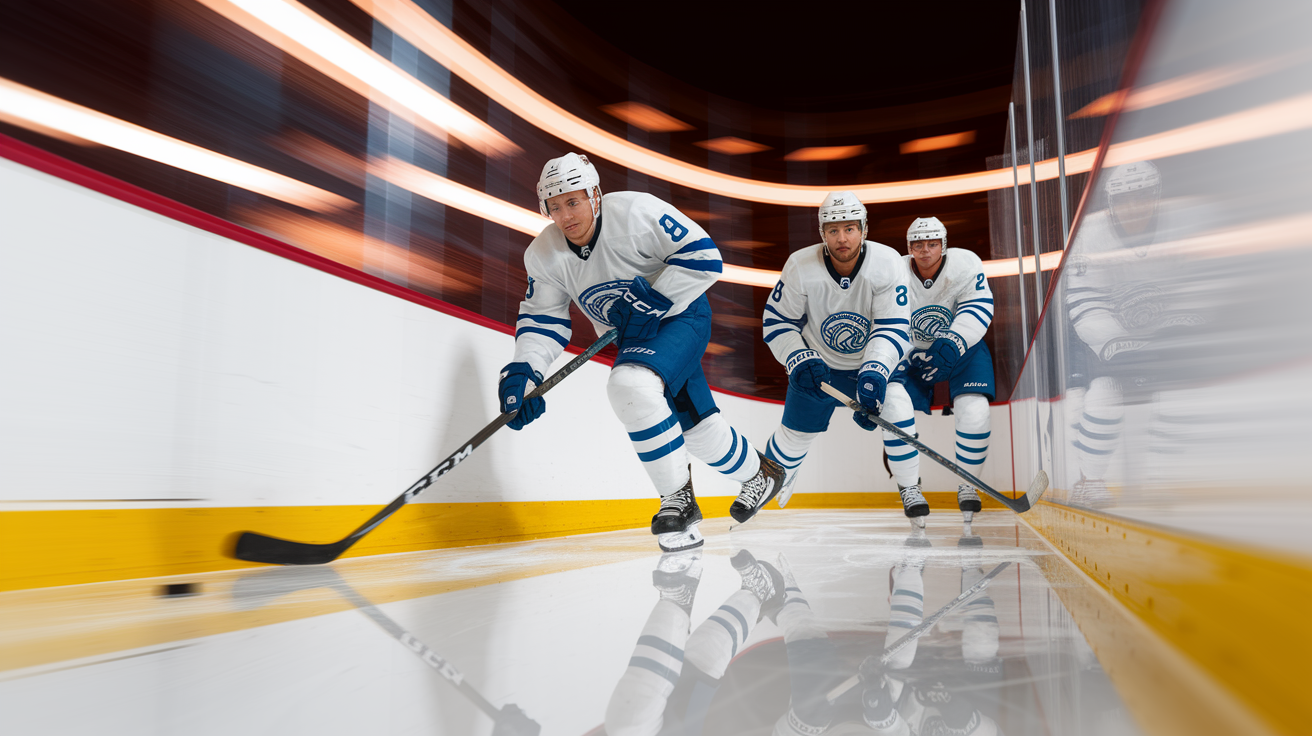
When you’re protecting a one-goal lead with under two minutes left, the fastest way to burn clock is cycling below the goal line, pinning the puck to the boards, and feeding it back to a high outlet before the defense can collapse. Your first forward carries into the corner, leaves it for a trailing teammate, then drives hard to the net. That trailing forward either continues the cycle behind the net, banks the puck softly off the boards to a third man, or sends a safe rim around the wall to reset everything. Continuous movement forces the defending team to chase, burns time, and keeps the puck away from center ice where turnovers become dangerous odd-man rushes. Your winger hits the corner, shields for two seconds, then slips it back to the trailing center who immediately rims it around to the opposite winger. Three seconds gone, no turnover risk.
An “OZ stall-out” happens when your attacking group gets forced into a corner by a Five‑Tight defensive collapse, often a 3v5 numerical disadvantage inside the defensive box. Speed disappears and possession becomes a battle of body position and safe outlet options. The collapse kills possession if your players panic and try forcing cross-ice passes through traffic. Instead, accept the corner pin, protect the puck with body and backhand, and work short passes along the boards until a third-man support option or a defenseman at the point provides a safe reset. This converts a dangerous 3v5 low-zone trap into manageable high-zone possession where your team controls tempo.
Combined safe passing patterns and point support keep the stall legal and low-risk. Short rim-around passes along the boards move the puck without exposing it to interception lanes. Bank passes off the wall to a trailing teammate create give-and-go sequences that shift defensive structure. Backward passes behind the net buy time and force defenders to rotate. Cross-ice passes are only used when clear support exists, never as desperation plays. The defenseman holding the blue line provides the crucial outlet that lets forwards escape pressure and recycle without icing the puck. A Guide to Offensive Ice Hockey Strategy breaks down how cycling and half-wall patterns create these controlled possession windows. All of this works because the puck keeps moving, defenders stay occupied, and your team avoids the static puck concealment that draws delay-of-game whistles.
Six integrated stall tactics for offensive zone delay:
- Below-goal-line cycling – Two to three forwards exchange the puck in the corner, keeping it below the dots to pull defenders low and away from counter lanes.
- Rim-and-retrieve along boards – Soft bank passes around the wall that force defenders to turn and chase while your teammates read the rotation and recover puck control.
- Third-man trailing support – A forward stays above the cycle to receive pressure-relief passes and to convert dangerous low collapses into safer mid-zone resets.
- Backward passes behind net – Controlled puck movement to the backside of the net that buys two to three seconds and forces defensive rotation without risk.
- Half-wall give-and-go sequences – Quick one-touch passes between the winger and center at the half boards that shift the puck laterally and open outlet lanes.
- Point reset to defenseman – Safe pass up to the blue line where D1 can hold, rim, or send a controlled shot that creates a reset rather than a blind clearance.
Offensive-Zone Positioning Concepts That Support Effective Stalling
Player positioning during a stall must create layers of support so that no single defender can collapse the entire sequence. F1, the first forward into the corner, protects the puck with body position and uses edges to shield against pressure. F2, the trailing winger, arrives two steps behind and becomes the immediate outlet, ready to receive a bank pass or to continue the cycle behind the net. F3, typically the center, occupies the middle lane between the dots to prevent quick counterattacks and to provide a backdoor passing option if gaps open in the defensive structure. This triangle below the goal line keeps the puck secure even when defenders outnumber attackers in the corner. If F1 gets swarmed, F2 is there. If F2 gets pressured, F3 can step down or the puck goes back to the point.
Defensemen hold the high structure that completes the stall. D1 stays at or just over the blue line to quarterback the zone, provide reset options, and prevent easy exits by opponents. D2 may pinch selectively to keep possession alive, but generally holds the opposite point to maintain defensive balance and to ensure the team can retreat if the puck turns over. Third-man support is the mechanism that converts a dangerous 3v5 collapse into safer high-zone possession. When three forwards cycle low and two defensemen hold high, the team creates a five-layer structure that forces defenders to choose between collapsing on the puck carrier or covering the outlets. That choice is what buys time. Positioning below the goal line affects stalling security because possession below the dots pulls defenders deep and creates space at the half boards and point, while possession above the dots exposes your team to quicker transition exits and reduces the physical shielding advantages of wall play.
| Position | Primary Stall Role | Key Risk to Avoid |
|---|---|---|
| F1 (Corner/Puck Carrier) | Protect puck with body, make safe rim or backhand plays when pressured, initiate cycle by leaving puck for F2 | Forcing long cross-ice passes through traffic; losing puck control by skating into multiple defenders without support |
| F2 (Trailer/Half-Wall) | Retrieve and choose: pass to slot, continue cycle, or bank to D1; primary communicator for next sequence | Turning puck over by holding too long under pressure; failing to recognize when to reset rather than advance |
| F3 (Net-Front/Center) | Screen and deflect, tie up defensemen, pounce on rebounds, occupy middle lane to block counters | Drifting too high and leaving slot open for defensive clears; getting caught flat-footed when puck turns over |
| D1 and D2 (Point) | Hold blue line, quarterback play, distribute low-risk passes, rim puck around boards or bring out when lane opens | Pinching recklessly and getting caught deep on a turnover; missing assignment on opposite-side coverage during cycle |
Using Boards and Corners to Extend Clock Time in the Offensive Zone
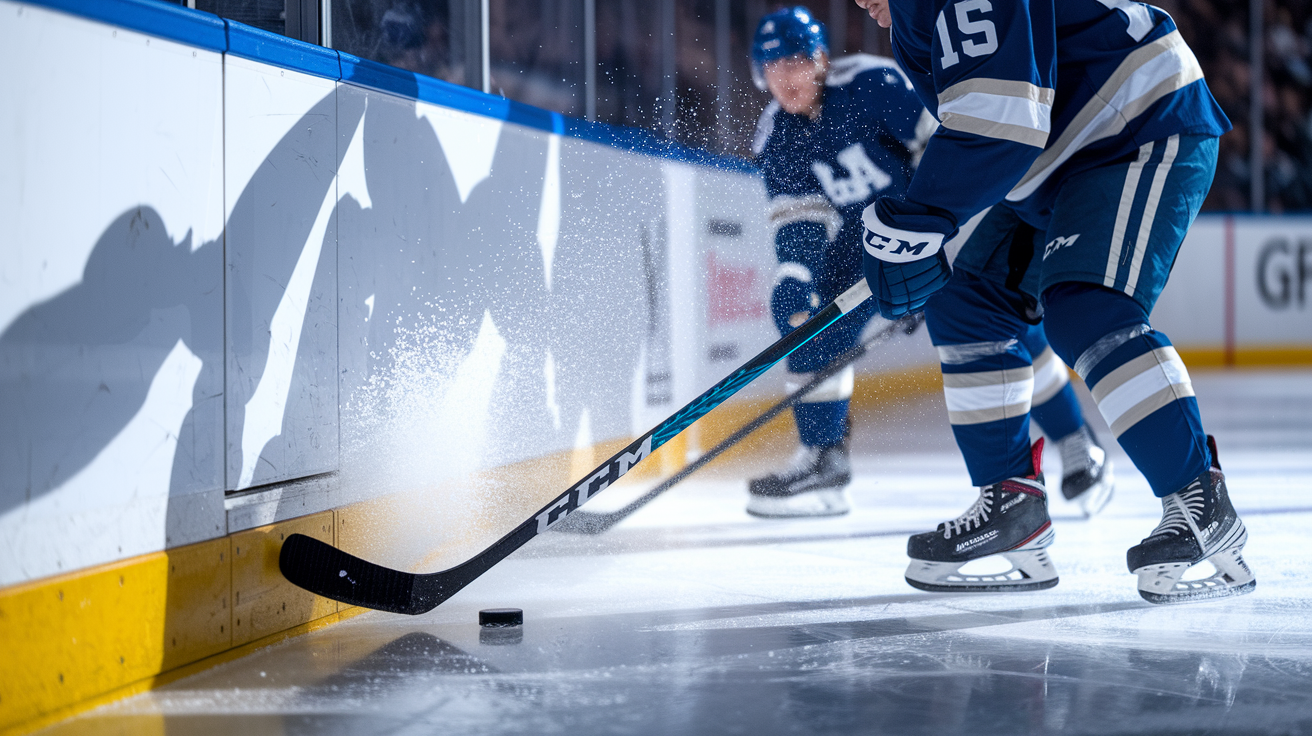
Physical execution along the wall is what separates effective stalling from panic turnovers. When a defender pressures you into the boards, place your body between the puck and the opponent, drop your center of gravity by bending your knees, and keep your weight on your back foot so you can pivot or escape without losing balance. Use your edges to maintain low body position and to shield the puck on your backhand, pinning it tight to the wall where only you can reach it. This posture buys two to three seconds while teammates rotate into support positions. A secure backhand wall pin lets you control the puck with your blade angled along the boards, protecting it from stick checks and creating time to read the next outlet option. The rim-around escape comes when you sense pressure building. You soften a pass off the boards with enough pace to reach a teammate but not so hard that it bounces out of the zone or into a defender’s lane.
Corner shielding is legal as long as the puck keeps moving and you don’t conceal it or stop play intentionally. If you hold the puck motionless against the boards for more than a few seconds without making a play, officials may interpret that as delay of game. The solution is continuous small movements, subtle passes, or a quick rim that resets the sequence. Avoid actions that cross into illegal territory, like covering the puck with your hand, deliberately knocking the net off its moorings, or repeatedly freezing the puck without competitive intent. The boards are your tool to waste time, but only when combined with active puck movement and clear passing options.
Five board-control techniques for protecting the puck:
- Low-edge body shield – Bend knees, stay side-on to pressure, use skate edges to anchor and pivot while keeping puck on backhand.
- Backhand wall pin – Blade flat against boards, puck tight to wall, body between defender and puck, eyes up to read outlet.
- Soft bank-pass escape – Light touch off boards to trailing teammate, pace controlled to avoid errant bounces or zone exits.
- Half-turn rim release – Quick pivot to face up ice, then rim puck around wall with enough speed to reach support but not overshoot.
- Give-and-go along boards – One-touch return pass with a nearby teammate to shift puck laterally and relieve immediate pressure.
Clock, Shift, and Bench Management While Stalling in the Offensive Zone
Shift timing becomes critical when stalling because fatigue leads to turnovers. Keep individual shifts between 30 and 45 seconds during late-game offensive-zone possession. Tired legs lose puck battles, miss outlet reads, and create the kind of soft turnovers that turn into odd-man rushes against. If a forward has been cycling hard for 40 seconds and the puck is secure at the half wall, make a controlled line change by having the fresh player jump on as the tired player peels off toward the bench. Communication is key. The player leaving must call “change” and the arriving player must arrive in a position that doesn’t disrupt the stall structure. Never change during active pressure or when the puck is loose in a contested area.
Safe-change scenarios happen when your team has clear puck control, typically when the defenseman at the point holds possession or when a forward has secured the puck along the boards with no immediate pressure. In these windows, one forward can exit and another can enter without creating a numerical disadvantage or a gap in coverage. The coach or a veteran player on the bench must read the flow and signal changes verbally or with a tap on the boards. Avoid the common mistake of sending too many players onto the ice at once, which results in a bench minor that immediately negates your stall advantage and puts the opponent on a power play.
Timeout usage around 1:30 to 2:00 remaining is a strategic tool to set up your stall structure, rest your top line, and communicate final possession priorities. Call the timeout when you have offensive-zone possession and want to ensure your best puck-protection unit is on the ice with clear assignments. During the last 30 to 60 seconds, every decision must be zero-risk. No long stretch passes, no risky pinches, no creative plays that could backfire. Protect the puck, keep it moving along the boards, and force the opponent to chase. The clock is your teammate when you manage it correctly.
Coaching Drills, Player Cues, and Practice Progressions for Offensive-Zone Stalling
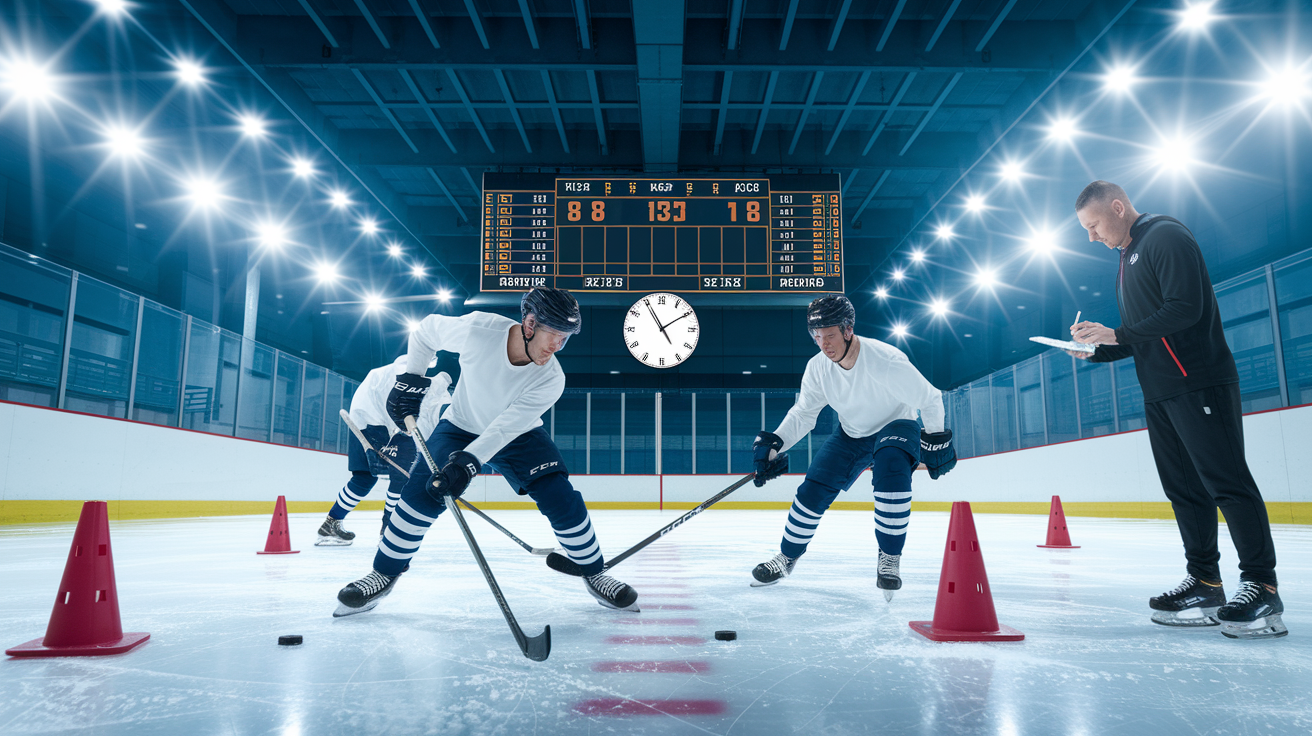
Practice must simulate the time pressure and physical contact of real late-game stalling. Use time-based scoring to reward puck protection, where holding possession for 3 seconds earns 1 point, 5 seconds earns 2 points, and 10 seconds earns 3 points. This gamification teaches players to value clock management as much as shot attempts. Set up a three-man corner cycle drill that requires 10 to 20 seconds of controlled possession before any finish, forcing players to resist the instinct to rush and instead to work safe passes and rim escapes. A blue-line pressure drill tests whether your defenseman can maintain possession at the point for 10 seconds against active forecheckers, with success defined as 8 of 10 clean reps. These measurable thresholds give players clear targets and coaches objective feedback on whether the team’s ready to execute stalling under game conditions. Stalling techniques and zonal defending shows how delay-based scoring and possession gamification transfer across sports when adapted to hockey-specific puck control.
Situational scrimmages bring all elements together. Run a five-minute simulated late-game scenario where the leading team must complete six consecutive clean possessions without a turnover to “win” the drill. Add a running clock, require line changes, and penalize turnovers by resetting the count to zero. This creates the exact decision-making pressure players will face in real games. Specific coaching cues during these drills include reminding the corner winger to keep low edges and body between puck and pressure, instructing the trailing forward to call for the pass verbally, and teaching the point defenseman to angle the stick and keep eyes up to time a secure rim or reset shot. Repetition of these cues under realistic conditions builds the habits that hold up when the game’s on the line.
Six drills and coaching cues for coachable delay plays:
- 3-man corner cycle with time floor – Require 8 to 12 successful exchanges and 10 to 20 seconds of controlled possession before finish; reset if turnover occurs.
- Point-retention under pressure – D1 must hold blue line for 10 seconds vs active pressure; passing grade = 8 of 10 successful reps without loss.
- Late-game situational scrimmage – 5 minutes, leading team must complete 6 clean possessions to win; running clock, line changes required, turnovers reset count.
- Board-shield 1v1 with time scoring – Defender pressures puck carrier along wall; carrier earns points for 3s/5s/10s of retention using body position and rim escapes.
- Safe outlet progressions – Start 2v1 in corner, add second defender after 3 seconds to force quick outlet reads; advance to 2v2 and require third-man support.
- Verbal-cue cycle repetition – Coach calls “low,” “rim,” “point,” or “change” during live drill; players must execute the corresponding stall action immediately and correctly.
Legal Boundaries of Offensive-Zone Stalling and Penalties to Avoid
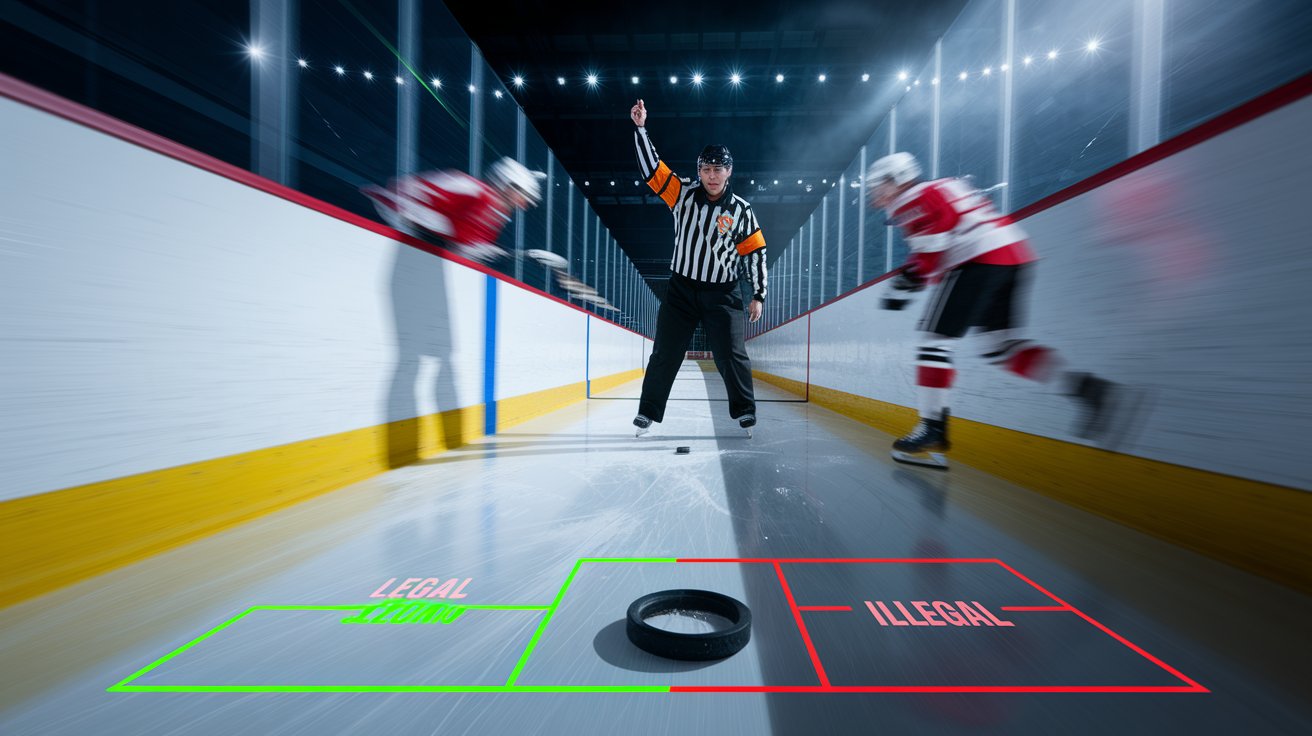
Effective stalling means continuous puck movement, legal passes, and maintaining competitive play while consuming time. The puck must remain in motion through rim plays, controlled resets, and safe passing sequences. Officials will allow extended possession as long as the team’s actively attempting to create opportunities or maintain zone control, not simply concealing the puck or stopping play. The line between smart clock management and illegal delay is whether your actions remain competitive. If you cycle the puck, work safe outlets, and force defenders to chase, that’s legal stalling. If you freeze the puck without reason, cover it with your body or hand, or make deliberate stoppages to waste time, officials will penalize you for delay of game or unsportsmanlike conduct.
Stalling must avoid the specific actions that draw whistles and penalties. Never flip the puck over the glass from your defensive zone, as that’s an automatic delay-of-game minor. Don’t deliberately dislodge the net from its moorings to create a stoppage. Avoid repeatedly holding the puck motionless against the boards or in the corner without making a play, because referees interpret static possession as non-competitive delay. Watch for too many players on the ice during line changes, a bench minor that immediately kills your stall advantage and gives the opponent a power play. Coaches must teach legal alternatives like rim-around plays, controlled point resets, and safe cycling sequences that keep the game moving while draining the clock. The goal is to make the defense work harder than your offense while staying inside the rules.
Four common illegal stall actions that lead to penalties:
- Intentionally shooting the puck out of play – Flipping puck over glass from defensive zone results in automatic delay-of-game minor.
- Deliberately dislodging the goal – Knocking net off moorings to stop play draws delay-of-game or unsportsmanlike penalty.
- Concealing or freezing the puck without reason – Covering puck with hand, holding motionless against boards, or trapping under body when not in traffic creates delay-of-game risk.
- Too many players on ice during change – Bench minor for illegal substitution, immediately negates stall advantage and creates power play against.
Final Words
You’re on the half-wall with 45 seconds left: cycle low, rim to the boards, and use third‑man support to drain the clock.
This piece ran the practical stall sequences—cycling, corner shielding, bank-and-rim passes—then mapped who does what (wingers, center, D) and how point outlets and safe passing patterns keep possession. It also covered board mechanics, shift timing, and drills to make it repeatable.
Practice the patterns, keep movement constant, and avoid risky clears. Use these stall tactics in the offensive zone to protect leads and finish strong.
FAQ
Q: Where to put the weakest player in hockey?
A: The weakest player in hockey should usually play on the fourth line or get sheltered minutes — short shifts, simple tasks (boards, net-front cleanups), and be paired with a veteran for support.
Q: What are the Gretzky rule and the Martin Brodeur rule in hockey?
A: The Gretzky rule in hockey usually refers to the NHL retiring Wayne Gretzky’s No. 99 league-wide. The Martin Brodeur rule forbids goalies from playing the puck outside the trapezoid behind the net.
Q: Is Wayne Gretzky intelligent?
A: Wayne Gretzky is widely seen as highly intelligent on the ice, noted for exceptional hockey IQ — anticipation, vision, and decision-making that made him a standout playmaker.