

Think talent alone will get you a college hockey scholarship?
It won’t.
Most paid offers go to players who plan early, meet NCAA academic rules, and sell their game to coaches.
Start by sophomore year: register with the Eligibility Center, build a short recruiting profile, and post a 3–5 minute highlight reel.
Contact 30–50 college coaches, attend targeted showcases, keep a 3.0+ core GPA, and follow up with fresh stats every 4–6 weeks.
This guide lays out the exact steps and timeline to turn your on-ice work into a scholarship that pays.
Core Steps to Securing a College Hockey Scholarship

Getting a college hockey scholarship takes planning, performance, and persistence. Most scholarships go to players who start building their recruiting profile early, stay on top of academic requirements, and actively communicate with coaches. You can’t wait for coaches to find you. You’ve got to put yourself in front of them with the right information at the right time.
Here’s what gives you the best chance:
-
Register with the NCAA Eligibility Center by sophomore year. This tracks your academic progress and confirms amateur status. Without it, you can’t receive Division I or Division II athletic aid.
-
Build a recruiting profile with stats, position, height, weight, and contact information. Coaches need basic facts fast. Include your graduation year, current team, and measurable performance data.
-
Create a 3–5 minute highlight video featuring 8–12 game clips. Show situational awareness, puck battles, skating speed, and scoring ability. Host it on YouTube or Hudl with a direct link.
-
Contact 30–50 college coaches starting in sophomore year. Personalize each email with the school name, your stats, and why you’re interested. Attach your highlight link and schedule.
-
Attend 3–6 showcases or prospect camps per season. Focus on events with confirmed college coach attendance. Regional and national showcases both matter.
-
Maintain a core course GPA of 3.0 or higher. Academic performance opens doors to better programs and non-athletic scholarships. Track your transcript every semester.
-
Follow up every 4–6 weeks with updated stats and video. Coaches want to see growth and consistency. Send midseason and postseason recaps with new footage.
-
Schedule unofficial visits to top programs by junior year. Meet coaches in person, watch practices, and tour facilities. Unofficial visits cost money but build relationships.
-
Prepare for official visits and scholarship offers during junior and senior years. Official visits are school funded and usually limited to top recruits. Use them to compare programs.
-
Track all communication and deadlines in a recruiting log. Note which coaches responded, when you followed up, and what next steps they requested. Organization prevents missed opportunities.
Starting early and staying consistent through each step increases your chances of landing athletic aid. Coaches see hundreds of players every season. The ones who communicate clearly, perform on the ice, and meet academic standards are the ones who get scholarship offers.
Understanding NCAA Eligibility and Academic Requirements

Before a coach can offer you a scholarship, you’ve got to qualify academically. The NCAA tracks your high school coursework, GPA, and amateur status through the Eligibility Center. Division I and Division II programs require athletes to complete 16 core courses before graduation. These include four years of English, three years of math (Algebra I or higher), two years of natural or physical science, one additional year of English, math, or science, two years of social science, and four years of additional core courses. Not all high school classes count. The NCAA maintains an approved list by school, so check your transcript early and often.
You also need a minimum core course GPA. Division I requires at least a 2.3, but most programs recruit players with a 3.0 or higher. Division II uses a sliding scale that pairs GPA with standardized test scores, though many schools now make test scores optional. Division III doesn’t require Eligibility Center registration, but academic standards are often higher because those schools emphasize merit and need based aid instead of athletic scholarships.
Maintaining amateur status is the third requirement. You can’t sign a professional contract, accept payment for playing, or compete on a team with professional players while preserving NCAA eligibility. If you play junior hockey, USHL and most U.S. based leagues are safe. Canadian major junior leagues (CHL, OHL, WHL, QMJHL) make you ineligible because they classify players as professionals. Violating amateurism rules disqualifies you permanently.
Here are five essential eligibility tasks every recruit should complete:
Register with the NCAA Eligibility Center before the end of sophomore year. Request an official transcript review to confirm core courses and GPA status. Verify that your high school courses appear on the NCAA approved list. Track any club or junior league participation to confirm amateur status. Re-check eligibility status before senior year to avoid last minute issues.
Navigating Recruitment Timelines for Hockey Players
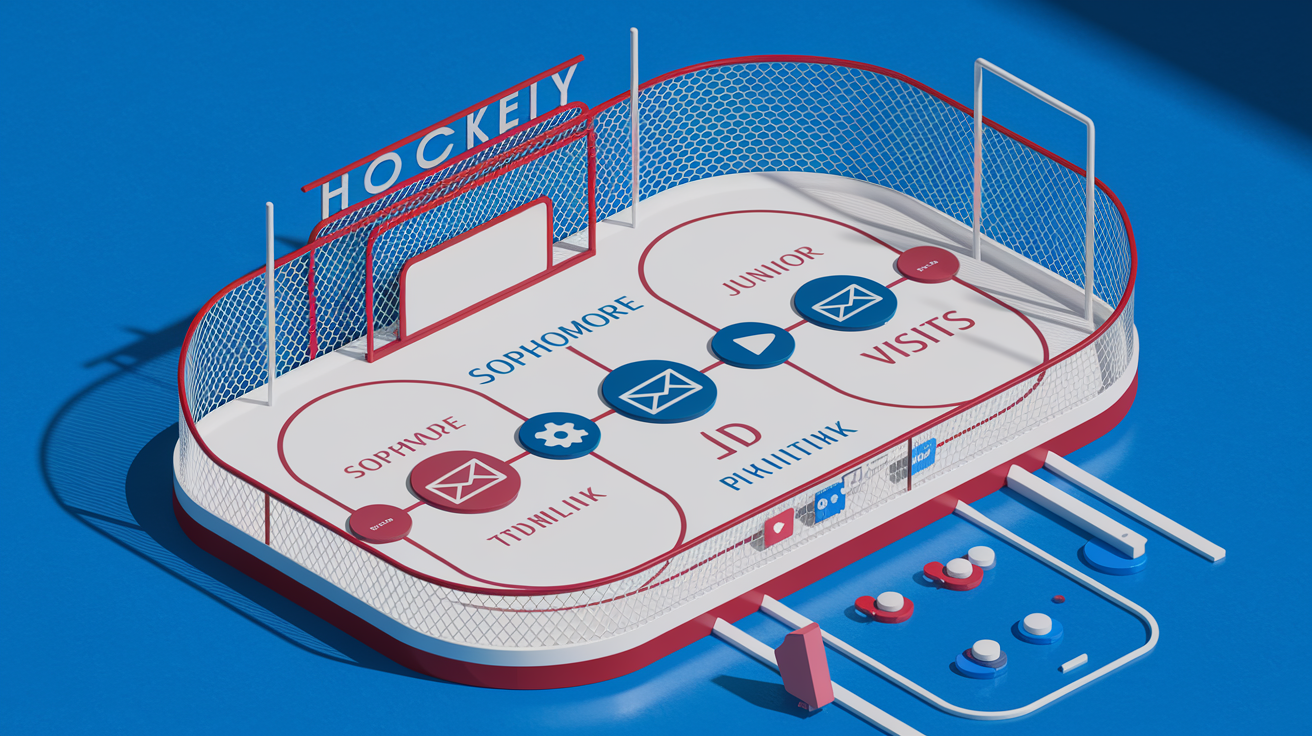
Recruiting follows a schedule shaped by NCAA contact rules and program cycles. Coaches can send recruiting materials (brochures, questionnaires, camp invites) at any time, but direct phone calls and off campus contact are restricted until specific dates. For Division I men’s hockey, coaches can call recruits starting June 15 after sophomore year. Official visits (school funded trips) begin August 1 of junior year. Division II and Division III have different calendars, and some programs move faster than others depending on roster needs.
The earlier you start, the more options you create. Freshmen and sophomores should focus on skill development, academic progress, and building early highlight clips. By junior year, recruiting accelerates. Most verbal commitments happen during the second half of junior year or the first months of senior year. Waiting until senior year limits your choices because many rosters are already full.
| School Year | Key Recruiting Milestones |
|---|---|
| Freshman–Sophomore | Register with Eligibility Center, maintain 3.0+ GPA, attend 1–3 local showcases, start building highlight clips, send initial emails to 10–20 programs. |
| Junior Year | Attend 3–6 major showcases, increase coach contact to 30–50 programs, schedule unofficial visits, update highlight video after every tournament, expect scholarship discussions and offers. |
| Senior Year (Fall) | Take official visits to top 3–5 programs, finalize scholarship offers, sign National Letter of Intent or submit commitment, maintain academic and on ice performance. |
| Senior Year (Spring) | Submit final transcripts to Eligibility Center, confirm financial aid package details, complete any remaining NCAA paperwork, prepare for transition to college hockey. |
Planning backward from commitment deadlines keeps you ahead of the timeline. If your goal is to commit by the end of junior year, you need to be visible to coaches by the middle of sophomore year. That means having a profile ready, a short highlight reel posted, and an active outreach plan. The players who land early offers are the ones who treated recruiting like a year round process, not a senior year scramble.
Building a Strong Athletic Profile and Highlight Video

Your athletic profile is the first thing most college coaches will see. It should answer basic questions in ten seconds or less. Who are you? What position do you play? What team are you on right now? When do you graduate? How do they reach you? A one page player resume works best. Include your name, position, height, weight, dominant hand, current team and league, high school, graduation year, email, and phone number. Add season stats (games played, goals, assists, points, plus/minus) and a short list of honors or leadership roles (team captain, all tournament selections). Attach your transcript or list your GPA and core course progress.
The highlight video is the second piece. Coaches want to see you play, not read about it. Here’s what belongs in a strong recruiting video:
A 10–15 second intro card with your name, position, height, weight, grad year, and contact info. Then 8–12 game clips showing scoring plays, defensive reads, puck battles, zone entries, and breakouts. Clear labeling for each clip (date, opponent, situation) so coaches know the context. Multiple camera angles if possible, especially clips that show skating stride and positioning. A closing card with updated stats and a call to action (“Available for calls and visits, contact anytime”). Total length between 3–5 minutes. Coaches rarely watch longer videos all the way through.
Once the video is ready, upload it to YouTube as an unlisted link or host it on Hudl. Keep the file under 250 MB if you’re attaching it directly to emails. Update your highlight reel every two to three months during the season. New clips show improvement and give you a reason to re-contact coaches who haven’t responded yet. Send the updated link with a short note: “Added five clips from last month’s showcase, here’s the new reel.” Coaches notice players who stay active and keep their materials current.
Communicating Effectively With College Coaches

Sending the right message at the right time separates recruits who get responses from recruits who get ignored. Coaches receive hundreds of emails every season. Yours needs to stand out in the first three sentences. Start with your grad year and position in the subject line. “Class of 2026 Defenseman – 6’1″, 185 lbs – Available for Visits.” In the body, introduce yourself in one sentence, mention why you’re interested in that specific program (reference the coach by name, the conference, or a recent team result), and include your most recent stats. Attach your highlight link and your schedule for the next two months.
Personalization matters. Generic mass emails get deleted. If you’re writing to a Division III program known for strong academics, mention your GPA and major interest. If you’re contacting a Division I school with a history of developing NHL draft picks, reference your performance in a high level league. Coaches want players who researched their program and understand what they’re looking for.
Here are five best practices for coach communication:
Email every 4–6 weeks with updated information. New stats, new video, upcoming showcase schedule, or midseason transcript. Consistent contact keeps you on their radar.
Include attachments coaches actually need. Highlight link, one page resume, unofficial transcript, and your game schedule. Don’t make them ask for basic information.
Ask specific questions in every message. “Would you be available for a 10 minute call next Tuesday?” or “Can I send you game film from this weekend’s tournament?” Questions prompt responses.
Follow up after showcases within 48 hours. “Played in the XYZ Showcase this weekend, here’s updated video and stats from three games.” Timing matters.
Track every interaction in a spreadsheet. Log the date, coach name, school, what you sent, and their response. Follow up becomes easier when you know the last time you contacted each program.
The most common mistake is waiting for coaches to reply before sending another message. If a coach doesn’t respond after two emails, send a third with fresh information. If they’re not interested, they’ll tell you. Silence usually means they’re busy or waiting to see more. Keep the door open by staying professional and providing value with every update.
Showcases, Camps, and Exposure Opportunities
Showcases and prospect camps put you in front of college coaches in a live game or practice setting. Email and video get you noticed. Showcases get you evaluated. Most Division I programs send scouts to 10–20 major events every season. Playing well at the right showcase can move you from a name on a list to a priority recruit in one weekend.
Timing matters. Attend your first showcase during sophomore year to build confidence and start collecting coach feedback. By junior year, increase participation to three to six high level events per season. Look for showcases that publish confirmed college coach attendance lists ahead of time. If 40 Division I programs are sending scouts, that event is worth the cost. If the list is vague or missing, find a better option.
Preparation starts before you arrive. Send your highlight video and schedule to every coach on the attendance list two weeks before the event. Include your jersey number, team name, and game times in the email. Coaches often pre-select players to watch based on position needs and early film review. If your video and stats match what they’re looking for, they’ll prioritize your games.
On ice performance is only part of the evaluation. Coaches also watch how you handle adversity, communicate with teammates, and compete when the game isn’t going your way. They notice players who battle for loose pucks, support teammates during line changes, and stay focused between shifts. A quiet two point game with strong defensive reads often outranks a flashy four point game with weak positioning.
Here are four ways to get the most out of showcases and camps:
Arrive early and introduce yourself to coaches between games or sessions. Play your role and avoid trying to do too much. Coaches value players who understand their responsibilities. Follow up within 48 hours with a thank you email, updated stats, and any new video from the event. Ask for direct feedback if a coach watched you play. Most will give honest evaluations if you ask respectfully.
Scholarship Availability Across Division I, II, and III Hockey
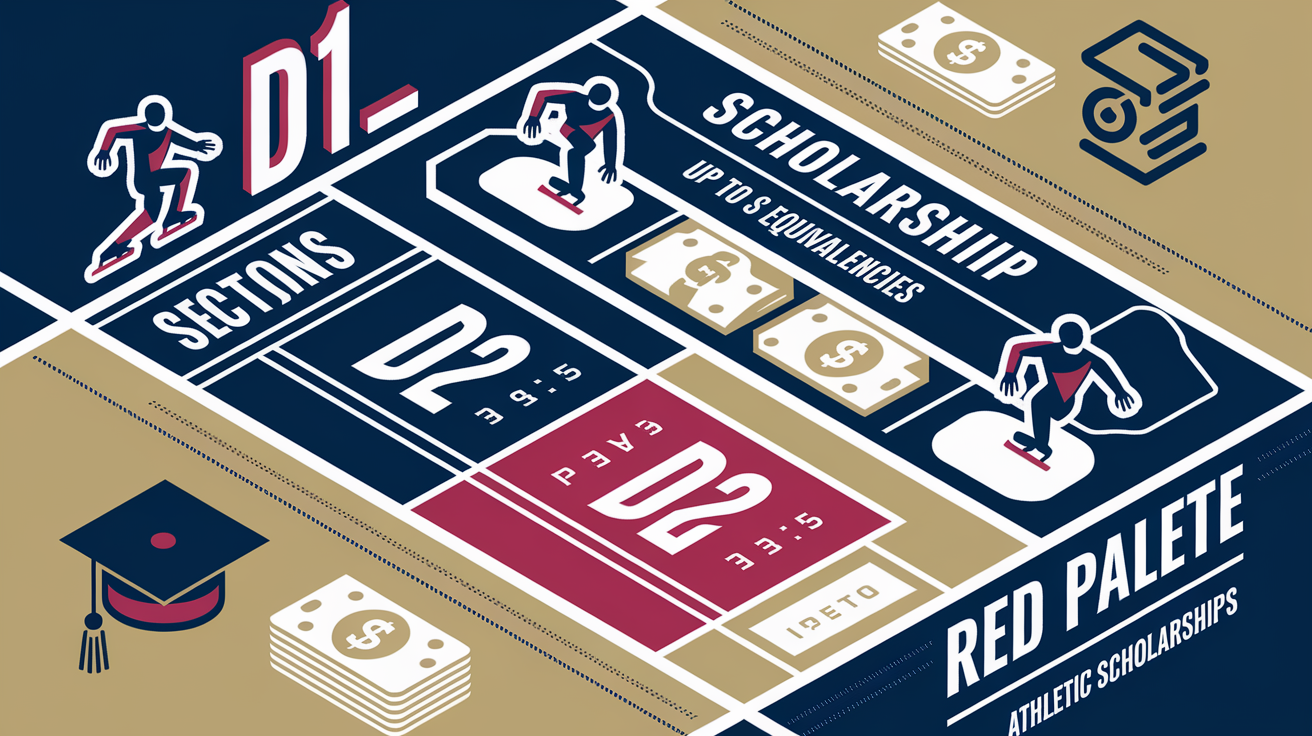
Not all divisions offer the same type of financial support. Understanding how scholarships are structured at each level helps you target the right programs and manage expectations during recruiting.
Division I Hockey Scholarship Landscape
Division I men’s and women’s hockey programs can offer up to 18 scholarship equivalents per team. “Equivalency” means the total value of all scholarships combined can’t exceed 18 full rides, but coaches split that money across 25 to 30 roster players. Full scholarships are rare and typically reserved for elite talent. Top USHL players, high NHL draft picks, or impact recruits. Most players receive partial awards covering 25% to 75% of tuition, room, and board. You might see offers described as “half scholarship” or “60% scholarship.” The exact percentage depends on the program’s budget, your position, and how many other recruits they’re targeting.
Competition for Division I scholarships is intense. Rosters include players from top junior leagues (USHL, BCHL, NAHL), elite prep schools, and high level AAA programs. The average Division I men’s roster carries 29 players. Coaches prioritize players who can contribute immediately or within one development year. Academic performance matters too. Many Division I programs recruit players with GPAs above 3.3 because stronger students are easier to keep eligible and often bring additional merit aid from the school.
Division II Hockey Scholarship Availability
Division II programs operate with smaller scholarship budgets. Men’s hockey teams receive up to 13.5 equivalency scholarships, and women’s programs follow similar limits. Rosters average 25 to 31 players, so partial scholarships are the norm. You might receive 30% to 50% athletic aid combined with academic or need based grants to cover the rest.
Division II schools often value well rounded recruits who bring strong academics, leadership, and positional versatility. They look for players who competed at the Tier II or Tier III junior level, strong high school or prep programs, or top end AAA travel teams. The competition is still high, but Division II rosters include more late bloomers and players who developed their game after high school. If you’re a solid player with a 3.2+ GPA and consistent stats in a competitive league, Division II programs are realistic targets.
Division III Funding and Aid Options
Division III schools don’t offer athletic scholarships. Instead, financial aid comes from academic merit scholarships, need based grants, and institutional aid packages. Many Division III programs are at academically selective colleges and universities, so strong grades and test scores (if required) open the door to significant non athletic funding. Some Division III players receive aid packages that cover 60% to 100% of costs, all based on academics and financial need.
Coaches still recruit and build rosters, but they have no control over scholarship dollars. Instead, they work with admissions and financial aid offices to help recruits maximize available funding. Division III hockey is competitive. 84 teams nationwide, many with deep rosters of 25 to 30 players. The level of play is high, especially in conferences like NESCAC, MIAC, and NCHA. If your priority is playing meaningful minutes, earning a degree from a strong academic school, and competing without the pressure of athletic scholarships, Division III is worth serious consideration.
| Division | Type of Aid Offered |
|---|---|
| Division I | Up to 18 athletic scholarship equivalents (partial scholarships common); combined with academic/merit aid in some cases. |
| Division II | Up to 13.5 athletic scholarship equivalents (partial scholarships standard); often combined with academic and need based grants. |
| Division III | No athletic scholarships; financial aid based entirely on academic merit, need based grants, and institutional aid packages. |
Academic and Athletic Checklists for Prospective Recruits

Staying organized throughout recruiting prevents missed deadlines and keeps your profile current. Most players juggle schoolwork, practice, games, showcases, and coach communication across two to three years. A checklist system breaks the process into manageable tasks you can track week by week.
Academic Checklist:
Register with the NCAA Eligibility Center before the end of sophomore year and request transcript reviews every semester. Maintain a core course GPA of 3.0 or higher and track progress toward completing all 16 required core courses. Submit unofficial transcripts to coaches when requested and include GPA and class rank in your recruiting emails. Prepare for standardized tests (if applicable) and send scores to the Eligibility Center and target schools. Verify amateur status annually and document all hockey participation (teams, leagues, payments) to avoid eligibility issues.
Athletic Checklist:
Create and update a one page player resume with current stats, position, contact info, and grad year every two months. Build a 3–5 minute highlight video with 8–12 game clips and refresh it after every major tournament or showcase. Contact 30–50 college coaches starting in sophomore year and follow up every 4–6 weeks with new information. Attend 3–6 high level showcases or prospect camps per season and send game schedules to coaches in advance. Track all coach interactions in a spreadsheet (date, school, message sent, response received, next steps).
Final Words
Get moving: use the roadmap—build a strong player profile, contact coaches early, clear NCAA eligibility hurdles, and make a tight 3–5 minute highlight video.
Follow the recruiting timeline, pick the right showcases, communicate clearly with coaches, and use the academic and athletic checklists to stay organized. Know the scholarship differences across divisions so you target the right fit.
If you want to know how to get a college hockey scholarship, start planning now, keep grades and training steady, and show up ready. Small steps, steady work, big payoff.
FAQ
Q: Do college hockey players get full scholarships?
A: College hockey players sometimes get full scholarships, but it depends on division: D1 women’s teams can award full scholarships; D1 men’s programs have 18 scholarship equivalents usually split among players; D3 offers none.
Q: What is the easiest sport to get a D1 scholarship?
A: The easiest sport to get a D1 scholarship varies. Sports with large rosters and many scholarships—football, rowing, baseball—generally offer more spots than low-roster sports like hockey or tennis.
Q: Where do you put your weakest player in hockey?
A: You put your weakest player in a sheltered role: third defensive pairing or a wall winger on the exit side. Give simple tasks—board battles, support the puck carrier, avoid high-danger net-front matchups.
Q: How do colleges recruit hockey players?
A: Colleges recruit hockey players by scouting games and showcases, reviewing highlight videos and stats, contacting prospects within NCAA timelines, checking academics and amateur status, then inviting to camps, visits, or making offers.