

Think HECC and CSA stickers mean a helmet is your best protection against concussions?
Surprising but true: only one public rating system, Virginia Tech’s STAR, actually measures how well helmets reduce concussion risk.
HECC and CSA labels only confirm a helmet met minimum league standards for impact and retention; they don’t rank concussion performance.
This post breaks down youth hockey helmet safety ratings so you can compare STAR scores to HECC/CSA certification, pick the real-protection winners, and fit them right.
Understanding Youth Helmet Safety Ratings for Immediate Buying Decisions
When you’re standing in a hockey shop or scrolling through helmets online, here’s what you need to know right away: only one rating system actually tells you how well a helmet reduces concussion risk. That’s the Virginia Tech STAR rating. HECC and CSA certifications? They just confirm a helmet meets minimum league requirements and won’t let catastrophic skull fractures happen. They don’t say anything about concussion performance. And that matters. A helmet can pass HECC certification and still do a terrible job at reducing the accelerations that cause concussions.
STAR ratings work on a scale where lower numbers mean better protection. A 1-star helmet gives you the least concussion reduction. A 5-star helmet gives you the most. Take the Bauer IMS 5.0 and CCM Tacks 70. Both score 1 star. The Bauer Re-Akt 85? That’s a 4-star helmet. When you’re comparing two helmets side by side, the one with the lower STAR score gives your player better measured protection against the impacts that produce concussions.
Certification labels exist to satisfy league rules. They confirm basic safety thresholds, but they don’t rank helmets against each other. HECC and CSA stickers mean the helmet passed impact tests designed to prevent catastrophic injury. That’s it. You check for certification to make sure the helmet is legal. You check STAR ratings to understand which helmet actually performs better at reducing concussion risk.
When you’re evaluating a youth hockey helmet for purchase, look for these five things:
- Current STAR rating value (the specific numeric score, not just the star count)
- Presence of HECC or CSA certification sticker with valid ID
- Model year (newer models usually reflect updated testing and design)
- General performance tier (budget, mid-range, or premium)
- Available sizes that match your player’s measured head circumference
How Youth Hockey Helmet Testing and Rating Systems Work
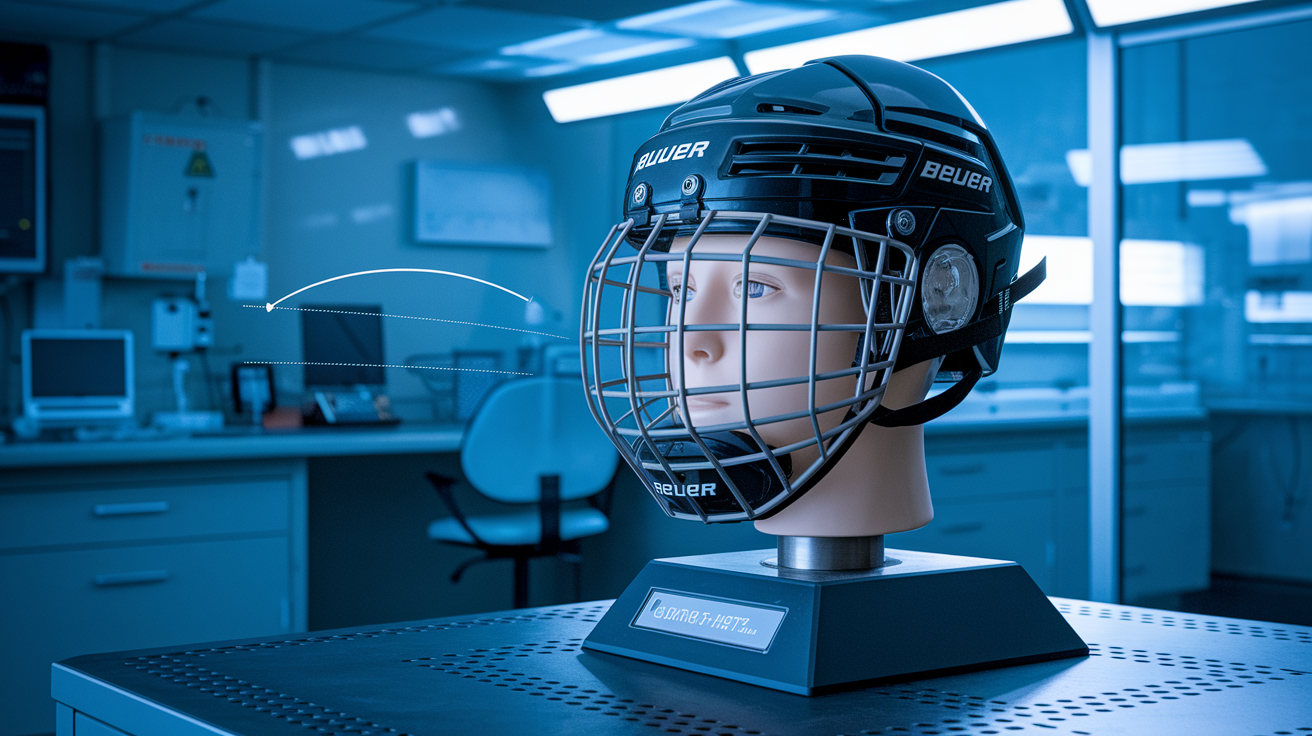
Laboratory helmet testing happens in controlled environments. Researchers drop helmets onto impact surfaces at precise velocities. Virginia Tech’s protocol uses four impact locations: front, side, rear, and crown. Each location receives multiple impacts at different velocities, typically ranging from about 2 meters per second up to 6 meters per second. Every impact gets instrumented with sensors inside a standardized headform. Those sensors record peak linear acceleration in g-force and peak rotational acceleration in radians per second squared. These measurements capture how the helmet handles both straight-line forces and twisting forces. Both contribute to concussion risk.
The STAR methodology takes all those individual impact measurements and combines them into a single composite score. Linear acceleration data and rotational acceleration data get weighted according to published research on concussion biomechanics. Higher accelerations in either dimension increase the risk score. The final STAR value represents an estimate of concussion likelihood across the tested impact scenarios. A helmet that consistently produces lower accelerations across all test locations and velocities earns a better (lower) STAR score. The system doesn’t test every possible impact angle or speed, but it samples enough scenarios to reflect real-world game and practice conditions.
HECC and CSA testing protocols focus on pass-fail thresholds rather than comparative performance. HECC specifies maximum allowable peak linear acceleration during a standardized drop test. It also requires the retention system to stay fastened under a defined pull force. Helmets that exceed the acceleration threshold or fail the retention test don’t receive certification. CSA uses similar impact attenuation limits and retention strength requirements, with slight variations in test velocities and anvil shapes. Both systems verify that foam liners absorb enough energy to prevent skull fractures and that the chinstrap won’t detach during play. But neither system differentiates between a helmet that barely passes and one that performs well above the minimum.
STAR vs Certification Testing
The fundamental difference between STAR and certification testing is this: STAR quantifies concussion-risk reduction while HECC and CSA confirm compliance with catastrophic-injury prevention standards. STAR testing measures rotational acceleration explicitly because research shows rotational forces drive much of the brain-injury mechanism in concussions. HECC and CSA tests measure only linear acceleration. Why? Their original design goal was to prevent skull fractures, not to rank concussion performance. A helmet can pass HECC or CSA with a high STAR score (poor concussion protection) as long as it meets the minimum impact attenuation and retention strength requirements. The systems complement each other. Certification ensures legal compliance and baseline safety. STAR provides the performance data parents need to choose the safest option within the certified group.
Youth Hockey Helmet Comparison Using Current Safety Ratings
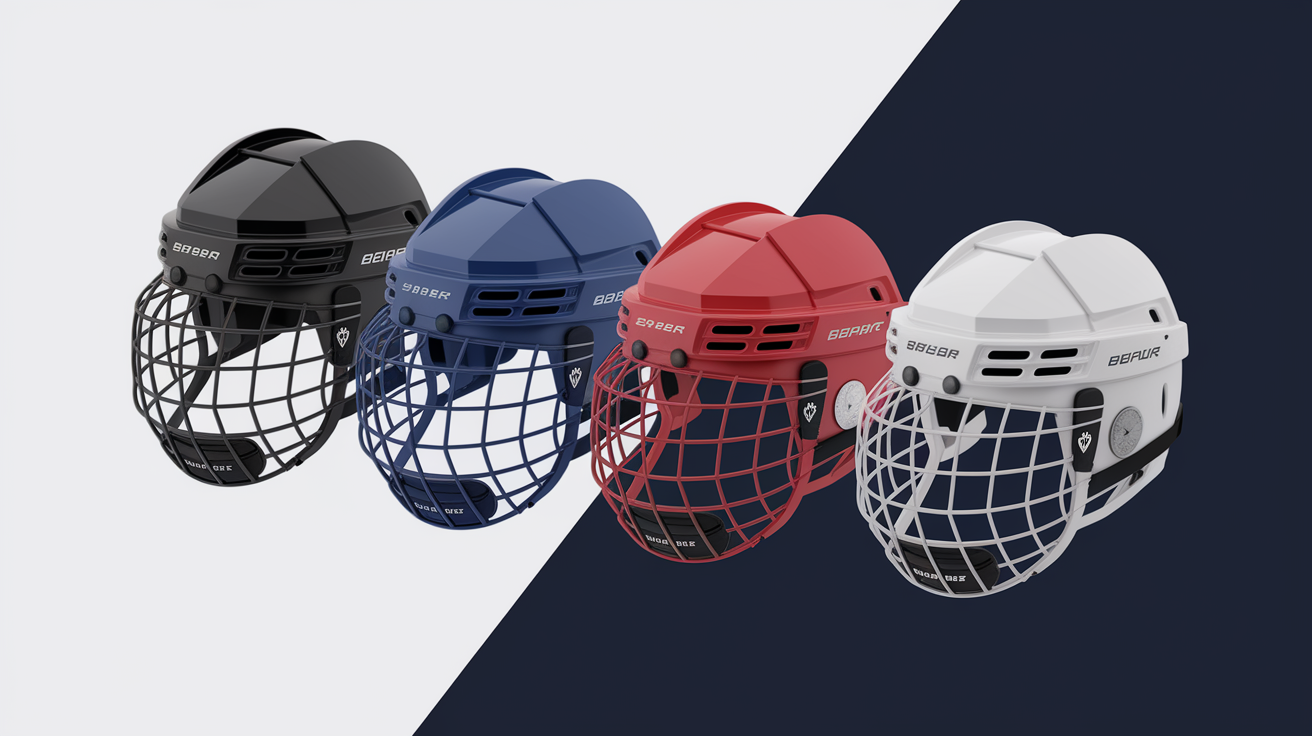
A structured comparison framework organizes the key decision variables into one table so you can evaluate helmets quickly. The table below shows four representative youth helmet models with their safety ratings, certifications, weights, retail prices, and recommended age ranges. Use this format to compare any helmets you’re considering.
| Brand | Model | STAR Score | HECC (Y/N) | CSA (Y/N) | Weight (g) | MSRP ($) | Age Range |
|---|---|---|---|---|---|---|---|
| Bauer | IMS 5.0 | 1-star | Y | N | 520 | 95 | 6–12 |
| CCM | Tacks 70 | 1-star | Y | Y | 540 | 110 | 8–14 |
| Bauer | Re-Akt 85 | 4-star | Y | Y | 610 | 240 | 10–16 |
| CCM | Tacks 910 | 3-star | Y | Y | 580 | 185 | 10–17 |
Look at the STAR score column first. A 4-star helmet offers measurably better concussion-risk reduction than a 1-star helmet, even though both carry HECC certification. Weight typically increases with better protection because advanced liners and dual-density foams add mass. But the difference between 520 grams and 610 grams is small enough that most players adjust quickly. MSRP shows the price premium required to move up in safety performance. In this example, upgrading from a 1-star to a 4-star helmet costs about 140 dollars more. If your player practices twice a week and plays games on weekends, that extra investment spreads over hundreds of ice hours and thousands of impacts.
Proper Youth Hockey Helmet Fit and Sizing for Maximum Protection
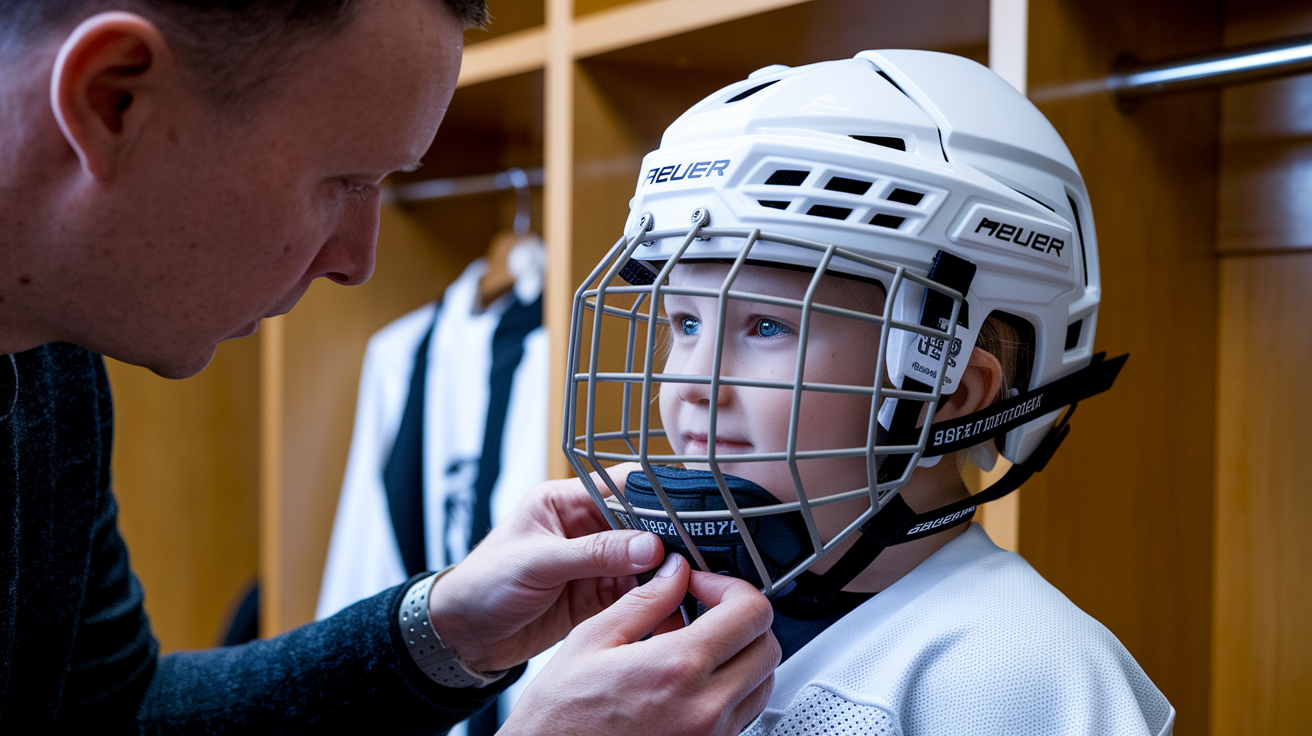
A helmet with a high safety rating loses its effectiveness if it doesn’t fit correctly. Start by measuring your player’s head circumference with a soft tape measure positioned about one finger width above the eyebrows, wrapping all the way around the widest part of the head. Write down the measurement in centimeters. Use the manufacturer’s size chart to match that number to the correct shell size. XS typically covers 48 to 50 centimeters. Small covers 50 to 52 centimeters. Medium covers 52 to 55 centimeters. Large covers 55 to 58 centimeters. If your measurement falls on a boundary, try both sizes and choose the one that compresses the fit pads evenly without pinching.
Research shows that only 23 percent of youth players wear helmets that meet all fit criteria, even though about 90 percent of those same players believe their helmet fits well. Poor fit directly increases concussion risk. The helmet moves during impact instead of staying locked in place to manage energy. A correctly fitted helmet should sit level on the head, with the front edge one to two finger widths (roughly 10 to 20 millimeters) above the eyebrows. The cheek pads should contact the face evenly with no gaps larger than 5 millimeters on either side. When you tighten the chinstrap and try to rotate the helmet forward and backward, it should move less than 10 millimeters in any direction.
Follow these six steps every time you fit or refit a youth helmet:
- Measure head circumference in centimeters and select the shell size within 1 centimeter of that measurement.
- Place the helmet on the head with the front edge 10 to 20 millimeters above the eyebrows and adjust any internal fit system until the helmet sits level.
- Check that the rear of the helmet covers the base of the skull without pushing the front edge up.
- Tighten the chinstrap so the buckle sits centered under the chin and you can fit only one finger between the strap and the jaw.
- Ask the player to shake their head side to side and up and down. The helmet should stay in place with less than 10 millimeters of movement.
- Verify that the cheek pads apply even pressure with no lateral gaps and that the cage doesn’t force the helmet into an incorrect position.
Safety Standards and Certifications Required for Youth Hockey Helmets
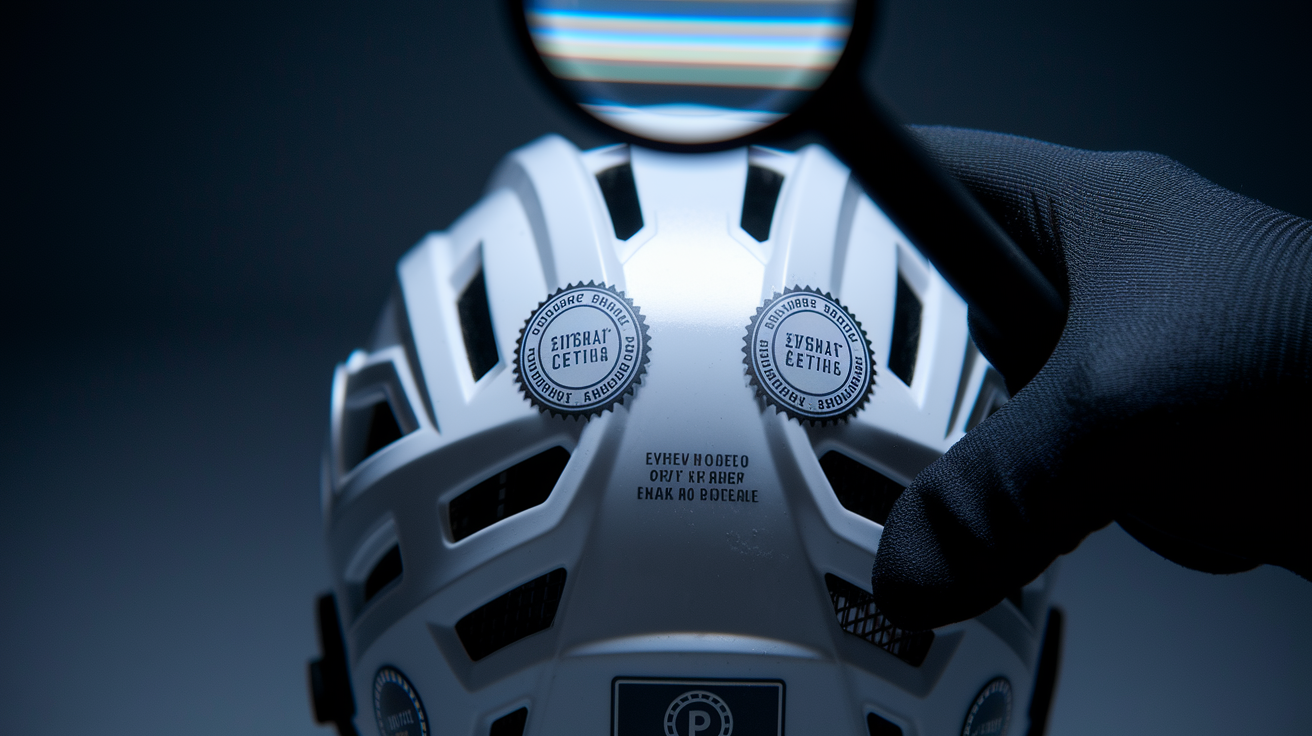
HECC certification stickers appear on the back or side of the helmet shell, usually near the base. The sticker lists the HECC approval number, the model name, and an expiration date. CSA certification stickers include the CSA mark, the standard number (typically Z262.1 or a related revision), and sometimes an approval code. Both stickers confirm that the helmet passed the required impact attenuation and retention tests at the time of manufacture. If you can’t find a sticker or if the sticker is illegible, don’t assume the helmet is certified.
Most organized youth hockey leagues in the United States require HECC-certified helmets. Canadian leagues often require CSA certification. Some leagues accept either standard. Verify the specific requirement with your league registrar before purchasing a helmet. A non-certified helmet won’t be allowed on the ice regardless of its condition or price. Certification exists to guarantee that every helmet meets a minimum safety threshold and to create a consistent baseline across all players.
Check the expiration date printed on the HECC sticker. Helmets have a defined certification lifespan, typically between three and five years from the manufacture date. After expiration, the helmet is no longer considered compliant even if it appears undamaged. If you’re buying a used helmet or pulling an old helmet out of storage, inspect the sticker first. An expired certification means the helmet can’t be used in league play and should be replaced.
Price-to-Safety Ratios in Youth Hockey Helmets
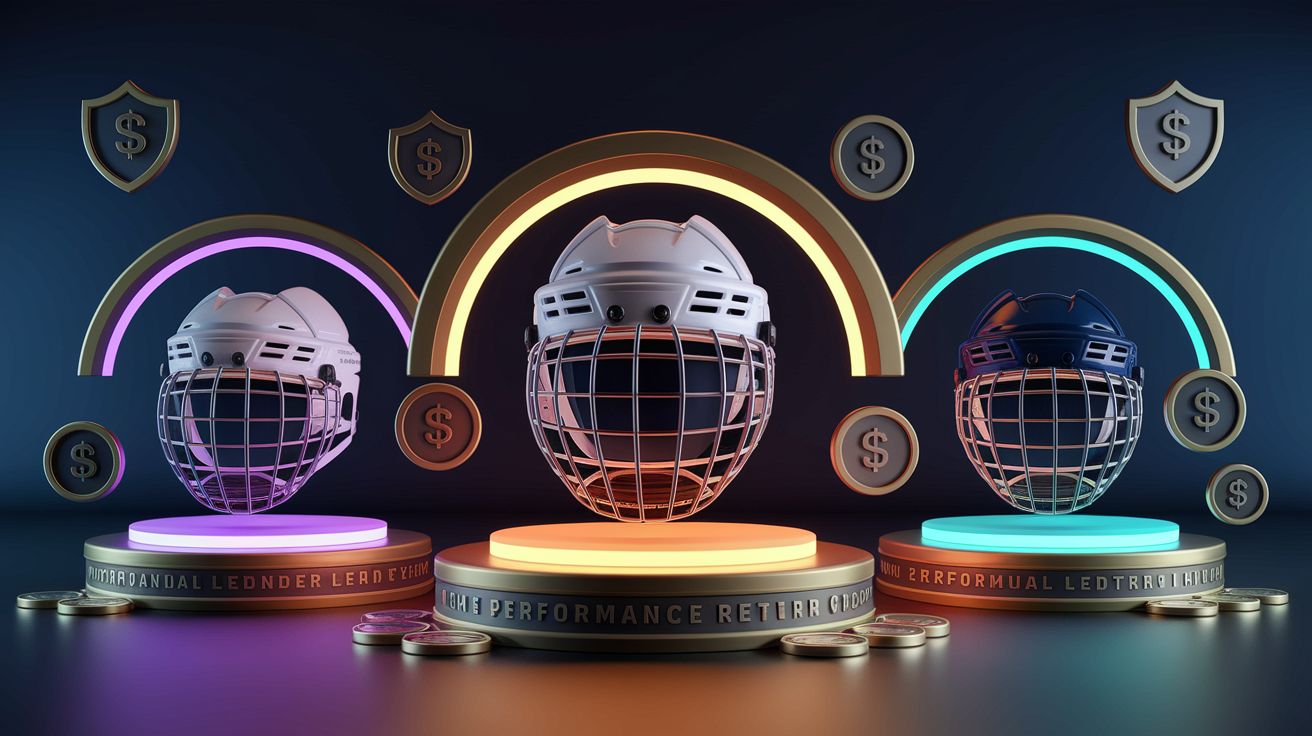
Youth hockey helmets fall into three broad price bands. Budget models run from 80 to 140 dollars. Mid-range models go from 141 to 220 dollars. Premium models start at 221 dollars and can reach 350 dollars or more. Budget helmets generally score 1 to 2 stars in STAR testing. Mid-range helmets score 2 to 3 stars. Premium helmets score 3 to 4 stars. The performance improvement between budget and mid-range is often significant. But the jump from mid-range to premium delivers smaller gains. A typical premium upgrade costs an extra 100 to 150 dollars and produces a 10 to 20 percent improvement in STAR performance compared to a mid-range helmet.
If you calculate safety per dollar spent, mid-range helmets often offer the best value. Divide the normalized concussion-risk reduction (the inverse of the STAR score or a similar metric) by the retail price to get a rough cost-per-safety-unit figure. For example, a mid-range helmet at 180 dollars with a 3-star rating delivers more safety per dollar than a premium helmet at 300 dollars with a 4-star rating, even though the premium helmet performs better overall. That doesn’t mean you should never buy premium. If your player is older, faster, or plays at a high competitive level, the absolute performance gain matters more than the cost efficiency.
When deciding how much to spend, consider these four factors:
- Budget helmets meet certification minimums but offer the least concussion-risk reduction. They’re appropriate for very young or recreational players with infrequent ice time.
- Mid-range helmets provide meaningful safety upgrades over budget options at a moderate price increase. Suitable for most youth players in regular league play.
- Premium helmets deliver the highest tested protection and are worth the investment for older players, competitive programs, or families prioritizing maximum safety regardless of cost.
- Upgrading from a 1-star to a 4-star helmet typically costs between 100 and 150 dollars, which is small compared to the cost of extended time off school or medical visits after a concussion.
Age-Based Helmet Recommendations for Youth Players
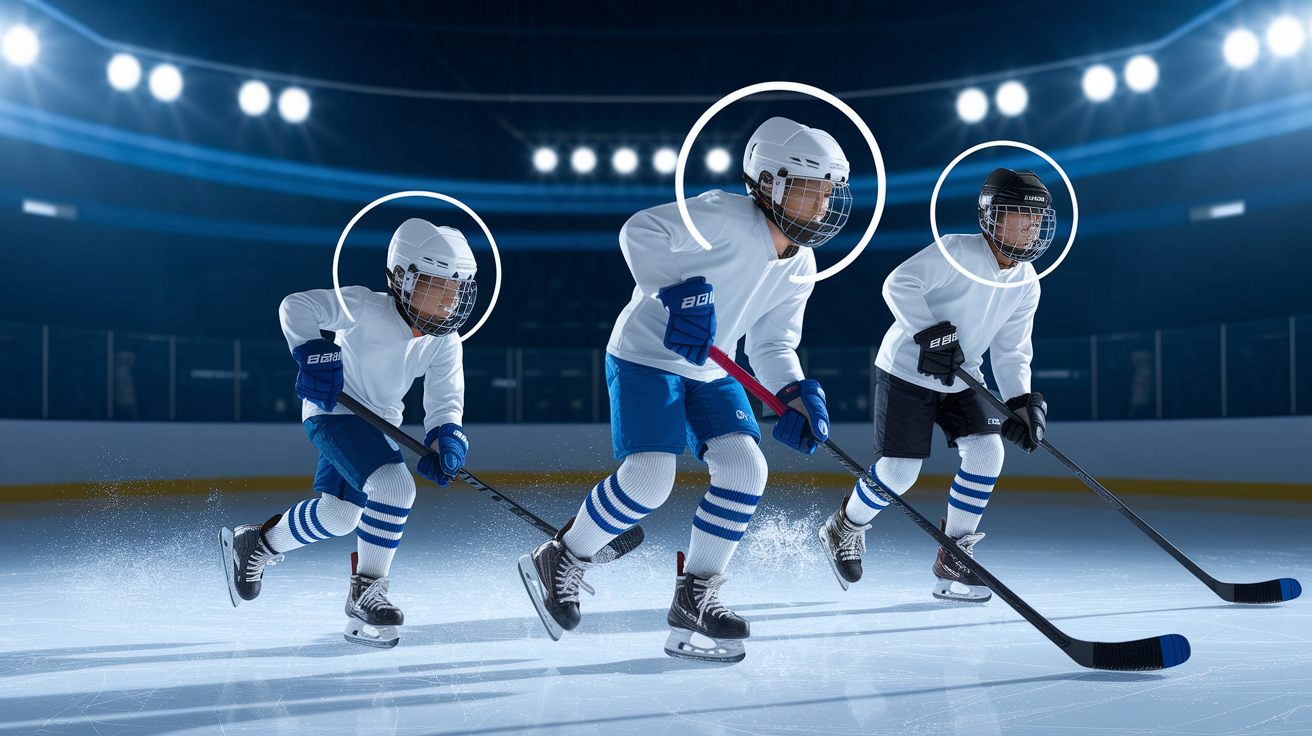
Players under 10 years old generate lower impact velocities and typically weigh less, so helmet weight becomes an important consideration. A lighter helmet reduces neck load during play and makes it easier for young players to keep their head up and aware. At the same time, prioritize helmets with low rotational acceleration scores in STAR testing. Even at slower speeds the brain is vulnerable to rotational forces. Look for helmets in the 400 to 500 gram range with multi-density foam liners designed for youth-specific impact energies.
For players between 10 and 14 years old, game speed increases. Body checking may be introduced depending on the league. This age group benefits from helmets with improved rotational protection and energy-managing liner technologies such as dual-density foam or suspended padding systems. Fit adjustability also matters more because kids grow quickly. Choose a helmet with a micro-dial or modular pad system that allows you to fine-tune the fit as head circumference changes. Aim for a 3-star or better STAR rating in this age range if budget allows.
Players aged 14 to 17 approach adult impact velocities and play with significantly more force, especially in checking leagues or junior programs. Premium helmets with advanced multi-impact liner materials and dedicated rotational-energy management systems provide the best protection for this group. Weight is less critical than absolute performance. A 4-star helmet in the 600 to 650 gram range is appropriate. At this stage, the small incremental cost of moving from mid-range to premium is justified by the higher risk environment.
Helmet Replacement, Damage Inspection, and Recall Awareness
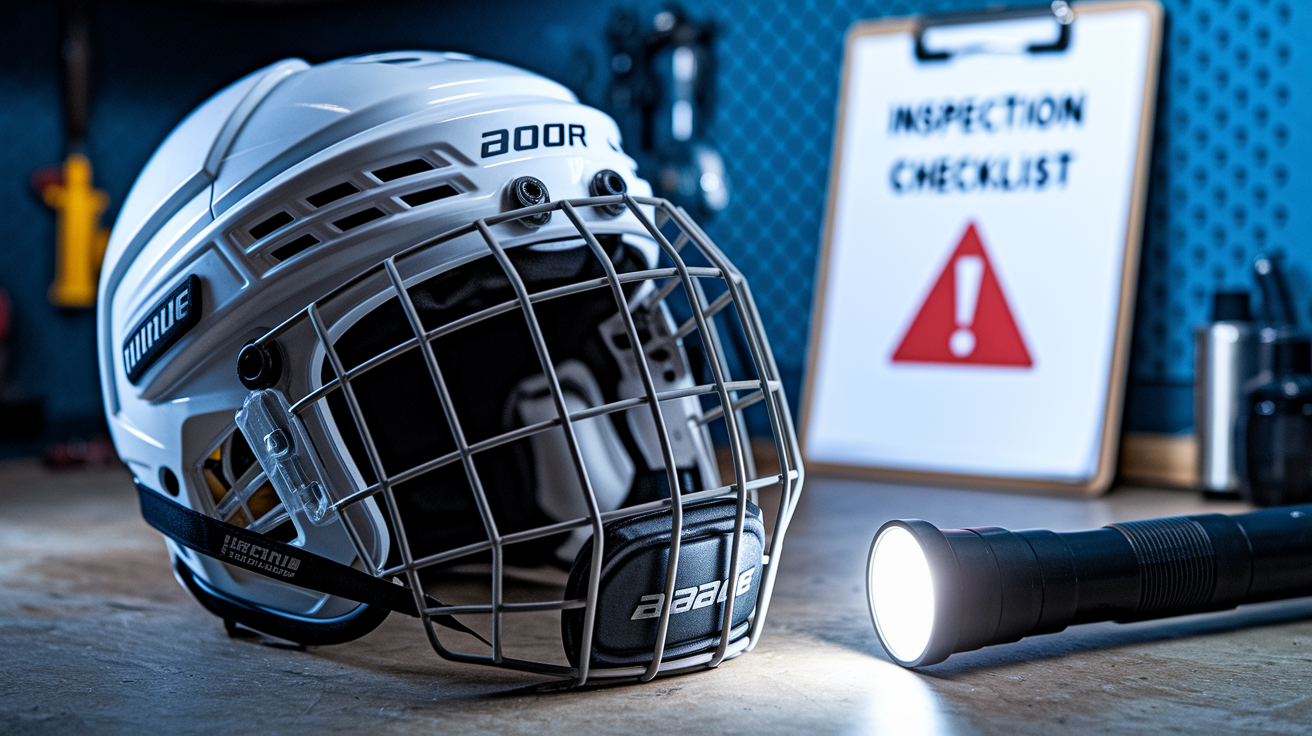
Replace any helmet after a significant impact that produces visible damage or occurs at high velocity, even if no cracks or dents are obvious. Foam liners are designed to crush and absorb energy during impact. Once the foam compresses, it doesn’t return to full protective capacity. For helmets in regular use without major impacts, plan to replace every three to five years depending on frequency of play. Heavy-use players who skate multiple times per week should replace closer to the three-year mark. Recreational players can extend toward five years. Don’t rely solely on visible wear. Foam degrades over time from sweat, temperature cycling, and repeated low-level impacts that don’t leave marks.
Inspect helmets before every season and periodically during the season for these five damage signs:
- Cracks or splits in the outer shell, especially around screw holes or the brow area.
- Loose or detached cage mounts that allow the face mask to shift or rattle.
- Compressed or permanently flattened foam pads that no longer spring back when pressed.
- Liner separation where the foam pulls away from the shell or where glue joints have failed.
- Damaged or frayed chinstrap webbing, broken buckles, or worn snap fasteners.
Helmet recalls occur when manufacturers or regulators identify safety defects that weren’t caught during initial testing. Between 2015 and 2026, the most common recall issues involved liner detachment and retention system failures. Check the U.S. Consumer Product Safety Commission website and Health Canada’s recall database at least once per season. Sign up for email alerts if available. If your helmet model appears on a recall list, follow the remedy instructions immediately. This usually involves returning the helmet for a replacement or refund. Don’t continue using a recalled helmet even if it appears undamaged.
Complete Buying Checklist for Youth Hockey Helmet Safety
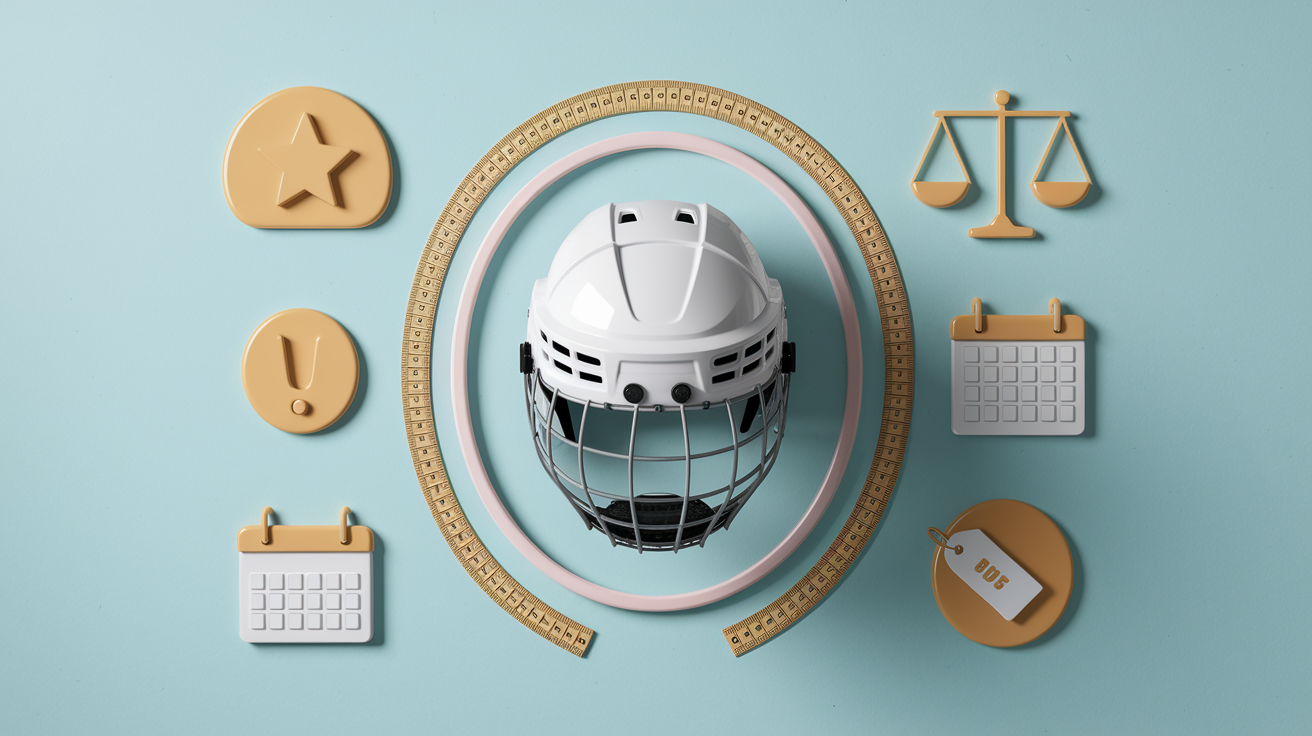
Before you purchase a youth hockey helmet, verify each of the following eight items to ensure you’re making an informed decision:
- Confirm the current Virginia Tech STAR rating for the specific model and note the numeric score. Choose the helmet with the lowest available STAR value within your budget.
- Verify that a valid HECC or CSA certification sticker is present on the helmet and matches your league’s requirements. Check the expiration date to ensure the helmet is still within its certified lifespan.
- Measure your player’s head circumference in centimeters and select a helmet size that falls within plus or minus 1 centimeter of that measurement according to the manufacturer’s size chart.
- Check the model year to confirm you’re buying a current or recent design, not an outdated model that may have been replaced by a safer version.
- Compare the helmet’s weight in grams to your player’s age and size. Younger players benefit from lighter helmets under 550 grams. Older players can handle 600 to 650 grams.
- Search for the helmet model on recall databases to confirm there are no active safety notices or mandatory returns.
- Calculate the price-to-safety ratio by comparing STAR ratings across helmets in your price range. Choose the helmet that delivers the best protection per dollar unless you have budget flexibility to prioritize absolute performance.
- Plan for replacement in three to five years and budget accordingly. Helmets lose protective capacity over time and your player will likely outgrow the shell before the certification expires.
Final Words
You’re in the gear room, holding two helmets and trying to pick the safer one. This guide cut through the noise: STAR gives a concussion‑risk score, HECC and CSA are pass/fail certifications, and fit plus inspection matter as much as the label.
We walked through how to read STAR (lower is better), where to find certification stickers, age recommendations, replacement timing, and a clear buying checklist.
Use youth hockey helmet safety ratings to compare models, confirm certification, and then try the best fit. Do that and you’ll leave the rink feeling solid about your choice.
FAQ
Q: What is the safest youth hockey helmet? / What helmet has the highest safety rating? / What is the best rated youth helmet?
A: The safest youth hockey helmets are those with the lowest Virginia Tech STAR scores; current 1‑star models (for example Bauer IMS 5.0 and CCM Tacks 70) rate best—also confirm HECC/CSA certification for league use.
Q: How to check helmet safety rating?
A: To check a helmet’s safety rating, look up its Virginia Tech STAR score online, verify HECC or CSA stickers and expiration on the shell, note the model year, and search for any recalls.