

Want to stop getting pinned on the boards and give your team cleaner zone exits?
Glove-hand (stick-side) control and a tight backhand are often the difference between a turnover and a clean breakout.
This post shows simple mechanics, edge work, and coach-ready drills you can practice in short reps.
You’ll learn how to cushion rims, shield under pressure, and pull tight backhands that buy time.
Read on for step-by-step drills that make those small touches into consistent, game-ready exits.
Core Defensive Puck‑Control Foundations

Defensemen need stable edges before they can handle the puck cleanly. Start with a stance just wider than shoulder width, knees bent 20–30 degrees, hips back enough to feel balanced over the balls of both feet. That posture gives you the leverage to absorb contact, pivot quickly, and keep your stick blade free to move the puck in any direction.
Hand separation on the stick matters more than most players realize. Keep your top hand 2–3 inches from the butt end for rim passes and outlet control. Drop your bottom hand 6–8 inches down the shaft when you need quick backhand adjustments or lateral drags. That spacing gives you both reach and snap without fighting the stick.
Weight transfer drives clean puck movement. If you’re pulling the puck back on your backhand, shift 60–70 percent of your weight onto the skating leg before you touch the puck. If you’re dragging it laterally on your forehand, load the inside edge of your lead leg first, then push. Timing that shift 0.15–0.30 seconds ahead of the puck pull keeps the movement smooth and controlled.
Foundational habits to build into every rep:
- Stance width at shoulder level or slightly wider for balance and quick pivots.
- Top hand near the knob, bottom hand 6–8 inches lower for flexibility.
- Hip rotation toward the direction of the next pass or escape route.
- Stick blade angled 20–30 degrees open for forehand rim passes, flatter for backhand pulls.
- Weight transfer initiated before puck contact, not during.
- Puck protection angle using your body to shield the puck from the nearest forechecker while keeping your head up.
Glove‑Hand (Stick‑Side) Control Techniques
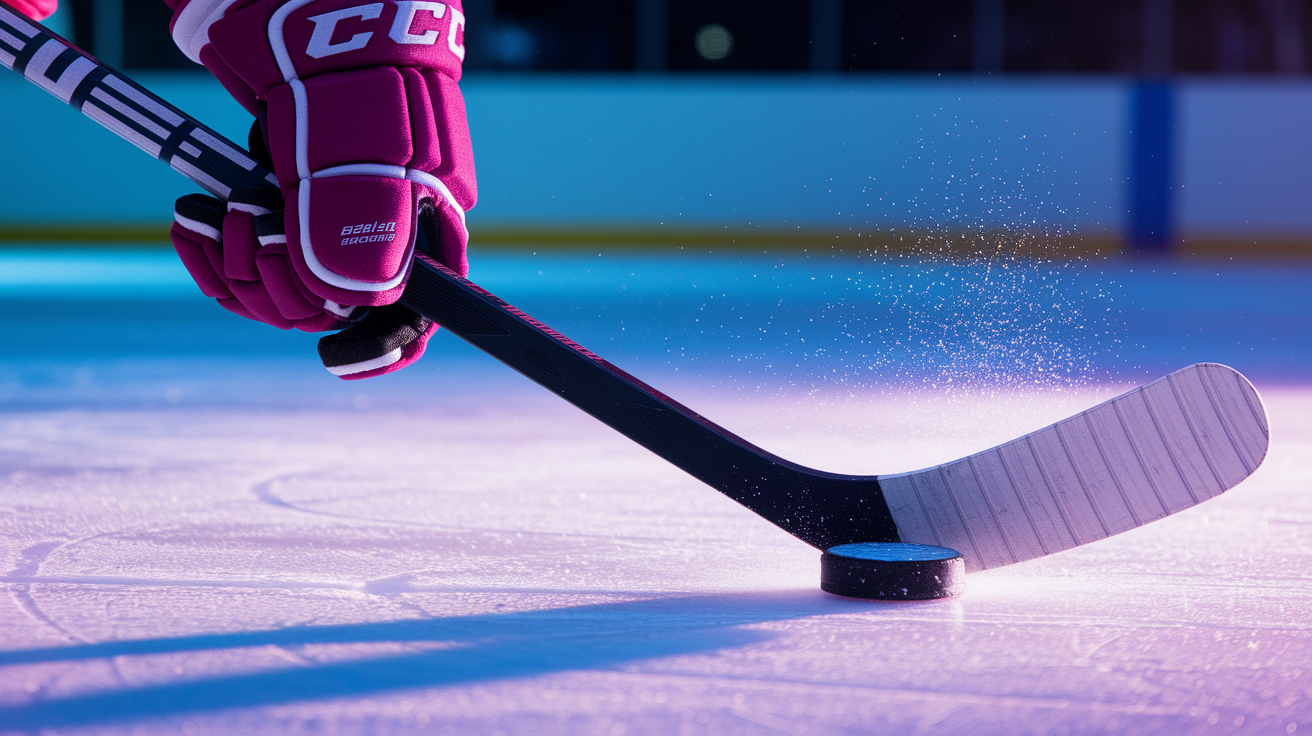
Forehand puck control gives defensemen the reach, stability, and angle flexibility needed for most zone exits and breakout setups. It’s the side you’ll default to under pressure because it lets you extend your stick without opening your body to the forechecker.
Glove‑Hand Mechanics and Blade Control
Blade angle determines whether you cushion the puck or send it hard. For soft retrievals off the rim, open your blade 20–30 degrees and meet the puck with the middle of the blade, not the toe. That contact point absorbs speed and keeps the puck close. When you’re ready to move it, roll the puck from middle to heel and snap your wrists through the pass.
Puck cushioning comes from top hand control. Let your top hand flex slightly at the wrist when the puck arrives. That micro movement acts like a shock absorber. Once the puck settles, firm up your grip and shift into the next movement. Lateral drag, pull back, or direct pass.
Lateral drags on the forehand work best when you load your inside edge first, then pull the puck across your body in a tight arc. Keep the puck 6–12 inches ahead of your front skate so you can see it and your next passing lane at the same time. If the puck drifts too far forward, you lose the ability to protect it with your body.
Reach adjustments matter when you’re stretching for a rim or a loose puck near the boards. Extend your bottom hand down the shaft another 2–4 inches temporarily, sweep the puck in with the toe of your blade, then immediately re‑grip to your normal hand spacing. That quick re‑set keeps you ready for the next play instead of stuck in an awkward reach position.
Situational Glove‑Hand Applications
Retrieving rims on your forehand lets you face up ice while you gather the puck. Step into the boards with your outside skate, angle your shoulders toward center ice, and let the puck come to the middle of your blade. From there you have three options: quick chip up the wall, backhand reverse if pressure arrives, or controlled carry into space.
Holding the blue line on your forehand gives you better stick on puck angles for tips, deflections, and keep ins. Keep your stick blade low, toe angled slightly toward the near boards, and your weight on your inside edge so you can pivot either direction. If the puck skips past you, a quick crossover and forehand sweep usually recovers it faster than trying to backhand it from an off balance position.
Breakout setups rely on forehand control because you can scan, hold, and deliver a pass without turning your back to the forecheck. Plant your outside skate, shield the puck with your body, and keep your head up. When your outlet appears, push off your inside edge and snap the pass in one motion. The whole sequence should take 1.0–1.5 seconds from puck touch to release.
Backhand Control Techniques for Defensive Play

Backhand puck handling is the skill that separates defensemen who can escape pressure from those who get trapped along the boards. It’s not flashy, but it’s reliable when you need to reverse direction, protect the puck with your body, or buy an extra second while a passing lane opens.
Backhand Biomechanics and Blade Alignment
Blade angle on the backhand should stay flatter than on the forehand. 0–10 degrees of opening is enough. A flat blade gives you a stable platform for short pulls and controlled carries. If you open the blade too much, the puck will slide off the toe when you try to pull it tight.
Wrist flexion controls how much cup you get on the backhand. Keep your bottom hand wrist neutral or slightly cocked back. That position lets you roll the puck from toe to heel without twisting your forearm. When you need a quick backhand pass, snap your bottom wrist through and let your top hand guide the direction.
Edge use on the backhand is almost always inside edge of the lead leg. Load that edge before you touch the puck. It gives you the platform to push laterally or pivot without losing the puck. If you’re on your outside edge, you’ll drift away from the puck and lose control.
Body shielding works better on the backhand because your back naturally faces the forechecker. Keep the puck slightly behind your front skate, chest square to your escape route, and your stick between you and the pressure. That setup gives you 0.8–1.2 seconds to scan and decide without getting stick checked.
Real‑Game Backhand Use Cases
Net side retrievals are cleaner on the backhand when the puck comes around the back of the net and you’re on your off side. Step into the corner with your lead leg, drop your stick blade to the ice, and let the puck roll onto your backhand. From there you can hold it, reverse it back behind the net, or chip it up the wall. All without exposing it to a charging forechecker.
Shoulder checks leading to backhand escapes are a key read for defensemen. When you feel pressure on your strong side, a quick shoulder check tells you if you have space to reverse. If you do, pull the puck onto your backhand, pivot on your inside edge, and accelerate up ice or across to your partner. That move buys 1–2 seconds and usually forces the forechecker to reset.
Blue line puck management on the backhand keeps the puck in the zone when a clear isn’t available. If the puck is rimmed toward you on your backhand side, angle your body to the boards, cushion it with a flat blade, and either hold it for a second look or bank it back to your partner. Keeping your shoulders square to the play lets you see if a shooting lane opens while you control the puck.
Edge‑Work and Body Mechanics Supporting Puck Control
Edge control determines whether you keep the puck or lose it when you’re under pressure. Defensemen who can shift weight smoothly between inside and outside edges while handling the puck force forecheckers to respect more space and buy themselves cleaner exits.
Inside edge work stabilizes lateral movement and quick pivots. Practice loading your inside edge on tight turns by bending your ankle and driving your knee over your toes. When you combine that edge load with a backhand pull or forehand drag, the puck stays glued to your blade instead of drifting wide. Outside edge work comes into play when you’re moving backward or recovering from an off balance position. Plant the outside edge, square your hips, and re‑establish control before attempting the next move.
Rotational control and center of gravity management keep you from lunging or reaching for the puck. Keep your chest over your hips and your hips over your skates. If your upper body gets ahead of your lower body, you’ll lose leverage and the puck will slide away. Hip drive initiates every controlled turn. Rotate your hips toward the direction you want to go, let your shoulders follow, and your edges will naturally bite into the ice at the right angle.
Edge work and body control reminders:
- Hip drive before shoulder rotation on pivots and escapes.
- Ankle flexion to load inside edge during backhand pulls and forehand drags.
- Center of gravity low and centered, chest over hips, no reaching.
- Pivot stability from proper knee bend and weight distribution before touching the puck.
Targeted Drills for Glove‑Hand and Backhand Mastery
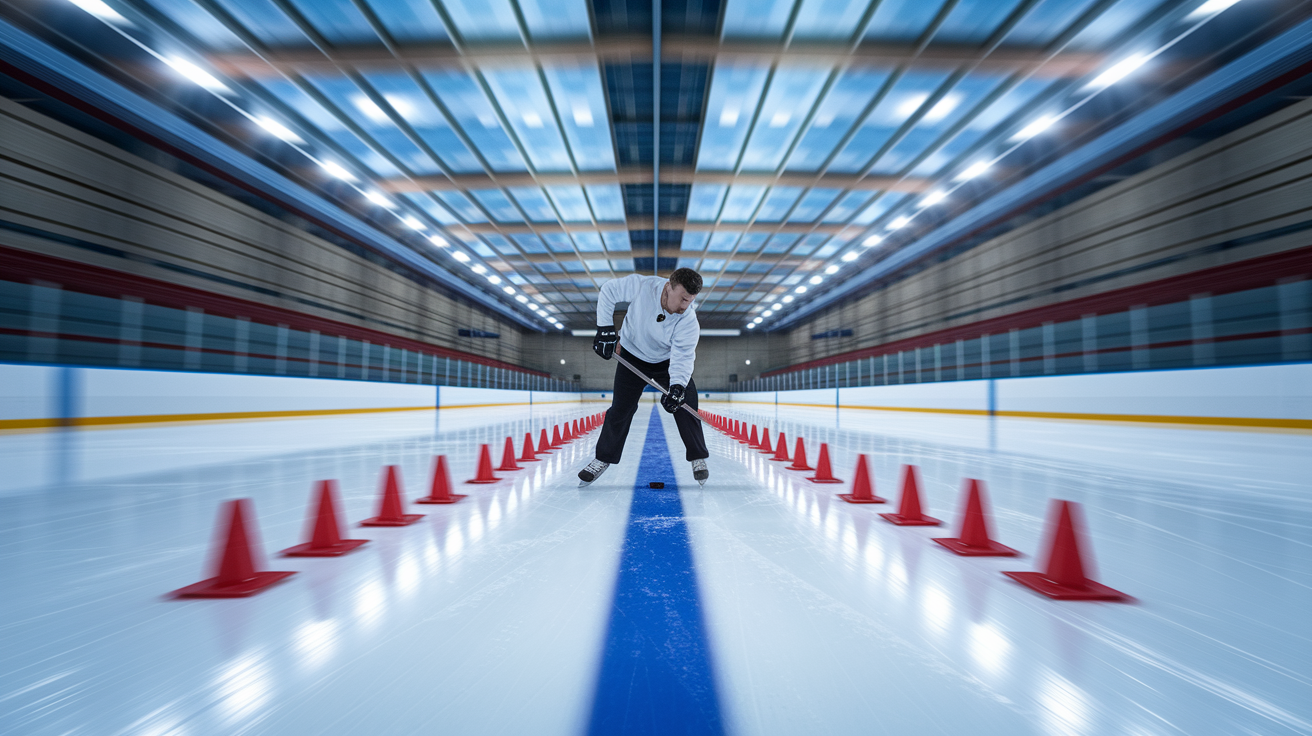
Drill 1: Lateral Glove‑Hand Puck Pulls
Set up 6 cones in a straight line, 10–15 feet apart, along the blue line. Start at cone 1 with a puck on your forehand, knees bent, stick blade angled 20–30 degrees open. Skate laterally toward cone 2, dragging the puck across your body from toe to heel of your blade. At cone 2, stop on your inside edge, pull the puck tight to your body, and immediately push off toward cone 3.
Repeat the drag and pull sequence at each cone, focusing on keeping the puck 6–12 inches ahead of your front skate. Complete 5 sets of 6 cones per side, resting 30 seconds between sets. Track your time and aim to complete each set in under 20 seconds while maintaining clean puck contact.
Common mistake: letting the puck drift too far forward. Cue yourself “knees over puck” to stay compact.
Drill 2: Backhand Retrieval and Reverse
Place 4 pucks along the boards, spaced 15 feet apart, starting at the goal line. Skate toward puck 1 on your backhand side, plant your outside skate, and retrieve the puck with a flat blade, 0–10 degrees open. As soon as the puck touches your stick, execute a quick shoulder check over your inside shoulder.
Pivot on your inside edge and reverse direction, pulling the puck onto your backhand and accelerating 3–4 strides up ice. Circle back and repeat the sequence for pucks 2, 3, and 4. Complete 4 sets, alternating which shoulder you check and which direction you reverse.
Measure success by counting clean retrievals without bobbling the puck. Target 80 percent or higher. Common mistake: staying on outside edge during the reverse. Cue yourself “inside edge, push” before the pivot.
Drill 3: Combined‑Side Transitions Under Simulated Pressure
Set up a small area 20 feet wide by 30 feet long with cones marking the boundaries. Partner stands at one end as a passive forechecker, moving at 50–60 percent speed. Start with the puck on your forehand at the opposite end, facing the forechecker.
Skate forward 2–3 strides, execute a forehand toe drag to one side, then immediately transition the puck to your backhand. Pivot on your inside edge, shield the puck with your body, and accelerate past the forechecker using 2–3 quick crossovers. Once you clear the forechecker, make a controlled pass to a target cone or your partner.
Repeat 10 sequences, switching the side of your initial drag and backhand transition each rep. Increase forechecker speed to 75–80 percent in later sets, and track how many clean exits you complete. Aim for 70 percent or better under full pressure.
Common Technical Mistakes and How Defensemen Can Correct Them
Over handling is the most common error. Defensemen try to make one extra move instead of moving the puck quickly. The puck should touch your stick for 1.0–1.5 seconds max on most exits. If you’re holding it longer, you’re inviting pressure. Practice making your read while the puck is on the way to you, not after it arrives.
Improper blade angle shows up on both forehand and backhand. If your blade is too open on a backhand pull, the puck rolls off the toe. If it’s too closed on a forehand rim pass, the puck won’t lift cleanly off the boards. Spend 5 minutes per session doing static blade angle work. Open 20–30 degrees for forehand outlets, flat 0–10 degrees for backhand holds, until the feel becomes automatic.
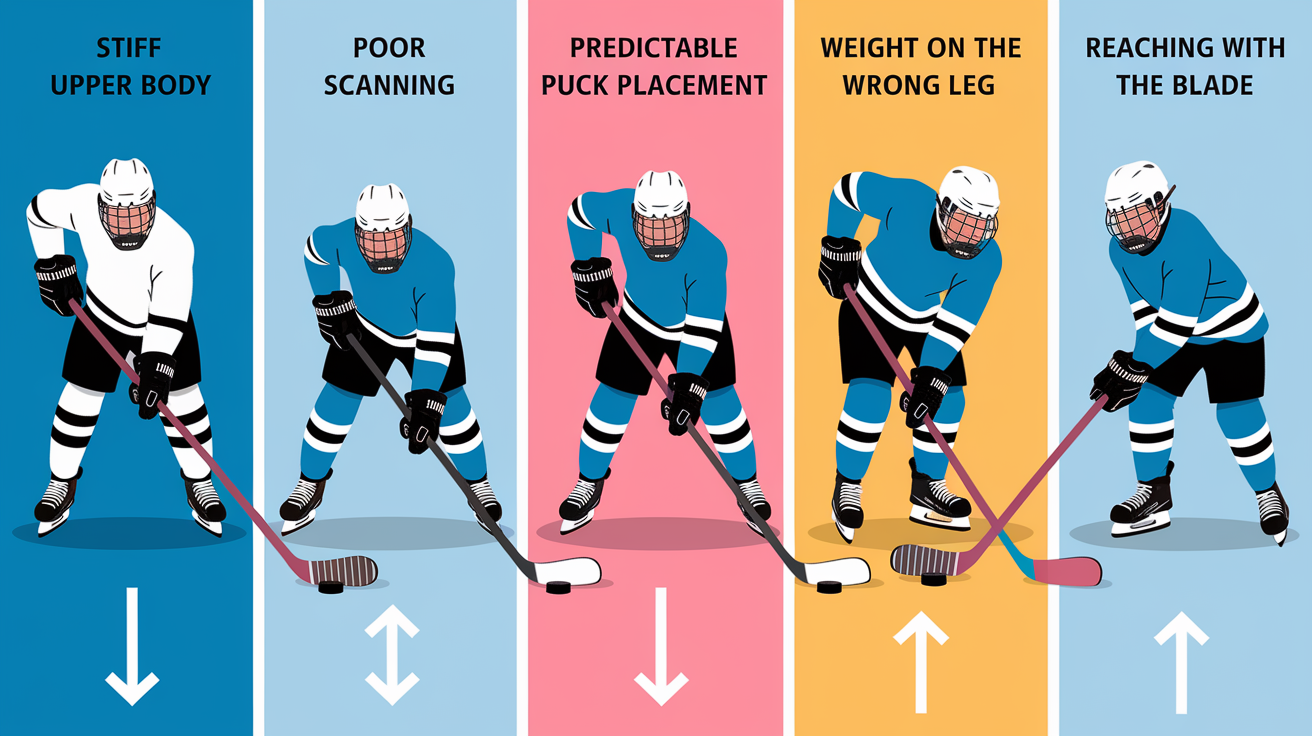
Five technical mistakes and their corrections:
Stiff upper body posture during puck reception. Correction: practice “soft hands” by flexing your top wrist slightly on every puck touch, 20 reps per session.
Poor scanning before the puck arrives. Correction: force yourself to complete one shoulder check before the puck reaches you, even in drills. Track how many times you scan successfully.
Predictable puck placement on exits. Correction: alternate your first move, forehand drag vs. backhand pull, every rep to build unpredictability into your reads.
Weight on the wrong leg during pivots. Correction: cue “step and push” by shifting weight to your lead leg 0.2 seconds before the puck move. Film yourself and count how many reps show proper timing.
Reaching with the toe of the blade instead of using proper footwork. Correction: shorten your stick reach, take two extra strides to get your body over the puck, and contact with the middle of the blade. Run 3 sets of 10 reps focusing only on foot positioning.
Applying Glove‑Hand and Backhand Skills in Real Game Scenarios
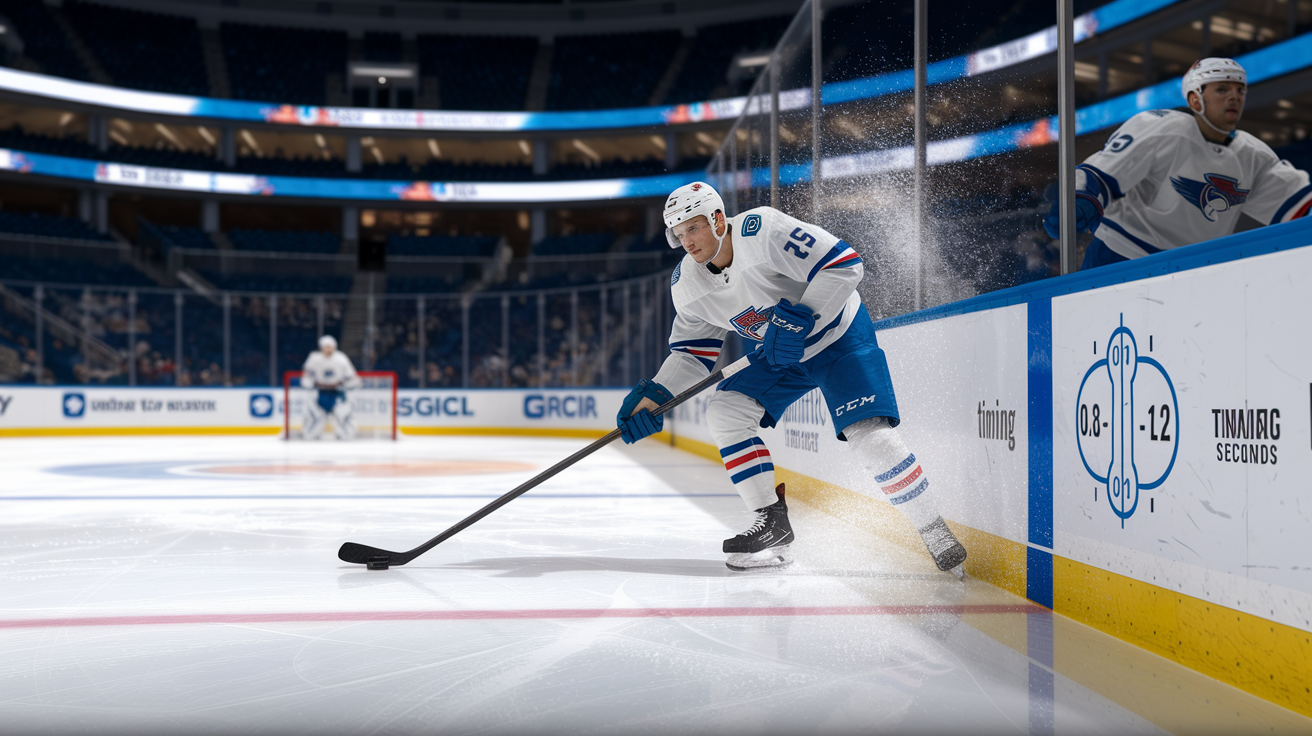
Retrievals under pressure require you to decide forehand or backhand before the puck arrives. If the rim is coming fast and you’re on your strong side, step into it with your forehand, cushion with an open blade, and immediately look for your breakout pass. If you’re on your backhand side and pressure is closing, plant your outside skate, let the puck roll onto a flat backhand blade, check over your inside shoulder, and either hold for 0.8–1.2 seconds or reverse back across. The key is committing to one option based on your positioning and the forechecker’s angle, not trying to adjust mid retrieval.
Breakout initiation separates defensemen who control the game from those who just react. When you gain possession on your forehand in the corner, your first look should be middle of the ice for a quick up to your center. If that’s covered, pull the puck onto your backhand, pivot toward the wall, and hit your winger in stride with a 10–15 foot backhand sauce or hard pass. That backhand option keeps you facing up ice and lets you see if a second wave is coming. Practice this decision tree in 2 on 0 breakout drills until your reads happen in under 2 seconds from puck touch to release.
Blue line management during offensive possessions tests your ability to switch sides quickly. If the puck is rimmed toward you on your forehand at the point, angle your stick blade to keep it in, then decide. One timer if the shooting lane is clean, backhand hold and walk the line if pressure arrives, or forehand bank pass to your partner if you’re getting closed down. Most turnovers at the blue line happen because defensemen try to force a forehand play when a quick backhand escape was the better read. Train yourself to recognize when the backhand option buys you an extra second and use it.
Final Words
In the action, you got hands-on cues for stance, stick blade, weight transfer, glove-hand mechanics, backhand technique, edge work, drills, and common fixes.
Use drills to build quick retrievals, lateral control, and clean reverses. Practice game scenarios, like retrievals, breakouts, and blue-line holds, until the moves feel automatic.
Work these glove-hand and backhand puck control tips for defensemen into short, regular reps and you’ll see fewer turnovers and cleaner breakouts. Keep it simple, stay patient, and enjoy the progress.
FAQ
Q: Is the number 69 banned in the NHL?
A: The number 69 is not banned in the NHL. The league has no rule against it, but teams or equipment staff may avoid it for image reasons, so players rarely pick it.
Q: Where do you put your weakest player in hockey?
A: You put your weakest player where they can succeed: sheltered minutes, paired with a stronger teammate, simple wall duties or third pairing, fewer defensive-zone starts, and clear, limited responsibilities.
Q: What is the best curve for a defenceman?
A: The best curve for a defenceman is a mid-to-low curve with a slightly rounded toe and moderate face openness, which helps backhand control, cleaner outlet passes, and reliable poke checks along the boards.
Q: How to defend the puck?
A: To defend the puck, you keep your body between opponent and puck, stick on the puck, use edges to absorb contact, shield with hips, scan for outlets, and move the puck on the first strong pass.