

You don’t need ice time to fix shaky hands.
Some of the biggest gains come from short, focused off-ice stickhandling.
This post gives the no-fluff drill that builds hand speed, soft touch, and muscle memory, plus five core patterns and progressions that translate straight to on-ice play.
Start with the stationary ball drill, nail your mechanics, then add movement, deception, and puck protection work to make those touches count on every shift.
Quickstart: The #1 Off-Ice Drill to Improve Your Puck Control Today

If you’re reading this, you probably want better hands. The fastest way to start building them? A basic stationary ball control drill you can do in any open space with a stick and a stickhandling ball.
This isn’t flashy. But it works. The drill builds hand speed, soft touch, and muscle memory you’ll use every shift.
Here’s the drill:
- Stand with feet shoulder width apart, knees slightly bent, stick in front of you.
- Place a stickhandling ball in front of your body, about even with your lead foot.
- Move the ball side to side in a controlled forehand to backhand rhythm. Blade stays closed, and you guide the ball with your top hand.
- Keep the ball within two feet of your body at all times. No wide, sloppy sweeps.
- Complete 3 sets of 45 seconds with 15 to 30 seconds of rest between sets.
- As you improve, lift your head and look forward instead of down at the ball.
Your top hand controls the motion. Your bottom hand should stay quiet. It’s just there for support. If you’re squeezing the shaft tight or using your whole arm to move the ball, slow down and reset. Loose wrists, controlled blade, smooth contact. That’s the point. Once you can handle 45 seconds without breaking rhythm or looking down, you’re ready to move on to the next set of drills. This single exercise builds the baseline touch every other pattern depends on.
Core Off-Ice Stickhandling Drills for Building Puck Control

Once you’ve nailed the basic back and forth pattern, the next step is adding variety. Doing the same drill over and over develops one movement. But in a game, you need hands that can react in every direction. Side to side, front to back, tight corners, quick pulls. Training multiple patterns helps your brain recognize puck position without thinking.
Here are five core drills that cover the full range of control motions:
Wide lateral drags: Pull the ball as far to your forehand as you can reach, then sweep it all the way across to your backhand side, moving it in a wide arc while keeping your blade on the ball.
Tight figure eight ball handling: Set two cones or objects one stick length apart and weave the ball around them in a continuous figure eight using alternating forehand and backhand control.
Toe pull back repetition: Start with the ball out in front, use the toe of your blade to pull it straight back toward your body, then push it forward again. Repeat for 30 seconds.
Pull push pattern around an object: Place a shoe or cone in front of you, pull the ball to one side of it, push it forward past the object, then pull it back to the other side in a smooth loop.
Rapid touch quick hands drill: In a space about two feet wide, make as many small blade touches as possible in 20 to 30 seconds without losing control.
Each drill works a different skill. Wide drags train reach and puck protection. Figure eights build coordination switching between forehand and backhand. Toe pulls develop the fine control you need for tight dekes. The pull push teaches you to change direction quickly, and the quick touch round trains hand speed under pressure.
Run these drills for 10 to 15 minutes a day. You don’t need ice time to build the muscle memory that makes handling automatic. Consistent repetition here means fewer fumbles and faster decisions when you’re back on the rink.
Intermediate to Advanced Off-Ice Stickhandling Progressions

When the basic drills start feeling automatic, it’s time to add complexity. Game situations are messy. There’s traffic, defenders reaching, and split second choices. Advanced off ice work simulates that pressure by layering in movement, fakes, and multi step sequences.
Multi Obstacle Deception Circuit
Set up four to six cones or objects in a line, spaced about one stick length apart. Your goal is to weave through them while adding a fake or pull move at each cone. For example, approach the first cone, fake to your forehand, then pull the ball to your backhand and move past it. At the next cone, try a toe drag or a quick push pull combo. Run the full circuit three times, focusing on selling the fake before you make the move. Each pass should take 15 to 20 seconds. This drill builds deception habits and teaches your hands to react while your feet are moving.
Movement Based Stickhandling Shuffle
Stand with the ball in front of you. Shuffle laterally to your right for three feet while keeping the ball under control, then shuffle back to your left. Continue for 30 to 45 seconds without stopping. Your feet should stay low and quick, and your hands should stay independent from your leg movement. Don’t let your stick swing wide when you change direction. This mirrors the footwork and hand separation you need when you’re protecting the puck along the boards or adjusting position in tight space.
Puck Protection Sweep and Reach Drill
Imagine a defender on your hip. Spread your feet wider than shoulder width and shift your weight onto your outside leg. Sweep the ball as far to that side as you can, using your body to shield it, then pull it back across and shift to the other leg. Each sweep should be deliberate and controlled. This isn’t about speed, it’s about reach and body positioning. Do three rounds of 20 second intervals with 10 seconds of rest between. On the ice, this motion keeps the puck away from stick checks and gives you time to find your next option.
Technique Breakdown: Form, Hand Position, and Blade Control
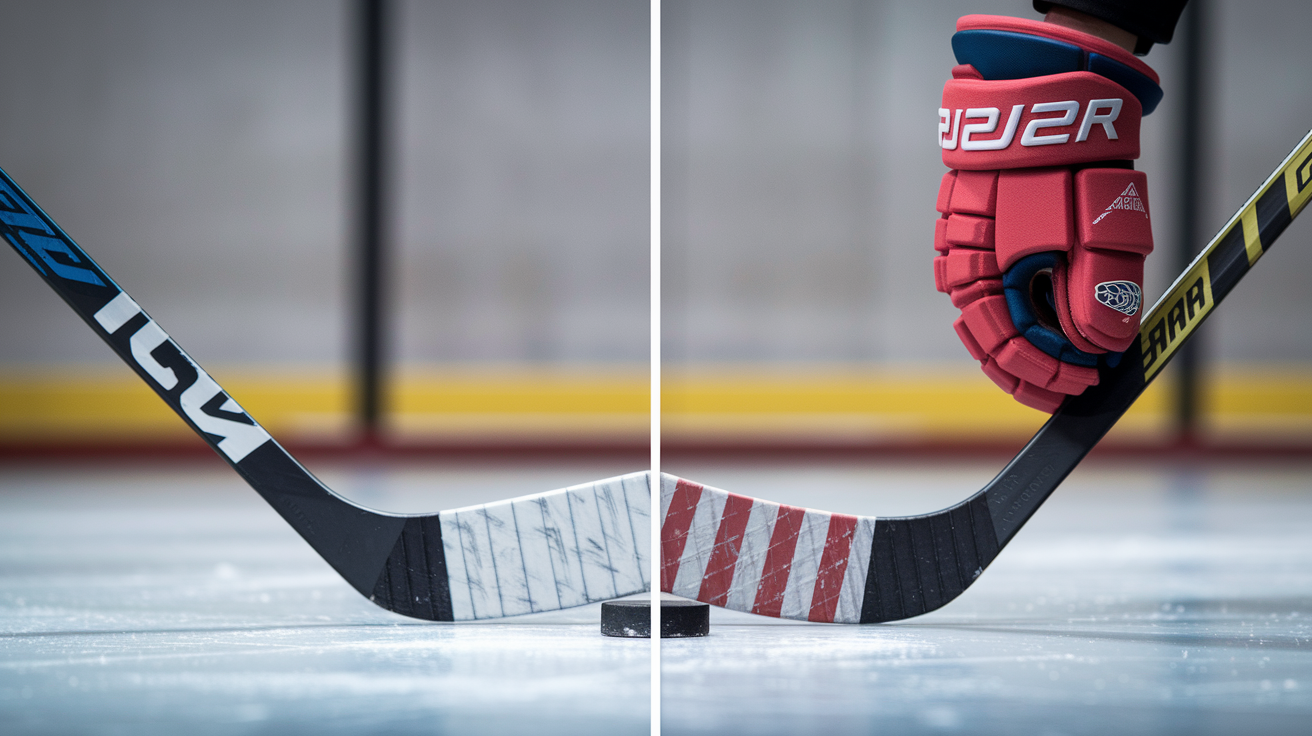
Even the best drill won’t help if your mechanics are off. The way you grip the stick, angle the blade, and position your body determines whether the puck feels glued to your stick or constantly rolling away.
Start with your hands. Your top hand should sit near the top of the shaft, and that’s the hand doing most of the work. It controls rotation, blade angle, and the fine adjustments that keep the puck on your tape. Your bottom hand is there for stability and support, but if you’re squeezing it hard or using it to drive the motion, you’ll end up with stiff, robotic handling. Loosen that bottom hand grip. Let your top hand lead.
Blade angle matters just as much. Keep your blade closed, meaning the toe of the blade is slightly ahead of the heel when the puck is on your stick. If the blade opens up, the puck rolls off. If it’s too closed, you lose the ability to cup and pull. A good test is to handle the ball slowly and watch the contact point. It should stay on the mid to lower section of the blade, and you should be able to feel the ball against the tape through your top hand. If you can’t feel it, you’re probably gripping too tight or holding the stick too far from your body.
Your posture and weight transfer tie everything together. Knees should stay bent, chest over your toes, and your weight should shift naturally as the puck moves. If you’re standing straight up or locking your knees, your hands can’t react fast enough. Small weight shifts, left foot to right foot, slight forward lean, give you the body control to handle while moving, turning, or protecting. The puck and your body have to work as one system, and that starts with how you set up before you even touch the ball.
Common Off-Ice Stickhandling Mistakes and How to Fix Them
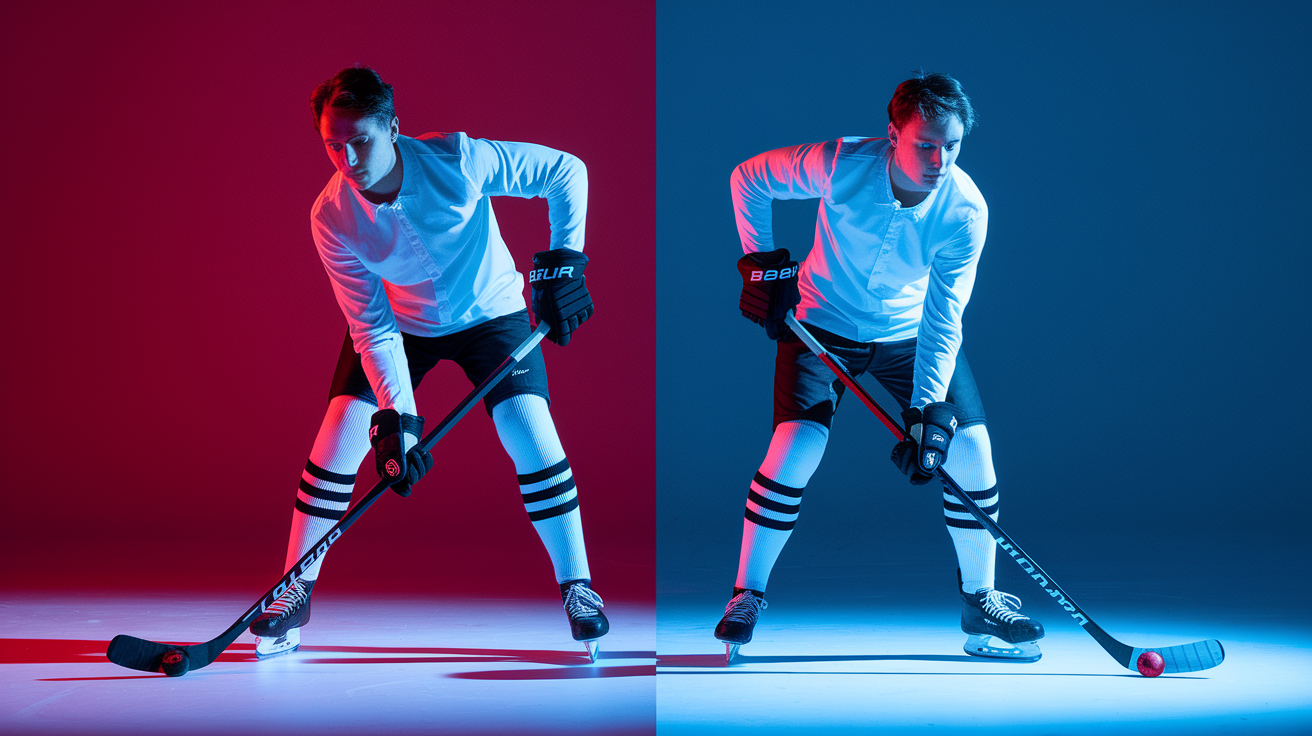
You can do every drill on the list and still not improve if you’re repeating bad habits. Most players make the same handful of mistakes, and most of those mistakes come from trying to go too fast before the foundation is solid.
Here’s what slows progress and how to fix it:
Too much bottom hand pressure: If you’re white knuckling the lower part of your stick, your wrists can’t move freely. Fix it by doing one handed drills with only your top hand on the stick for 20 to 30 seconds at a time. You’ll feel the difference immediately.
Overly wide stick movements: Big, sweeping motions look impressive but kill control in tight situations. Practice keeping the ball within two feet of your body during every rep. If it’s drifting farther out, slow your tempo and tighten the pattern.
Stiff wrists instead of loose control: Locked wrists turn your stick into a lever, not a tool. Between sets, do 10 to 15 wrist flicks without the ball. Just rotate your top hand back and forth to loosen up.
Losing control when attempting speed: Speed is the result of good technique, not the starting point. If you can’t handle the ball cleanly at half speed, full speed reps won’t help. Dial it back, get smooth, then gradually increase tempo over multiple sessions.
The pattern is always the same. Slow and correct beats fast and sloppy. If a drill falls apart when you try to go quicker, that’s your signal to spend another week at the slower pace.
Recommended Off-Ice Equipment for Better Stickhandling Training
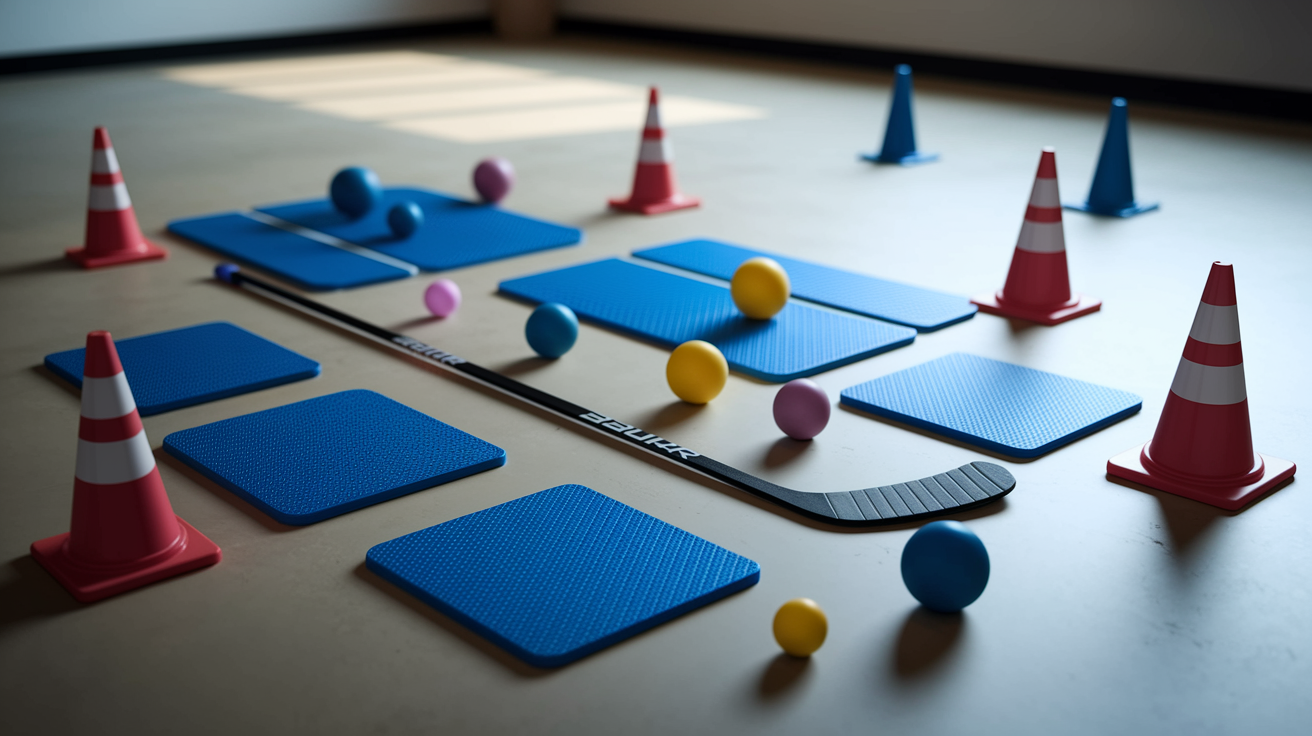
You don’t need a full setup to train off ice, but the right tools make a noticeable difference. A basic stickhandling ball costs five to fifteen dollars and works on any flat surface. Standard hard plastic balls are durable and give realistic feedback. Weighted balls, usually in the ten to twenty dollar range, add resistance and build wrist strength. But use them sparingly, maybe one or two sets per session, to avoid fatigue that breaks your form.
If you want something closer to real ice feel, consider slide boards or synthetic training tiles. Small sliding pucks designed for off ice use run between ten and thirty dollars each. They glide on smooth floors and let you practice passing, receiving, and quick transitions without the puck bouncing or sticking. Synthetic ice tiles cost more, around two to six dollars per square foot, but a small 6×8 area gives you enough space for movement based drills and realistic puck action. For most players, a 4×6 flat section of basement or garage floor and a quality ball will cover 90 percent of your off ice work.
Add on tools like cones, agility markers, and small obstacles can be picked up for five to fifteen dollars in a six pack. Use them to build circuits, set up figure eight patterns, or create lane work that mimics game traffic. The gear isn’t the limiting factor. Consistency and focus are. A stick, a ball, and ten square feet of open floor are enough to build hands that translate to the rink.
A 15-Minute Off-Ice Stickhandling Routine You Can Follow Daily

Short, focused sessions work better than occasional long grind outs. Fifteen minutes every day builds neural pathways faster than an hour once a week. This routine hits the key patterns without burning you out.
Here’s the daily flow:
Warm up touches, 1 minute: Light forehand to backhand rolls, easy figure eights, wrist rotations. Get your hands loose and your brain dialed in.
Forehand backhand reps, 3 minutes: Stationary control drill. Three sets of 45 seconds with short rest. Focus on blade angle, top hand control, and keeping your head up by the third set.
Toe pulls + pull push pattern, 4 minutes: Alternate 30 seconds of toe pull backs with 30 seconds of pull push loops around a cone or object. Four total rounds. This section builds the fine touch moves you use in tight.
Movement based shuffle drill, 4 minutes: Lateral shuffles with the ball for 45 seconds, rest 15 seconds, repeat four times. Keep your feet active and your hands independent. Simulate board play or defending space.
Quick hands speed round, 3 minutes: Rapid touch drill in a tight area. Go all out for 20 seconds, rest 20 seconds, repeat six times. This is where you push tempo and test whether your control holds under pressure.
Total time: 15 minutes. Do it before or after ice practice, in your driveway, basement, or garage. Track your touch counts on the speed rounds or time your cone weaves if you want measurable progress. Within two to four weeks of consistent work, you’ll notice cleaner receptions, faster hands in traffic, and better confidence when the puck’s on your stick during live play.
Final Words
in the action, this post gave a ready-to-run starter drill, core and advanced routines, a clear technique breakdown, common fixes, gear choices, and a 15-minute daily plan. Everything’s focused on building soft hands, quicker reactions, and head-up puck work.
Start with the quickstart forehand–backhand sets, keep sessions short, and add one harder drill each week. Use these off-ice stickhandling exercises to boost puck control and confidence on the ice. Keep it simple and consistent — progress follows.
FAQ
Q: How to improve puck control and get better at stick handling off ice?
A: Improving puck control and off-ice stickhandling begins with simple, repeatable drills: stationary forehand–backhand reps with a stickhandling ball, 3 sets of 45 seconds, top-hand drive, closed blade, and daily head-up practice.
Q: Where do you put your weakest player in hockey?
A: Placing your weakest player usually means a bottom-line role: fourth line, sheltered minutes, offensive-zone starts, and simpler responsibilities while focusing on development, practice repetitions, and pairing with experienced teammates for support.
Q: How to lift a puck off the ice?
A: Lifting a puck off the ice uses a quick heel-to-toe roll with the toe of the blade: get under the puck, snap the wrists, push with the top hand and shift weight back to lift cleanly.