

Can a single video frame cost a team a goal?
Turns out it can, at 50-60 frames per second a player can cover nearly half a meter between frames, and that tiny gap often decides offside or onside.
This coach’s guide breaks down exactly how officials review offsides with video replay systems.
You’ll get the step-by-step workflow VAR uses, how they pick the contact frame, which camera angles matter, and when the referee accepts VAR data versus doing an on-field review.
Read on to learn what officials look for and how to coach players away from tight offside calls.
How Video Replay Officials Conduct an Offside Review Step‑by‑Step
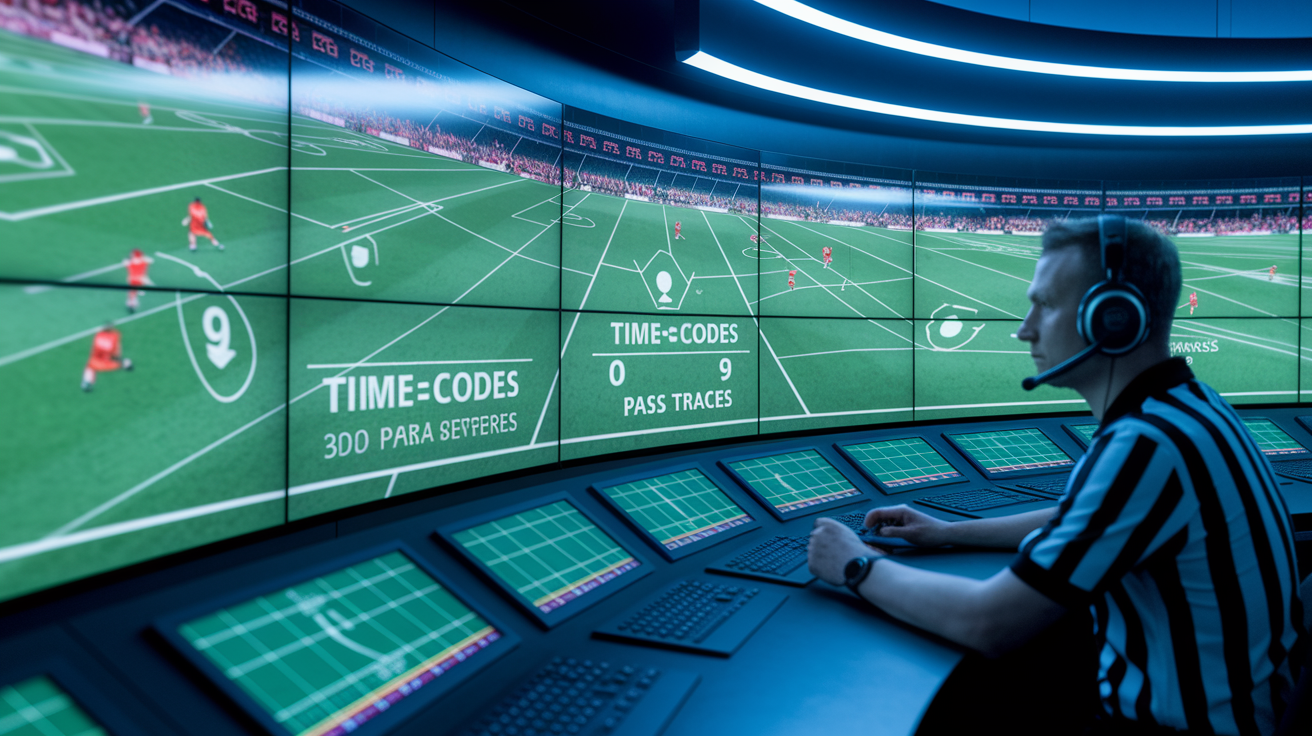
Officials don’t review every offside call with video replay. Offside only gets reviewed when it directly affects one of four match-changing moments: a goal, a penalty kick, a straight red card, or mistaken identity. If an attacking player is offside during the build-up to a goal, VAR checks it. If the offside happens thirty seconds before a corner kick that eventually leads to a goal, VAR ignores it unless it occurred during the Attacking Phase of Play.
The workflow starts before the ball even hits the net. VAR performs continuous “checks” on every goal situation, scanning broadcast camera feeds in real time. The instant a goal is scored, VAR rewinds to the pass that put the scorer through, locks onto the frame showing ball contact, and compares attacker position to the last defender. This happens silently while the referee signals the goal. If VAR spots a clear and obvious error (attacker ahead by a visible margin), the VAR communicates to the head referee using the hand to earpiece signal, then recommends a formal Video Review.
At the first natural stoppage, or when the ball reaches a neutral zone, the head referee makes the universal TV box motion to initiate the review. For factual offside decisions (pure positional questions like “Was the attacker’s shoulder ahead of the defender’s knee?”), the referee trusts the VAR’s measurement and changes the call without walking to a sideline monitor. For subjective involvement questions (“Was the attacker interfering with the goalkeeper’s line of sight?”), the referee conducts an on-field review at the Referee Review Area, watches replays on the monitor, then makes the final call.
The exact offside review sequence using video replay:
-
VAR identifies the decisive pass. Scrubs backward from the goal to find the moment the ball left the passer’s foot, using frame by frame and timecode matching across multiple angles.
-
VAR freezes the contact frame. Stops playback at the exact frame showing ball separation from the passer, not the frame before or after.
-
VAR selects the best alignment camera. Chooses the broadcast angle most parallel to the last defender’s line, minimizing perspective distortion.
-
VAR measures attacker vs defender positioning. Uses calibrated virtual lines or 3D tracking data to compare body parts that can legally play the ball (head, torso, feet, not hands or arms).
-
VAR communicates findings to the referee. Reports what the replays show, never the decision itself, and waits for the referee to decide whether to initiate a formal Video Review.
-
Referee makes the final call. Either accepts the VAR only information for a clear factual error or reviews the monitor for involvement/interference questions, then signals the outcome and restarts play.
The Camera Angle and Video Tools Used for Offside Replay Review
VAR and referees work only with broadcast television feeds. No special in-stadium cameras. No proprietary angles. If the TV truck didn’t capture it, VAR can’t review it. This constraint forces VAR operators to master the angles that do exist, understanding which views deliver reliable alignment and which introduce parallax error that makes an onside attacker look off or vice versa.
The most reliable angle for offside is a camera positioned high and wide, parallel to the edge of the penalty area or the 18 yard line. When the camera sits directly in line with the last defender, perspective distortion drops to near zero and officials can draw clean vertical reference lines from attacker to defender. Reverse angles (shot from behind the attacking team) help verify timing of the pass but rarely offer usable alignment because the camera looks down the length of the field, compressing distances. Goal line cameras confirm whether the ball crossed but contribute almost nothing to offside positioning unless the offside line sits near the six yard box.
Calibration of virtual lines uses fixed field markings: penalty spots, the 18 yard box, corner arcs. Before the match, the VAR system maps each broadcast camera’s position and lens characteristics, creating a 3D grid that accounts for camera height, angle, and zoom. When VAR draws a vertical line on screen, the system adjusts for perspective so the line represents true field position, not just a straight overlay. The process isn’t perfect. Broadcast cameras move during play, zoom changes shift calibration slightly, and low resolution feeds make pixel level decisions harder.
The five broadcast angles VAR prioritizes for offside review:
Primary wide tactical camera. High midfield position, best for overall alignment and phase of play context.
18 yard line camera. Positioned parallel to the box edge, ideal for tight calls near the penalty area.
Tactical high angle. Elevated center or corner perch, useful for verifying attacker involvement and passing lanes.
Reverse angle. Behind the attack, confirms pass timing and attacker movement but weak for alignment.
Goal line to offside line hybrid. Rare but valuable when the offside line and goal line nearly overlap, offering clean perpendicular verification.
Frame Selection, Freeze-Frame Technique, and Timing the Moment of the Pass

Identifying the exact moment the ball leaves the passer’s foot decides every tight offside call. One frame too early, the attacker looks onside. One frame too late, the defender has stepped up and the attacker is off. VAR operators scrub through replay at normal speed to locate the general window of the pass, then switch to frame by frame to isolate the instant of contact.
The contact frame is the last frame showing the passer’s foot, head, or body part still touching the ball before separation. VAR doesn’t use the frame immediately before contact or the frame showing the ball already in flight. It’s the split second boundary between touch and release. Broadcast video in most leagues runs at 50 or 60 frames per second, meaning each frame represents roughly 0.02 seconds. A fast attacker sprinting at top speed covers nearly half a meter in that window, so choosing the wrong frame flips the call.
To reduce human error, VAR syncs the contact frame across multiple camera angles using embedded timecodes. If the wide angle shows contact at timecode 42:17.340 and the reverse angle shows the same pass at 42:17.360, VAR knows the angles aren’t frame matched and adjusts before measuring position. When angles disagree by more than a few frames, VAR picks the angle with the clearest view of both the passer’s contact point and the attacker’s position, then cross references with a third angle if available.
| Frame Number | Ball Contact Status | Attacker Position | Offside Implication |
|---|---|---|---|
| Frame –1 | Foot approaching ball | Level with defender’s torso | Onside if used (incorrect) |
| Frame 0 (Contact) | Foot on ball, no separation | Shoulder half step ahead | Offside (correct freeze point) |
| Frame +1 | Ball in flight, separated | Full stride ahead of defender | Offside margin exaggerated |
| Frame +2 | Ball traveling toward attacker | Two steps clear | Misleading; not the pass moment |
Offside Positioning, Interference, and the Last Defender Measurement Process
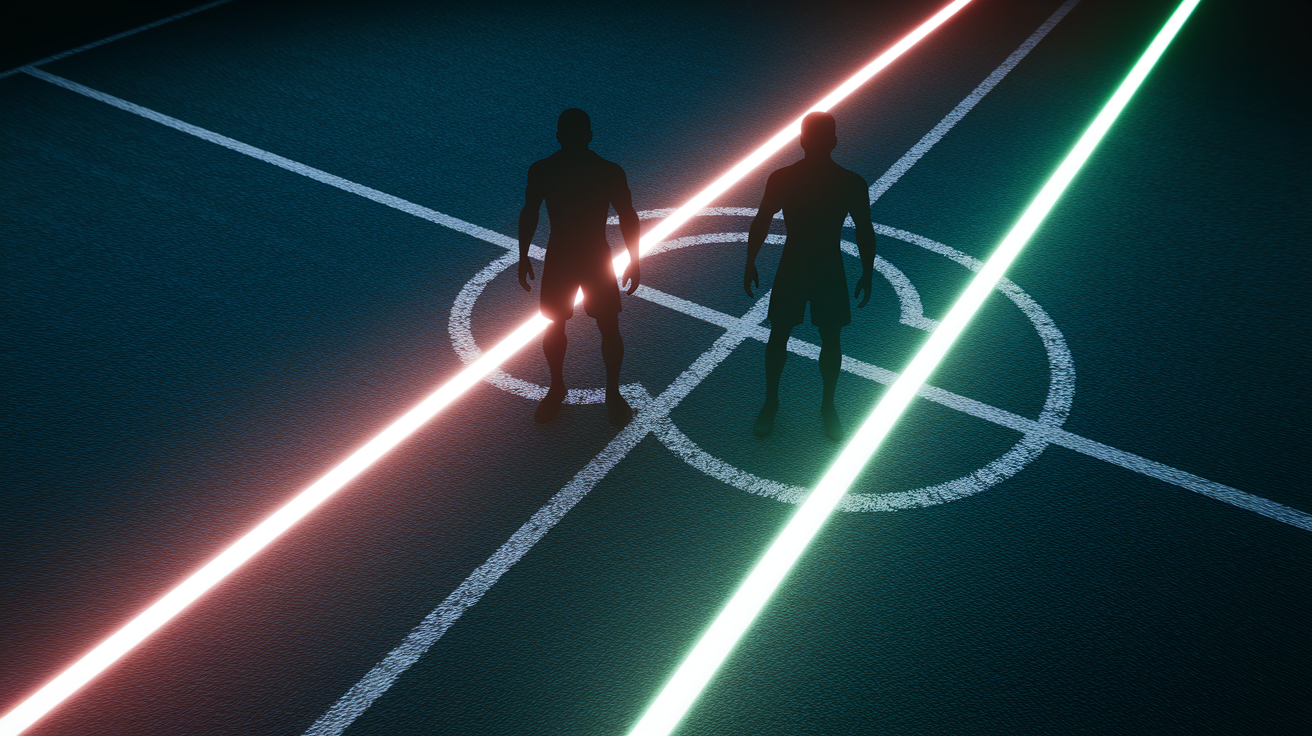
Position alone doesn’t make a player offside under the Laws. The attacker must be in an offside position and involved in active play when the ball is passed. VAR handles the factual question (“Where was the attacker’s body relative to the second to last opponent?”) using freeze frame and virtual lines. The referee handles the subjective question (“Did that position affect play?”) by reviewing involvement criteria on the sideline monitor.
For measurement, officials count only body parts that can legally play the ball: head, torso, thighs, feet. Arms and hands don’t count for either attacker or defender. If an attacker’s shoulder is ahead but their foot is level, the shoulder decides. If the defender’s arm is back but their torso is ahead, the torso decides. VAR draws vertical lines from the furthest forward legal body part of each player, references those lines to fixed field markings, and compares. A difference of five centimeters counts as offside. A difference of two pixels on a low resolution feed might get called onside because the margin isn’t clear and obvious.
Attacking Phase of Play determines how far back VAR can look. If a team wins the ball in midfield, holds possession for fifteen seconds passing sideways, then suddenly launches a through ball for a goal, the APP starts with the through ball, not the midfield turnover. Offside infractions or fouls that happened during the slow build up aren’t reviewable unless they occurred during the deliberate attacking move toward the penalty area. Non purposeful “keep ball” possession doesn’t count as APP.
The six interference types officials evaluate when an attacker is in an offside position:
Obstructing the goalkeeper’s line of vision. Standing directly between keeper and ball as the shot arrives, even without touching it.
Challenging an opponent for the ball. Making a play on a loose ball, forcing a defender to react, or contesting a header.
Clear attempt to play the ball. Swinging at a cross, stepping toward a pass, or positioning to receive, even if contact isn’t made.
Blocking a defender’s clearance or tackle. Occupying space that prevents a defender from reaching the ball in time.
Gaining an advantage from position. Receiving a rebound off the post, crossbar, or a defender after being offside when the initial pass was played.
Deflection involvement. Touching or playing a ball that deflected off an opponent, if the attacker was offside at the moment of the original pass and the deflection was not a deliberate play.
How VAR and Referees Communicate During Offside Reviews

VAR never tells the referee what decision to make. VAR describes what the replay shows (“The attacker’s shoulder is ahead of the defender’s knee at contact” or “I see the defender’s foot keeping the attacker level”) and lets the referee decide whether that information represents a clear and obvious error. The referee then chooses to initiate a Video Review or stick with the original call.
Communication runs through a push button headset system. The VAR must press and hold a button to speak, preventing accidental open mic distractions while the referee manages the game. If the VAR is occupied reviewing a different angle or coordinating with a replay operator, the Assistant VAR can speak. On field officials hear VAR audio but players and coaches do not. The universal hand to earpiece signal tells everyone a VAR check is happening. The TV box motion signals a formal Video Review is starting. The final whistle and arm signals communicate the outcome.
Assistant Referee Responsibilities During Potential Offside Situations

The assistant referee’s flag used to go up the instant an attacker moved ahead of the last defender. Now, in matches using VAR, the AR delays the flag in very clear attacking situations where a goal, penalty, or continued possession might result. If the attack fizzles into a goal kick or the ball goes out for a throw in to the defending team, the AR keeps the flag down and the game continues. If the attack ends with a goal, a penalty decision, a corner, or the attacking team retaining possession after the play stops, the AR raises the flag immediately after the stoppage.
Delaying the flag prevents VAR from having to overturn an early whistle that stopped a legal goal scoring chance. It also creates anxiety for defenders who expect protection from the whistle and frustration for coaches who see an offside attacker score before the flag appears. The protocol is explicit: delay only when the offside attacker or a teammate in an onside position has a direct opportunity to score or assist, and raise the flag as soon as that opportunity ends.
Assistant referee responsibilities during potential offside under VAR protocol:
Positioning along the second to last defender. Maintaining the correct sightline to judge offside at the moment of the pass, even when delaying the flag.
Communication with the head referee via headset. Reporting when a delayed flag will be raised and confirming whether the attacker was involved in play.
Flag delay visual cues. Keeping the flag down during the attacking sequence, raising it clearly once play stops, and holding it high until acknowledged by the referee.
Post review responsibilities. Assisting with restart positioning and communicating the outcome to nearby players if the referee directs.
Applying Semi Automated Offside Technology (SAOT) and 3D Tracking Systems

Semi Automated Offside Technology debuted at the 2022 FIFA World Cup and is now rolling out in top flight leagues worldwide. The system uses 10 to 12 dedicated tracking cameras mounted in the stadium roof, capturing up to 50 data points per player 50 times per second: shoulders, elbows, knees, feet, head. A central processor combines those points into a 3D skeletal model for every player on the field, tracks the ball with a sensor embedded in its core, and calculates offside position in real time.
When the system detects a potential offside, it generates an automated alert and sends a bundled data packet (freeze frame, virtual offside line, 3D player models, and annotated video) to the VAR within seconds. VAR reviews the packet, confirms the tracking data aligns with what the broadcast replay shows, and communicates the finding to the referee. The referee still makes the final call. The technology doesn’t whistle. It doesn’t override human judgment on involvement or interference. It just delivers faster, more precise positional data than a human can extract from 2D video.
The accuracy improvement is measurable but not absolute. SAOT reduces offside decision time from an average of 70 seconds under manual VAR to around 25 seconds. It nearly eliminates the guesswork on tight calls where an attacker’s toe or shoulder is level with a defender’s knee. But it still depends on camera angles, lighting, and calibration. A player who ducks or jumps can momentarily confuse the skeletal tracker. A crowded penalty area with ten bodies overlapping creates tracking gaps. The system flags these uncertainties and defaults to the VAR’s manual review.
The five steps in an automated offside review using SAOT or similar 3D tracking:
Player point mapping. Tracking cameras lock onto each player’s body and map key anatomical landmarks in three dimensional space.
Ball touch detection. Embedded ball sensor or high speed camera records the exact frame of contact between passer and ball.
3D alignment calculation. System compares attacker’s furthest forward legal body part to the second to last defender’s position at the moment of the pass, accounting for camera perspective and field curvature.
Automated alert generation. If the attacker is ahead by a defined threshold (usually 5 cm or more), the system immediately notifies VAR and bundles the data into a visual review packet.
Referee confirmation and final decision. VAR reviews the 3D model and annotated replay, verifies alignment with broadcast footage, communicates findings to the referee, and the referee makes the call.
Offside Review Scenarios Coaches Must Teach Players and Staff

Coaches who understand how VAR evaluates offside can shape training, manage in-game expectations, and reduce arguments that lead to yellow cards. The best coaching starts with real match examples, broken down frame by frame, showing exactly what VAR saw and why the call went the way it did. Players learn faster when they can see their own shoulder ahead of the line or watch a teammate’s run timed perfectly to stay onside.
A common scenario: attacker makes a run, receives a through ball, scores, and the assistant’s flag stays down. Celebration starts. Then VAR freezes the frame and shows the attacker’s knee six inches ahead of the defender’s torso at the moment of contact. Goal disallowed. The teaching point isn’t “don’t make runs.” It’s “time your movement to the passer’s touch, not to the flight of the ball.” Another scenario: attacker in an offside position near post doesn’t touch the ball but screens the goalkeeper as the shot arrives. VAR and referee rule offside interference. The lesson: position discipline matters even when you’re not involved in the play, because standing in the keeper’s line of sight counts as involvement.
Attacking Phase of Play adds complexity. If your team wins the ball 40 yards out, plays three square passes over eight seconds, then threads a final ball for a goal, VAR only checks the final pass and the immediate moments before it. But if your team wins the ball, immediately drives forward in a continuous attacking move, and a foul or offside occurs anywhere in that sequence, VAR can go back and erase the goal. Coaches teach players to recognize when APP starts (usually the first forward pass or dribble with intent toward the penalty area) and stay disciplined during the entire sequence.
APP also determines whether a goal stands after an earlier infraction. If an attacker commits a handball 12 seconds before a goal but your team maintained possession and kept attacking, the handball negates the goal. If your team lost and regained possession, or if play stopped and restarted (corner, throw in, free kick), APP resets and the earlier handball isn’t reviewable.
| Case | Angle Used | Call Type | Reasoning | APP Impact | Final Ruling |
|---|---|---|---|---|---|
| Attacker’s shoulder ahead, toe level | 18 yard parallel camera | VAR only factual | Shoulder can play the ball; clear offside | APP active; goal disallowed | Offside, no goal |
| Attacker level but obstructing keeper’s view | Tactical high + reverse | On field review (OFR) | Position legal but involvement subjective | APP active; interference evaluated | Offside interference, no goal |
| Attacker clearly ahead, pass deflects off defender | Wide + goal line sync | VAR only factual | Deflection not deliberate play; offside stands | APP continuous from original pass | Offside, no goal |
| Attacker ahead during build up, team loses/regains possession | Tactical wide | No review | APP reset when possession changed | Earlier offside no longer reviewable | Goal stands |
| Tight call, 2 pixel margin on low res feed | Primary broadcast wide | VAR only factual | Insufficient evidence of clear/obvious error | APP active but margin too small | Original call stands (goal or no goal) |
| Attacker offside, doesn’t touch ball, teammate onside scores | Reverse + 18 yard | On field review (OFR) | Evaluate if offside attacker affected defender or keeper | APP includes both attackers’ movements | Depends on interference; often onside if no impact |
Best Practices for Training Officials and Coaching Staff on Offside Video Review

Officials training for VAR certification spend hours in mock Video Operation Rooms, paired with replay operators and Assistant VARs, working through hundreds of offside scenarios at match speed. The drills isolate decision points: finding the contact frame under time pressure, choosing the best angle when three cameras offer conflicting perspective, and explaining findings to the referee without influencing the final call. Certification requires passing both written protocol exams and live scenario assessments where instructors score accuracy, speed, and communication quality.
Coaches benefit from parallel training. Bring your staff into a film room with multi angle replay access and run the same freeze frame exercises officials use. Pause at the moment of the pass. Ask your assistant coaches to call offside or onside before revealing the VAR decision. Discuss why certain angles mislead and which body parts matter. When your staff understands the frame by frame logic, they stop wasting energy arguing calls that were obviously correct under review and start focusing on tactical adjustments that keep attackers onside.
The most effective training isolates the gaps between real time perception and replay evidence. In real time, an assistant referee 35 yards away sees an attacker’s run and makes a snap judgment. On replay, the freeze frame shows the attacker’s shoulder was actually behind the defender’s knee by four inches. The drill teaches ARs to trust their positioning, delay the flag in tight situations, and let VAR correct the mistakes that matter. It also teaches attackers to exploit that delay. If you know the AR won’t flag a marginal call immediately, you can commit fully to the run and trust VAR to get it right.
Five essential drills for officials and coaching staff learning offside video review:
Freeze frame timing drill. Replay ten passes at normal speed, then challenge participants to identify the exact contact frame without slow motion. Compare their picks to the verified frame. Repeat until contact recognition becomes automatic.
Interference assessment drill. Show replays of attackers in offside positions who do not touch the ball. Participants decide whether each attacker interfered by obstructing vision, challenging for the ball, or gaining advantage. Discuss borderline cases where interference is debatable.
AR delayed flag drill. Run live scrimmage scenarios where attackers deliberately time runs to near offside. ARs practice holding the flag during goal scoring opportunities, raising it only after the play ends. Debrief on timing, positioning, and confidence.
Multi angle verification practice. Present the same offside situation from three camera angles (wide, reverse, 18 yard). Participants choose the most reliable angle, justify their choice, then verify using a calibrated reference. Repeat with progressively tighter calls.
Restart window scenario training. Simulate sequences where a potential offside occurs, play continues, and a restart (corner, throw in, free kick) happens before VAR completes the check. Participants decide whether the incident remains reviewable or the window closed. Cover APP exceptions.
Review Constraints, Restart Rules, and Limitations of VAR Offside Reviews

VAR cannot fix every mistake. Once play restarts after a stoppage, the window for reviewing most offside incidents closes. If the referee awards a corner kick and the corner is taken, VAR cannot go back to check whether an offside occurred during the build up unless it involved violent conduct, spitting, biting, or an extremely offensive gesture (none of which apply to positional offside). The restart rule forces VAR to work quickly during the brief stoppage between the initial play and the corner, throw in, or free kick.
The rule exists to preserve game flow and prevent endless backtracking. Without it, a referee could award a goal, allow the kickoff, let play continue for 30 seconds, then stop the match to review an offside from two restarts ago. The restriction also protects referees from criticism when VAR genuinely cannot help. If a tight offside is missed, play continues, a throw in is taken, and only then does VAR identify the error, the referee can honestly say the decision is unreviewable under the protocol.
Offside reviews during stoppage time follow the same rules as regulation. There is no limit on the number of reviews, no maximum time allowed, and no restriction based on score or match situation. If a 90+6 minute goal comes off a tight offside, VAR checks it with the same thoroughness as a goal in the 12th minute. The time taken is added to stoppage time at the referee’s discretion, often extending the match by two or three additional minutes.
Four situations where VAR cannot review offside even when an error occurred:
Restart has been taken. Corner, throw in, goal kick, free kick, or drop ball executed before VAR completes the check. Offside incident prior to that restart is no longer reviewable unless it involved violent conduct or serious missed misconduct.
Offside unrelated to the four reviewable categories. Attacker in offside position during open play but no goal, penalty, or red card results. VAR does not intervene because the incident is not match changing under the protocol.
Margin too small to be clear and obvious. Freeze frame shows attacker and defender within a pixel or two on a low resolution feed. VAR cannot conclusively determine offside, so the original call stands regardless of direction.
Offside occurred outside the Attacking Phase of Play. Team held possession for an extended period of non purposeful passing (“keep ball”) before the goal. Earlier offside not part of the continuous attacking move and therefore not reviewable under APP rules.
Final Words
In the action, we walked through the offside review workflow: VAR checks on goals, frame-by-frame pass timing, camera angles and calibration, measuring the last defender, and when on-field review is needed.
You also got tools: communication protocols, AR duties, SAOT basics, and coach checklists to train players and staff so everyone knows what a review looks like.
Treat this how officials review offsides with video replay coach guide as a playbook: rehearse freeze-frame timing, run AR delay drills, and review scenarios after practice. Do that and your team will be calmer, smarter, and better prepared when video decides the call.
FAQ
Q: Can you review offsides in football?
A: Offsides in football can be reviewed when it directly affects a goal, penalty, red card, or mistaken identity; VAR automatically checks goal situations using broadcast feeds and frame‑by‑frame timing to decide.
Q: What is the 9 1 4 rule in college football?
A: The “9 1 4” rule isn’t a widely used term; it likely refers to a specific rulebook section. Tell me the league or the rule text and I’ll explain it clearly.
Q: Can you challenge replay assist?
A: You cannot personally challenge a VAR or replay “assist” in soccer; coaches don’t request reviews. VAR or the referee starts reviews and uses broadcast angles to confirm factual points like position.
Q: Why can’t coaches challenge in the last 2 minutes?
A: Coaches can’t challenge in the final two minutes because replay responsibility moves to the replay official or booth, centralizing reviews to protect game flow and ensure consistent, timely decisions.