

Think veteran interviews usually end up in polite coach-speak instead of real numbers?
They do. Players can tell you’re unprepared in two questions and shut down.
If you want sets, loads, weekly hours, and rehab specifics, you need a plan.
This guide shows the prep that matters — mapping career timelines, naming strength staff, and lining up follow-ups that demand detail.
You’ll get exact question templates and note-taking tricks that turn stories into usable training data.
Read on to learn how to get honest answers, not safe answers.
Preparing to Interview Veteran Hockey Players About Their Training Methods

Start with the player’s career timeline. Teams, leagues, stats, playoff runs, injuries, coaching changes. If they played college hockey in the 1990s, know what strength programs were standard at their school. If they turned pro in 2005, understand what off-ice conditioning looked like before GPS tracking and force plates existed.
Show you’ve done your homework fast. Reference specific seasons, training staff, or facility changes. Mention the strength coach they worked with, the rink where they trained summers, or a known injury they rehabbed. Veterans can tell within two questions whether you’re prepared or just fishing for generic quotes.
Before you reach out, knock out these five prep tasks:
Map their career timeline with exact seasons, teams, and position changes.
Identify training staff, notable coaches, or performance centers they used.
Review past interviews or articles where they mentioned drills, workouts, or recovery habits.
List three or four training themes you want them to expand on. In-season maintenance, rehab protocols, off-season progressions.
Prepare follow-up prompts for common responses so you can dig into sets, reps, session length, and weekly hours.
Decide which parts of their routine matter most for your audience. If you’re writing for parents of youth players, ask about foundational habits and early training mistakes. If you’re targeting junior or college athletes, probe periodization, testing metrics, and how they structured off-seasons around playoff fatigue or injury recovery.
Structuring Effective Training‑Focused Interview Questions

Open with questions that invite stories, not one-word answers. Ask “Walk me through a typical summer week during your prime years” instead of “Did you train hard in the summer?” The first version gets you session-by-session breakdowns. The second gets you a polite “Yes.”
For drill and conditioning detail, ask the player to describe specific exercises, distances, and durations. “What hill sprints did you run? How long was the hill, how many reps, how much rest between sprints?” That gets you usable numbers. “Did you do sprints?” doesn’t.
To understand evolution, frame questions around career inflection points. “How did your off-season change after your first NHL contract versus after the Olympic year?” or “What did you add to your routine when you moved from wing to center?” Both prompts tie training shifts to real performance context.
Use these seven questions to pull training depth from veteran players:
Walk me through your off-season week by week. When did you start, what changed each month, and when did you taper before camp?
Describe your heaviest lifting phase. What lifts, how many days per week, sets and reps, and how long did that phase last?
What on-ice work did you do in June versus August? Hours per week, drill focus, and intensity level?
How much time off did you take after the season ended, and what factors decided that rest window?
Which conditioning protocols gave you the best carryover to in-season performance? Bike intervals, hill runs, sled pushes, shuttles?
What mistakes did you make early in your career with training, and how did you correct them?
How did you structure maintenance work during the season? Frequency, session length, and lift selection?
Building Rapport With Veteran Hockey Players
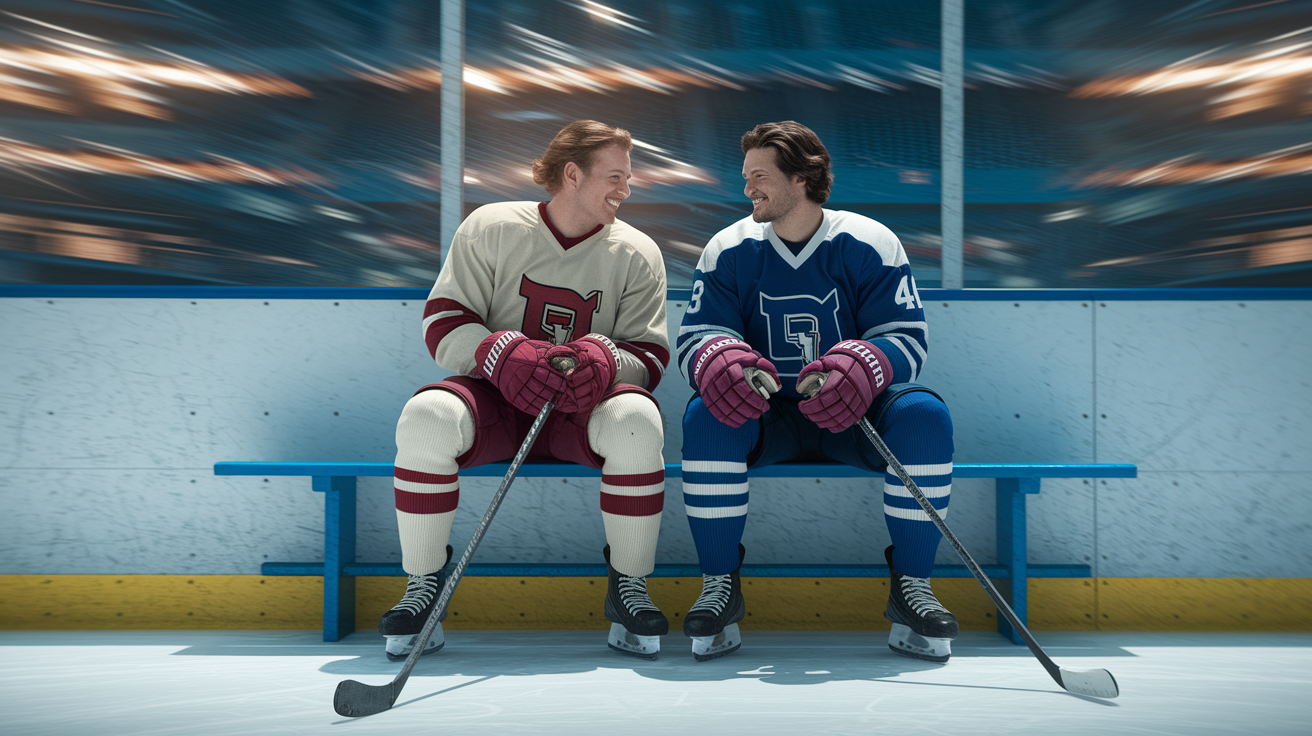
Respect for their era matters. If they played before video-assisted coaching or wearable tech, acknowledge that context instead of treating old-school methods as primitive. Ask how they adapted when training science caught up to them mid-career, or how they refined routines without today’s tracking tools.
Don’t assume anything about age, injury history, or physical decline. Don’t open with “Now that you’re retired and probably dealing with pain…” unless the player has publicly discussed those issues. Let them volunteer information about limitations or setbacks. If they mention an injury, ask how it shaped their training rather than pressing for medical detail they may not want to share.
Pace the conversation to match their comfort level. Some veterans enjoy technical deep dives and will talk sets and tempo for an hour. Others prefer broader storytelling and will give you training philosophy instead of exact rep schemes. Read their energy. If they’re expansive on one topic, stay there and capture the detail. If answers get short, pivot to a different angle or offer a break.
Documenting and Organizing Insights From the Interview

Record audio with explicit permission, and take structured notes in real time. Use shorthand or a template with columns for phase, exercise, sets, reps, load, rest, duration, and frequency. When the player says “I squatted once a week, heavy, maybe three or four reps,” write down “1x/week, 3–4 reps, heavy load (follow up: % of 1RM or actual weight).” Mark gaps so you remember what to clarify later.
Label insights by category as you go. Technical drills, strength work, conditioning, recovery, nutrition, mental prep, and career evolution. When a veteran describes a skating-edge drill, tag it “technical/on-ice.” When they mention weekly treatment time, tag it “recovery.” This sorting makes it easy to pull themed sections when you write or produce the interview.
After the interview, send a short follow-up with two or three clarifying questions. “You mentioned squatting heavy once a week. What weight range or percentage of your max were you using?” or “For hill sprints, how long was the hill and how many reps in a set?” Most players will reply with the numbers if you ask cleanly and show you’re trying to get it right, not challenge their memory.
Managing Interview Logistics for Veteran Athletes

Schedule around their current routine and physical comfort. If they still train or coach, mornings after their session often work better than evenings when they’re tired. Offer options for location. Home, rink, gym, or a quiet café. Let them pick the setting where they’ll be relaxed and unrushed.
Respect their time window. If they give you thirty minutes, plan for twenty-five and leave room for one good story to run long. Bring water, offer breaks, and don’t assume they want to sit the entire time. Some players think better on their feet or prefer to demonstrate a movement rather than describe it.
Complete these four logistical steps before the interview begins:
Confirm recording permissions and clarify what details you plan to publish.
Send your core questions in advance so they can prepare examples or dig up old training logs.
Arrive early, test your recording setup, and keep backup batteries or a second device ready.
Prepare a one-page reference sheet with their career timeline, key seasons, and the themes you want to explore so you can stay on track without shuffling notes.
Final Words
You jumped into prep: research a player’s era, pick training themes, and set up quick credibility so veterans open up.
Then you structured questions to prompt stories about warmups, drills, strength work, and how routines evolved. You practiced pace and respect to build rapport and agreed how to record details.
Use this guide on how to interview veteran hockey players about training routines to capture specific drills, reps, and seasonal shifts. Those insights change coaching and development for the better.
FAQ
Q: What are the 4 C’s of coaching hockey?
A: The 4 C’s of coaching hockey are communication, conditioning, consistency, and competitiveness. Communication is clear instruction; conditioning is fitness; consistency is systems and routines; competitiveness is daily effort and habits.
Q: Has a black person ever won the Stanley Cup?
A: A black person has indeed won the Stanley Cup. Several Black NHL players have been champions, notably goaltender Grant Fuhr, who won with the Edmonton Oilers in 1984 and 1985.
Q: What are the 4 pillars of hockey?
A: The 4 pillars of hockey are skating, puck skills, physicality, and hockey IQ. Skating enables action, puck skills keep possession, physicality wins battles, and hockey IQ guides decisions and positioning.
Q: Where do you put your weakest player in hockey?
A: You should put your weakest player on the fourth line or in sheltered minutes, paired with a strong partner, often on the wall or in offensive-zone starts, avoiding penalty kill and key defensive matchups.