

Think every showcase will get college coaches to your games? Think again.
The best showcases and tournaments for hockey recruiting visibility are the ones coaches actually attend, not the flashy invites with empty stands.
This post lists the events that bring consistent scout turnout, explains why they matter by age and level, and shows how to pick the right one for your budget and stage.
Short answer: fewer wasted weekends, more real recruiting calls.
Premier Hockey Showcases and Tournaments for Maximum Recruiting Visibility
The events below represent your best shots at getting noticed by college scouts who actually matter. Each one’s here because it brings consistent coach turnout, strong competition, and real results. Commits, roster invites, follow-up calls.
-
USHL Fall Classic (Cranberry, PA) — Late September. You’re watching USHL rosters plus select NAHL and prep commitments. Draws 80 to 120 college coaches because it’s the first clean look at junior talent after cuts.
-
NAPHL Finals Weekend (Location Rotates) — March or April. Elite AAA divisions competing for national titles. Scout density jumps during 18U and 16U finals. Coaches show up to cross-check commit lists and fill late spots.
-
CCM/USA Hockey All‑American Prospects Game (Host City Rotates) — September. By invitation, televised, stacked with birth year elite talent. NHL and NCAA staffs attend because the competition ceiling’s high and the list’s already vetted.
-
Beantown Classic (Boston Area) — December holiday tournament. AAA, Tier 1, Prep, top club programs. Heavy coach attendance because Boston’s a recruiting hub and flights are easy during the break.
-
NAHL Showcase (Blaine, MN) — Mid September. Every NAHL team plays two games in four days. College staffs camp out in Blaine to watch entire rosters under game pressure. Most efficient scouting weekend on the junior calendar.
-
CCM World Invite (Toronto/Chicago, Location Varies) — July. Top AAA 16U and 18U teams only. Strong Canadian and U.S. college presence because it’s one of the best July competition pools during prime camp season.
-
USA Hockey National Championships (Host City Rotates) — April. Tier 1 16U and 18U divisions bring the highest level of club competition. Coaches attend semifinals and finals for late recruiting targets and uncommitted seniors.
-
Elite 9 New England (Multiple NH/MA Venues) — November through December. Prep and junior teams compete in a weekend round robin. Scout friendly schedule and concentrated East Coast programs make it a favorite stop for NESCAC, Hockey East, and ECAC staffs.
-
Beast Series Events (Location Rotates) — Various months, U16 to U18 AAA and Tier 1. Strong invite only format compresses talent density. Coaches attend because the field’s curated and the schedule lets them see multiple game blocks.
-
NCDC Showcase (Attleboro, MA) — September. Similar format to the NAHL Showcase but focused on the NCDC’s tuition free junior rosters. Heavy Division III and lower Division I scouting because the league’s academic profile aligns with those programs.
Use this as a starting point, not a checklist. If your team or program doesn’t have access to an invite only event, go for the open showcases with the best coach to player ratio. Fewer wasted trips. More quality shifts in front of decision makers who know your name by Sunday.
What Makes a Showcase Valuable for Recruiting Exposure
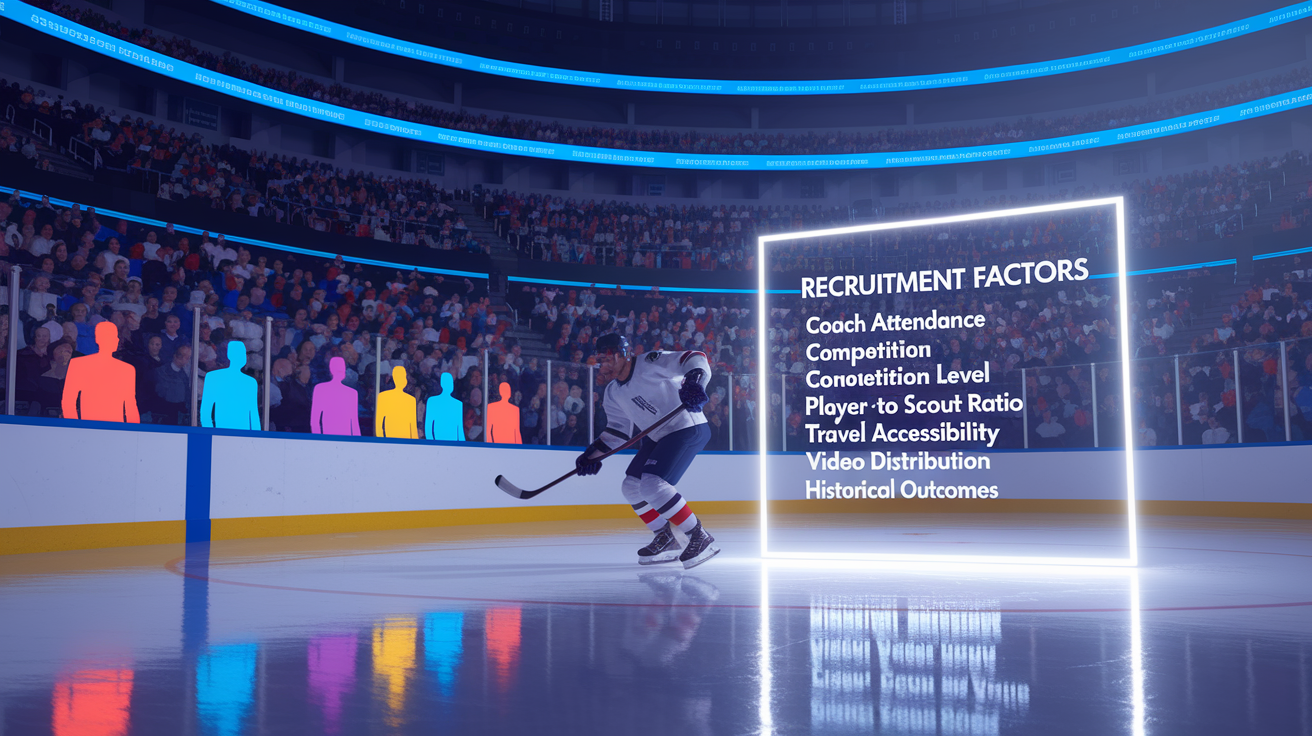
A packed rink full of coaches means nothing if they don’t recruit your position, division, or graduation year. The events that deliver real recruiting traction share six things: published coach attendance lists, competition that matches or exceeds your current level, manageable player to scout ratios, convenient travel corridors for college staffs, dependable video capture and distribution, and a pattern of repeat attendance by the same programs year over year.
Scout density is the clearest signal. An event that hosts 40 college programs beats an event with 100 coaches if those 40 programs all recruit your target division and position. Look for showcases that publish attending school names at least two weeks before puck drop. If the organizer won’t share the list, assume the number’s low or the schools aren’t relevant to your pathway.
Competition level has to stretch you without burying you. Coaches want to see how you perform when the game speed rises. If you’re a second line player on a regional team, an elite invite only showcase might deliver exposure but no ice time. A strong regional event where you log heavy minutes against legitimate opponents often produces better film and more follow-up. Match the event’s ceiling to your current development stage, then move up as your play improves.
Key factors to evaluate before you register:
• Coach attendance transparency, names and divisions published in advance
• Competitive balance, rosters that will challenge your game without eliminating your minutes
• Player to scout ratio, fewer than 20 players per attending college staff is ideal
• Regional accessibility, coaches attend events near their campus or along established recruiting routes
• Video distribution speed, highlight clips available within 48 hours post game
• Historical outcomes, documented commits or roster invitations from prior years
Cost, Travel, and Scheduling Considerations for Families

Tournament fees, travel, lodging, and add on video packages push the real cost of a single showcase weekend to $800 through $3,500 per player. Registration alone typically runs $250 to $900 for national level showcases and $150 to $500 for regional events. Hotel blocks during peak recruiting months (December, January, February, and July) carry premium rates, and most showcases require a two or three night minimum stay. Early bird discounts often close six to eight weeks before the event, so budget planning and registration decisions need to happen well ahead of the first game.
National showcases deliver broader exposure but cost more in every category. A Midwest family traveling to a September showcase in Massachusetts will spend twice what a regional New England event costs. The incremental recruiting value depends entirely on whether the attending coaches recruit outside their home region. Many Division III programs and some Hockey East schools focus their travel budgets on East Coast showcases, so a California based event might draw fewer relevant scouts despite a strong field. Match the event’s geographic draw to the programs on your target list.
Regional showcases offer better cost efficiency for younger players and families still mapping the recruiting landscape. A strong 15U or 16U performance at a $400 regional event often generates the same early interest as a $1,200 national showcase if the right coaches attend. Save the higher cost national events for your peak recruiting years (16U second half and the full 18U season) when coaches are ready to extend offers and your game’s mature enough to showcase under pressure.
Choosing Events by Age Group and Development Level
NCAA coaches begin tracking names as early as 14U, but meaningful recruiting conversations rarely start before the second half of 16U. The showcase strategy that works for a 2009 birth year won’t help a 2005. Younger players benefit most from events that build competitive credibility and generate early coach awareness. Older players need events that produce direct contact, campus invitations, and verbal offers.
At 14U and 15U, prioritize regional showcases and strong league schedules over expensive national travel. Coaches attending these events are gathering names for later follow-up, not extending offers. A solid showing at a well run regional event (especially one that draws local Division I, Division III, or ACHA programs) puts you on watch lists without the financial and travel strain of cross country trips. Use this window to develop your highlight film, refine your position skills, and start building relationships with coaches who recruit your league or region.
The 16U season, particularly January through April of your second 16U year, marks the start of active recruiting for most Division I and Division III programs. Showcases during this window should prioritize competition quality and coach density. If you’re tracking Division I interest, national level invitationals and top tier league finals are worth the cost. If your target is Division III or ACHA, regional showcases with strong academic program representation deliver better ROI. Coaches at this age are evaluating skating mechanics, hockey IQ, and how you handle defensive zone pressure. Your shifts need to demonstrate growth, not just effort.
By 18U and junior hockey, showcases serve a different purpose. They’re closing tools. Coaches attend to confirm in person what they’ve seen on film, to meet uncommitted targets face to face, and to fill late roster spots. At this stage, attend only the showcases where programs on your list will be present. A well timed visit to a September junior showcase or a December prep tournament can turn a warm email thread into a campus visit. If you’re already committed, showcases become opportunities to show your future coaching staff that the player they recruited is still progressing.
Strategies to Maximize Recruiter Visibility at Any Event

Coaches will watch you play, but they won’t chase you down. Your visibility at any showcase depends on preparation before the event, execution during your shifts, and disciplined follow-up in the 48 hours after your last game.
Six actions that increase the odds a coach remembers your name:
-
Email attending coaches 10 to 14 days before the event. Include your team name, jersey number, position, graduation year, and a link to a 90 second highlight clip. Keep it to four sentences.
-
Arrive with printed recruiting sheets. One page: height, weight, 40 yard or 30 meter sprint time, GPA, test scores (if available), and your travel team stats. Hand them to coaches after warm ups or between periods.
-
Get filmed by a credible service. In event video providers deliver edited clips within 24 to 72 hours. Pay for it. Coaches want to review plays they missed, and you need clean film for follow-up emails.
-
Play your position and stay disciplined. Showcase heroics (end to end rushes, risky pinches) often backfire. Coaches want to see you execute your role under pressure, especially in the defensive zone.
-
Use breaks and off ice time strategically. Introduce yourself between games. A 15 second conversation in the hallway (name, position, school interest) registers more than a cold email sent two weeks later.
-
Track which coaches attended your specific games. Ask team staff or check the press box. Prioritize follow-up emails to programs that actually watched you play, not every school on the event’s published list.
Post event follow-up separates players who get callbacks from players who get forgotten. Within 48 hours, send a short thank you email to every coach you spoke with or who watched your game. Attach your fresh highlight clip if the video service delivered it. Reference one specific moment from the event. “Thanks for watching our semifinal Saturday morning” lands better than a generic thank you. If a coach expressed interest or asked a follow-up question, respond with the requested information immediately. Coaches are sorting through dozens of names after a showcase weekend, and fast, professional communication keeps you near the top of the pile.
Final Words
At the rink, with scouts circling, you see what matters: performance, preparation, presence.
We ranked the top 10 events, explained scout criteria, mapped costs and travel, and showed how to pick by age and level.
Then we gave clear actions: plan your budget, make a short highlight, reach out to coaches, and behave like a pro on-ice.
Use this list of the best showcases and tournaments for hockey recruiting visibility to pick two targets, focus on execution, and trust the process.
FAQ
Q: What do hockey recruiters look for?
A: Hockey recruiters look for standout skating, hockey IQ (decision speed and positioning), compete level, positional skills, size/athleticism, consistency, coachability, and production against top competition.
Q: What is a prospect showcase in hockey?
A: A prospect showcase in hockey is an event where players perform in drills and short games so scouts compare skating, skills, decision making, and competitiveness, often using timed shifts, video, and written evaluations to rank players.
Q: What is the most prestigious international hockey tournament?
A: The most prestigious international hockey tournament is the IIHF World Junior Championship (World Juniors), showcasing top U20 talent and drawing heavy NHL, pro, and college scout attention for player evaluation and draft stock.
Q: What do you need for a hockey tournament?
A: For a hockey tournament you need full protective gear, game and practice jerseys, spare stick and skate, tape and basic repair kit, travel and medical forms, team roster, conditioning, and water bottles.