

Treating Peewee, Bantam, and Midget players the same is the fastest way to stall progress and invite injury.
They’re at different growth stages, with different coordination, recovery, and load tolerance.
That means Peewees need movement quality and low-load work, Bantams can start controlled strength and speed work, and Midgets need structured, periodized power and conditioning.
This post lays out clear, age-specific guidelines—what to prioritize, sample weekly plans, and injury-prevention checks—so coaches, parents, and players know exactly what to train at 11–12, 13–14, and 15–17.
Developmental Overview of Conditioning Needs for Peewee, Bantam, and Midget Players
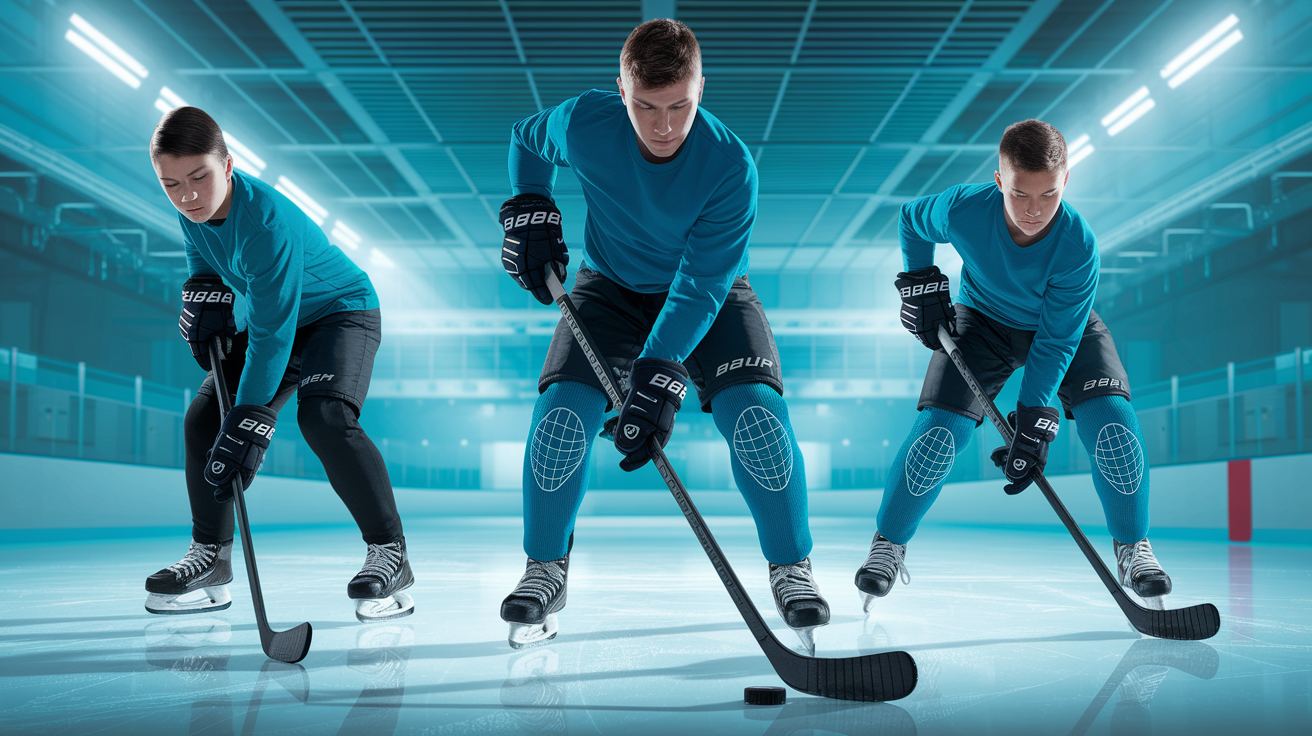
Peewee, Bantam, and Midget players all need conditioning. But the type and intensity? Completely different based on where they are physically, how their coordination’s developing, and whether their growth plates can handle the load. Peewee athletes (ages 11–12) are just starting to grasp tactical awareness and early competitive pressure, so conditioning has to focus on movement quality and light training instead of heavy weights or high volume. Bantam players (ages 13–14) hit a phase where positional play gets sharper and physical demands jump, which opens the door for careful introduction of structured strength work and acceleration drills. Midget athletes (ages 15–17) train with advanced skill execution and serious physical conditioning in mind, getting ready for Junior, college, or high-level club pathways.
The biggest conditioning mistake? Treating all three age groups the same. Growth plates are still open in Peewee and Bantam players. That means high-impact plyometrics, heavy axial loading, and repetitive max-effort work carry real injury risk. Biological maturation varies wildly within each age bracket. Two 13-year-olds on the same Bantam team might have vastly different training readiness. Conditioning programs need to account for both chronological age and individual development to avoid overtraining early bloomers or under-challenging late developers.
The sections that follow break down specific conditioning guidelines for each age group, including training priorities, recommended methods, sample weekly frameworks, and injury prevention strategies. Every recommendation is built around safe progression, movement competency, and long-term athletic development rather than short-term performance gains.
Foundational Principles Behind Age-Specific Hockey Conditioning

Age-specific conditioning matters because young hockey players aren’t miniature adults. Peewee athletes are still building coordination and movement literacy. Bantam players are navigating growth spurts and hormonal changes that affect strength, power, and recovery. Midget players may be physically ready for structured resistance training, but their training age (how long they’ve been conditioning off the ice) still dictates how much volume and intensity they can handle safely. Programs that ignore these differences risk injury, burnout, and stalled development.
Hockey programs naturally get more competitive and physically demanding as you move from Peewee (ages 11–12) through Bantam (ages 13–14) to Midget (ages 15–17). As tactical maturity improves and game speed rises, conditioning must support those demands without exceeding what the body can handle. Every conditioning decision should align with these core principles:
Movement quality comes before intensity or load. Proper mechanics protect joints and build better athletes long-term.
Progressive overload must match biological readiness. Gradually increasing training stress only works if the body can adapt safely.
Injury prevention drives every program decision. Growth plate protection, appropriate volume, and recovery are non-negotiable.
Qualified supervision ensures safe execution. Coaches or trainers must watch technique, adjust loads, and monitor fatigue in real time.
Age-appropriate intensity keeps players healthy and engaged. Overly intense work burns out young athletes. Too little fails to prepare them for the next level.
Conditioning Guidelines for Peewee Hockey Players (Ages 11–12)
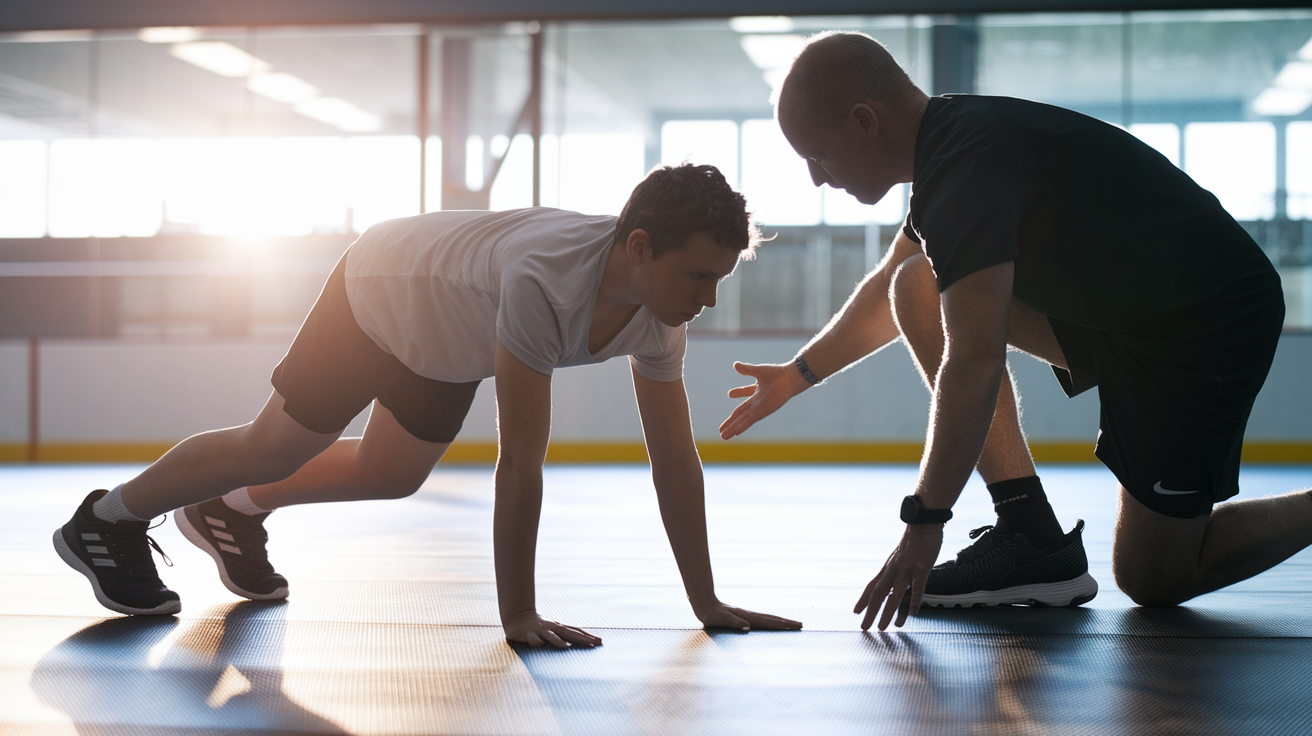
Peewee players are transitioning from skill-focused play to more competitive hockey with early tactical awareness and positional responsibilities. Conditioning at this age should support improved endurance, coordination, and movement control without introducing heavy resistance training or high-impact plyometrics. The focus is building a foundation of movement quality, body control, and low-load strength that prepares players for more structured training in Bantam and Midget years.
Off-ice conditioning for Peewee athletes works best when it looks like active play rather than traditional gym workouts. Bodyweight exercises like lunges, push-ups, planks, and single-leg balance drills improve stability and coordination without stressing growth plates. Agility ladder work, cone drills, and low-intensity shuttle runs develop footwork and change-of-direction mechanics. Medicine ball throws, resistance band pulls, and sled pushes (light loads only) introduce the idea of creating force without requiring heavy barbell lifts.
On-ice conditioning at the Peewee level should come from practices and small-area games rather than dedicated bag skates. Short bursts of skating with full recovery, puck-handling circuits, and battle drills naturally build work capacity while keeping players engaged. Coaches should avoid long, grinding conditioning drills that fatigue young athletes without teaching hockey-specific movement patterns.
Safe Peewee Training Priorities
Training priorities for Peewee players center on coordination development, movement literacy, and low-load strength. Exercises should emphasize proper landing mechanics, core stability, and controlled deceleration to protect knees, ankles, and hips. Sessions should be short (20 to 30 minutes off-ice, two to three times per week) and closely supervised to ensure proper technique. Recovery between sessions is critical. Peewee athletes need at least one full rest day per week, and fatigue should never compromise movement quality.
Conditioning Guidelines for Bantam Hockey Players (Ages 13–14)
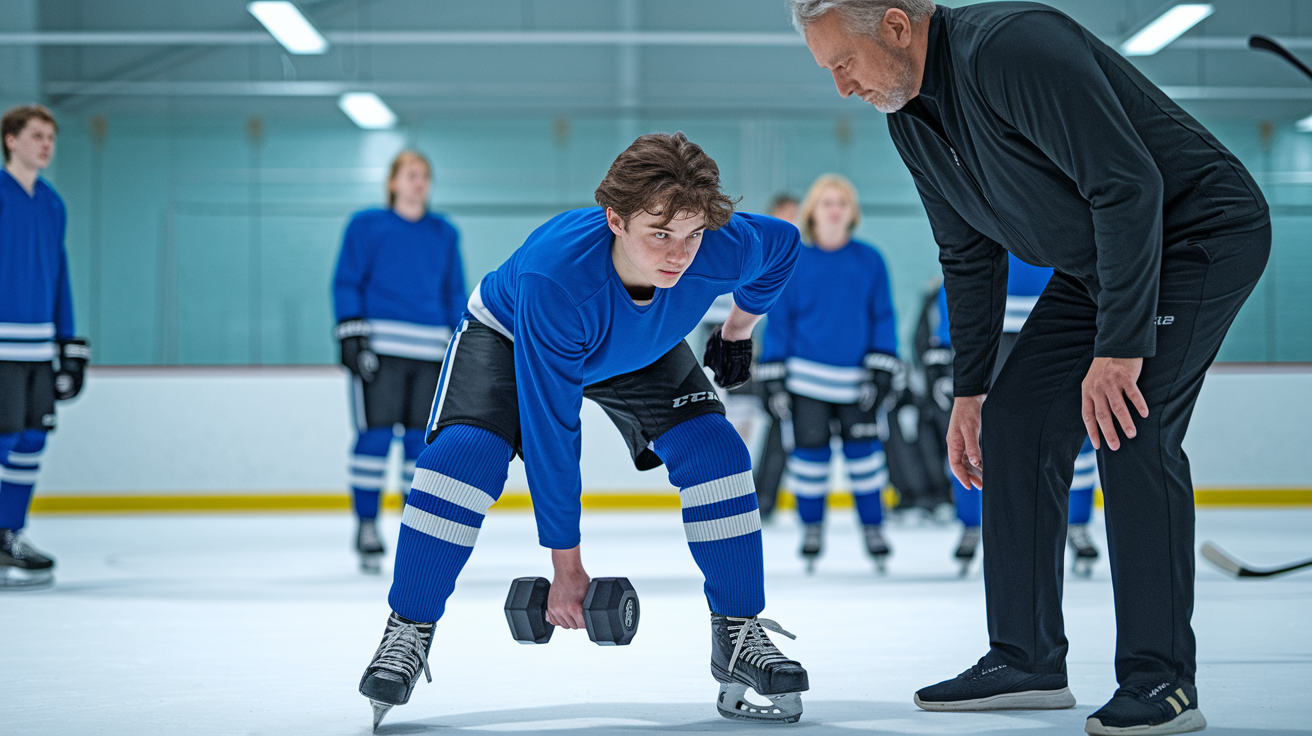
Bantam athletes are refining positional play, improving team dynamics, and handling faster game speeds. That demands better physical capacity and the safe introduction of progressive strength and power development. Many Bantam players are entering or navigating growth spurts, so conditioning programs must account for changes in coordination, muscle length, and joint stability. This is the age where structured strength training can begin, but only with appropriate supervision, conservative loading, and a focus on movement quality over numbers.
Bantam conditioning should include foundational strength exercises like goblet squats, dumbbell presses, Romanian deadlifts, and pull-ups or rows. Loads should stay moderate (body weight or light external resistance) with an emphasis on controlling the eccentric (lowering) phase and maintaining proper posture. Power development can begin with low-impact movements like broad jumps, box steps, and medicine ball slams, avoiding high-volume plyometrics or depth jumps that stress growth plates. Acceleration mechanics and first-step quickness become priorities, which means short sprint work, resisted starts, and lateral shuffle drills fit well into off-ice programming.
On-ice fitness at the Bantam level should still come primarily from practices, but players can handle slightly higher intensity intervals and longer shifts with shorter rest. Change-of-direction drills with a puck, battle scenarios in tight spaces, and short-duration high-intensity skating circuits help build anaerobic capacity without turning practice into a grind. Recommended off-ice training components for Bantam players include:
Foundational strength training two to three times per week with controlled tempos and moderate loads.
Speed and acceleration work focusing on first three to five strides and proper body positioning.
Agility drills emphasizing deceleration control, cutting mechanics, and reactive movements.
Low-impact power exercises like medicine ball throws, sled pushes, and box step-ups.
Core stability circuits using planks, dead bugs, pallof presses, and anti-rotation exercises.
Mobility and flexibility work addressing hip, ankle, and thoracic spine range of motion.
Conditioning Guidelines for Midget Hockey Players (Ages 15–17)
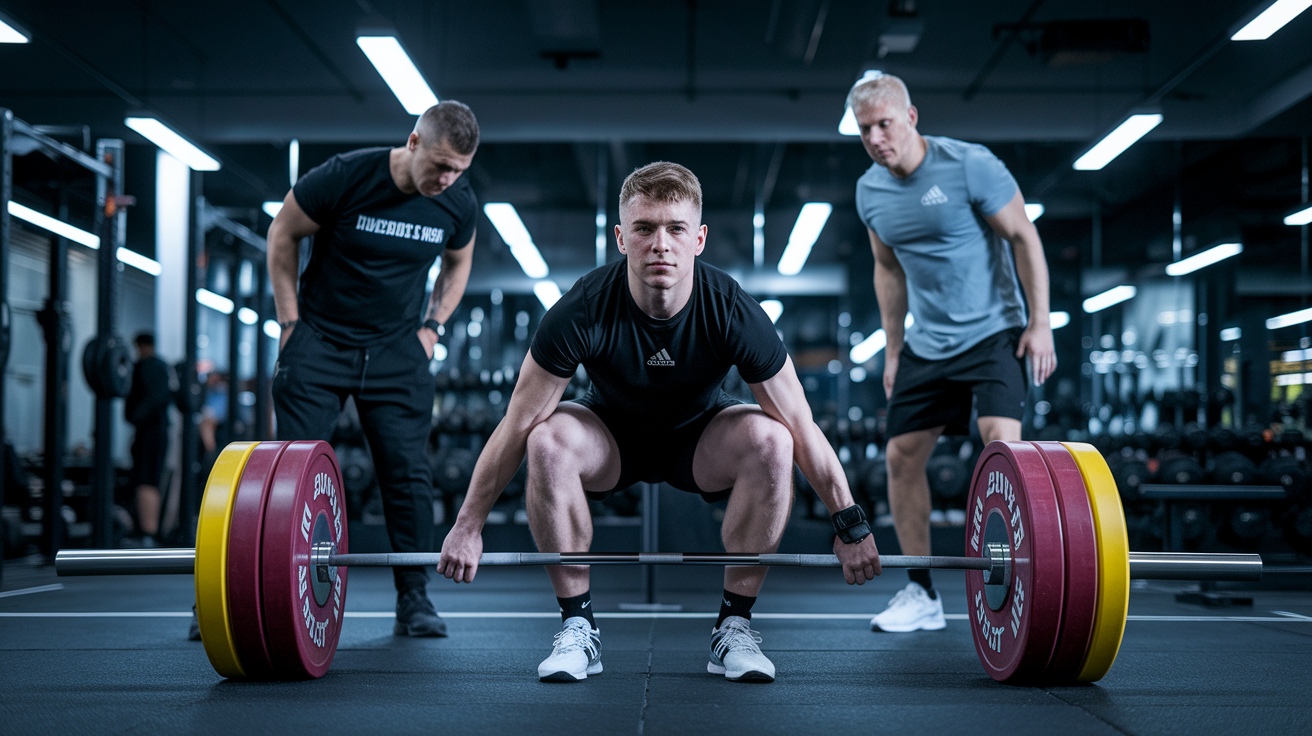
Midget players train for higher competitive levels with advanced skill development, game strategies, and serious physical conditioning demands. This age group is preparing for Junior hockey, college recruiting, or elite club pathways, which means conditioning programs must be structured, periodized, and performance-focused while still respecting individual maturity and training age. Most Midget athletes are physically ready for heavier resistance training, multi-directional power work, and targeted metabolic conditioning, but program design must balance development with recovery and injury prevention.
Resistance training for Midget players should include compound movements like back squats, front squats, deadlifts, bench presses, and overhead presses, progressed carefully based on movement competency and load tolerance. Training frequency increases to three to four sessions per week during the off-season, dropping to two maintenance sessions during the competitive season. Power development becomes a priority through Olympic lift variations (hang cleans, power snatches), plyometric circuits (box jumps, hurdle hops, lateral bounds), and medicine ball throws for rotational power. Anaerobic capacity work should mimic game demands. Short, high-intensity intervals on the bike or track with work-to-rest ratios around 1:2 or 1:3.
Periodization matters at the Midget level. Off-season training emphasizes building strength, power, and work capacity. Pre-season shifts toward power maintenance, speed development, and conditioning that mirrors game intensity. In-season training focuses on maintaining strength and managing fatigue rather than chasing new personal records. Workload management becomes critical. Monitoring total ice time, practice intensity, game schedules, and off-ice volume prevents overtraining and reduces injury risk.
| Training Component | Focus Area | Appropriate Methods | Target Intensities |
|---|---|---|---|
| Strength | Lower body, upper body, core stability | Barbell squats, deadlifts, presses, rows, single-leg work | 70–85% 1RM, 3–5 sets of 3–6 reps |
| Conditioning | Anaerobic capacity, repeat sprint ability | Bike intervals, resisted sprints, sled pushes, shuttle runs | 15–30 second work, 45–90 second rest, 6–10 rounds |
| On-Ice Work | Game-speed skating, battle conditioning, shift simulation | High-intensity drills, small-area games, timed skating circuits | Max effort 20–45 seconds, 2–3 minute recovery between reps |
Recovery strategies become just as important as training volume. Midget players should prioritize sleep (8 to 10 hours nightly), proper nutrition around training sessions, and active recovery methods like light skating, swimming, or mobility work on off days. Monitoring soreness, mood, and performance trends helps coaches and parents catch early signs of overtraining before they turn into injuries or burnout.
Injury Prevention and Recovery Approaches Across Peewee, Bantam, and Midget Hockey
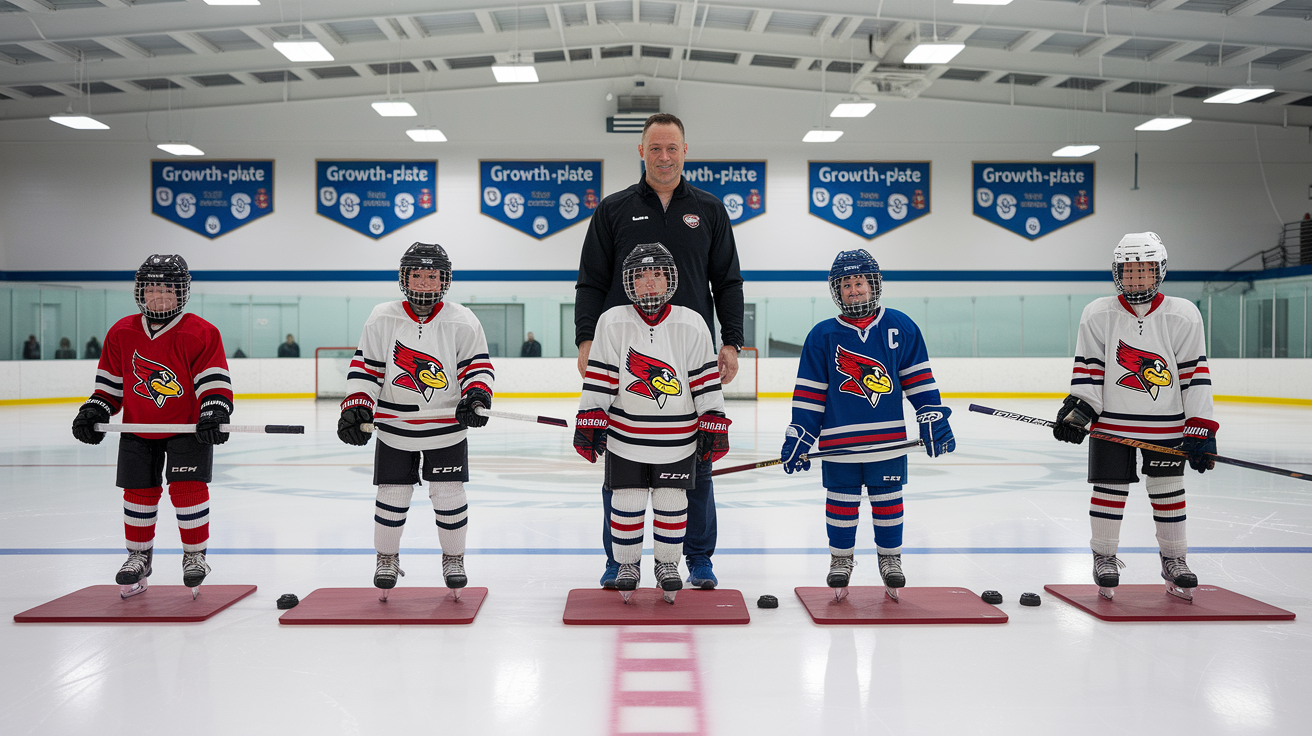
As competitiveness increases from Peewee to Midget, physical conditioning becomes increasingly central, which raises the stakes for injury prevention and strategic recovery. Growth plates remain vulnerable through Bantam and into early Midget years. High-impact work, repetitive max-effort training, and improper loading can cause long-term damage. Overuse injuries (stress fractures, tendonitis, hip impingement) often result from too much volume, insufficient recovery, or poor movement mechanics that go uncorrected.
Every training session should begin with a structured warm-up that includes dynamic movement prep, joint mobility work, and low-intensity activation exercises. Cool-downs should emphasize static stretching, foam rolling, and breathing exercises to help the nervous system downshift. Supervision requirements increase as training complexity grows. Peewee athletes need constant coaching on form, Bantam players benefit from video feedback and movement assessments, and Midget athletes should work with qualified strength coaches who understand periodization and load management.
Key injury prevention and recovery practices include:
Comprehensive warm-ups with dynamic stretching, movement prep, and muscle activation. Cold muscles and stiff joints increase injury risk on the ice and in the weight room.
Targeted mobility work for hips, ankles, and thoracic spine. These areas directly affect skating mechanics and injury resilience.
Qualified coaching and supervision during all off-ice training sessions. Poor technique under load causes more injuries than any single exercise.
Strategic recovery practices including sleep, nutrition, and active rest days. Adaptation happens during recovery, not during training.
Load adjustment based on growth spurts, fatigue, and individual readiness. Rigid programs that ignore biological signals break athletes down over time.
Sample Weekly Conditioning Frameworks for Peewee, Bantam, and Midget Players
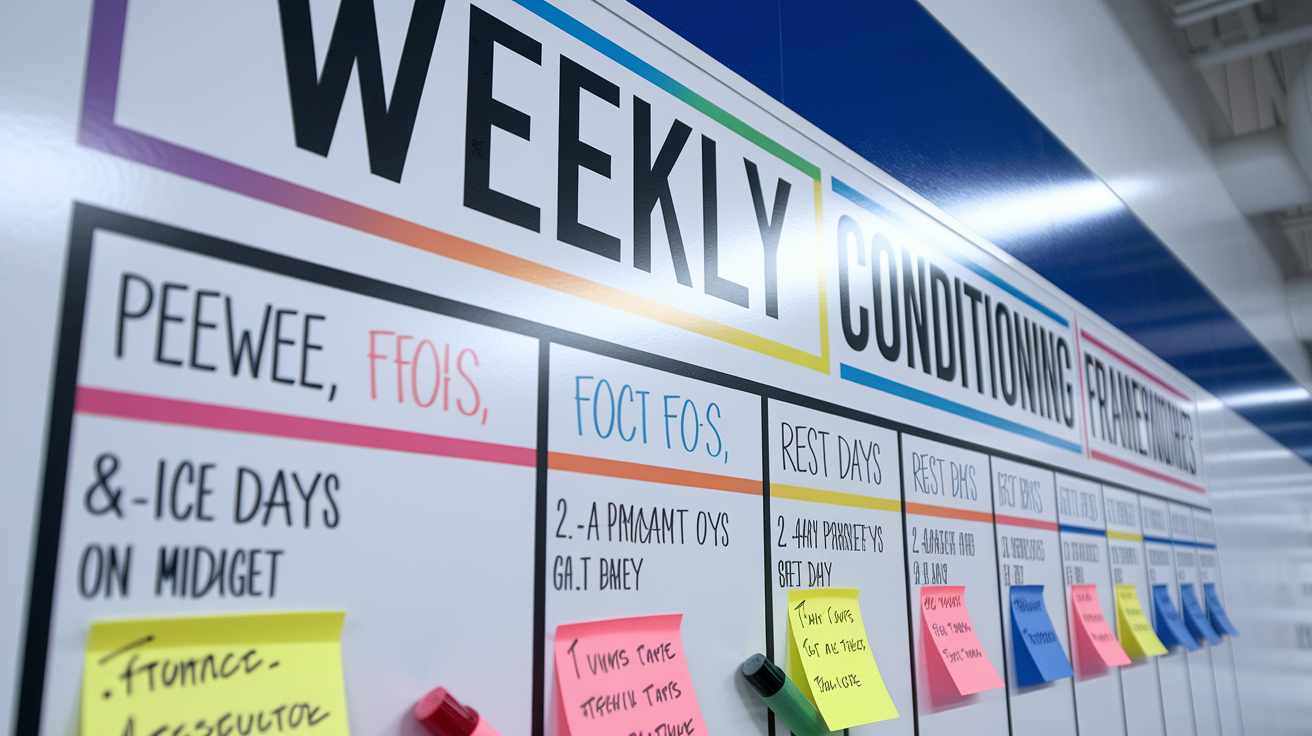
Peewee conditioning frameworks emphasize low-volume, movement-focused training that complements on-ice practice without adding excessive fatigue. Two off-ice sessions per week work well, focusing on bodyweight exercises, coordination drills, and light conditioning games. On-ice work should come from practices and small-area games rather than dedicated bag skates. Key priorities at this age include building movement literacy, improving body control, and keeping training fun and engaging so players stay motivated.
Bantam frameworks introduce structured strength training while maintaining a balance between off-ice conditioning and on-ice skill development. Three off-ice sessions per week allow for foundational strength work, speed development, and recovery-focused mobility sessions. On-ice intensity increases slightly, with practices incorporating higher-tempo drills and short conditioning intervals. Priorities shift toward teaching proper lifting mechanics, improving first-step quickness, and managing growth-related coordination changes.
Midget frameworks are more sophisticated, with periodized training blocks that adjust volume and intensity based on the competitive calendar. Four off-ice sessions during the off-season drop to two or three during the season to manage fatigue. On-ice work becomes more game-specific, with shift-length conditioning, battle drills, and high-intensity skating circuits. Key priorities include maximizing strength and power, maintaining conditioning through the season, and preventing overtraining through careful load management.
| Age Group | Training Days per Week | Off-Ice Focus | On-Ice Focus | Key Priorities |
|---|---|---|---|---|
| Peewee (11–12) | 2 off-ice, 3–4 on-ice practices | Bodyweight strength, coordination drills, light conditioning games | Skill development, small-area games, short skating bursts | Movement quality, fun, building work capacity |
| Bantam (13–14) | 3 off-ice, 3–4 on-ice practices | Foundational strength, speed mechanics, mobility work | Tactical drills, higher-tempo play, short conditioning sets | Proper lifting form, acceleration, managing growth |
| Midget (15–17) | 3–4 off-ice (off-season), 2–3 (in-season), 3–5 on-ice | Resistance training, power development, metabolic conditioning | Game-speed drills, shift simulation, battle conditioning | Strength and power, conditioning maintenance, recovery |
Coaching and Parental Support for Age-Specific Conditioning Programs

Programs must evolve with increasing competitiveness and physical expectations at each level, and family and coaching guidance ensures proper progression. Coaches need to understand the difference between training Peewee players and training Midget players. What works for a 16-year-old preparing for Junior hockey will break down a 12-year-old still navigating coordination changes. Parents play a critical role in monitoring fatigue, supporting recovery, and helping young athletes understand that conditioning is a long-term investment, not a sprint toward immediate results.
Qualified trainers with experience in youth athletic development bring structure, safety, and accountability to off-ice conditioning programs. Coaches and parents should look for trainers who prioritize movement quality, understand growth plate considerations, and adjust programs based on individual readiness rather than calendar age. Progress monitoring (tracking lifts, sprint times, or conditioning benchmarks) helps players see improvement without turning every session into a max-effort test. Encouragement and realistic expectations keep players engaged and reduce the risk of burnout.
Support strategies that help young hockey players develop safely include:
Open communication between coaches, trainers, parents, and players. Everyone should understand the training plan, the reasoning behind it, and how to adjust when needed.
Close supervision during all off-ice training sessions. Technique breaks down under fatigue, and poor movement under load causes injuries.
Monitoring fatigue, mood, and performance trends. If a player is consistently tired, sore, or struggling on the ice, the training load needs adjustment.
Encouraging long-term athletic development over short-term performance chasing. Rushing physical development to win games this season often costs players their health and progress in future seasons.
Final Words
On the ice, training must match the player’s stage: Peewee builds coordination, Bantam adds strength and speed, Midget focuses on power and game-ready conditioning.
This post walked through why age matters, foundational principles, safety checks like growth-plate protection, sample weekly templates, and injury-prevention and recovery basics.
Use these age-specific conditioning guidelines for peewee bantam midget hockey as a roadmap – start light, add load sensibly, monitor recovery, and keep skill work first. Small, steady progress wins.
FAQ
Q: What is the age range for Bantam hockey?
A: The age range for Bantam hockey is generally 13 to 14 years old in North America, a stage where players refine positional play and begin structured strength and speed training.
Q: Why can’t you wear 69 in hockey?
A: The reason you can’t wear 69 in hockey is that many teams and leagues ban the number for being vulgar or distracting; always check your team or league uniform policy.
Q: Where do you put your weakest player in hockey?
A: You put your weakest player in hockey where they can contribute and learn: sheltered roles like third-line minutes, offensive-wall duties, or low-pressure zone starts while building simple habits and confidence.
Q: What is a muffin in hockey?
A: A muffin in hockey is slang for a player or play considered soft or error-prone — someone who’s easy to beat, makes giveaways, or loses puck battles.