

Want an easy way to score more? Most teams waste the low slot and never learn how to run true one-timer setups.
The low slot, the ice between the crease and hashmarks, creates split-second windows where goalies can’t react and defenders collapse, opening cross-crease seams.
This post lays out the exact positioning, timing, passing patterns, and simple drills to turn low-slot one-timer setup plays into consistent goals.
You’ll get clear cues, where to stand, when to cut, how hard to hit the tape, so your next power play or 5-on-5 shift produces more clean looks and more net.
Core Low-Slot Concepts That Directly Increase One-Timer Scoring Chances

The low slot sits right in front of the net, roughly from the crease out to the hashmarks and between the faceoff circles. It’s where you’ll see the highest conversion rates in hockey because goalies don’t have time to react and defenders naturally collapse toward the middle to protect it. That collapse is exactly what creates one-timer opportunities. Cross-lane seams open up, backdoor cutters slip through untracked, and passing lanes appear for a split second when defenders commit to the puck carrier instead of covering the trailer.
Behind-the-net possession, often called the “Gretzky Office,” is one of the most reliable ways to create slot feeds. When the puck sits below the goal line, defenders have to respect both wraparound threats and cross-crease passes. Forces them into predictable positions. A sharp pass from behind the net to a low-slot cutter arriving late beats the defender’s recognition and puts the shooter in position for a true one-timer. One touch, no cradle, straight into the net.
Spacing matters here. Keep 0.6 to 1.0 meters (roughly 2 to 3 feet) between your low-slot attackers so defenders can’t tie up two players with one stick or body position. Arriving late is better than camping early because defenders lose track of timing changes and the goalie has less time to set angle and depth.
Tape-to-tape passing velocity directly determines one-timer success. A slow pass gives the goalie time to push across and set. Lets the nearest defender close the shooting lane. A firm, accurate pass forces the goalie to react in real time and keeps the defender honest. Deception works too. Head fakes, shoulder turns, looking one direction and passing the other. Freezes defenders for the half-second you need to get the puck through clean.
Key tactical requirements for reliable low-slot one-timers:
- Clear passing lane creation – Use positioning and body fakes to pull sticks and bodies out of the seam before releasing the pass.
- Separation between attackers – Maintain 0.6–1.0 m spacing so defenders can’t cover two threats at once.
- Pass velocity and accuracy – Flat, hard passes on the tape reduce reaction windows for goalies and defenders.
- Shooter readiness – Stick on ice, blade angled slightly open, body balanced and moving toward the puck before it arrives.
- Deception and timing coordination – Passer and shooter synchronize movement and use fakes to create hesitation in coverage.
Low-Slot One-Timer Positioning Principles for Predictable Scoring Windows
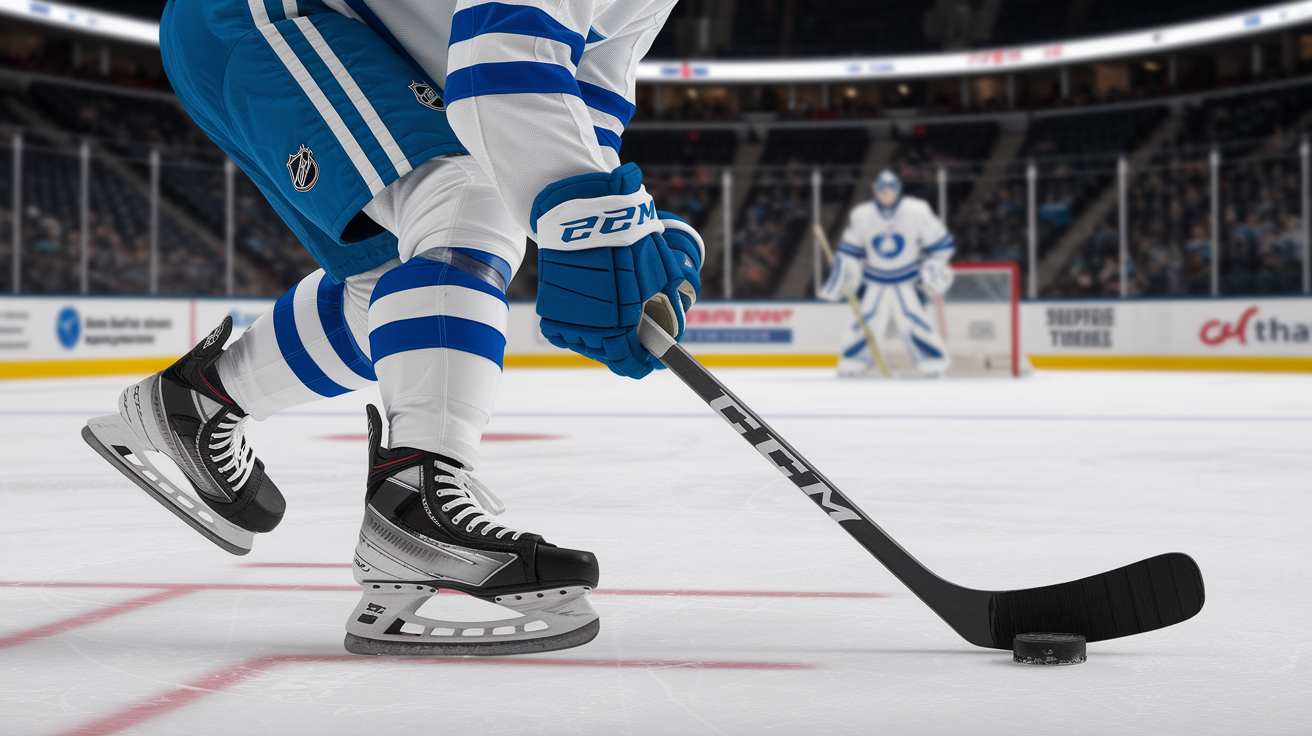
Proper positioning for a low-slot one-timer starts with your feet. Your lead skate (left skate for a right-handed shooter) should point at your target when the puck arrives. Your back foot should be angled to allow a strong push-off, transferring momentum from your legs through your hips and into the shot.
If your feet are square or crossed, you lose power and accuracy. Keep your knees bent and your weight distributed evenly before the pass so you can move to meet the puck instead of waiting for it to find you. Stick positioning is just as critical. Blade on the ice, angled slightly open to lift the puck cleanly, and kept low (below the waist) so you don’t miss a flat pass or lose timing on the wind-up.
The net-front screener is part of the one-timer setup, not a separate play. A good screen forces the goalie to look around or through traffic, which delays their read on the shot and often causes late movement or incomplete pushes. The screener should stand between the goalie and the shooter without interfering with the shooting lane, stick on ice to tip redirects if the shot misses the intended path.
The passer typically sets up on the half-wall, high slot, or behind the net where they have a clear view of both the shooter and the defender’s stick. Timing the pass to arrive just as the shooter plants their lead foot creates a true one-timer. One fluid motion from reception to release.
| Position | Key Role | Timing Cue |
|---|---|---|
| Passer (half-wall or behind net) | Deliver flat, tape-to-tape feed across seam | Release when shooter’s lead foot plants |
| Low-slot shooter | Arrive late with speed, stick low, blade open | Meet puck with momentum, not static |
| Net-front screener | Block goalie sight line, tip if possible | Settle before shot, maintain position through contact |
| High-slot support | Secondary passing option, rebound coverage | Read pass lane closure, move to open ice |
| Weak-side trailer | Backdoor option if cross-slot pass unavailable | Time arrival for late pass if primary read closes |
| Goalie read | Track depth and angle commitment | Shoot when goalie is moving laterally or screened |
Passing Patterns and Sequences That Lead to Clean Low-Slot One-Timer Looks
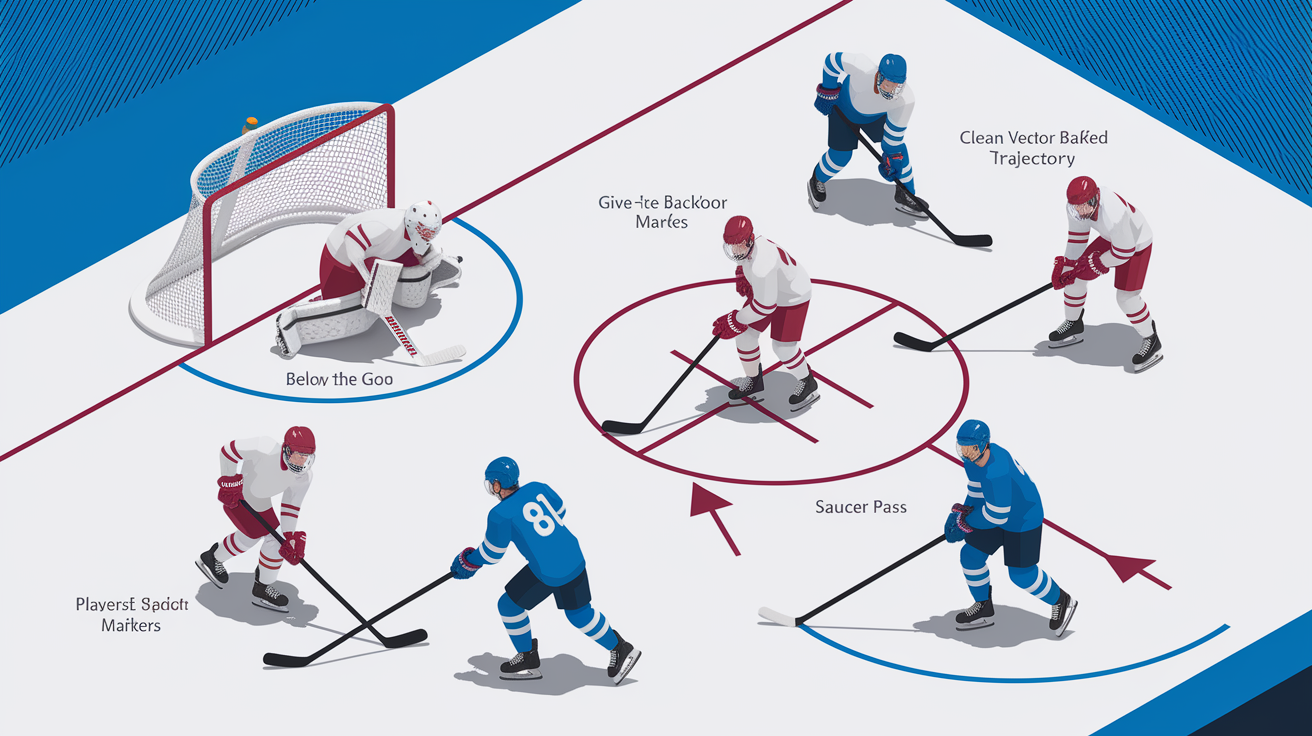
The most reliable low-slot one-timer patterns share a common structure. Multiple puck touches that move defenders out of position before the final feed. A behind-the-net cycle into a cross-crease pass works because defenders collapse below the goal line to prevent the wraparound, opening the far-side low slot for a cutter.
A give-and-go below the hashmarks pulls one defender up ice, creating a temporary 2-on-1 advantage in front of the net. High-to-low sequences (point to half-wall to low slot) stretch the defensive box vertically and horizontally, forcing defenders to choose between covering the pass or the shooter. Each pattern relies on quick puck movement and late arrival by the shooter so the defense can’t recover in time.
Cross-ice backdoor passes are the highest-percentage one-timer feeds in the low slot. The passer holds the puck on one side while the shooter cuts hard to the far post, arriving just as the pass crosses the crease. Defenders typically track the puck carrier and lose visual contact with the backdoor threat for a half-second. Enough time for a clean look.
Saucer passes help here because they lift over sticks and skates without being deflected or intercepted. Eye fakes and shoulder turns add another layer. Look at the near-side forward, then whip the pass backdoor while the defender commits to the fake.
Deception is built into every successful sequence. If the passer stares at the intended target, the defender reads it and closes the lane. If the passer moves their shoulders one way and passes the other, or fakes a shot before dishing, the defender hesitates. That hesitation is the window. Head position, stick angle, and body language all communicate intention, so controlling those signals creates openings that wouldn’t exist otherwise.
Five-step sequence for a clean low-slot one-timer:
- Establish possession in a high-threat area (behind the net, half-wall, or high slot) to force defender collapse.
- Use a decoy movement or fake (look away from target, fake shot, shoulder turn) to freeze nearest defender.
- Initiate the pass as the shooter begins their cut so puck and player arrive simultaneously in the low slot.
- Deliver a flat, firm pass on the tape to eliminate handling time and maximize shooter momentum.
- Shooter meets the puck with lead foot planted toward target and releases in one fluid motion without cradling.
Timing and Movement Patterns Required for Elite Low-Slot One-Timers
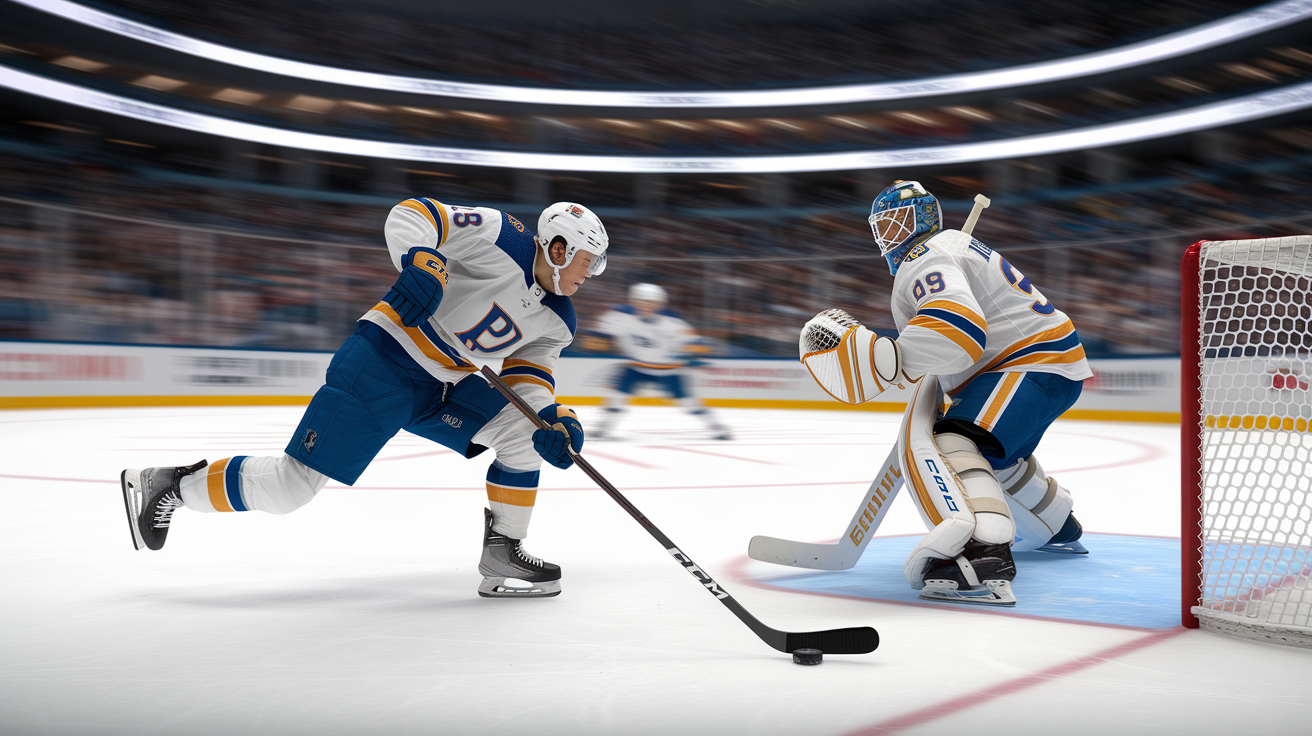
Arriving late into the low slot is more effective than setting up early because defenders track the puck first and players second. When you cut into the slot just as the pass is released, the defender has to recognize the threat, adjust their gap, and contest the shot in under a second. Most can’t.
Early arrival lets defenders establish body position, tie up your stick, and communicate coverage with their teammates. Late arrival creates chaos. The goalie is still tracking the puck carrier, the nearest defender is a step behind, and you have a clean window to release before anyone can recover.
Movement without the puck is where the timing advantage comes from. If you’re standing still in the slot waiting for a pass, you have no momentum to transfer into the shot and you’re easy to cover. Skating into the shooting position as the pass is delivered means your body is already moving toward the net, your weight is shifting forward, and your stick is meeting the puck with speed.
That momentum translates directly into shot power and quick release. The passer has to read this movement and time their feed so the puck and the shooter arrive in the same place at the same time. Off by half a second either direction and the play breaks down. Too early and the shooter isn’t ready; too late and the defender recovers.
Six timing cues that improve low-slot one-timer execution:
- Passer holds until shooter’s second stride into the slot – releasing too early gives defenders time to close the lane.
- Shooter accelerates through the shooting position instead of gliding or stopping – momentum improves power and quick release.
- Maintain 0.6–1.0 m separation between low-slot attackers to prevent one defender from tying up multiple threats.
- Time cuts to coincide with puck movement – if the puck is cycling, start your cut as it leaves the corner or point.
- Read defender head position – if they’re watching the puck carrier and not tracking you, that’s the window to cut.
- Arrive as the goalie is moving laterally – shooting while the goalie is pushing across cuts reaction time in half.
Power-Play Structures That Create Automatic Low-Slot One-Timer Opportunities
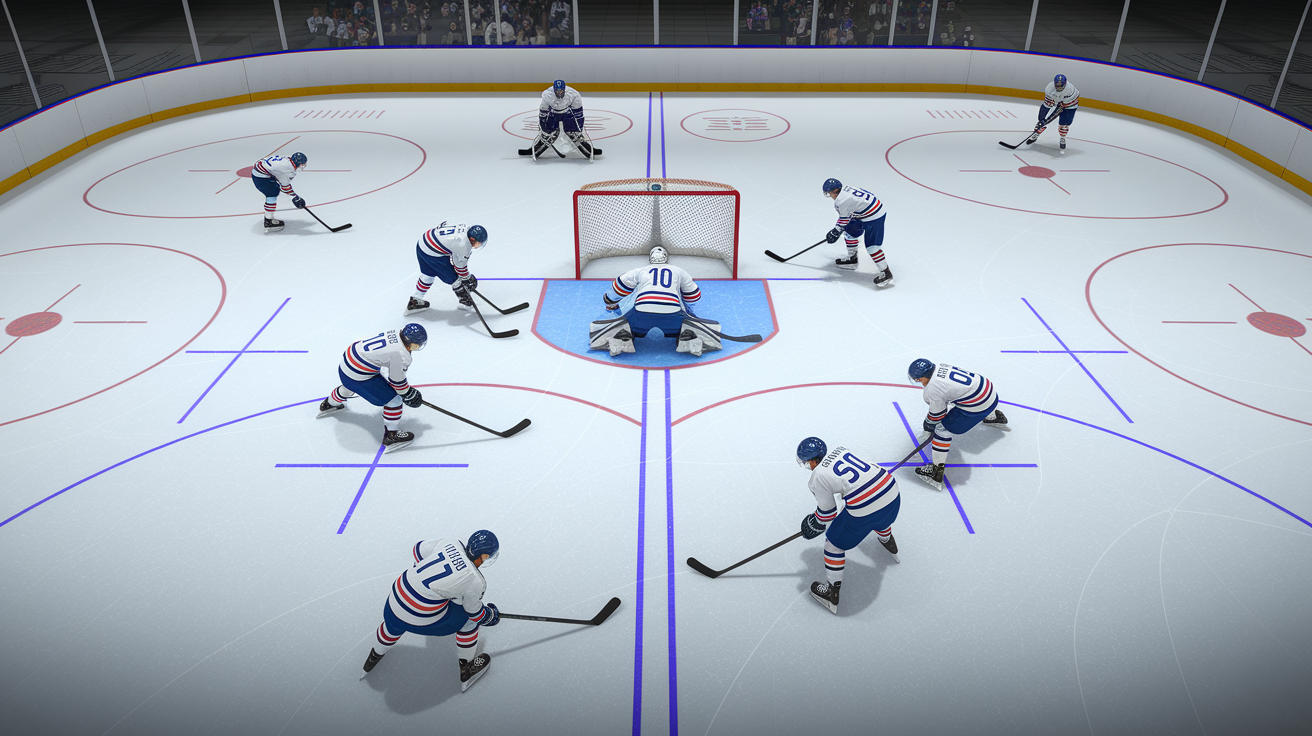
Power plays offer stable puck possession and predictable defensive reactions, which makes low-slot one-timer setups more reliable than at even strength. The umbrella and overload formations both create natural passing lanes into the slot because penalty killers collapse to protect the middle and respect the point shot threat.
When the puck sits behind the net or on the half-wall, the defending forward and weak-side defenseman have to respect wraparounds and cross-crease passes. Opens a seam to the low-slot shooter arriving late from the weak side or bumper position. A stationary net-front screen increases success rates by blocking the goalie’s vision and creating deflection opportunities if the one-timer is slightly off target.
Backdoor one-timer plays work better on the power play because penalty killers are taught to collapse low and protect the slot, which inherently leaves the far post exposed for a split second during puck movement. The setup is simple. Establish possession behind the net or on one side of the umbrella, draw the attention of the near-side penalty killers, then feed a sharp cross-crease pass to the weak-side low-slot shooter cutting toward the far post.
The goalie has to push across the crease while tracking the puck through traffic, and the weak-side penalty killer is almost always a step late recovering to the backdoor threat.
The overload formation places three attackers on one side of the ice, forcing the penalty kill to shift, which creates temporary gaps on the weak side. The puck carrier on the half-wall or behind the net can hit the bumper player (positioned between the circles) or skip the pass directly to the low-slot shooter cutting from the weak side. Both options produce clean one-timer looks because the penalty kill can’t cover all three threats simultaneously.
The key is quick puck movement and late arrival timing. Slow passes or early cuts give defenders time to recover and close shooting lanes.
Rotational PP Movements That Free the Low-Slot Shooter
Rotation on the power play pulls defenders out of their assigned zones and creates temporary confusion in coverage. A common rotation involves the bumper player swapping positions with the weak-side half-wall forward while the puck cycles low. The defender covering the bumper loses track for a moment, and the forward who rotates into the bumper spot is now unmarked in the high slot with a direct passing lane to the low-slot shooter.
Another rotation happens when the net-front screen drifts to the half-wall and the half-wall player crashes the net. Forces the penalty killers to communicate a switch, and during that communication window, a quick pass into the low slot often finds open ice. These movements work because defenders are taught to hold positions rather than chase, so any exchange that forces them to decide who covers whom creates a gap.
Even-Strength Slot-Entry Plays to Generate One-Timer Lanes
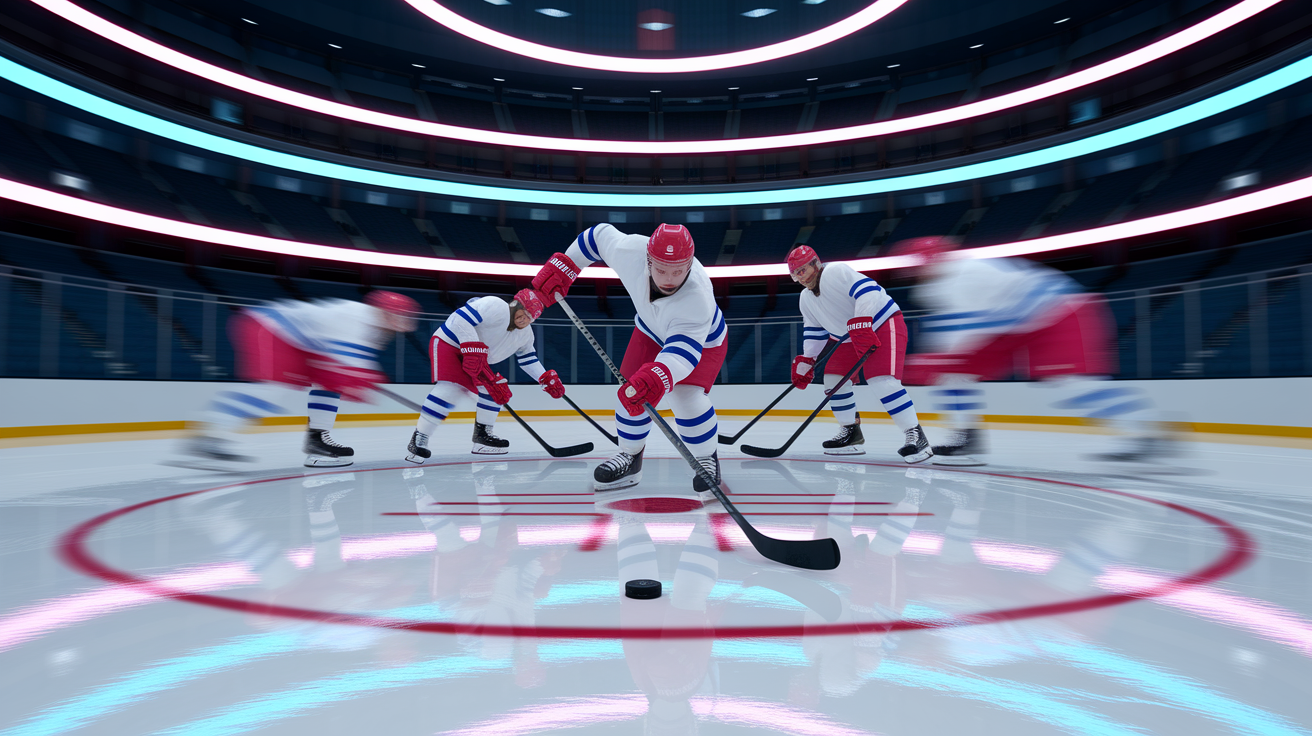
Even-strength opportunities are faster and less structured than power-play setups. Slot entries rely on tempo changes and quick two-man exchanges rather than patient puck movement. A cycle below the goal line that suddenly reverses direction with a quick give-and-go can catch defenders flat-footed. One defender commits to the corner, leaving the slot open for a trailing forward cutting late.
The puck carrier chips the puck to a teammate, then cuts to the net for an immediate return pass and one-timer attempt. The window is small, usually one to two seconds, but that’s enough if both players read the opening at the same time.
Delayed entries and late-man patterns exploit defenders who over-pursue the puck carrier. If the first forward drives wide and the defense collapses to stop the rush, a trailing forward entering the slot late can receive a centering pass with time and space for a one-timer. The key is creating separation. If the trailing forward is too close to the play, defenders can cover both threats.
A two-second delay between the primary rush and the trailer’s arrival is often enough to generate a clean look. Small-area cycles near the half-wall or below the circles also work. Quick puck movement in tight spaces forces defenders to turn their hips and lose track of weak-side threats cutting into the slot.
The two-man game is the most reliable even-strength slot-entry pattern because it only requires coordination between two players instead of a full line structure. One forward carries the puck into the offensive zone and draws attention, while the second forward times a cut into the low slot to arrive just as the pass is released.
Defenders are taught to stay between the puck and the net, so when the puck moves laterally or backward before the slot feed, the nearest defender is often facing the wrong direction for a split second. Enough time for a clean one-timer attempt before they can recover.
Reading Defenders and Goalies to Trigger Low-Slot One-Timer Attempts

Defenders instinctively protect the middle. They’ll collapse toward the slot and keep their sticks in passing lanes whenever the puck is below the circles or behind the net. That instinct creates the exact openings you need for low-slot one-timers.
Watch the defender’s stick and body angle. If their stick is pointed at the puck carrier and their hips are square to the boards, the cross-ice passing lane is open for a moment. If they turn their head to track the puck carrier, they’ve lost visual contact with you, and that’s the window to cut. Defenders who over-pursue or commit too early to the puck give up backdoor opportunities because they can’t recover in time once the pass is released.
Goalie reads are just as important. A goalie who’s set in their crease with good depth and square to the puck is harder to beat than one who’s moving laterally or caught mid-push. The best time to shoot is when the goalie is transitioning. Pushing across the crease to track a pass, recovering from a screen, or adjusting depth after a shot fake.
If the goalie is deep in the crease and square, a one-timer to the far post or low corner has a better chance than shooting into the body. If the goalie is shallow and aggressive, a quick one-timer before they can set eliminates their ability to read and react. Deception plays work here too. If the passer fakes a shot and the goalie drops early, the slot one-timer that follows catches them out of position.
Four key defensive and goalie reads that signal go-time for the one-timer:
- Defender’s stick points at the puck carrier, not covering the slot threat – that’s the window for a cross-ice or backdoor feed.
- Goalie is moving laterally or caught mid-push – shooting during movement cuts reaction time and often beats the far post.
- Weak-side defender loses visual contact with the low-slot cutter – happens when they turn their head to track the puck carrier.
- Penalty killers or defenders collapse below the circles – automatically opens the weak-side low slot for a late-arriving shooter.
Practice Drills That Build Perfect Low-Slot One-Timer Execution
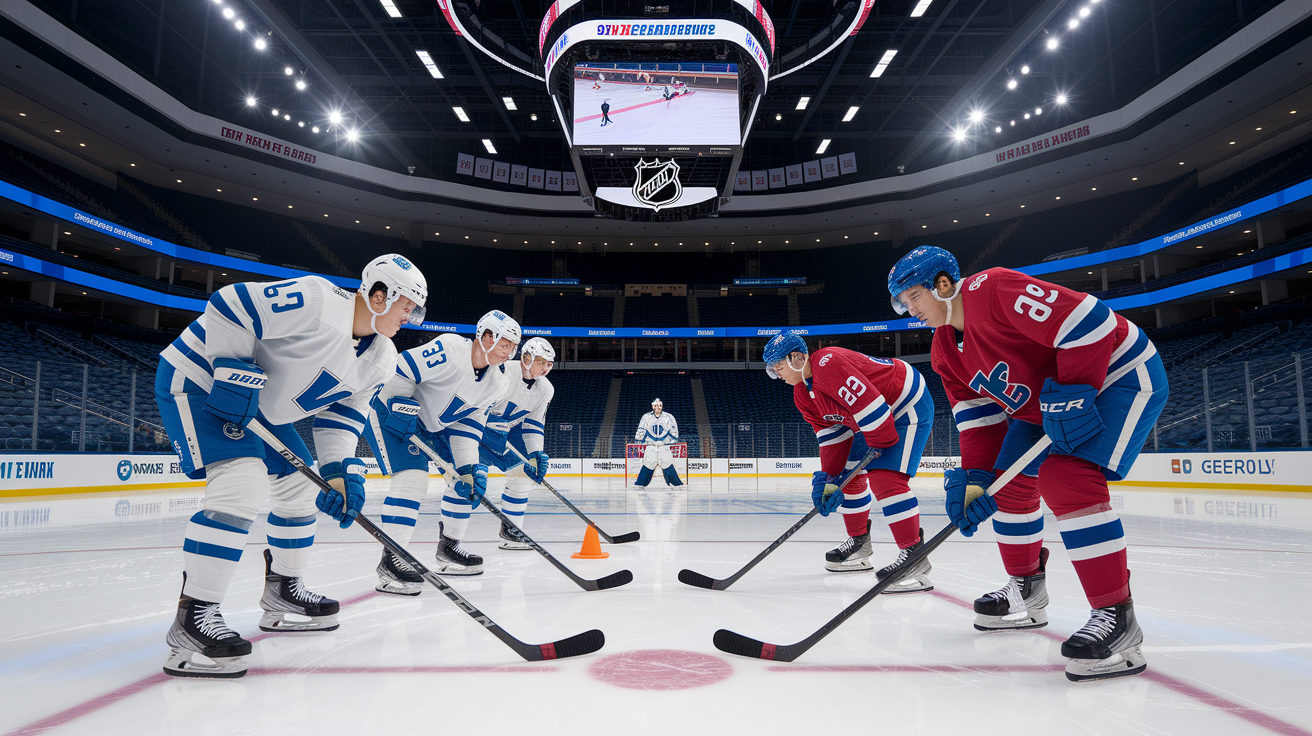
Small-area games around the crease replicate the speed, pressure, and quick decisions required for low-slot one-timers. Run 2-on-2 or 3-on-3 games in a confined zone from the goal line to the top of the circles, with the objective of creating and finishing one-timer chances within a set time window.
The tight space forces players to make fast reads, use deception, and time their movements without room for hesitation. Recommended drill parameters: 6 to 8 minute station length, three sets per practice session, 8 to 12 one-timer attempts per player per set, and 60 to 90 seconds of rest between sets to maintain quality repetitions. These games teach timing, spacing, and the ability to execute under defensive pressure without overthinking.
Structured repetition drills build the mechanics and rhythm that small-area games alone can’t develop. Set up a passing station where one player feeds from the half-wall or behind the net and the shooter enters the slot at different angles and speeds. Start with stationary feeds so the shooter can focus purely on blade angle, weight transfer, and release point.
Once they’re consistent, add movement. Have the shooter skate through the slot and meet the pass on the move. Then introduce a passive defender who applies light pressure without disrupting the play, and finally progress to live defensive pressure where the defender contests the shot and the passer has to read when to release. Target 10 to 15 timed one-timer repetitions per player per week to build consistency and muscle memory without causing fatigue that degrades technique.
Progressive Repetition Drills
Start every session with stationary repetitions. Passer and shooter stand still, focusing purely on timing and release. The passer holds the puck until the shooter signals readiness with stick position, then delivers a flat, accurate feed. The shooter works on blade angle, compact wind-up, and follow-through.
Once players hit 8 out of 10 successful releases, add movement. The shooter skates into the slot and meets the pass on the move, working on foot placement and momentum transfer. Then add a passive defender who shadows the shooter without contesting, forcing the shooter to process light pressure while maintaining timing.
The final step is live pressure. Full-speed passer, shooter, and defender with a goalie, simulating game conditions. Competitive elements like timed accuracy rounds or small-area scrimmages with point tracking increase intensity and replicate the decision-making required in real games.
| Drill Phase | Setup | Player Focus | Repetitions | Rest |
|---|---|---|---|---|
| Stationary timing | Passer and shooter still, flat passes | Blade angle, release point, follow-through | 8–12 per player | 60 sec between sets |
| Movement integration | Shooter skates into slot, meets pass on move | Footwork, momentum transfer, timing coordination | 8–12 per player | 60–90 sec |
| Passive pressure | Add shadow defender, no stick disruption | Processing light pressure, maintaining mechanics | 6–10 per player | 90 sec |
| Live competition | Full-speed with goalie and active defender | Reading lanes, deception, game-speed execution | 5–8 per player | 90 sec |
| Small-area scrimmage | 2v2 or 3v3 in slot zone, timed rounds | Decision-making under pressure, rebound awareness | 6–8 min per set | 2 min between sets |
Training Tools, Shooting Mechanics, and Technique Reinforcement for Slot One-Timers
One-timer mechanics rely on a compact wind-up that stays below the waist so you don’t lose timing when the pass arrives. A full slap-shot wind-up works when you have time to load, but in the low slot you rarely have more than half a second from reception to release.
Keep your hands close to your body, rotate your hips and shoulders through the shot, and let the stick flex do the work instead of over-swinging. Blade angle controls elevation. Slightly open lifts the puck cleanly off the ice and into the net, while too closed keeps it low and easier to block, and too open sends it over the net. Consistent mechanics come from repetition with immediate feedback, so shoot with a target or goalie whenever possible instead of just firing pucks into an empty net.
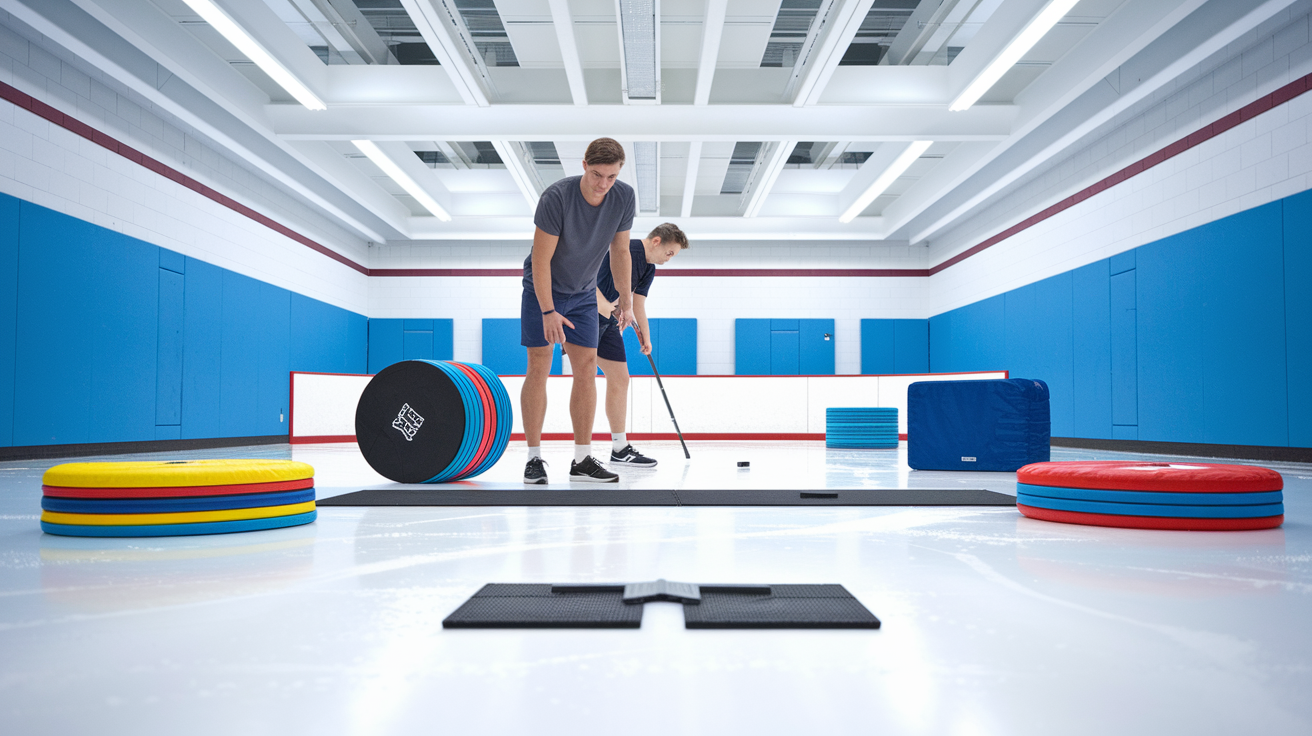
Training aids help when ice time is limited or when you need controlled repetition to build muscle memory. Passing kits and rebounders let you practice receiving and releasing without a partner, and dryland shooting surfaces with proper puck glide replicate ice conditions for off-ice training.
Flooring tiles that simulate ice friction allow you to work on footwork, weight transfer, and timing at home or in the garage. The key is matching the training environment to the skill you’re developing. If you’re working on timing, you need variable pass speeds and angles; if you’re working on mechanics, you need high-repetition static drills with consistent feeds.
Hand-eye coordination and quick-release consistency both improve with high-repetition training that isolates specific aspects of the one-timer. Spend time receiving passes from awkward angles or at different speeds so you learn to adjust blade angle and timing on the fly. Practice switching between one-timers and quick wrist shots so you can adapt when the pass isn’t perfect.
Some feeds force you to cradle and snap a wrist shot instead of a full one-timer, and being able to make that adjustment in real time keeps the play alive. Stick selection matters too. A lower kick point allows faster load and release, and moderate flex balances power with control. Experiment with curves and flex until you find the setup that gives you the most consistent release under pressure.
Measurement, Video Review, and Tracking Expected Goals from Low-Slot One-Timers

Video breakdown is one of the fastest ways to improve low-slot one-timer execution because it shows players exactly what worked and what didn’t. Collect clips of pro-level backdoor goals, deflections, and cross-crease one-timers, then timestamp the key moments. When the shooter starts their cut, when the passer releases, when the defender loses track, and when the goalie commits.
Players see the timing windows in real time and understand why certain plays succeeded while others failed. Use those clips in practice video sessions before on-ice work so players have a clear mental picture of what they’re trying to replicate. Film your own team’s practices and games, then review the same plays to compare execution and identify gaps in timing, spacing, or decision-making.
Expected goals (xG) data quantifies the value of low-slot one-timers compared to shots from the perimeter or poor angles. Most tracking systems assign xG values based on shot location, shot type, and whether the goalie was set or moving. Low-slot one-timers typically carry xG values between 0.20 and 0.40 per shot. You’d expect to score on 20 to 40 percent of attempts from that area under those conditions.
Perimeter shots from outside the circles often sit below 0.05 xG. That difference shows why low-slot attack strategies focused on creating one-timer opportunities produce better offensive results than volume shooting from low-percentage areas. Track your team’s shot charts and xG over a practice cycle or game stretch to see whether your low-slot one-timer setups are increasing high-danger chances.
Four practical tracking methods to measure improvement:
- Count successful one-timer attempts per practice – target 10–15 quality reps per player per week and track completion rate.
- Log high-danger scoring chances per game – define “high-danger” as shots from the low slot with the goalie moving or screened, then count how many your team generates.
- Review video timestamps of successful and failed plays – note when timing, spacing, or passing accuracy broke down and address those specific issues in the next practice.
- Compare shot-location data over time – use league tracking tools or manual shot charts to measure the percentage of your team’s shots that come from the low slot versus the perimeter; improvement means more high-xG attempts.
Final Words
In the action, we laid out why the low slot is the highest-value scoring area and the basics that make one-timers work: spacing, late arrival, tape-to-tape feeds, and quick timing.
You saw positioning cues for shooters and screeners, passing sequences that open lanes, power-play and even-strength structures, plus drills and tools to build the skill.
Practice the drills, track the clips, and focus on timing. These low-slot one-timer setup plays for increased scoring chances reward simple, repeatable reps — keep working and the results will show.
FAQ
Q: What is the low slot and why is it the highest-value area for one-timers?
A: The low slot is the area directly in front of the net and it’s highest value because collapsing defenders open backdoor and cross-lane passing windows for quick, high-danger one-timers.
Q: What spacing and positioning should attackers use in the low slot to create one-timer windows?
A: Spacing and positioning should be 0.6–1.0 m (2–3 ft) between attackers, stagger arrivals, stay off-body to avoid tie-ups, and prepare a tape-to-tape target for a clean shot.
Q: How should a shooter position their feet, body, and stick for a clean low-slot one-timer?
A: A shooter should face feet toward the target, keep a compact stance, carry momentum into the puck, slightly open the blade for lift, and keep the stick low below the waist for timing control.
Q: Which passing patterns and sequences consistently lead to clean low-slot one-timers?
A: Effective patterns include behind-the-net feeds, cross-ice/backdoor passes, saucer passes over sticks, give-and-go below the hashmarks, and high-to-low chains that move defenders laterally.
Q: What timing and movement cues should passer and shooter use for elite low-slot one-timers?
A: Timing and movement cues are late arrival by the cutter, synchronized passer-shooter tempo, meeting the puck with momentum, maintaining 0.6–1.0 m separation, and using slight deception to create hesitation.
Q: How do power-play structures generate automatic low-slot one-timer opportunities?
A: Power-play structures generate one-timers by stable behind-the-net possession, lateral umbrella or overload passes into the low slot, a stationary net-front screen, and planned rotational movements to free the shooter.
Q: What even-strength plays produce one-timer lanes into the low slot?
A: Even-strength plays that work are quick give-and-go entries, tempo-driven small-area cycles, delayed slot cuts to catch defenders flat-footed, and two-man games that pull defenders out of position.
Q: How do you read defenders and goalies to know when to attempt a low-slot one-timer?
A: Read defenders and goalies by spotting defender over-collapse, goalie depth and commit, defender stick orientation, and any hesitation after shoulder or head fakes that opens a passing seam.
Q: What drills and practice volume best develop low-slot one-timer execution?
A: Drills and volume should include 2v2 and 3v3 crease games, 6–8 minute stations, three sets with 8–12 one-timers per player per set, and about 10–15 timed one-timer reps per week.
Q: How should coaches measure and track improvement on low-slot one-timers?
A: Coaches should track clip timestamps of successful/failed one-timers, high-danger chances per game and practice week, shot accuracy, and expected-goals (xG) impact to quantify progress.