

Think cycling is just skating in circles along the boards? That’s why it often fails.
Cycling is actually a controlled way to keep possession, wear down defenders, and open clean shooting lanes.
This post breaks down who needs to be where (F1, F2, F3), exactly how to move the puck—wall banks, reverses, low-to-high feeds—and the pressure reads that tell you when to keep cycling or attack the net.
Read on for simple positioning rules, puck-movement patterns, and a step-by-step cycle you can practice this week.
Core Concepts of Offensive Zone Cycling
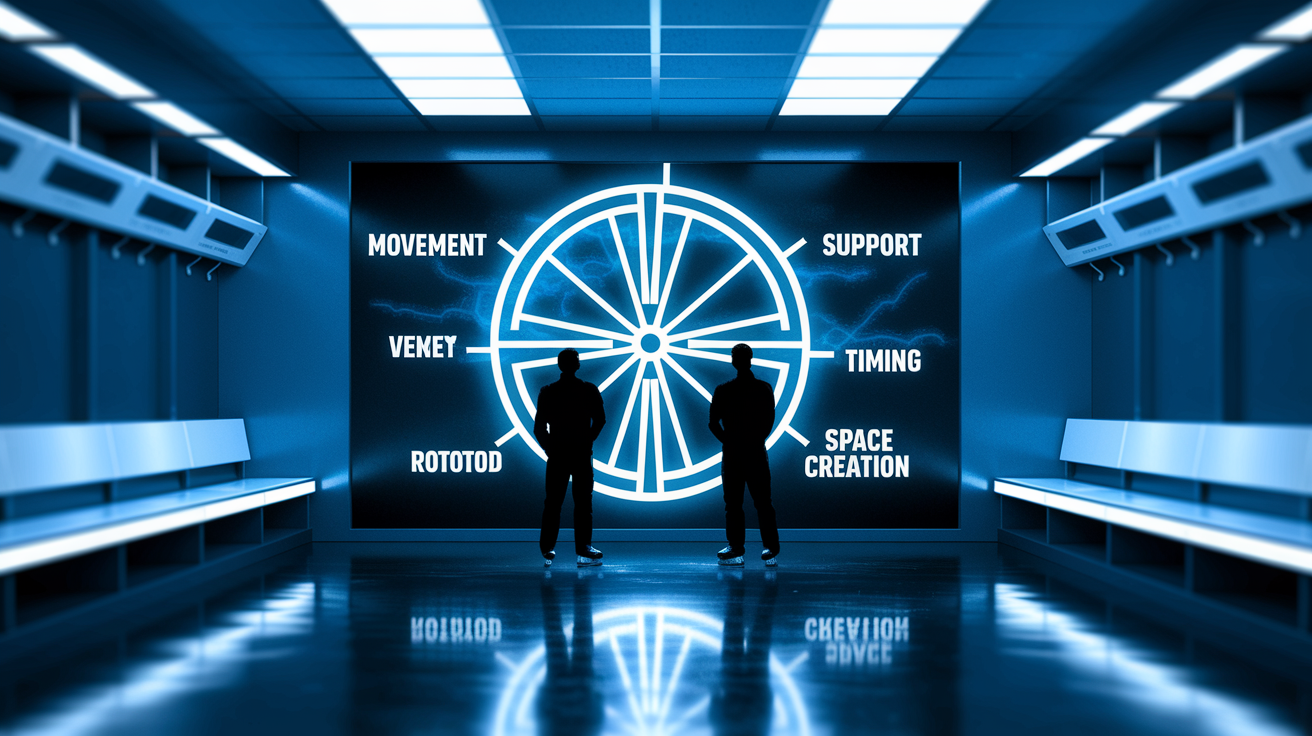
Offensive zone cycling is a puck possession tactic where forwards rotate along the boards and through the lower offensive zone to create scoring chances while protecting the puck. The movement looks like a wheel on the whiteboard, with players continuously shifting positions as the puck moves from wall to corner to net front. The cycle uses small dumps, bank passes off the boards, and short support passes to keep defenders moving and reacting. The goal isn’t endless puck movement. It’s finding a clean shooting lane or net front opportunity.
Teams cycle the puck to wear down defenders, buy time to develop better chances, and maintain possession when a direct rush or one timer isn’t available. When defenders chase the puck around the lower zone, they fatigue. Gaps open up. Those gaps create passing lanes to the slot or give a forward space to drive the net. Cycling also reduces turnovers by keeping the puck along the boards and away from the middle, where a bad pass often becomes an odd man rush the other way.
Effective cycling depends on continuous motion, proper spacing, and quick decisions. Players need to read pressure, support the puck carrier from the correct angle, and rotate into open ice as soon as the puck moves. Without those fundamentals, the cycle stalls and defenders can collapse on the puck or force a weak clear.
Core elements of the offensive zone cycle:
- Movement: Players rotate continuously in a circular or triangular pattern. Standing still kills the cycle.
- Support: The second and third forwards position themselves to receive passes and maintain outlet options.
- Timing: Passes and rotations must sync. Early or late support creates turnovers or wasted space.
- Space creation: The cycle forces defenders to choose between collapsing low or covering the high slot, opening one option or the other.
Player Roles and Positioning Principles
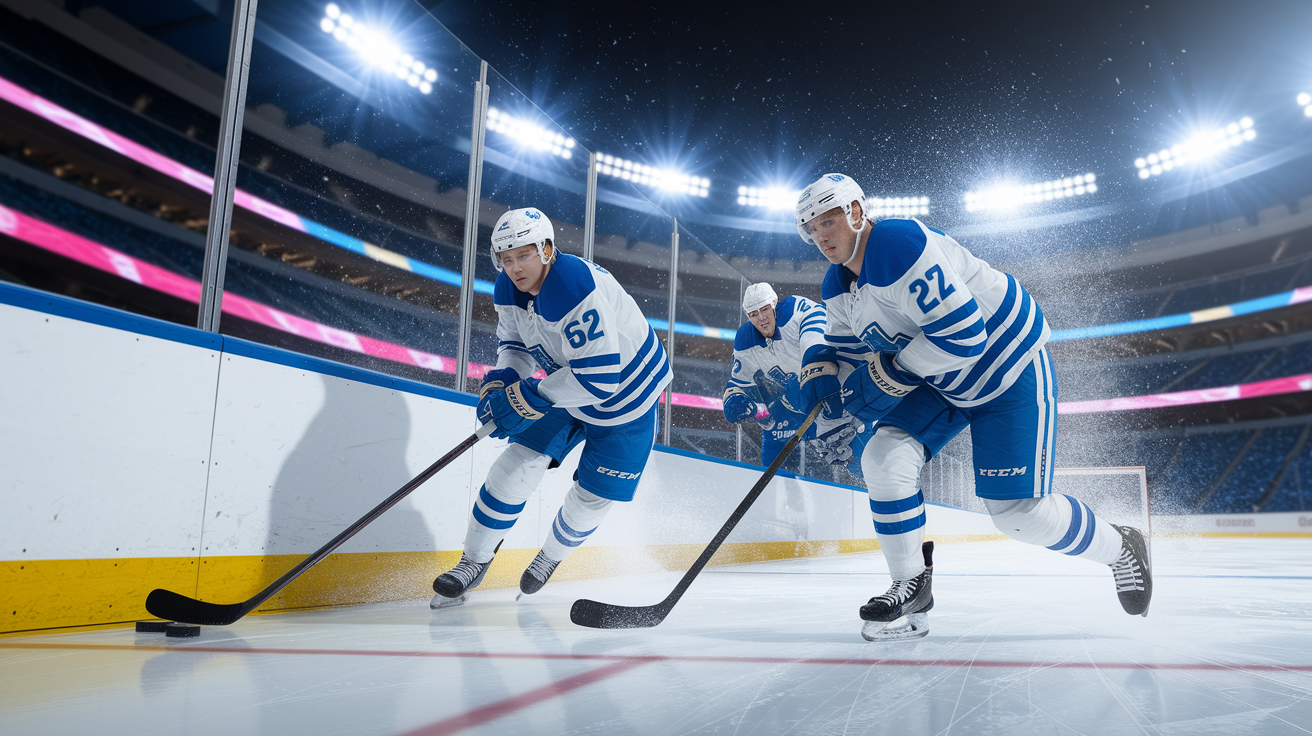
The offensive zone cycle assigns each forward a role that shifts as the puck moves. F1 is typically the puck carrier along the wall or in the corner, responsible for protecting the puck, reading pressure, and making the next pass. F1 uses body position, edge work, and stick protection to shield the puck from the nearest defender. When F1 feels pressure or sees a support option open, the puck moves and F1 rotates to the next position in the sequence.
F2 supports F1 from the inside lane or trails slightly behind, ready to receive a bank pass, wall reverse, or quick dump. F2’s job is to maintain a passing option without drifting too close to F1 or getting pinned on the boards. When F2 receives the puck, the role becomes puck carrier and the rotation continues. F2 often makes the call to continue the cycle or feed the puck to the high slot if a defender collapses low.
F3 floats between the net front area and the weak side half wall, maintaining defensive responsibility while staying available for a cross ice feed or one timer. F3 provides the finishing option when the cycle opens a seam or creates traffic in front of the goalie. Good F3 positioning balances offensive opportunity with back pressure awareness, making sure the team doesn’t leave itself exposed if the puck turns over. As the cycle rotates, F3 may drop low to become F2 or F1, depending on where the puck and pressure move.
Puck Movement Patterns and Rotation Mechanics
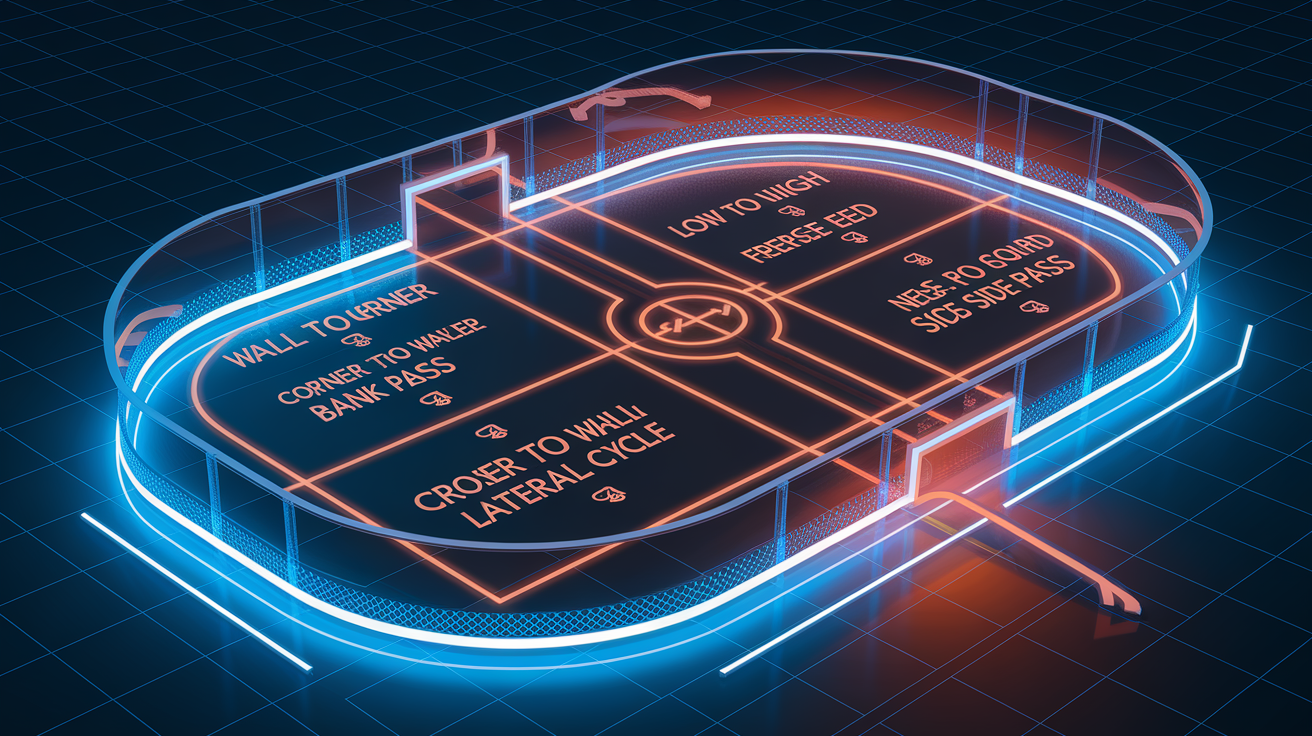
Cycling relies on specific puck movement patterns that keep defenders reacting and create windows for high danger passes or shots. These patterns are repeated until a clear opening appears or the defense makes a mistake that the offense can exploit.
-
Wall to corner bank pass: F1 rims the puck hard around the boards from the wall to the corner, where F2 picks it up and continues the rotation. Defenders must chase the puck and adjust their positioning.
-
Corner to wall reverse pass: F1 in the corner reverses the puck back to F2 on the wall, changing the direction of the cycle and forcing defenders to shift their gap control.
-
Low to high feed: When a defender collapses too low or turns their back, the puck carrier feeds F3 in the high slot for a one timer or shot through traffic.
-
Cross ice weak side pass: If the strong side defenders pinch aggressively, a quick cross ice pass to F3 on the weak side creates a 2 on 1 or open lane to the net.
-
Board to board lateral cycle: F1 and F2 move the puck laterally along the boards without dropping into the corner, forcing defenders to cover width and opening the middle.
-
Net front pick and roll: F3 sets a screen or small pick on a defender while F1 or F2 slips the puck through to the crease or wraps it around the net for a backdoor tap in.
The rotation itself follows a circular or triangular path. As the puck moves from wall to corner, the previous puck carrier rotates up the wall or toward the net front, and the next support player takes over puck duties. This constant motion prevents defenders from locking onto one player or shutting down a single passing lane.
Timing is everything. If F2 arrives too early, the pass option isn’t open yet and both forwards get caught in the same spot. If F2 arrives too late, F1 has no outlet and gets stripped or forced into a low percentage play.
Step by Step Execution of a Proper Cycle

Running the cycle correctly requires a specific sequence of actions that players must repeat until a scoring chance opens up. Here’s how to run a clean offensive zone cycle from start to finish.
-
Establish low zone possession on the wall: Enter the zone with control and settle the puck along the strong side boards, usually just below the hash marks. Protect the puck with your body between the defender and the puck.
-
Read the first defender’s approach: Check where the nearest defender is coming from and how tight their gap is. If they give you space, look for an immediate pass to the slot. If they pressure hard, prepare to move the puck.
-
Support player (F2) takes the inside lane: As F1 shields the puck, F2 skates into the middle of the ice slightly below F1, creating a passing angle and an outlet if F1 needs to escape pressure.
-
Execute a bank pass or wall reverse: F1 dumps the puck hard around the boards to the corner or reverses it back up the wall to F2. The pass should be firm enough to beat a stick check but controlled enough for a clean pickup.
-
Rotate into the next position: After making the pass, F1 skates toward the net front or up the weak side wall, filling the space F3 just vacated. F2 becomes the new puck carrier.
-
F3 adjusts positioning based on puck location: If the cycle stays low, F3 holds the high slot to maintain a shooting option. If the puck moves to the weak side, F3 drops low to provide support and continue the rotation.
-
Repeat the sequence until a seam opens: Continue cycling through wall passes, bank passes, and rotations. Watch for a defender who turns their back, a defenseman who pinches too hard, or a clear lane to the net front.
-
Attack the opening immediately: When the defense collapses or makes a mistake, stop cycling and drive the net, feed the slot, or take a high percentage shot. The cycle is a setup, not the finish.
Communication and Pressure Reads
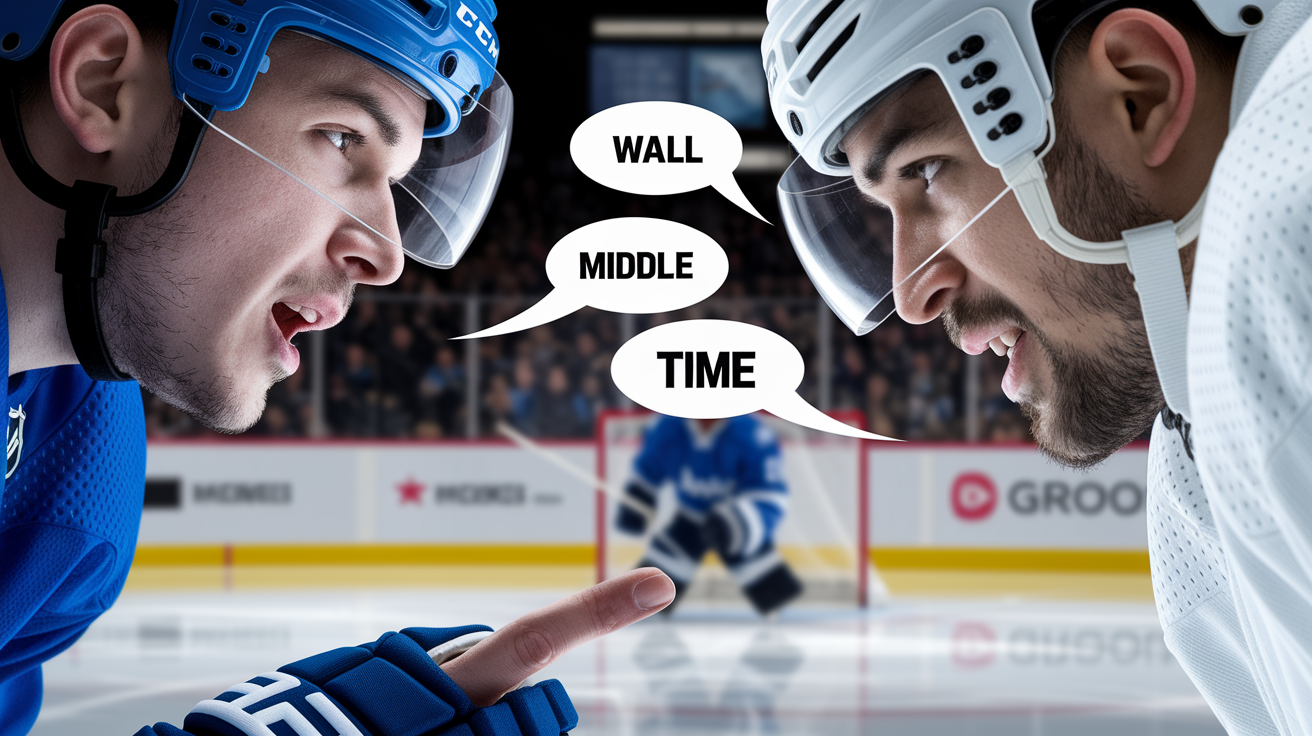
Communication keeps the cycle structured and prevents turnovers when defenders apply pressure or switch assignments. Players use verbal cues like “wall,” “middle,” “net,” or “time” to signal where support is coming from and how much space the puck carrier has. A quick “wall” call tells the puck carrier that a passing option is open along the boards. “Time” means there’s no immediate pressure and the carrier can hold the puck for an extra second to read the defense.
Nonverbal communication matters just as much. Eye contact between forwards confirms who is rotating into which spot. A stick tap on the ice shows where a pass should go. Shoulder positioning signals whether a player is about to peel away or drive the net. Defenders watch these cues too, so forwards need to disguise intent until the last moment.
Reading defensive pressure determines whether to continue the cycle or break it off for a scoring chance. If defenders collapse low and leave the high slot open, the correct read is a quick feed to F3 for a one timer. If a defenseman pinches aggressively on the wall, the right play is usually a chip pass behind them to the weak side. When defenders play passive and give space, that’s the signal to drive the net or walk into a shooting lane rather than cycling again.
Common Cycling Mistakes and How to Avoid Them

Most cycling breakdowns happen because players misread the situation, lose spacing, or force a pass that isn’t there. Recognizing these errors early makes them easier to fix in practice and games.
The most frequent mistake is bunching up in the same area instead of maintaining proper spacing. When two forwards drift into the corner at the same time, they give defenders an easy 2 on 2 situation and eliminate passing options. Fix this by assigning clear rotation paths during drills and reinforcing the rule that only one player works the corner while the others provide support from different zones.
Five common cycling mistakes:
- Standing flat footed while teammates move the puck: If you stop skating, you’re not cycling. Continuous motion is required to create space and keep defenders reacting.
- Forcing a cross ice pass when defenders are set: Cross ice feeds work when the defense is rotating or out of position, not when they’re square and reading the pass.
- Ignoring net front presence: Cycling without a forward near the crease turns the drill into puck movement with no finishing threat. Someone has to create traffic and be ready to score.
- Breaking the rotation early: Peeling away from the cycle too soon leaves the puck carrier isolated with no outlet, usually resulting in a turnover or a low danger clear attempt.
- Cycling when a direct scoring chance is open: The cycle is a tool to create opportunities, not a requirement on every possession. If the slot is wide open, shoot or drive the net instead of moving the puck back to the boards.
After identifying the mistake, the correction is usually simple. Add a constraint in practice, like requiring three passes before a shot, or mark zones on the ice to enforce spacing. Video review helps players see when they bunch up or miss an open lane.
Situational Variations: Against Different Defensive Structures
Cycling tactics change depending on whether the defense plays man to man coverage, zone coverage, or a hybrid system. Against man to man, defenders follow their assigned forward everywhere, which creates clear one on one battles along the boards. The cycle becomes a tool to wear down individual defenders and force them to choose between staying with their man or collapsing to help on the puck. When a defender commits to the puck carrier, the forward they were covering becomes open for a pass or a net drive.
Zone defenses require different timing. Defenders protect areas rather than chasing specific forwards, so the cycle needs to pull them out of position by moving the puck faster than they can rotate. Quick wall to wall passes and cross ice feeds exploit the gaps between zone responsibilities. If the low defenders collapse to stop the cycle, the high slot opens up. If they stay high, the cycle can continue low until someone makes a mistake or a forward finds space to attack the net.
Hybrid systems mix man and zone principles, often with one defender playing the puck aggressively while others protect the house. Against a hybrid, the key read is identifying which defender is the rover and which are anchored. Once you know who’s chasing and who’s sitting, you can cycle away from the chaser or use a quick reversal to catch the rover out of position. Pinching defensemen create the best opportunities. When a defenseman jumps down into the cycle, a quick chip pass behind them or a cross ice feed to the weak side often results in a 2 on 1 or odd man situation.
Drills to Improve Cycling Skills

-
3 on 3 Continuous Cycle Drill: Set up three forwards against three defenders in one zone. Forwards must complete five consecutive passes using proper cycling mechanics before they’re allowed to shoot. Defenders apply active pressure but don’t steal the puck immediately. Run 5 to 8 minute rotations with fresh groups every two minutes. This drill builds timing, support positioning, and decision making under pressure.
-
Wall to Corner Bank Drill: Place one forward on the wall and one in the corner with a defender between them. The wall player banks the puck hard around the boards, and the corner player retrieves it, protects it, and reverses it back. Complete 10 repetitions on each side of the ice, focusing on firm passes, clean pickups, and body positioning to shield the puck from the defender’s stick.
-
Net Drive Finish Drill: Run a 3 on 2 cycle in the offensive zone where forwards must cycle at least twice before one player drives the net for a shot or deflection. The other two forwards provide a pass or screen. Rotate groups every 12 repetitions per player. This teaches players to recognize when to stop cycling and attack.
-
Pressure Chase Drill: Start with a 3 on 1 cycle where the single defender applies light pressure. Every 30 seconds, add another defender until it becomes 3 on 3. Forwards must adjust their cycle speed, passing decisions, and spacing as pressure increases. Run 2 minute shifts and track how long each group maintains possession before a turnover or shot.
Final Words
You’ve seen the essentials in action: what cycling does, where forwards set up, the pass and rotation patterns, step-by-step execution, reads under pressure, common mistakes, and drills to fix them.
It’s about motion, support, and timing. Practice the steps, call out pressure, and run the drills until spacing and reads feel natural.
Use reps in practice and quick game reps until the timing clicks. Do that and you’ll show coaches and teammates you know how to execute the cycle in the offensive zone, and you’ll start creating more real scoring chances.
FAQ
Q: What is the toughest position in ice hockey?
A: The toughest position in ice hockey is widely considered the goaltender. Goalies face constant pressure, need elite reflexes and reads, and carry heavy mental workload since one mistake often costs a goal.
Q: Why can’t you wear 69 in hockey?
A: You can’t wear 69 in hockey because many teams and leagues ban that number as inappropriate or distracting. Organizations enforce uniform standards and often refuse numbers seen as vulgar or likely to cause controversy.
Q: What is the hardest skill in field hockey?
A: The hardest skill in field hockey is often ball control under pressure, including tight dribbling, quick stick work, and first touch. Keeping possession while evading tackles and handling fast passes is the toughest to master.
Q: Where to put the weakest player in hockey?
A: You should place the weakest player in low-risk roles like fourth-line minutes or on the wall for simple support. Give sheltered ice time, clear tasks, and focus on confidence-building first passes and positioning.