

Think offsides is the same at every age level? Think again.
The offsides rule in youth hockey looks simple, puck first, skates behind the blue line, but how it’s taught and enforced changes a lot between mites, squirts, and peewee.
This post breaks down the skate-first rule, how blue lines work, and the common age-specific exceptions like cross-ice play, delayed offsides, and intentional offsides.
Read on to know what referees will call, what coaches should teach, and how parents can help players learn the right timing.
Core Mechanics of Offsides in Youth Hockey
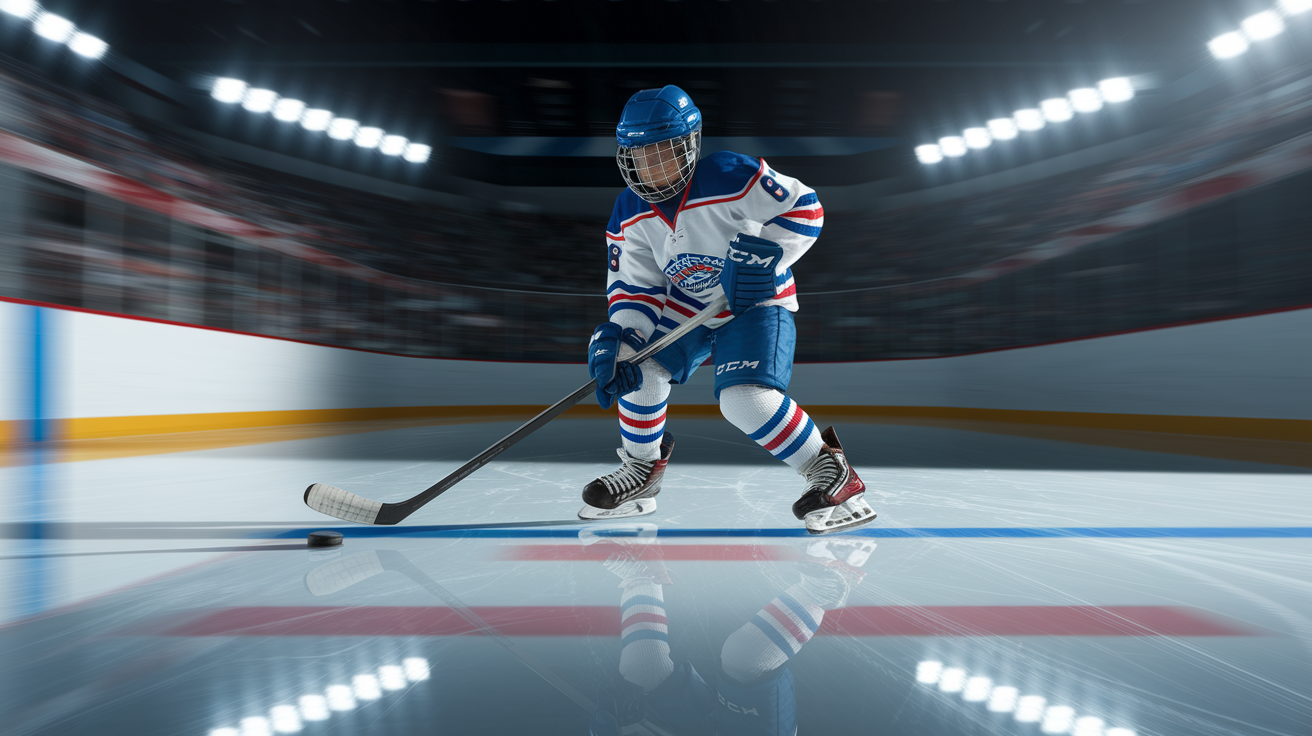
Offsides happens when an attacking player’s skates completely cross the offensive-zone blue line before the puck fully crosses that same line. The rule exists to prevent cherry-picking, when a forward camps out near the opposing goal waiting for a long pass, and to keep the game moving with proper team structure. In youth hockey the basic principle is identical to adult play, but enforcement, teaching emphasis, and developmental philosophy shift depending on age and skill level.
What matters is skate position, not stick placement. A player can reach a stick over the blue line into the offensive zone as long as at least one skate remains on or behind the line in the neutral zone. The instant both skates cross completely into the attacking zone ahead of the puck, that player is offsides. If that player then touches the puck or interferes with a defender, the whistle blows and the faceoff moves to the neutral zone.
Youth programs teach offsides primarily through repetition and visual cues on the ice. Younger players learn to “drag the trailing skate” or pause at the blue line until the puck carrier crosses first. Coaches often use colored tape, cones, or whiteboard sequences to show the line, the puck path, and the correct timing. The focus at early levels is simple: watch the puck, watch the line, and don’t cross ahead of the carrier.
Skate rule: Both skates must be behind or on the blue line until the puck fully crosses into the offensive zone.
Puck first: The puck must completely cross the leading edge of the blue line before any attacking player enters with both skates.
Stick exception: Stick position doesn’t determine offsides. Only skate placement matters.
Violation outcome: If an offsides player touches the puck or engages a defender, play stops and the faceoff returns to the neutral zone.
Understanding Zone Structure and Blue‑Line Positioning
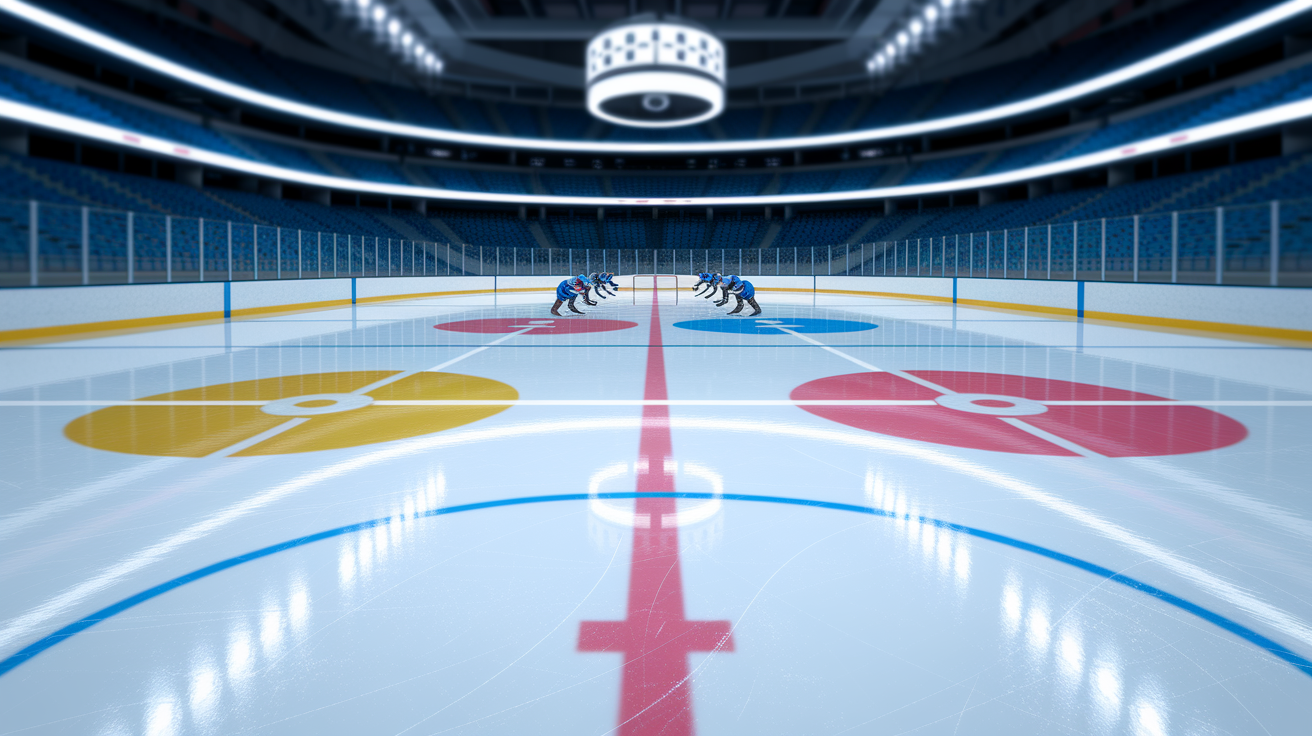
A regulation hockey rink is divided into three zones by two blue lines. The defensive zone is the area behind your own net. The neutral zone sits between the two blue lines. The offensive zone is the area beyond the far blue line where you attack the opponent’s goal. Each blue line acts as a gate: the puck must pass through before attacking players can legally enter that zone with both skates.
The blue line itself is part of the neutral zone. A player standing with one skate on the line and one skate in the neutral zone is still considered in the neutral zone and onside. The puck is considered to have entered the offensive zone once it completely crosses the leading edge of the blue line, the edge farthest from center ice. Until that moment, any attacking player who has both skates over that edge is offsides the instant they touch the puck or force a defender to react.
Youth coaches simplify the concept by teaching “puck first, then you.” Players practice controlled entries at the blue line, learning to time their skating so the puck carrier crosses a split second before trailing wingers. At younger ages, instructors use visual markers like tape lines, painted dots, or even extra cones to help kids see and internalize the boundary.
Age‑Specific Offsides Rules (Mites, Squirts, Peewee)
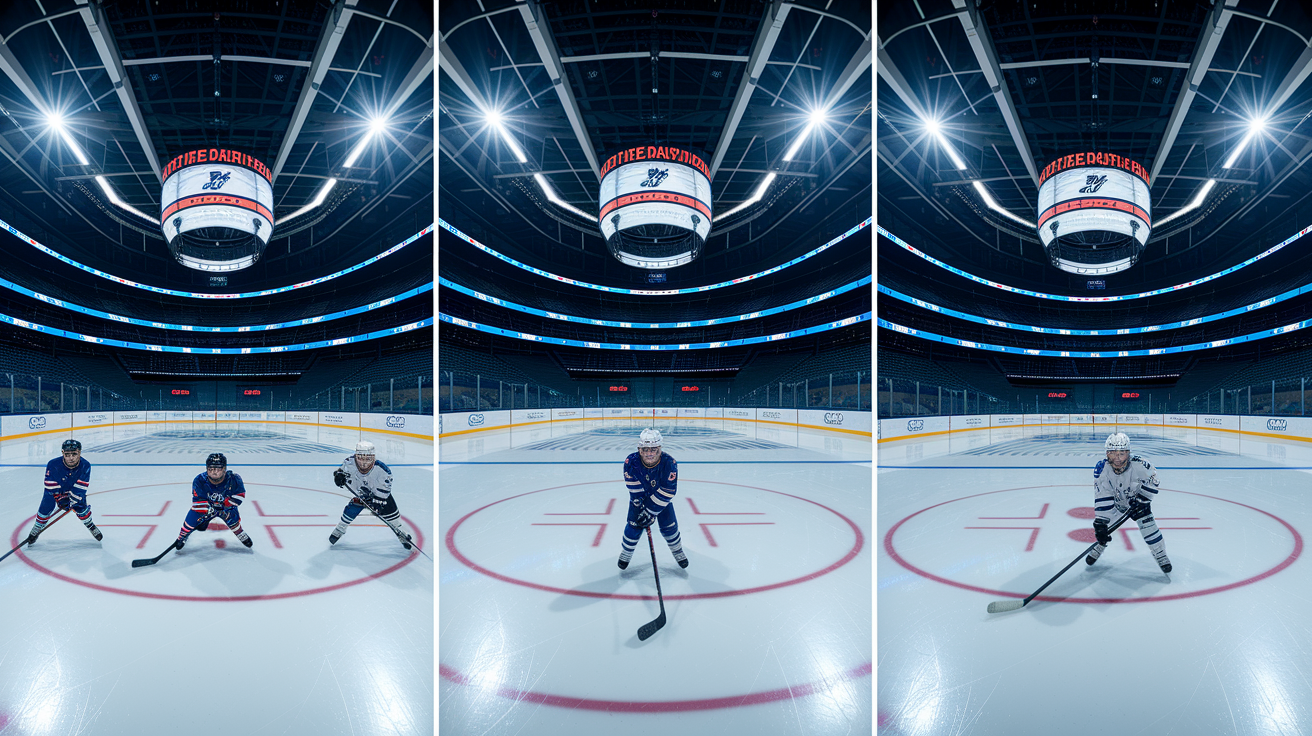
Mites (typically 6U and 8U, or Initiation and Novice depending on the governing body) often play cross-ice or half-ice formats that eliminate offsides entirely. The smaller playing surface and reduced player count mean there are no traditional blue lines or neutral zones, so the rule doesn’t apply. The developmental priority at this stage is maximizing puck touches, skating repetitions, and basic puck control. Coaches teach spatial awareness and positioning through small-area games, but formal offsides calls aren’t part of the game structure.
Squirts (9U and 10U, or Atom in Hockey Canada systems) typically transition to full-ice play, and offsides enforcement begins in earnest. Some leagues introduce a modified or relaxed version. Coaches may verbally correct violations during stoppages rather than blow the whistle immediately, but most Squirt divisions use standard offsides rules identical to higher levels. Players at this age are expected to recognize the blue line, understand puck-first entry, and begin practicing delayed offsides and tag-up mechanics. The adjustment from no-offsides Mite hockey to full enforcement can be abrupt, so early-season practice time often focuses on blue-line timing drills and entry patterns.
Peewee divisions (11U and 12U, or Peewee/Bantam depending on age cutoffs and region) play with full offsides rules matching those used in high school, junior, and adult leagues. By this stage players are expected to manage their own positioning, execute controlled entries under pressure, and understand advanced concepts like intentional offsides and tag-up sequences. Referees enforce the rule strictly, and violations result in neutral-zone faceoffs with no leniency. Coaches begin incorporating breakout systems, zone-entry plays, and defensive gap control that all depend on players respecting and exploiting the offsides line.
Mites (6U–8U): Cross-ice or half-ice formats. No offsides rule in most programs.
Squirts (9U–10U): Full-ice play begins. Standard offsides introduced and enforced, sometimes with early-season coaching flexibility.
Peewee (11U–12U and up): Full enforcement identical to higher levels. Players expected to manage positioning independently.
Organizational Variations: USA Hockey vs. Hockey Canada
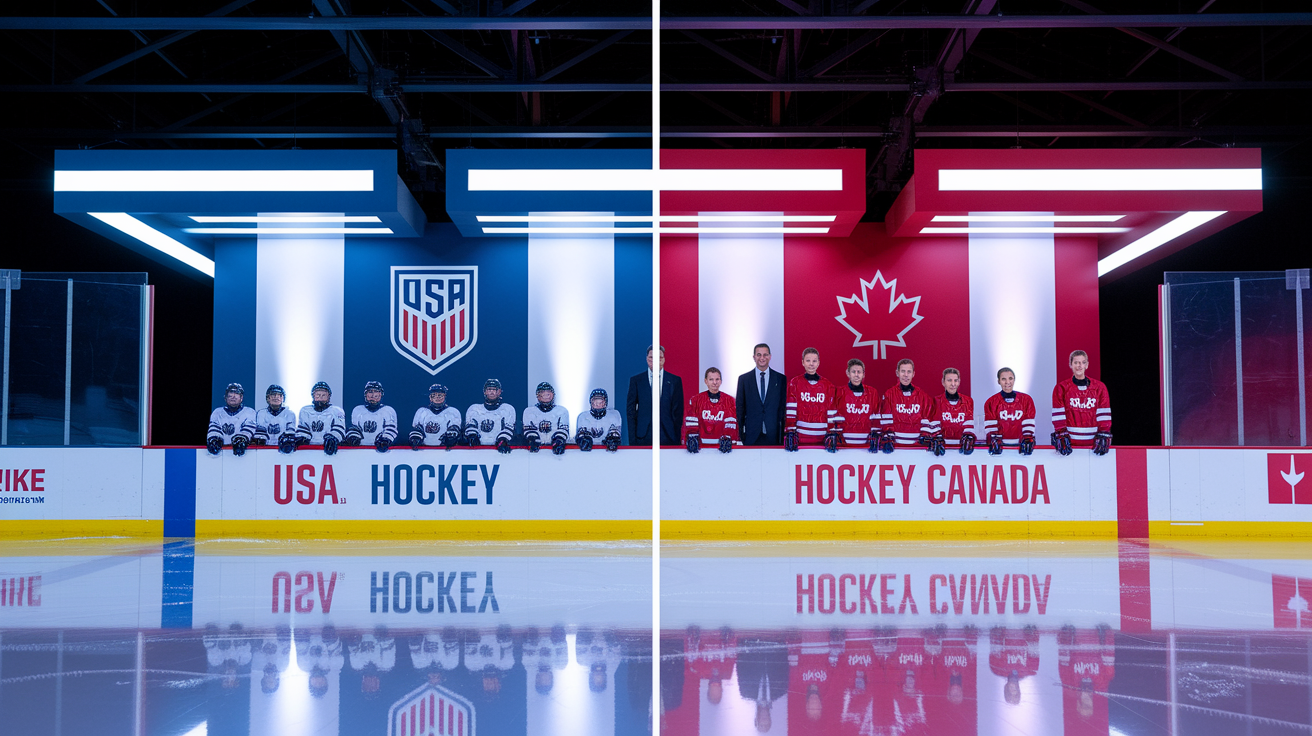
USA Hockey structures its age divisions as 6U, 8U, 10U, 12U, 14U, and so on, with cross-ice mandates for the youngest levels and a phased introduction of offsides as players move to full-ice formats. The organization emphasizes long-term athlete development, so offsides enforcement at 10U is designed to teach rather than penalize. Coaches are encouraged to use stoppages as teaching moments, and some regional districts allow flexibility in how strictly the rule is called during the first half of the season.
Hockey Canada uses Initiation (U7), Novice (U9), Atom (U11), Peewee (U13), and Bantam (U15) designations, with comparable developmental timelines. The offsides rule is introduced once players reach full-ice play, typically at the Novice or Atom level depending on the province and local association. Tag-up rules and delayed-offsides mechanics may be adopted earlier in Hockey Canada systems compared to some USA Hockey regions, but the core skate-position principle remains identical across both organizations.
Both governing bodies publish annual rulebooks with identical baseline offsides definitions but differ in how quickly they introduce advanced variations like intentional offsides and tag-up procedures. Always check your local league’s specific guidelines, because district-level modifications are common and age-bracket naming conventions vary by region and country.
Delayed Offsides, Intentional Offsides, and Tag‑Up Rules
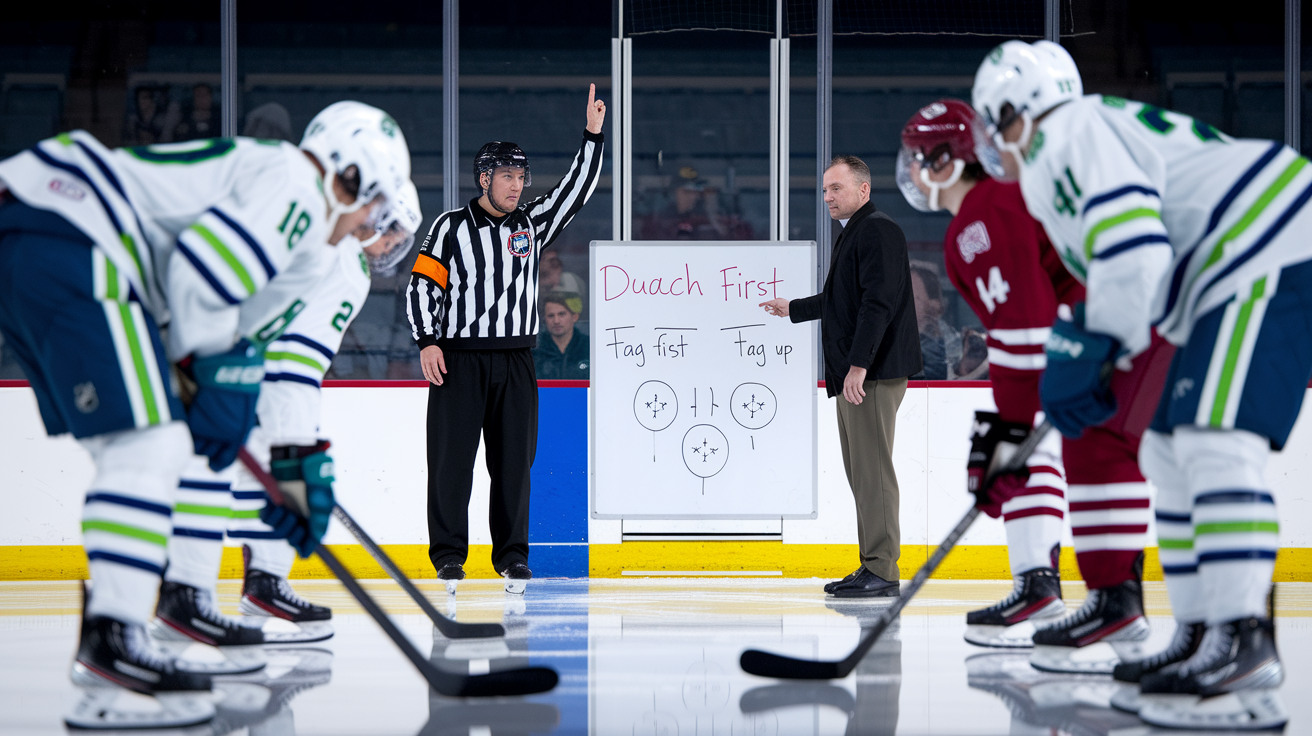
Delayed offsides occurs when an attacking player enters the offensive zone ahead of the puck but doesn’t immediately touch it. The linesman raises an arm to signal the infraction but allows play to continue as long as the defending team controls the puck or the attacking players clear the zone. To “tag up,” every offsides attacker must skate back across the blue line into the neutral zone, touching the line with at least one skate, before re-entering legally. If an offsides player touches the puck before tagging up, the whistle blows and the faceoff moves to the neutral zone. Youth programs introduce delayed offsides around the Squirt level, teaching players to recognize the raised arm and immediately retreat rather than chase the puck.
Intentional offsides is called when a team deliberately shoots or passes the puck into the offensive zone while a teammate is already standing offsides, typically to force a stoppage and allow a line change. The penalty for intentional offsides is harsher: instead of a neutral-zone faceoff, the puck is dropped in the offending team’s defensive zone. This discourages teams from abusing the offsides rule to relieve defensive pressure. Youth leagues that use full offsides usually enforce intentional offsides as well, though referees may show leniency early in the season if it’s clear a young player simply mistimed an entry rather than trying to manipulate the stoppage.
Tag-up mechanics vary slightly by league and age group. In some youth systems, any part of the skate touching the blue line satisfies the tag-up requirement. In others, both skates must fully re-enter the neutral zone. The most common version used in USA Hockey and Hockey Canada youth play requires the offsides player to have at least one skate on or behind the blue line, returning to a legal position, before the attacking team can legally play the puck again. Coaches drill this with simple retreat-and-reentry sequences, using cones or tape to mark the line and calling “tag up!” as a verbal cue during practice scrimmages.
Modified Rink Formats and How They Affect Offsides
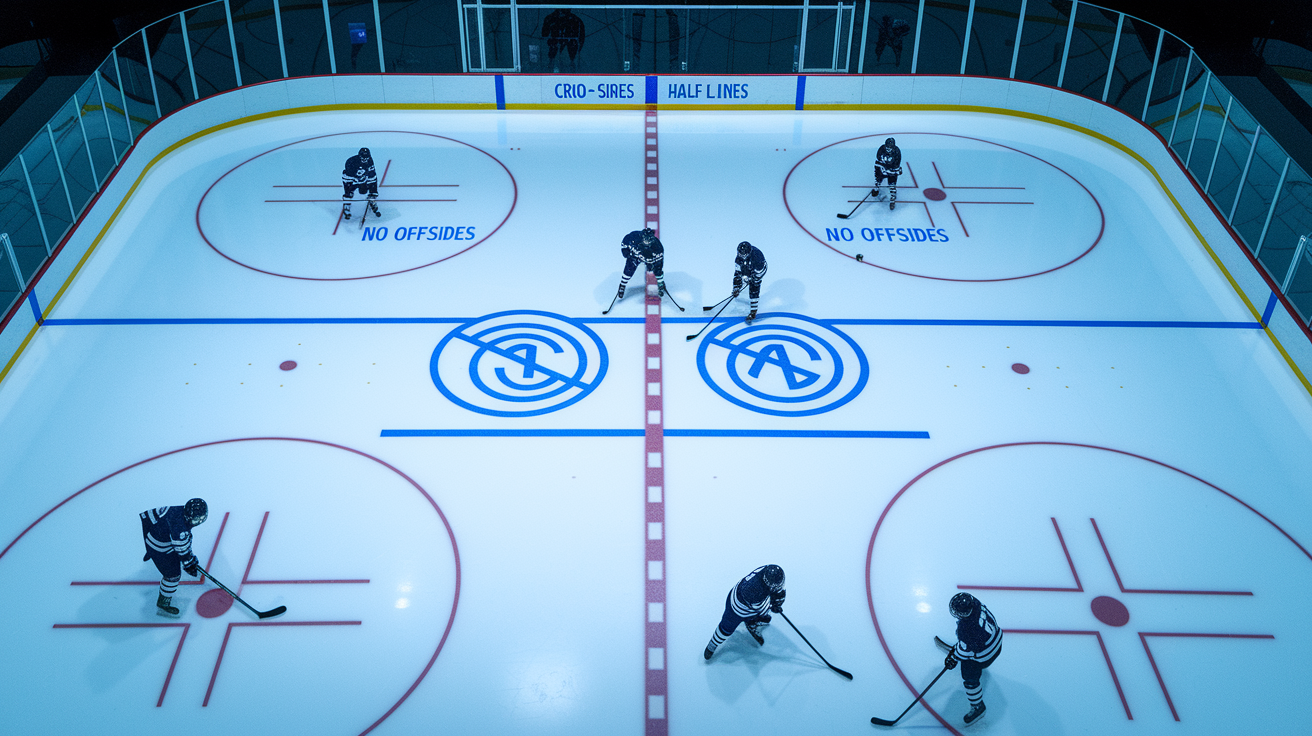
Cross-ice hockey divides a regulation rink widthwise into two or three smaller playing surfaces, each with its own nets and boundaries. Half-ice formats use the length of the rink but only half the width, creating a smaller zone with no traditional blue lines. Both setups are standard for Mite-age players and are designed to increase puck touches, reduce skating distance, and keep all players engaged in the play. Because there are no blue lines or formal zone divisions in these formats, offsides doesn’t exist. Players learn positioning, puck support, and spatial awareness through gameplay rather than formal rule enforcement.
The absence of offsides in modified-ice formats is intentional. Young players at the 6U and 8U levels are still developing basic skating, stopping, and puck handling. Introducing offsides too early can lead to excessive stoppages, confusion, and frustration, all of which reduce the number of meaningful touches each player gets during a practice or game. Coaches instead focus on teaching “where to be” relative to the puck carrier, using small-area games and simple positioning drills that build the foundation for understanding zones and lines when players graduate to full ice.
Cross-ice and half-ice = no offsides: Modified formats eliminate blue lines and zone divisions entirely.
Developmental focus: Coaches teach support positioning and puck movement without formal enforcement.
Transition timing: Players typically move to full-ice play and standard offsides between ages 8 and 10, depending on the league.
Visual Scenarios and Applied Coaching Examples
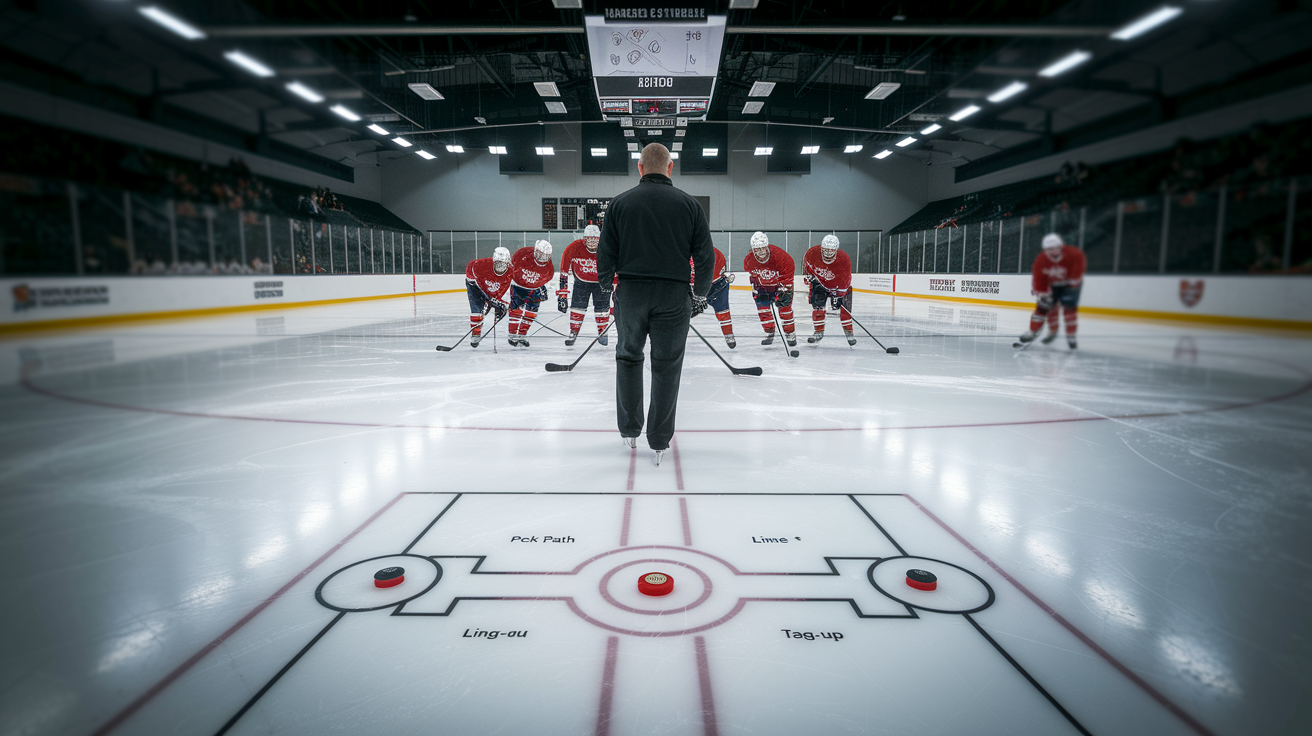
Coaches use on-ice walk-throughs to demonstrate offsides in real time. A common drill places a coach or assistant at the blue line with a puck, while forwards skate toward the line at game speed. The coach controls when the puck crosses, forcing players to time their entry and adjust their skating to stay onside. Players who cross early see an immediate whistle and restart, reinforcing the “puck first” rule through repetition. Off-ice, coaches draw rink diagrams on whiteboards, marking the blue line, neutral zone, and offensive zone, then sketching puck paths and player routes to show legal and illegal entries.
Another teaching method is the “freeze and check” technique during scrimmages. When a player goes offsides, the coach blows the whistle, freezes all movement, and walks over to show exactly where the puck was and where the offsides player’s skates were when the violation occurred. This immediate visual feedback helps younger players connect the abstract rule to their actual positioning. Coaches also use video review at higher youth levels, pausing clips at the moment of blue-line crossing to show frame-by-frame whether skates were onside or offsides.
| Scenario | Coaching Focus |
|---|---|
| Winger crosses blue line ahead of puck carrier | Teach trailing-skate drag; practice timed entries with verbal “now” cue from carrier |
| Delayed offsides with linesman’s arm raised | Drill immediate retreat and tag-up; use “clear the zone!” call and cone markers for line recognition |
| Intentional dump-in while teammate is already in zone | Explain defensive-zone faceoff penalty; reinforce line-change discipline and puck awareness before dumping |
Final Words
In the action, we walked through how offsides works: blue-line placement, zone definitions, and why timing matters. We broke down age-specific rules, governing-body differences, delayed and intentional offsides, and how half- and cross-ice formats change teaching.
Next, focus on simple reps: puck-first entries, visual drills, and coach-led tag-up demos. Practice the fundamentals and teach players to read the puck-carrier.
Remember the offsides rule in youth hockey lines and exceptions and use that clarity to coach smarter and play cleaner.
FAQ
Q: What are the exceptions for offsides? Do both skates need to be over the blue line for offsides in hockey?
A: Exceptions for offsides and whether both skates must be over the blue line are: offside happens if any attacking skate precedes the puck; both skates aren’t required. Delayed offsides (tag-up) or an opponent carrying/redirecting the puck nullify offside.
Q: Who is the richest hockey player of all time?
A: The richest hockey player of all time is widely listed as Wayne Gretzky, with an estimated net worth around $200–250 million from contracts, endorsements, and post-playing business and media work.
Q: What is the Gretzky rule in the NHL?
A: The Gretzky rule in the NHL is an informal nickname for the onside interpretation that a skate touching the blue line counts as onside, letting attackers use the line to avoid an offside call.