

Think offside is just a referee buzzkill?
It feels that way in tight games, but the rule is simple: the puck must fully cross the attacking blue line before an attacking player’s two skates do.
Think of the blue line as a doorway.
The puck walks through first.
This piece breaks the offside rule down for beginners: what officials look for, the difference between immediate and delayed offside, how tag-up works, and quick drills to avoid the whistle.
Read on and you’ll start spotting offside before it costs your team.
Core Breakdown of the Hockey Offside Rule for Beginners

Offside happens when an attacking player’s two skates completely cross the attacking blue line before the puck fully crosses that same line. If any part of a player’s skate is still on the blue line when the puck crosses, you’re onside. The rule exists to keep players from camping out near the opponent’s net waiting for long passes.
The ice gets divided into three zones by two blue lines: your defensive zone, the neutral zone in the middle, and the attacking zone where you’re trying to score. When your team carries or passes the puck forward, everyone entering the attacking zone has to let the puck cross the blue line first. Think of the blue line as a doorway. The puck walks through before you do.
Here’s the four-step check you can use in real time:
- Locate the nearest blue line (the one between the neutral zone and the attacking zone).
- Watch the puck. Does it completely cross the blue line into the attacking zone?
- Check attacking players’ skates. Are any completely over the line before the puck?
- If a player’s skates entered first, the linesman blows the whistle and stops play.
Blue Line Positioning and Zone Entry Fundamentals
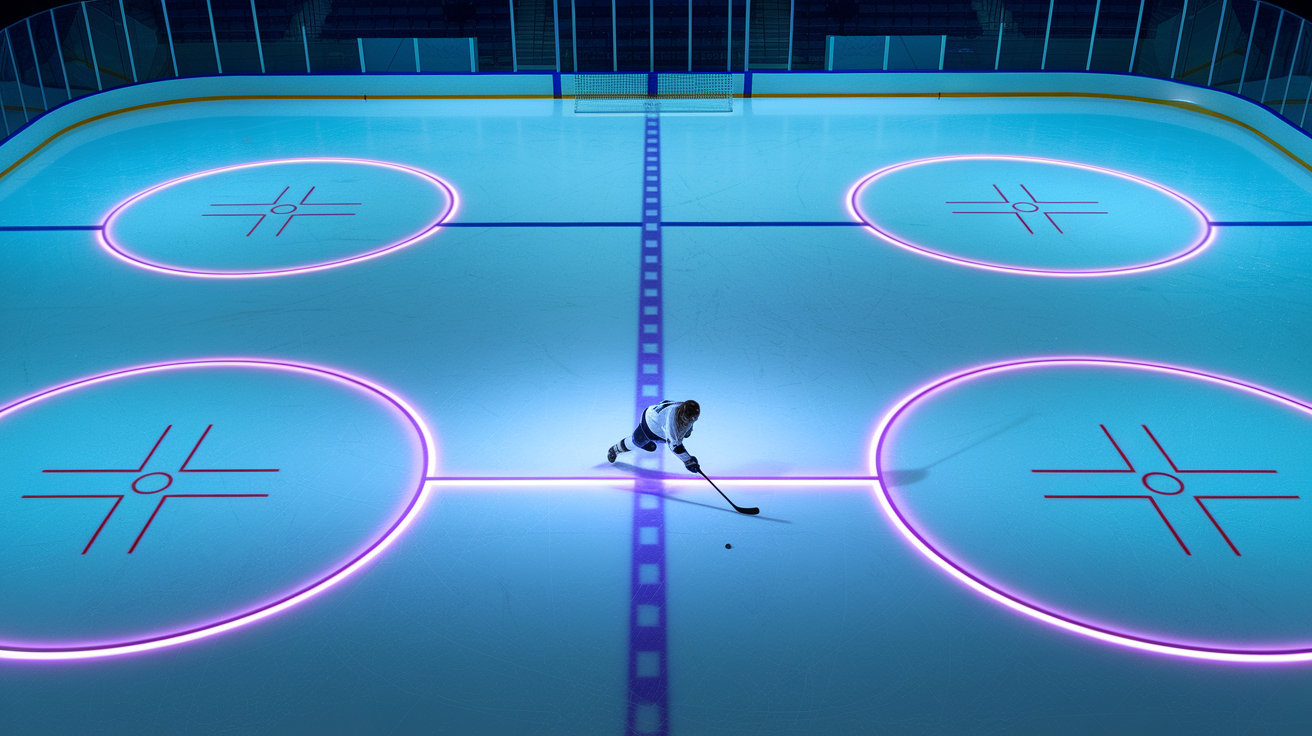
Zone entry is the moment attacking players cross the blue line into the offensive zone. The blue line acts as the trigger point for offside. At the exact instant the puck crosses the line, officials check where every attacking player’s skates are. If both skates are over the line before the puck, it’s offside. If one skate is touching or behind the line, you’re still legal.
Only skates matter. Stick position, body lean, or where your hands are doesn’t count. A lot of beginners assume reaching a stick across the line causes offside. It doesn’t. The confusion happens because players move fast and the puck crossing happens in a fraction of a second. Watch the feet, not the stick.
| Zone Name | Defining Boundary | Impact on Offside |
|---|---|---|
| Defensive Zone | Blue line nearest your own net | No offside can occur here when defending |
| Neutral Zone | Between both blue lines | Transition area; offside ruled at attacking blue line |
| Attacking Zone | Blue line farthest from your net | Offside occurs if players enter before puck |
Immediate vs Delayed Offside and the Tag-Up Process
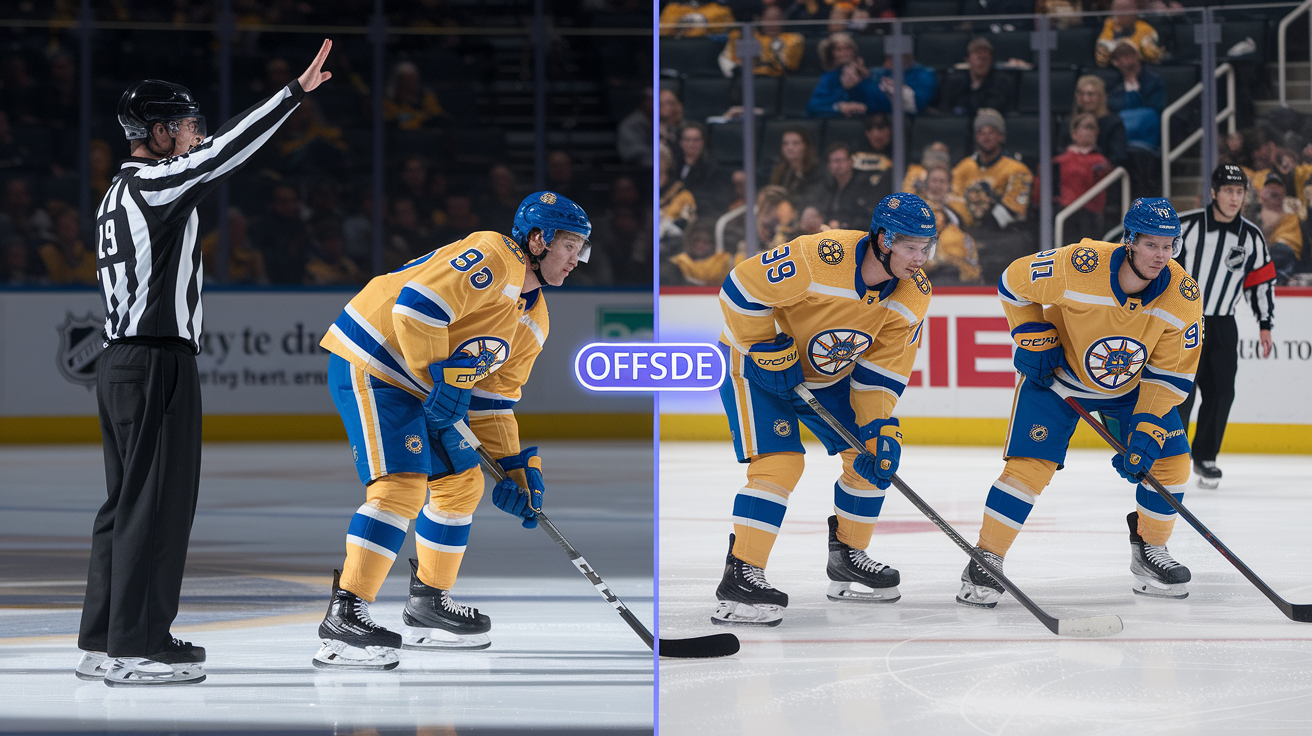
Immediate offside means the linesman stops play right away. This happens when an attacking player touches or plays the puck after entering the zone ahead of it. The whistle blows, everyone stops, and the faceoff moves back to the neutral zone.
Delayed offside is different. If an attacking player is already in the zone before the puck but doesn’t touch it, the linesman raises his arm and lets play continue. As long as no one on the attacking team touches the puck, the defending team can play it and clear the zone without a whistle. If the defenders gain possession and move the puck out, the delayed offside gets waved off and play continues normally.
Tag-up is how the attacking team can fix a delayed offside. All attacking players who entered early have to skate back out of the zone, completely crossing the blue line back into the neutral zone. Once everyone’s out and the puck is still in the zone untouched, they can re-enter legally. The moment an attacking player touches the puck during a delayed offside, the whistle blows.
If you’ve ever seen a forward skating hard backward toward the blue line while the puck slides around the offensive zone, that’s tag-up in action. The defending team often tries to prevent tag-up by pressuring the puck or cycling it to kill time.
The five-step tag-up sequence:
- Attacking player enters zone ahead of puck. Linesman raises arm for delayed offside.
- Attacking teammates avoid touching the puck. Defending team gains or contests possession.
- All attacking players skate back across blue line into neutral zone (both skates have to clear).
- Once all are out, delayed offside is cleared and zone is legally re-entered.
- If attacker touches puck before everyone clears, immediate whistle and neutral-zone faceoff.
Common Offside Scenarios Beginners Should Recognize
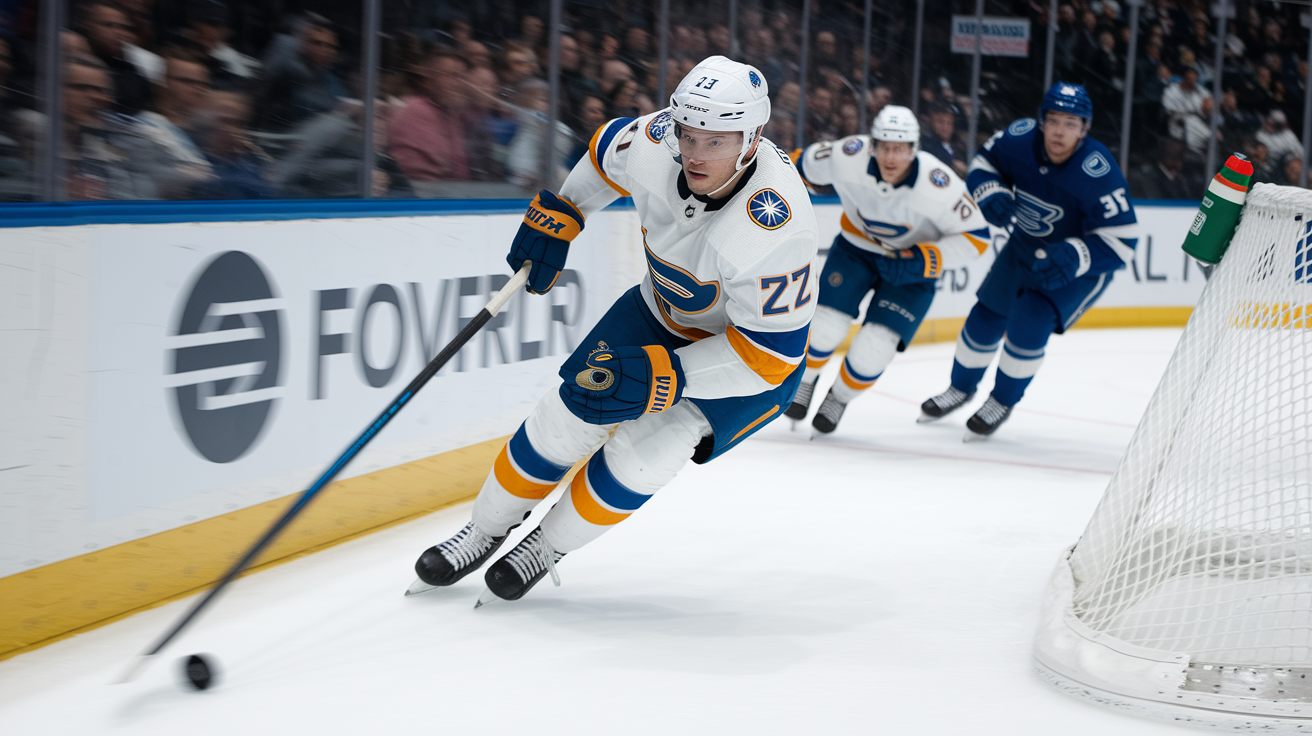
The most common offside happens on the breakout when a winger jumps early. The defenseman passes up the middle, the winger sees open ice and takes off, and both skates cross the blue line a split second before the puck arrives. The linesman’s arm goes up, the winger realizes the mistake, and everyone regroups.
Pass timing creates tight calls. A center at the red line fires a long cross-ice pass to the left wing. If the winger is already gliding forward and his skates cross the blue line before the puck, it’s offside, even if the puck is only inches behind. Deflections off a defender can change the call. If a defending player deliberately plays or bats the puck back into their own zone, attackers already over the line may be ruled onside. If it’s an accidental deflection or a rebound, the original offside stands. Officials decide based on controlled possession versus incidental contact.
Visuals help lock in recognition. Watch a clip where the puck carrier enters cleanly with trailing wingers still straddling the line. That’s onside. Compare it to a clip where a forward races ahead and receives a pass after both skates cross. That’s offside. Then watch a delayed offside where everyone backs out, tags up, and the puck legally re-enters.
Test yourself with these three scenarios:
- A winger skates into the attacking zone, receives a pass, then the puck carrier follows behind. Offside or onside?
- The puck is chipped into the zone. One attacker is already over the line but doesn’t touch it while his teammates clear back out. What happens next?
- A defender swats at a loose puck and deflects it backward into his own zone. An attacking forward is already past the blue line. Offside?
Offside Enforcement: Linesman Judgment, Signals, and Video Review

Linesmen enforce offside, not referees. When an offside occurs, the linesman blows the whistle, raises one arm, and makes a chopping motion with the other hand to signal the stoppage. He’ll usually shout “offside” and point to the spot where the faceoff will take place in the neutral zone. The side of the ice where the infraction happened determines which neutral-zone faceoff dot is used.
Close plays require judgment. The linesman watches the puck and the skates at the same moment, often from an angle that gives him the best sightline on the blue line. If he’s uncertain, he makes the call in real time and the play stops. At higher levels, video review can challenge tight zone entries.
Key factors linesmen check before calling offside:
- Position of the puck relative to the blue line at the moment of crossing
- Position of both skates for every attacking player at that same instant
- Whether any attacking player touched or played the puck while offside
- Whether a defending player deliberately played the puck, potentially nullifying offside
Replay Review Basics
Replay officials look at synchronized camera angles showing the blue line from above and from the side. They check frame by frame to see if the puck crossed the plane of the blue line before or after the attacking player’s trailing skate left the line. Skate position is determined by whether any part of the blade is touching the blue line or the ice on the onside side of the line. Puck position is determined by whether the entire puck has crossed the vertical plane of the blue line. One frame can reverse the call.
Offside Outcomes, Faceoff Locations, and Rulebook Variations

When offside is called, play stops immediately and the puck goes to a neutral-zone faceoff. The faceoff happens at the dot on the same side of the ice as the infraction, just outside the attacking blue line. This pushes the attacking team back and gives the defending team a chance to regroup or change lines.
Intentional offside results in a harsher penalty. If a team deliberately shoots or dumps the puck into the attacking zone when a teammate is already over the line (usually to force a stoppage and get a line change), the faceoff moves all the way back into the offending team’s defensive zone. Coaches use intentional offside sparingly because it costs zone position.
Different leagues use slightly different interpretations. Youth hockey often enforces offside more leniently to keep the game moving. College hockey follows NCAA rules that mirror the NHL in most cases. IIHF rules include minor variations in how deflections and tag-up timing are judged. USA Hockey and Hockey Canada each publish their own rulebooks with small differences in delayed-offside enforcement and faceoff placement.
Three tricky exceptions to watch for:
- A defending player in control of the puck deliberately carries or passes it backward into his own zone. This negates offside even if attackers are already over the line.
- The puck deflects off an on-ice official in the neutral zone and bounces back. Attackers in the zone may still be offside depending on when they entered.
- During a delayed offside, if the defending team shoots the puck out of their zone and it goes directly out of play, the original delayed offside may be waved off before the faceoff.
Beginner-Friendly Tips and Drills for Avoiding Offside

Timing the blue line is a learned skill. The fix is simple: keep one skate on or behind the line until you’re certain the puck has crossed. Drag your back skate, straddle the line, or stop completely if you’re not sure. Lateral moves at the blue line (trying to deke a defender or change direction) are high risk for offside. If you’re under pressure, chip the puck deep and chase it, or pass it to a teammate who’s in better position.
Linemate habits shape zone entries. If your center always carries the puck wide, you know to trail slightly. If your winger likes to send long stretch passes, stay aware of your speed and position. Talk through entries in practice so everyone knows the timing and tendencies.
Five drills for teaching offside awareness:
- Video review drill. Watch 10 short zone-entry clips, identify onside vs offside, and discuss what the attacking player should have done differently.
- Blue-line straddle drill. Skate forward at half speed, keep one skate on the blue line, receive a pass from a coach, and only cross fully once the puck arrives.
- Puck-first count drill. Partner passes the puck across the line. You count “puck, then skate” out loud before entering.
- Delayed offside regroup drill. Coach dumps puck in early. Attacking players practice clearing the zone together, tagging up, and re-entering cleanly.
- Game-speed rush drill. Run 3-on-2 or 2-on-1 entries at full speed with a coach watching the blue line and blowing the whistle on offside. Repeat until players consistently enter legally.
Quick Glossary and Beginner Reference Guide for Offside Terms

Understanding the terminology makes watching and playing easier. The terms below cover the core language officials, coaches, and players use when talking about offside. Remember the simple numbers: two blue lines, three zones, and you need to track both skates at the moment of entry.
Key offside terms and definitions:
Blue line – The two horizontal lines that divide the rink into three zones. The attacking blue line is where offside is ruled.
Attacking zone – The zone where your team is trying to score. Entering it ahead of the puck triggers offside.
Delayed offside – When an attacking player is in the zone early but play continues until someone touches the puck or the team tags up.
Tagging up – The process of all attacking players skating back across the blue line into the neutral zone to clear a delayed offside.
Controlled possession – When a defending player deliberately plays or carries the puck. Can nullify offside in certain situations.
Deflection – When the puck contacts a player, official, or board and changes direction. Can affect offside rulings depending on intent and control.
Intentional offside – Deliberately causing offside to stop play, usually for a line change. Results in a defensive-zone faceoff for the offending team.
Final Words
in the action we covered the offside definition, why blue lines matter, immediate vs delayed offside and the tag-up, common game examples, how linesmen call it, where faceoffs go, and drills to fix timing.
Short checklist and visuals were recommended so you can spot offsides in real time.
Practice the 4-step check at the blue line and the straddle-line drills, and watch replay clips to train your eyes.
This hockey offside rule explained for beginners guide should give you the tools to read plays and avoid whistles.
Keep at it. Small timing gains make a big difference in games.
FAQ
Q: What is offsides in hockey and how can I simply explain the offside rule?
A: Offsides in hockey happens when an attacking player has both skates completely across the attacking blue line before the puck crosses it. One skate on the line is onside — think “puck goes through the door first.”
Q: Which state is hockey most popular in?
A: Hockey is most popular in Minnesota, where youth and high-school participation, community rinks, and deep fan culture have earned it the nickname “State of Hockey.”
Q: Who is the richest hockey player of all time?
A: The richest hockey player of all time is generally considered Wayne Gretzky, due to career earnings, endorsements, and long-term business and ownership investments.