

Think offside calls are just bad luck or picky refs?
Most of the time they come from simple mistakes attackers make: mistimed runs, ball-watching, and poor body positioning.
In this post we’ll break down the three judgment errors that get players flagged, show the moment-by-moment cues to watch, and give clear drills and communication tricks you can use in training and games.
Read on to stop getting pulled back and start finishing more chances.
Understanding the Offside Rule and Why Players Get Caught
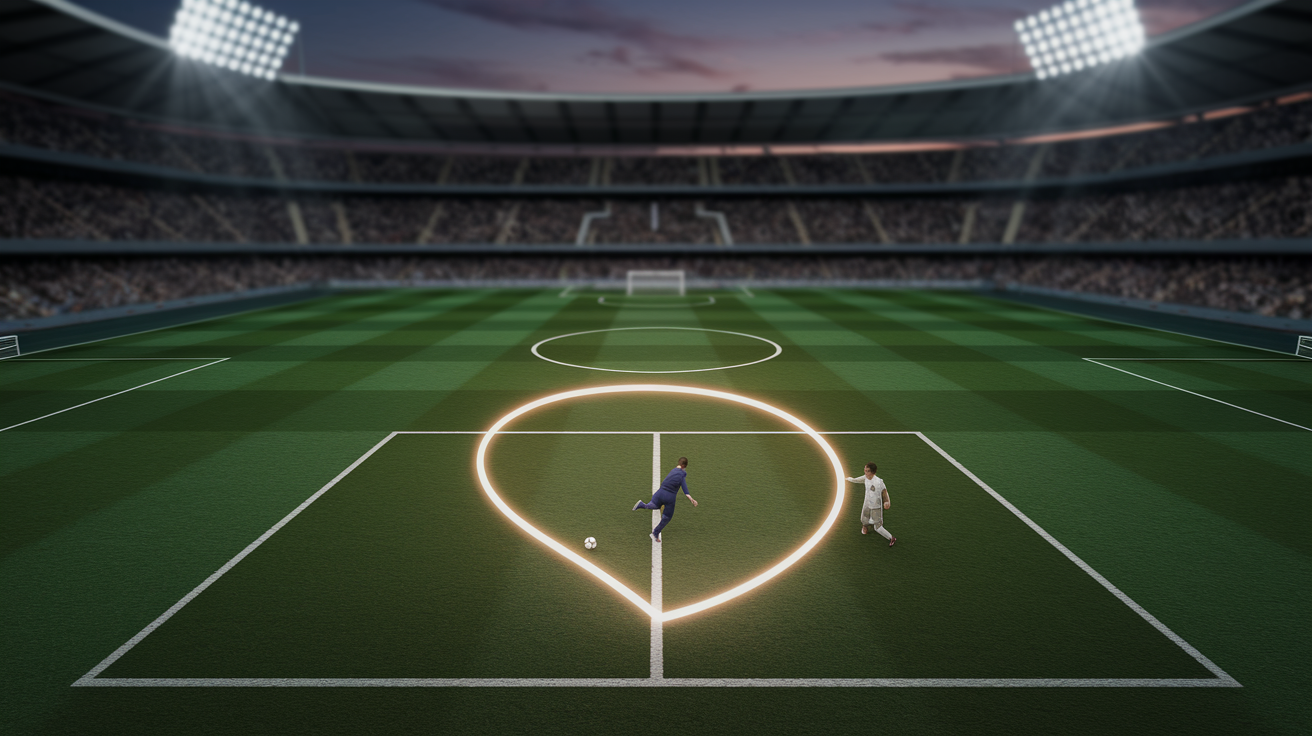
The offside rule says you’re in an offside position if any part of your head, body, or feet is closer to the opponent’s goal line than both the ball and the second-last opponent when your teammate plays the ball. It’s about the moment of the pass, not when the ball shows up. And just being offside doesn’t break the rule. You only commit an offense if you get actively involved by touching the ball, messing with an opponent, or benefiting from your position.
Most players get the basic idea. Where they struggle is in three specific judgment areas.
First, they misjudge exactly when the passer strikes the ball. They move too early or too late. Second, they lose track of where the second-last defender is because they’re staring at the ball or the space they want to hit. Third, they don’t really understand what “active involvement” means. They think they’re fine if they don’t touch the ball, even when they’re blocking the keeper’s sightline or getting in a defender’s way.
In-game situations make this worse. Quick transitions compress your decision time to fractions of a second. Set pieces reset defensive lines in ways you can’t always predict. Rebounds off the keeper or deflections change the point of pass, and players don’t always track that shift. The offside trap works when defenders step up together, and it catches attackers who don’t read defensive movement or adjust their runs.
Top five causes of offside calls:
- Mistimed runs that start before the passer releases the ball
- Ball-watching without checking the position of the second-last defender
- Drifting ahead of defenders during build-up without resetting
- Anticipating a pass based on teammate positioning instead of actual pass timing
- Failing to adjust when defenders step up together
Identifying the Most Common Offside Errors in Matches

The most frequent offside mistake? Drifting ahead of defenders during the build-up phase.
Players creep forward while their team moves the ball around. They edge closer to goal without realizing they’ve gone past the defensive line. This happens because they focus on where they want to receive the ball instead of tracking where they actually are relative to defenders. When the pass finally comes, they’re already a half-step or full step offside before the ball is struck.
Anticipating passes too early creates the second most common error. You read your teammate’s body language, see the passing lane open, and accelerate into space before the ball leaves their foot. The difference between onside and offside often comes down to 0.2 to 0.5 seconds. Starting a run when you think the pass is coming rather than when it’s actually played puts you offside over and over. This mistake spikes during counterattacks when excitement overrides timing discipline.
Failing to track defensive line movement causes the third major category. Defenders don’t stand still. They push up to compress space, drop back to cover runners, shift laterally to close passing lanes. Attackers who plant themselves in a static position or run in straight lines without checking get caught when that line steps up together. The offside trap works because attackers ignore or fail to notice coordinated defensive movement.
Losing visual contact between the ball and defenders creates the fourth pattern. Players turn their backs to the play to make a run, eliminating their ability to see both the passer and the defensive line at the same time. They commit to the run based on outdated information, unable to adjust if the pass gets delayed or defenders step up. Side-on body positioning solves this, but many attackers face forward toward goal and sacrifice the visual feedback they need to stay onside.
The four most frequent match-day positioning errors:
- Starting runs from an even or slightly ahead position instead of dropping a half-step behind the second-last defender before accelerating
- Watching only the ball carrier’s feet and ignoring peripheral defender positioning
- Staying high during slow build-up without periodically checking back onside
- Reacting to where the ball is going rather than where it is at the moment of the pass
Techniques for Improving Timing of Runs

Correct timing starts with reading the passer’s body mechanics. Watch their hips and plant foot, not their eyes. When the passer’s plant foot hits the ground and their kicking leg starts forward, that’s your acceleration cue.
Practice a simple 1-2 count. “One” when you see the wind-up, “two” when the foot strikes the ball, and your first explosive step happens on “two.” This synchronization drill, repeated in training, programs your muscle memory to match pass release with run initiation.
Defender cues give you a second timing layer. The second-last defender’s weight shift, head turn, or slight drop in their hips often signals they’re about to react to a pass. If you see a defender turn their shoulders to track a potential ball, delay your run by a half-second because the pass might get intercepted or deflected. If defenders are backpedaling or static, you’ve got a cleaner window to time your break. Combine passer mechanics with defender body language to create a two-input timing system instead of guessing.
Synchronization with your passer improves through repetition and pre-arranged signals. Spend 15 minutes per training session working exclusively on timed through balls with the same midfielders who’ll feed you in matches. Agree on a simple verbal cue like “Now” or a nonverbal signal like a quick glance or hand flash before the pass. The more you practice with the same players, the better you’ll read their rhythm without needing explicit signals, building an intuitive understanding of their passing tempo.
Five-step timing improvement process:
- Position yourself half a step behind the second-last defender before starting any forward run
- Watch the passer’s plant foot and hips for the moment they commit to the pass
- Delay your first explosive step until you see the kicking foot make contact with the ball
- Use peripheral vision to track the nearest defender’s movement while watching the passer
- Practice 10 to 12 timed runs per training session with the same passers to build rhythm and consistency
Mastering Body Positioning to Stay Onside

Side-on positioning gives you visual access to both the ball and the defensive line without turning your head. Instead of facing straight toward goal, angle your body at roughly 45 degrees so your chest points between the ball and the space you want to attack.
This stance lets you use peripheral vision to monitor the second-last defender while keeping the passer in your direct line of sight. When you need to check the defensive line, a small shoulder rotation of 15 to 20 degrees is enough, rather than a full head turn that temporarily blinds you to the ball.
Shoulder alignment creates the reference point for staying level with defenders. Plant your outside shoulder in line with the second-last defender’s outside shoulder. This keeps your body even with theirs while positioning you on their “outside,” closer to the touchline, which creates a cleaner angle for runs into space behind. If you’re on a defender’s inside shoulder, closer to the center of the pitch, you’ll naturally drift ahead as they shift to cover central areas. The outside shoulder position also gives you a better view of both the ball and the defender without excessive head movement.
Stance and weight distribution affect how quickly you can adjust position. Keep your weight on the balls of your feet with knees slightly bent, ready to move in any direction. A flat-footed stance or weight sitting back on your heels costs you the 0.3 to 0.5 seconds needed to react when the defensive line steps up. Practice quick shuffle steps laterally and small backward steps to stay level with defenders during build-up play. Your stance should feel like a coiled spring, ready to explode forward but equally capable of dropping back or shifting sideways to maintain your onside position.
Communication Strategies Between Attackers and Midfielders

Effective communication between attackers and midfielders cuts down offside calls by syncing movement and pass timing. Establish two or three short verbal cues before matches and use them consistently.
“Now” signals an immediate pass, “Hold” tells the attacker to delay their run, and “Check” means drop back because the passing lane is closed. Keep cues to one word that can be heard over crowd noise and shouted quickly without breaking the passer’s focus. Nonverbal signals work in louder environments. A raised hand means the attacker is ready, a pointed finger shows the target area, and a quick head nod confirms the pass is coming.
Pre-match coordination sessions, even brief 10-minute walkthroughs, align expectations about run timing and passing windows. Attackers should tell midfielders their preferred timing, whether they want the ball played early so they can run onto it, or late so they can check to the ball. Midfielders should communicate their visual limitations, such as when a defender blocks their view of the attacker’s position. This two-way exchange prevents assumptions that lead to mistimed passes and offside flags.
Six communication methods that reduce offside errors:
- Use “Now” for immediate through balls and “Next” for the second or third pass in a sequence
- Implement a raised hand signal from the attacker when they’re in an onside position and ready to run
- Call “Step” or “Line” when you see the defensive line pushing up, alerting teammates to drop back
- Midfielders shout the attacker’s name before releasing the ball to confirm target and timing
- Establish eye contact for 0.5 to 1 second before disguised or delayed passes
- Attackers call “Behind” when they want a pass into space and “Feet” when they want the ball to their current position
Offside Awareness Drills for Training Sessions

Effective offside drills replicate match pressure and decision speed while isolating the specific skills players need to stay onside.
The first category focuses on visual scanning. Set up a 3v2 scenario where three attackers face two moving defenders and a goalkeeper. Attackers must complete five passes before attempting a through ball, and during those passes they’re required to perform shoulder checks at least twice per possession phase. Coaches count checks out loud and stop play if attackers fail to scan, reinforcing the habit of constant defender awareness.
Reaction timing drills train players to sync their runs with pass release. Place attackers 15 meters from goal with two defenders forming a line. A server 25 meters out plays through balls at irregular intervals. Attackers must hold their position until they see the server’s foot strike the ball, then explode forward. Coaches watch for early movement and flag any attacker who moves before ball contact. Run 12 repetitions per player over 8 to 10 minutes, gradually increasing server unpredictability to simulate match conditions.
Shadow-play exercises build spatial awareness without the chaos of live opposition. Organize 11v0 where the team runs offensive patterns against an imaginary defensive line marked by cones or poles set at realistic defender spacing. Attackers practice timed runs, checking movements, and positional resets while a coach moves the cone line up and back to simulate a high line or a dropping defense. This drill ingrains the habit of checking position relative to markers before every run, translating to automatic checking against real defenders.
Pattern repetition drills create muscle memory for common offside scenarios. Set up a crossing situation where wingers deliver balls from wide areas and strikers time their runs into the box. Mark the penalty spot and 18-yard line as reference points. Strikers practice starting their run from a position level with the back post, accelerating to the near post only after the winger’s cross is struck. Repeat 20 crosses per session, mixing early crosses, driven crosses, and delayed cutbacks to vary timing demands.
| Drill Name | Objective | Setup Requirements |
|---|---|---|
| Shoulder-Check Possession | Build habit of scanning for defensive line during build-up play | 3 attackers, 2 defenders, 1 goalkeeper, 20×15 meter grid, 1 ball |
| Timed Through-Ball Reaction | Synchronize run initiation with exact moment of pass release | 1 server, 2 defenders, 3 attackers, 30-meter channel, markers for defensive line, 6–8 balls |
| Shadow Offensive Pattern | Train positional awareness against simulated moving defensive line | 11 attackers, 11 cones or poles for imaginary defenders, full pitch, 3–4 balls |
| Crossing and Run Timing | Practice timing runs to goal from wide service while staying onside | 2 wingers, 3 strikers, 1 goalkeeper, penalty area, 10 balls, markers at 18-yard line and penalty spot |
Tactical Concepts That Influence Offside Decisions

High defensive lines force attackers to recalibrate their spatial reference constantly. Teams that press aggressively and hold a line near midfield compress the space attackers can exploit, but they also create opportunities for through balls if timing is perfect.
When facing a high line, attackers must resist the instinct to push up and instead hold a position 1 to 2 meters behind the second-last defender, creating a buffer that allows explosive runs without crossing the offside threshold before the pass. Reading whether the defensive line is static or actively stepping up determines whether you can maintain your position or need to drop deeper.
Coordinated pressing systems increase offside risk during transitions. When a defending team wins possession and immediately pushes forward, their defensive line often stays high for 2 to 4 seconds before resetting. Attackers who don’t track this delayed adjustment find themselves offside when their team regains the ball and attempts a quick counter. The solution is positional discipline during the 3 to 5 seconds immediately after losing possession. Drop back level with or slightly behind the ball until you confirm the defensive line has also retreated.
The offside trap requires synchronized movement from at least three defenders stepping up together at the moment the ball is played forward. Teams that execute the trap well train defenders to push up on a verbal call or visual cue from the deepest defender.
Attackers can exploit the trap by recognizing the pre-step cues. Defenders shifting their weight forward, a defender calling “Step” or “Up,” or multiple defenders glancing at each other before moving. When you see these signals, either delay your run by a full second or take an angled run through gaps in the line rather than running straight. The trap collapses if even one defender fails to step, so scanning for the defender who might not move gives you a target to exploit.
Real Match Scenarios Showing How Offside Mistakes Happen
A midfielder receives the ball 35 meters from goal with three attackers positioned across the width of the field. The striker in the center drifts two steps ahead of the last defender while watching the ball, anticipating a through pass.
The midfielder delays, checking other options, and the defensive line steps up one meter while the striker remains static. When the midfielder finally releases the pass 1.5 seconds later, the striker is offside by nearly two meters. The mistake happened during the delay. The striker failed to check the defender’s position after the initial setup and didn’t adjust when the line moved up. A single shoulder check during the midfielder’s hesitation would have shown the defensive shift and allowed the striker to drop back onside.
During a counterattack, a winger carries the ball down the touchline at full speed while the striker sprints centrally toward goal. The striker, focused entirely on reaching the box first, runs in a straight line and edges half a step past the second-last defender one second before the winger’s cross. The assistant referee flags offside the moment the ball is struck.
The striker’s error was running to where they wanted to be rather than where the ball was. If the striker had angled the run slightly toward the winger, staying parallel to the last defender until the cross was played, they would have arrived onside and in position for a clean finish.
A set piece creates the third scenario. A team takes a free kick 40 meters from goal, and two attackers position themselves in the box. One attacker stands level with the second-last defender but fails to notice a third defender on the opposite side of the field who is playing everyone onside.
When the free kick is played long, the attacker makes a run and scores, only to see the flag go up. The offside call stands because the attacker was ahead of the second-last defender, and the distant third defender didn’t factor into their positional awareness. The correction is simple. Before every set piece, scan the entire width of the defensive line, not just the defenders in your immediate area, to identify who the actual second-last opponent is.
A quick throw-in presents the fourth example. A defender takes a throw-in near midfield, and an attacker 10 meters upfield starts running toward goal the moment the ball is released from the defender’s hands. The attacker, remembering that offside doesn’t apply on throw-ins, assumes they’re safe.
But when the ball bounces to a midfielder who then plays a first-time pass forward, the attacker is flagged offside. The mistake was misunderstanding the exception. Offside doesn’t apply to the initial throw-in, but it does apply to any subsequent pass. The attacker should have held their run until the midfielder controlled the ball and then timed a new movement to the second pass.
Final Words
In the action, we broke down the offside rule, why players get flagged, and the match situations that cause confusion. You saw the top errors, timing drills, body-positioning tips, communication cues, and tactical reads that change where you stand.
Keep practicing the timing drills, shadow runs, and the communication habits from the session. Remember these common offside mistakes players make and how to avoid them, run later, watch the second-last defender, and talk to your passer. Do that and you’ll see fewer whistles and more chances.
FAQ
Q: How do players avoid being offside?
A: Players avoid being offside by timing runs so they’re level with or behind the second-last defender when the ball is played, watching the passer’s cues, staying side-on to defenders, and communicating clearly.
Q: Where to put your weakest players in soccer?
A: You should place weaker players where they can succeed: in compact defensive roles (full-back in a low block), as a holding midfielder with a partner, on the wing with support, or used as early substitutes.
Q: What is rule 7 in soccer?
A: Rule 7 in soccer defines the match duration: two 45-minute halves, added time at the referee’s discretion, a halftime interval, and procedures for restarts when time is lost or matches are shortened.
Q: What are the three exceptions when offsides is not called?
A: The three exceptions when offsides is not called are receiving the ball directly from a goal kick, a throw-in, or a corner kick.