

Think cycling is just holding the puck? Think again.
Done right, cycling forces defenders to chase and creates real scoring chances, not empty possession.
This post breaks down the key movements, spacing, and reads that make a cycle dangerous: using the net and corners as shields, timing high-to-low and reverse rotations, and bringing defensemen in without gifting odd-man rushes.
Read on to learn simple, repeatable techniques your players can train so every offensive sequence ends with a real chance.
Core Concepts Behind Offensive Zone Cycling Techniques

Cycling is about coordinated movement that forces defenders to chase while you create scoring chances. The puck moves along the wall, behind the net, through corners. Forwards rotate in and out of passing lanes. Someone parks at the net front. Good cycling makes the defense shift and collapse coverage, which opens up real shooting opportunities. You’re not cycling just to keep possession. Every sequence should end with a legit scoring chance.
Spacing and timing make it work. Players need to maintain a triangle of support around the puck carrier. Stay wide enough to stretch the defense. Close enough to receive passes under pressure. If spacing compresses, defenders collapse and kill the cycle. If timing’s off, passes arrive too early or late and you turn it over. Smart cycles look like controlled chaos, with each player reading lanes and arriving a split second before the puck.
Reading defenders and knowing when to break the cycle is where things usually fall apart. Young teams learn the rotation, then never stop rotating. They cycle three, four, five times around the boards while the defense stays in position and nothing opens up. You need to recognize when a lane cracks. When the net-front forward gets separation. When a seam opens cross-ice. That’s the trigger to attack, not to send it back to the wall again.
High-quality offensive zone cycling includes:
Puck protection. Body between puck and defender, stick on the far side, using boards and net as barriers.
Continuous rotation. Forwards and defensemen move in coordinated patterns to create unpredictability and support.
Net-front presence. At least one forward positioned to screen, deflect, or retrieve rebounds.
Reading defenders. Watching for coverage breakdowns, gap mistakes, and overpursuing forwards or defensemen.
Timing of puck exchanges. Spot passes arrive as support players hit their lanes, not before or after.
Attack mindset. Every cycle is designed to produce a scoring chance, not just to possess the puck.
Player Movement Patterns for Better Zone Cycling Flow

Effective cycling depends on how you move without the puck. The most common rotation is high-to-low where the forward along the wall carries the puck low, a second forward supports from the high slot or half-wall, and a third forward positions at the net. As the low forward makes a spot pass off the boards, the high forward rotates down to retrieve it. The original puck carrier drives to the net or pulls a defender away. The net creates a natural anchor point for rotation. Players move around it, never standing still, forcing defenders to choose who to cover and when.
Support triangles keep the puck carrier from getting trapped. If the puck’s on the goal line and the supporting forward is only six feet away on the boards, there’s no second option and defenders can smother both players. Proper spacing places one forward eight to twelve feet away on the half-wall and another at the net. Two live outlets. The rotation stays active so the next pass destination changes before defenders can react, and no single defender can take away more than one option.
| Role | Primary Movement | Key Timing Cue |
|---|---|---|
| Low Forward (F1) | Wall to goal line to behind net, board-side protection | Pass when support forward reaches half-wall or top of circle |
| High Forward (F2) | Half-wall to corner to net-front rotation | Arrive at retrieval spot as puck is released, not before or after |
| Net-Front Forward (F3) | Crease to slot, screening or collecting rebounds | Watch puck carrier’s stick and goalie’s eyes, jump for loose pucks |
Low, High, and Reverse Cycling Variations for Offensive Control

All three major cycle types exist to disrupt defensive reads and create different angles of attack. The low cycle keeps the puck in the corner and behind the net, moving it from board to board along the goal line. The high cycle brings defensemen into the rotation and stretches the zone vertically. The reverse cycle changes direction suddenly to catch defenders moving the wrong way. Each variation forces the defense to adjust coverage and timing. Mixing them keeps defenders guessing.
Low Cycle
The low cycle is the most common possession pattern. It starts behind the net or on the goal line and uses board passes to rotate the puck along the end boards. The puck carrier shields the puck with their body and makes a spot pass off the wall for a supporting forward to pick up. That new puck carrier either continues the cycle or finds the net-front player who has rotated into a passing lane. The low cycle works because it uses the dead zone in the corner where defensemen struggle to apply pressure without leaving the front of the net exposed.
High Cycle (Scissor Play)
The high cycle activates the defenseman at the blue line by pulling them into the boards while the puck-carrying forward drives middle. The forward carries the puck up the wall and leaves it for the activating defenseman, who cuts toward the middle between the puck and the boards. The forward then drives a defender deep or to the net, creating separation for the defenseman to shoot, pass, or carry. This play pulls coverage high, forces defenders to choose between the puck carrier and the net, and opens cross-ice passing lanes.
Reverse Cycle
A reverse cycle changes the puck’s direction against the flow of the rotation. Usually sending it back the way it came or cross-ice when defenders expect a continuation along the wall. The simplest version is a quick reversal pass from the corner back to the half-wall or behind the net while defenders are skating away from that space. Reverse cycles work when the defense over-commits to the rotation and leaves their backside exposed. One misdirection pass can leave a forward wide open.
Using the Net and Corners to Maintain Puck Possession During the Cycle
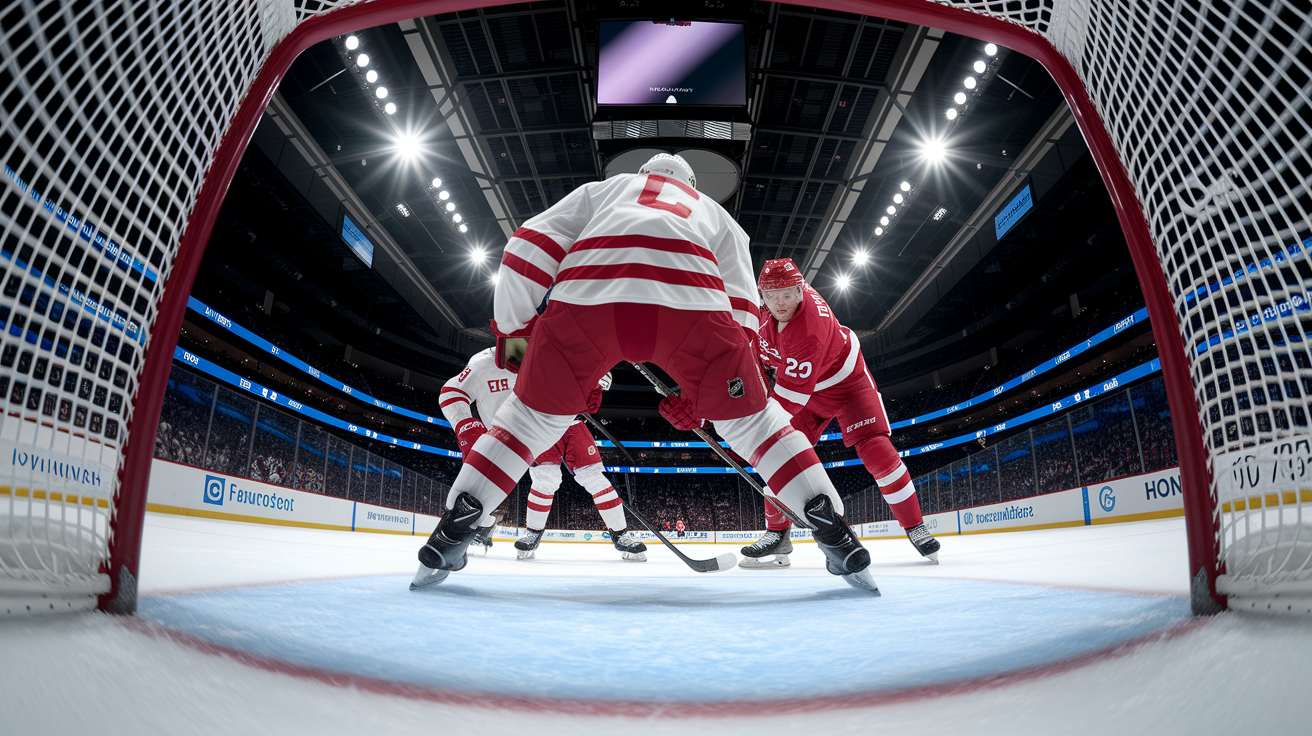
The net and boards are natural barriers that give the puck carrier time and space when used correctly. Behind the net is one of the safest places to control the puck because defenders can’t approach from all angles at once. A quick shift of direction leaves them chasing. The corner creates a similar shield. The puck carrier pins the puck against the boards with their body between the defender and the puck, using the wall to reduce the defender’s angle of attack. Smart players treat these barriers like a third teammate, using them to slow down pressure and create passing windows.
Puck protection starts with body positioning and stick work. The puck carrier’s hips should face the boards, knees bent, with one skate pinning the puck against the wall if needed. The stick stays on the far side, ready to make a quick spot pass or pull the puck away if the defender lunges. Eyes stay up, scanning for the next rotation and reading where the defenders are moving. If the defense collapses hard, the puck carrier can wrap the puck around the net or feed it back against the grain. But only if they see the play developing before contact arrives.
Key techniques for puck control during cycles:
Keep your body between the puck and the nearest defender at all times.
Use a wide stance and low center of gravity to absorb contact and protect balance.
Pin the puck to the boards with your skate blade when you need an extra second to scan.
Keep your stick blade on the far side so you can make a spot pass in one quick motion.
Use head fakes and shoulder drops to sell a direction before reversing or passing.
Integrating Defensemen Into the Offensive Zone Cycle
Defensemen become part of the cycle by activating from the point or rotating into half-wall support when forwards pull low. The simplest integration is a high cycle where the defenseman skates hard toward the boards and receives a drop pass from the puck-carrying forward, then either shoots, passes cross-ice, or feeds the half-wall. The risk is always the same. If the defenseman activates at the wrong time and the puck turns over, the other team gets an odd-man rush the other way. Timing and reading the play are everything.
Good defensemen watch the puck carrier’s body language and the positioning of the opposing forwards before they move. If the puck carrier is under heavy pressure and can’t make a clean pass, the defenseman holds the blue line and stays ready to retreat. If the puck carrier has time and the opposing defenseman is pinching, that’s the activation window. The forward leaves the puck and drives a defender away. The defenseman picks it up with speed. The play opens up for a shot or a pass to the far side.
Point support also means understanding when to stay home. If the cycle is working and the puck is moving cleanly low, the defenseman’s job is to protect the blue line, cut off clearing attempts, and be ready to reset pucks that pop out high. Pinching on every rotation creates too much risk. The best defensemen read four things before they activate: puck carrier’s body position, support forward’s location, opposing forwards’ pressure angle, and the status of their defensive partner.
Reads defensemen should make before activating into the cycle:
Puck carrier has control. If the forward is battling for the puck or about to lose it, stay at the point.
Support forward is in position. Someone needs to cover the blue line if you activate.
Opposing forwards are committed low. If they’re chasing the puck deep, the blue line is safe.
Your partner is ready to rotate. The far-side defenseman shifts middle to cover breakouts if the puck turns over.
Power Play Cycling Tactics to Extend Offensive Pressure
Power play cycles are more deliberate and structured than even-strength cycles because the extra skater creates more time and space. The most effective setup uses a low-to-high cycle that pulls the penalty kill low, then moves the puck up to the blue line to create shooting and passing lanes at the point. One forward stays planted at the net to screen and create chaos. One or two forwards work the half-wall and corner. The defensemen hold the blue line ready to shoot or reset. The cycle continues until a lane opens to the net or a one-timer becomes available.
The biggest difference on the power play is patience and the use of net-front traffic. Even-strength cycles need to attack quickly before the defense resets. Power play cycles can afford to work the puck three or four times if it means drawing all four penalty killers below the dots. Once the kill collapses, a quick high cycle or cross-ice pass finds open ice at the point or on the weak side. The defenseman can walk into a shot or make a pass to a wide-open forward. The net-front forward’s job is to make the goalie’s job harder. Screening, tipping, and occupying a defender so the shooting lane stays cleaner.
| Power Play Situation | Ideal Cycle Type | Key Advantage |
|---|---|---|
| 5-on-4, aggressive box | Low cycle to pull defenders, then quick high cycle to point | Collapses the box, creates open point shots and cross-ice passes |
| 5-on-4, passive triangle | Reverse cycle and overload one side | Forces the kill to shift and opens backside shooting lanes |
| 5-on-3 | Methodical low-to-high with net presence and constant puck movement | Creates multiple high-percentage looks per cycle with time to reset |
| 4-on-3 (offensive team short) | Quick low cycle with immediate attack reads | Possession buys time and prevents icing or turnovers under pressure |
| Umbrella vs. aggressive pressure | High cycle from half-wall to point with D-to-D options | Puck moves faster than penalty killers can close gaps |
Drills That Build Cycling Skills and Offensive Zone Possession

The best cycling drills start simple and build pressure gradually. Coaches should begin with no defenders so players can learn rotation timing and puck-handling mechanics. Then add passive defenders who mirror movement without taking the puck. Finally move to live competition where players must execute under real pressure. The progression teaches players to see the play, make the right read, and execute the pass or shot before the window closes. Repetition at each level builds confidence and muscle memory that carries into games.
Two foundational drills cover the core mechanics. The 3-Man Cycle places three forwards in one corner with a puck and has them rotate the puck back down the boards in a continuous cycle. On the coach’s signal (a whistle, shout, or hand clap), the puck carrier makes a pass to the net-front forward for an immediate shot. The drill can start with no defenders, then add one passive defender, then two active defenders to create game-like conditions. Players learn to time their rotations, protect the puck, and recognize when to break the cycle for a scoring chance. The Down Wall Cycle uses two lines near the blue line. The middle line shoots on net, retrieves the puck in the corner, and the boards-line skates down the wall to receive a cycle pass from the first forward, who then drives to the net for a return feed and another shot. This drill teaches support timing, puck exchanges under movement, and net-front awareness in one quick sequence.
Coaches should build practice sessions around three to four cycling progressions per week, running each drill for eight to twelve reps across three or four sets. A typical station lasts ten to fifteen minutes, with players rotating through different roles. Low forward, high forward, net-front, and defenseman. Video review after practice helps players see their spacing, timing, and reads from an outside perspective, especially when they miss a lane or fail to attack when the opportunity is there.
3-Man Cycle Drill
Three forwards start in the corner with one puck. They cycle the puck along the boards, rotating low to high and maintaining constant movement. On the coach’s signal, the puck carrier makes a pass to the net-front forward for a shot. Add one defender to start, then two as players improve their reads and puck protection.
Down Wall Cycle Drill
Set up two lines near the blue line, one at the middle and one along the boards. The middle-line player shoots, then skates to the corner to collect the puck. The boards-line player skates down the wall and receives a cycle pass from the first forward, who then drives to the net for a return pass and shot. This drill reinforces timing, exchanges, and net-front finishing.
Coaching cues to reinforce during cycling drills:
“Keep moving. The cycle dies when you stop.”
“Leave the spot before the pass arrives, force defenders to chase.”
“Head up, read the defense before you pass.”
“Net-front presence every cycle. Someone at the crease.”
“Protect the puck with your body, stick on the far side.”
“When the lane opens, attack it. Don’t send it back to the wall.”
Common Cycling Mistakes and How to Correct Them
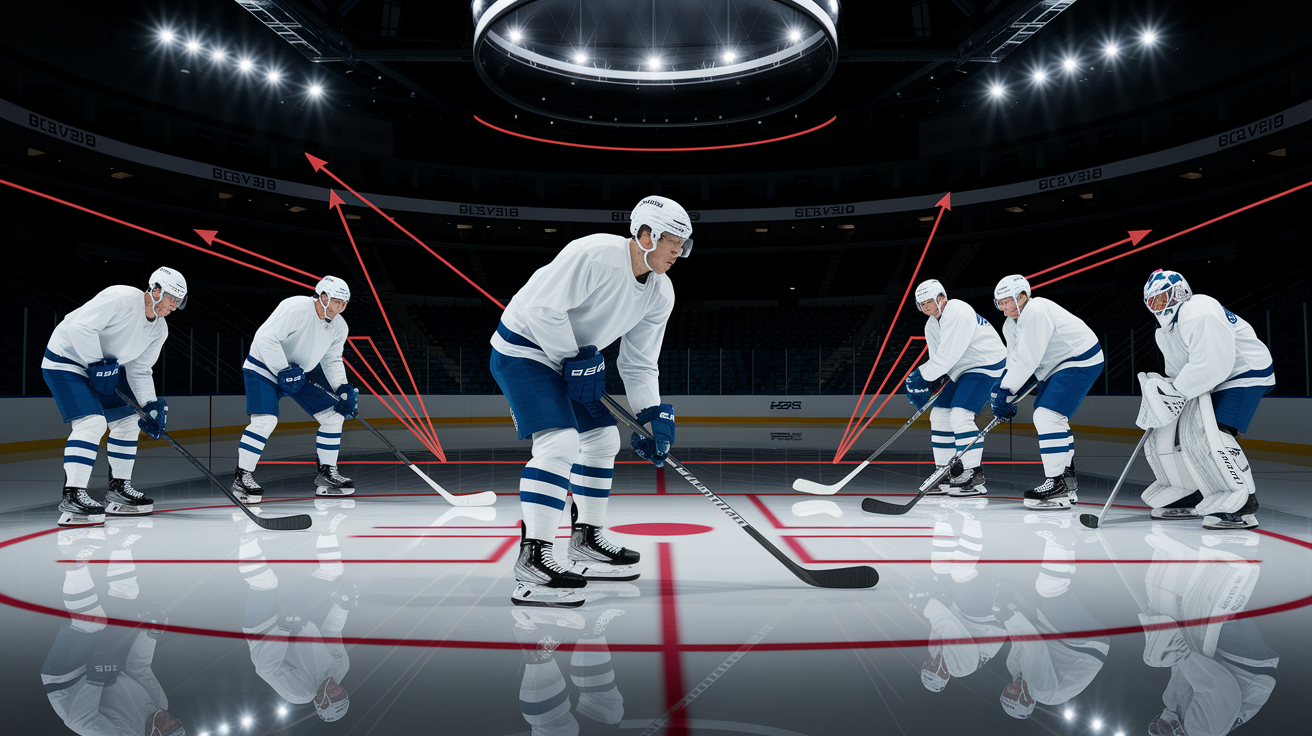
The most common mistake is cycling without purpose. Players learn the rotation pattern and just keep moving the puck around the boards even when a clear lane to the net opens up. The cycle becomes the goal instead of the tool, and scoring chances disappear. Coaches need to stop play immediately when this happens and ask the player, “Did you see the lane? Why didn’t you attack it?” The correction is simple. If the net-front forward has separation or a passing lane cracks open, take it. Every cycle sequence should end with an intentional scoring action, not another board pass.
Predictable puck movement is the second biggest problem. If the puck always moves the same direction at the same speed, defenders can jump the pattern and force turnovers. Players need to change pace, use reverses, and mix in quick stops or fakes to keep defenders guessing. A good cycle looks random to the defense even though the forwards know exactly where they’re going next. Adding one or two reverse passes per cycle or a sudden acceleration off the wall creates enough chaos to break down coverage.
Standing still. Players stop moving and become easy to cover. Correction: constant rotation, never plant your feet during a cycle.
Poor spacing. Support players cluster too close to the puck carrier. Correction: maintain eight to twelve feet of separation to create passing options.
Telegraphing passes. Looking directly at the target before passing. Correction: use peripheral vision and make the pass in one motion off a head fake.
No net-front presence. All three forwards end up on the boards. Correction: assign roles before the drill and hold players accountable for positioning.
Failure to read defenders. Cycling mechanically without watching how the defense reacts. Correction: pause drills and ask players to identify who is open and why before resuming.
When to End the Cycle and Attack the Net
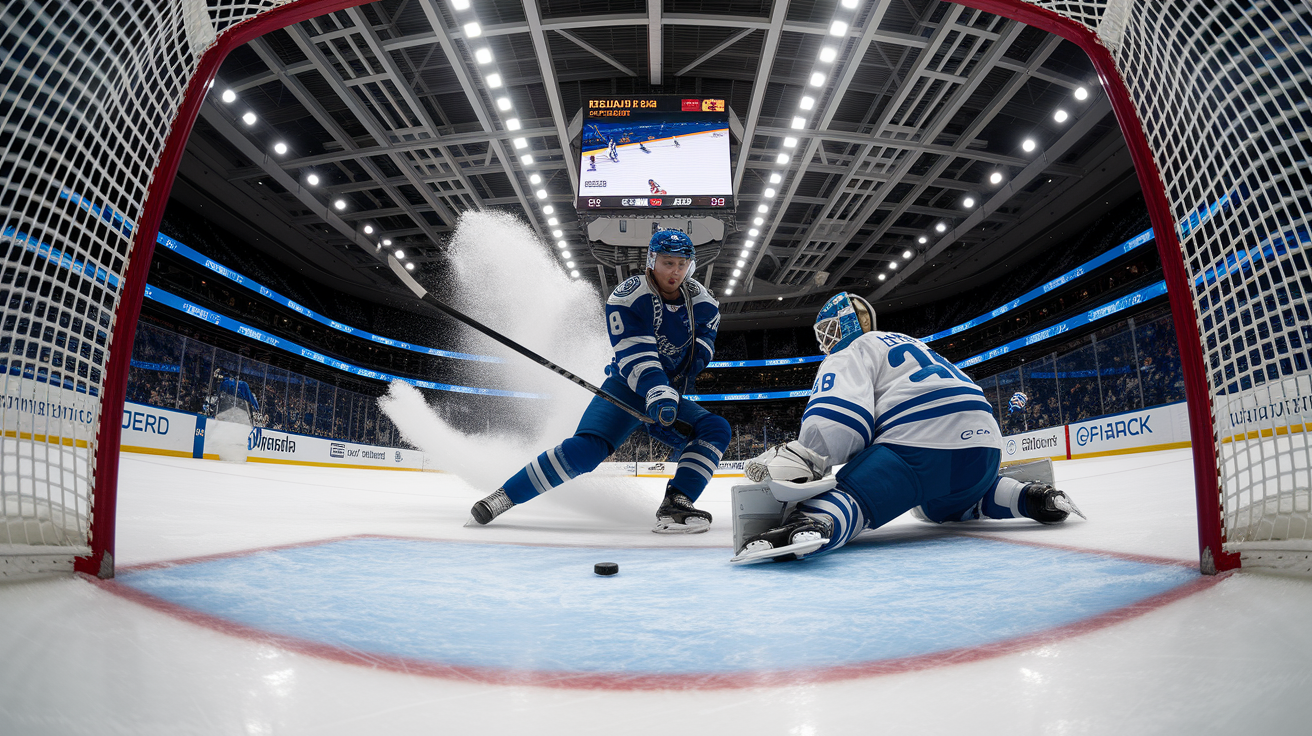
The cycle ends when a high-percentage scoring chance appears, not when the puck has moved a certain number of times around the boards. The most common trigger is a net-front forward getting separation from their defender. Even one step of space is enough for a quick feed and a redirected shot. Another trigger is a lane opening cross-ice or through the middle when defenders over-commit to the boards. If the low forward can hit a streaking forward cutting to the far post or a defenseman walking into the high slot, that pass needs to happen immediately. Waiting for a “better” opportunity usually means the window closes and the defense resets.
Shot timing depends on the goalie’s positioning and the location of rebounds. A point shot with a net-front screen forces the goalie to move and creates deflection opportunities, even if the initial shot isn’t dangerous. Low shots off the cycle generate rebounds that can be collected and jammed in before the goalie recovers. The net-front forward needs to read the trajectory of every shot and anticipate where the puck will end up. Corner shots rebound to the far post, point shots drop in the slot, and wrap-around attempts often pop out to the high slot. Positioning for the rebound before the shot is released turns low-percentage chances into goals.
Support sequencing after the shot matters as much as the shot itself. If the puck goes wide or the goalie makes a save, the nearest forward should be collapsing on the net for the rebound while the high forward rotates to support a second cycle or outlet pass. The defensemen hold the blue line to prevent clears and reset loose pucks. Teams that crash the net with purpose and maintain their structure after the shot generate two or three scoring chances per cycle instead of one. The shift doesn’t end when the puck hits the goalie. It ends when the puck leaves the zone or goes in the net.
Final Words
In the corner, forwards rotate, feed, and pull defenders out of position, cycling is about creating lanes and real shots, not endless puck churn.
We covered why spacing and timing matter, movement patterns, low, high, and reverse options, using the net, involving defensemen, power-play tweaks, drills, and quick fixes for common mistakes.
Practice those cycling techniques for offensive zone control, focus on net presence and the right moment to attack, and you’ll spend more time with the puck where goals get made. Keep at it. Progress shows up shift by shift.
FAQ
Q: What is offensive zone cycling and why use it?
A: Offensive zone cycling is coordinated movement along the boards and net that creates confusion, opens passing lanes, and produces higher-quality shots, rebounds, and traffic in front of the goalie.
Q: Why do spacing and timing matter in cycling?
A: Spacing and timing matter because they protect the puck, make passing lanes, and ensure a forward arrives as a lane opens, preventing turnovers and endless, low-value cycling shifts.
Q: How do players read defensive alignment to decide when to attack?
A: Reading defensive alignment means watching gaps, which defenders slide, and where coverage collapses; attack when a defender is late, a lane opens, or a net-front screen creates a quality chance.
Q: What movement patterns improve cycling flow?
A: Movement patterns like high-to-low rotations, wall walks, and support triangles keep puck support, shift defenders, and create unpredictability so passes, shots, and net-front opportunities appear.
Q: What are low, high, and reverse cycling variations and when should teams use them?
A: Low cycles use corner space for puck protection; high cycles add a defenseman at the point for options; reverse cycles use misdirection to displace defenders—pick the variation based on space, pressure, and shot chances.
Q: How should players use the net and corners to maintain possession during a cycle?
A: Using the net and corners means shielding the puck with your body, initiating plays behind the net, and forcing defenders around physical barriers to buy time and open lanes for passes or plays to the front.
Q: How should defensemen be integrated into the offensive zone cycle?
A: Defensemen should activate from the point, pinch when lanes open, provide blue-line shots and read puck movement to support or bail out, with timing that avoids creating odd-man rushes against.
Q: How should cycling change on the power play?
A: Cycling on the power play should use low-to-high depth, deliberate puck movement, and set-ups that open pockets at the blue line to exploit penalty-kill shifts and create clearer shooting lanes.
Q: What drills build cycling skills and how should coaches progress them?
A: Drills like the 3-Man Cycle, Down Wall Cycle, and small-area possession drills should progress from low-pressure to game-speed, focusing on timing, net presence, and reading defenders.
Q: What common cycling mistakes do teams make and how do you fix them?
A: Common mistakes are endless cycling without attacking, poor spacing, predictable passing, and weak net presence; fix them with timing drills, enforced net-front roles, spacing cues, and decision-making thresholds.
Q: When should a team end the cycle and attack the net?
A: You should end the cycle and attack the net when a defensive breakdown, open lane, goalie screen, or rebound chance appears—take a decisive shot, tip, or hard pass with net-front support.