

You don’t need a neutral-zone turnover to get a 2-on-1.
Most teams hunt odd-man chances up ice, but the real edge comes from inside the offensive zone.
This post shows how counter-attack timing—quick puck retrieval after rebounds, smart defenseman pinches, short 2–3 touch cycles, and late-trailer entries—creates 2-on-1, 3-on-2, even 4-on-3 chances in the 0–3 second window before defenders reset.
Do this and you attack before they can regroup, force cleaner shots, and turn sustained pressure into quick scoring chances.
Core Offensive-Zone Methods for Generating Odd-Man Rushes

The most effective odd-man rushes don’t always start with neutral-zone turnovers. Teams that know how to create 2-on-1, 3-on-2, and 4-on-3 opportunities from inside the offensive zone get a real advantage because they’re attacking before opponents can regroup. It’s about quick puck retrieval after failed attempts, pinning defenders in bad spots, and exploiting that 0–3 second window when defensive structure falls apart. When a rebound pops off the goalie or a rim doesn’t clear, you’ve got maybe three seconds to grab it and make a play before defenders reset. Miss that window and the odd-man chance is gone.
Strategic defenseman pinches, done at the right depth and moment, force opponents into coverage mistakes that open interior lanes. A defenseman closing a 5–10 foot gap from the point to the half-wall can cut off an outlet pass and trap a defender below the dots. That creates numerical superiority higher in the zone. Short cycle patterns using just 2–3 quick touches pull opponents down low, then a reversal finds a weak-side winger with open ice. The whole thing can unfold in under ten seconds if players read the triggers right.
Late-trailer timing separates good offensive-zone play from great odd-man creation. A forward arriving 0.5–1.5 seconds behind the puck movement stays unmarked because defenders commit to the initial carrier. Weak-side overloads held for 3–6 seconds force defensive slides that open cross-ice seams. Turnover triggers become instant counterattack fuel. We’re talking loose pucks in corners, failed net-front screens, or defensemen caught deep after pinches. Understanding these things transforms sustained offensive-zone pressure into quality scoring chances. For more context on traditional odd-man rush principles, see Odd-Man Rushes and Breakaways.
Top 5 tactical triggers that produce odd-man rushes from sustained offensive-zone play:
- Immediate puck retrieval (0–3 sec after rebound or rim). Regaining possession before defenders reorganize preserves attack momentum and catches opponents mid-transition.
- Defenseman pinch when puck is below the dots and support is visible. Closes the gap and traps an opponent, creating a +1 advantage higher in the zone.
- Quick 2–3 touch cycles to draw defenders low, then reverse. Pulls coverage down and opens weak-side lanes for cross-ice breaks.
- Late trailer arriving 0.5–1.5 seconds behind the play. Enters unmarked into the high slot, converting overloads into 3-on-2 or secondary 2-on-1 opportunities.
- Weak-side overload held for 3–6 seconds to force a defensive slide. Displaces defenders and creates open seams for quick passes and odd-man entries across the middle.
Pinching Mechanics and Blue-Line Control for Odd-Man Creation
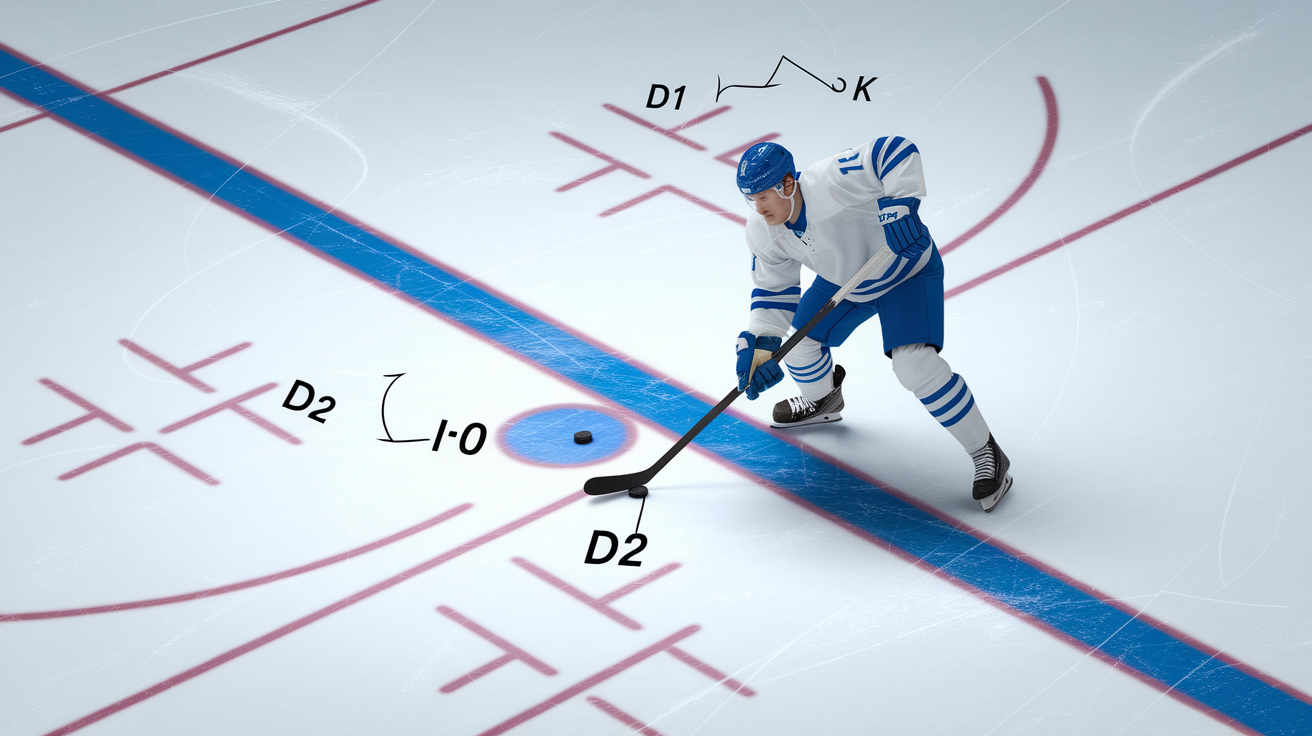
Disciplined pinching is the foundation of offensive-zone odd-man creation. A defenseman who reads puck support, commits at the right moment, and uses body angle to seal the wall can turn a contested cycle into a clean odd-man break in under five seconds. The effective pinch distance is 4–10 feet above the offensive blue line. Deeper pinches extending 10–15 feet into the zone increase the risk of breakouts if retrieval fails or if the opponent wins a quick wall battle. The decision to pinch has to happen within a 1–2 second window: if the puck is below the dots and a trailer or support forward is visible, the pinch is on. If not, hold the line.
Body positioning during the pinch matters. The pinching defenseman should angle toward the boards to cut off the opponent’s escape route, forcing them to either give up the puck or make a risky play under pressure. The partner defenseman has to immediately shift to mid-ice coverage to protect against turnovers. This D1/D2 rotation, where the activating defenseman pushes the non-activating partner into fallback position, is non-negotiable. Without it, a failed pinch leaves the slot exposed and creates an odd-man rush the other way. Coaches should limit high-risk pinches to one per entry unless backside cover is confirmed and communicated.
Top 5 pinch cues coaches can teach:
- Puck is below the dots and the carrier is facing the boards or engaged in a battle.
- A trailer forward is visible in the high slot or weak-side lane, providing an outlet option.
- The opponent’s support forward is flat-footed or late to arrive, leaving them isolated.
- The puck carrier has just received a rim or rebound and hasn’t yet gathered full control (0–2 sec window).
- The goalie’s sight line is obstructed by a net-front screen, reducing their ability to make a clean outlet pass.
Cycling Patterns That Force Defensive Overcommitment
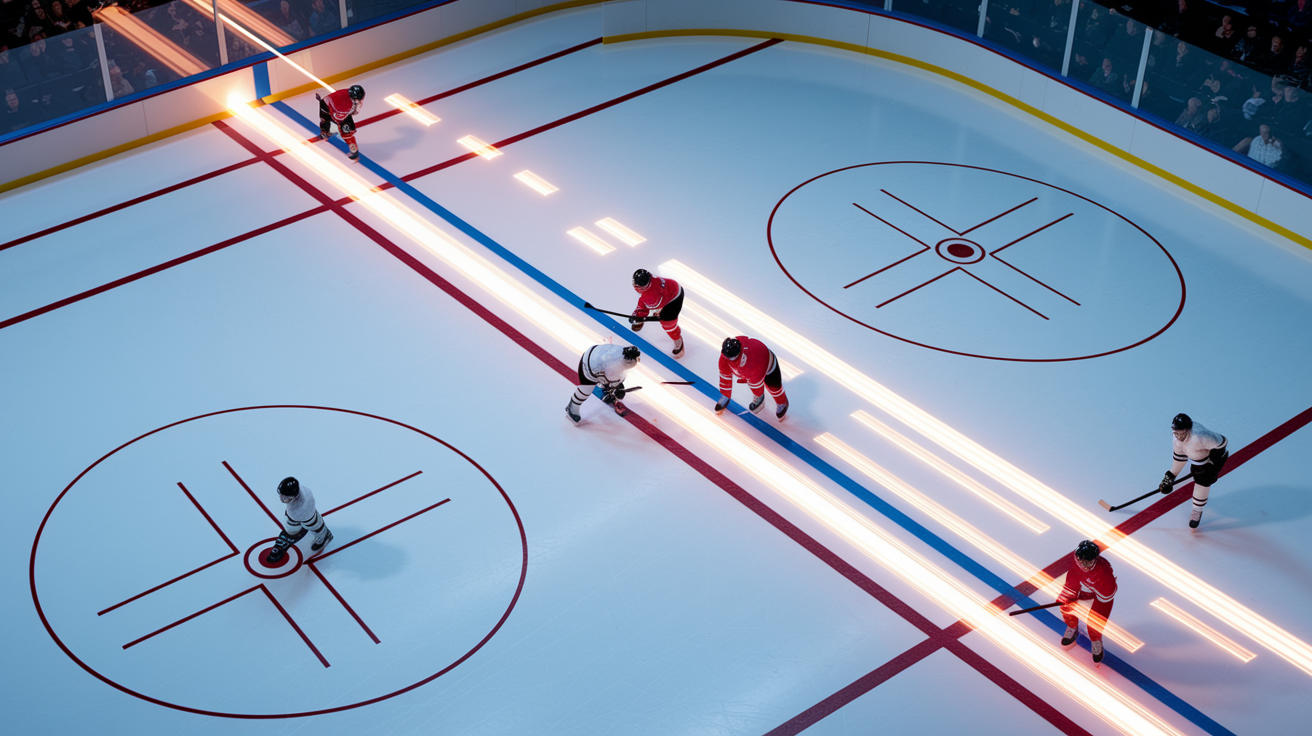
Short, rapid cycles are designed to manipulate defenders, not to hold the puck indefinitely. The most effective cycles use 2–3 touches along the wall to draw one or two defenders below the goal line, creating space higher in the zone. Common sequence: winger receives the puck on the half-wall, makes a quick give-and-go with the center, then the center dishes back to the point or reverses to the weak side. Each touch should happen in one to two seconds. After 3–4 rotations, defensive structure starts to break down and cross-ice seams open up. The goal isn’t to cycle until the defense collapses. It’s to cycle just enough to displace defenders and then strike.
North-south cycles move the puck vertically along the boards, pulling defenders up and down the wall. East-west cycles reverse the puck across the zone, forcing defenders to slide and chase. Both serve the same purpose: creating a numbers mismatch by occupying one or two defenders in a low area while a weak-side winger slips into open ice 5–15 feet from the nearest defender. The timing of the reversal is everything. Too early and defenders haven’t committed. Too late and they’ve already reset. The sweet spot is 4–6 seconds after the cycle starts, right when defenders are moving low and the weak-side winger is accelerating into the seam.
Late-trailer routes should sync with cycle behavior. As the puck reverses from strong side to weak side, the trailer times their arrival to hit the high slot or middle lane 0.5–1.5 seconds after the pass. This delay keeps them unmarked. Quick-strike weak-side attacks, where the reversal and the trailer arrival happen almost simultaneously, turn 3-on-3 situations into clean 3-on-2 or 2-on-1 chances across the slot. The entire sequence from first cycle touch to shot can run in 8–12 seconds if the reads are sharp.
Late-Trailer Timing and Middle-Lane Support
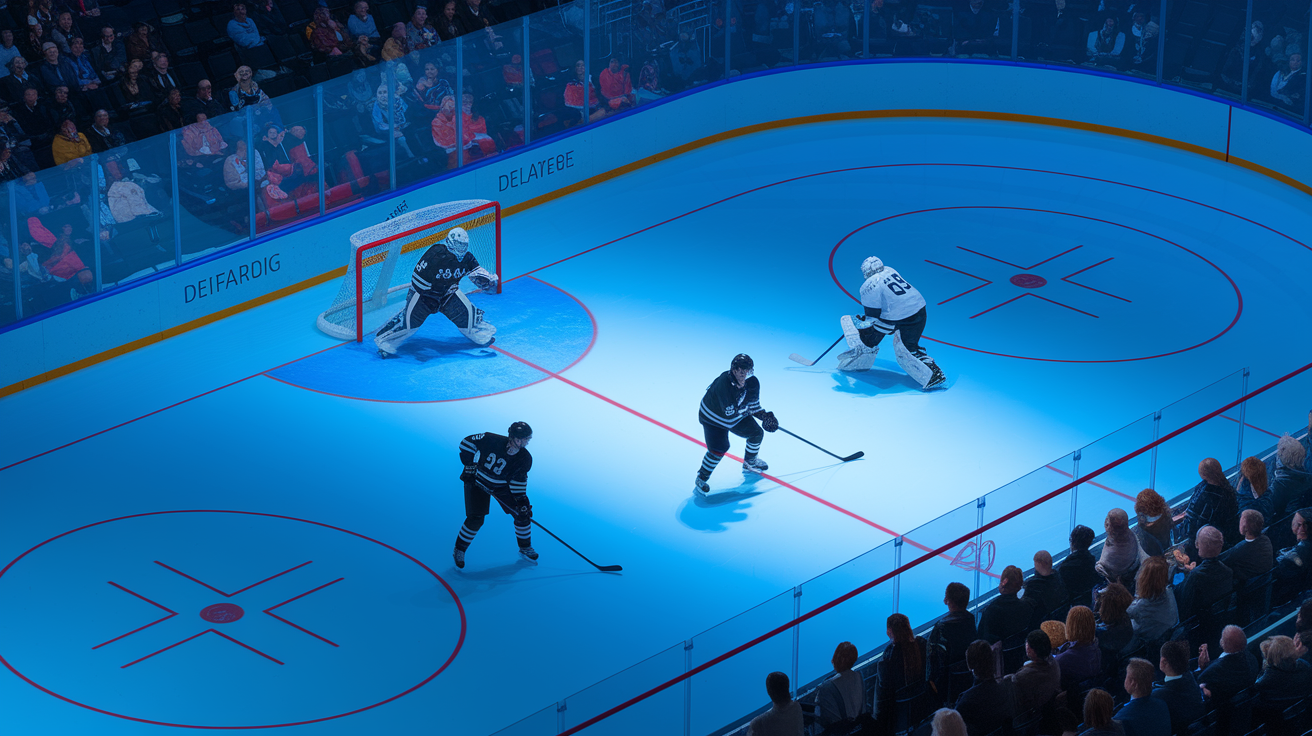
The late trailer is the unmarked option that converts overloads into odd-man scoring chances. Timing is the difference between a covered player and a wide-open slot shot. The trailer should arrive 0.5–1.5 seconds behind the puck movement, entering the play at 60–80 percent of full stride. Arriving too early means getting picked up by a defender who hasn’t committed to the puck. Arriving too late means the window has closed and the defense has reset. The best trailers read the cycle reversals and puck movement, then time their approach so they’re accelerating into the high slot just as the pass arrives.
Cycle reversals create natural timing windows. When the puck moves from strong side to weak side, defenders shift their coverage and often lose track of the trailing forward. Centers and weak-side wingers exploit this by delaying their entry, staying behind the play until the reversal happens, then attacking the middle lane at speed. You’ll see this repeatedly in film: a winger cycles low, the center holds at the high slot, the puck reverses, and the center attacks the seam between the two defenders as the pass arrives. The result is a clean look from the slot or a quick give-and-go that generates a 3-on-2 across the goalmouth.
| Trailer Role | Timing Window | Primary Lane | Expected Outcome |
|---|---|---|---|
| Center (high slot) | 0.5–1.5 sec after reversal | Middle lane between defenders | 3-on-2 or high-slot shot |
| Weak-side winger | 1.0–2.0 sec after strong-side cycle | Weak-side half-wall to slot | 2-on-1 cross-ice or secondary option |
| Defenseman (late join) | 1.0–2.0 sec after pinch or puck reversal | Mid-ice behind forwards | Late shooting option or trailer feed |
| Backside forward (delayed) | 1.5–2.5 sec after initial entry | Back-door or weak-side seam | Back-door tap-in or secondary rush |
Weak-Side Overloads and Seam Exploitation

Weak-side overloads work by stacking two or three players on the puck-side wall, forcing defenders to commit, then quickly attacking the vacated weak side. The overload should be held for 3–6 seconds. Long enough to pull defenders out of position but not so long that they can rotate and recover. Typical spacing puts the puck carrier on the half-wall, a support forward below the goal line, and a third player at the top of the circle. The defenders see three attackers on one side and slide to cover, leaving the weak-side winger or trailing defenseman in open ice 5–15 feet from the nearest opponent.
The payoff comes when the puck reverses. A quick rim, cross-ice pass, or chip to the weak side finds a player with time and space to attack the middle lane. Defensive slides open seams because defenders are moving laterally and can’t pivot quickly enough to close the gap. The weak-side winger should already be moving toward the net as the puck reverses, converting the 3–6 second overload into a 2-on-1 or 3-on-2 rush across the slot. The spacing has to be intentional. If the weak-side player is too close, defenders can cover both sides. Too far and the pass becomes low-percentage.
Film shows how overloads convert into quick strikes. A team cycles three players low on the right side, the left defenseman pinches slightly, and the left winger holds at the top of the left circle. The defense collapses to the puck side. The puck carrier rims it hard around the boards to the weak side. The left winger attacks the seam at speed, receives the pass in stride, and creates a 2-on-1 against a sliding defender and a goalie who’s still adjusting. The whole thing runs in under ten seconds. The displacement distance and the timing of the reversal make it work.
Turnover-to-Transition Triggers Inside the Offensive Zone

The best odd-man rushes from the offensive zone start within 0–2 seconds of a turnover. When a puck squirts loose in the corner, bounces off a defender’s skate, or pops free after a failed net-front attempt, the window to attack is immediate and narrow. Recognition cues for the puck carrier and trailer are simple: if you see a loose puck and your team is in better position to get it, attack the outlet before defenders can organize. Immediate outlet passes to a trailer or open winger increase odd-man likelihood by 40–60 percent compared to delayed decisions.
Common turnover types that produce automatic attack opportunities include rebounds off the goalie that land in the slot, failed screens where the puck deflects to open ice, and defensemen caught deep after a pinch who can’t recover in time. Each of these creates a brief moment of chaos where the defending team is scrambling and the attacking team has numbers. The puck carrier’s job is to recognize the trigger and make the simplest, fastest play. Usually a direct pass to the unmarked player or a quick chip into space where a teammate can collect it at speed.
Top 6 turnover-to-transition triggers:
- Loose puck in the corner after a failed rim or dump attempt.
- Rebound off the goalie that lands in the high slot or weak-side circle.
- Failed net-front screen where the puck deflects to open ice and defenders are caught watching.
- Defenseman stuck deep after a pinch, leaving the middle lane exposed.
- Opponent’s outlet pass that’s tipped or intercepted near the blue line.
- Puck reversal below the dots that catches the weak-side defense flat-footed.
Defense Activation Patterns (Back-Side Option, Pass-and-Go, Mid-Ice 2-on-1)

Defensemen can join the attack in structured ways that create odd-man rushes without sacrificing defensive coverage. Three activation patterns work well: Back-Side Option, Pass-and-Go, and Mid-Ice 2-on-1. Each requires quality puck possession and clear mid-ice coverage from the non-activating defenseman. When executed right, these plays add a late passing option, force opponents to cover an extra player, and often give the puck carrier more time to make decisions.
Back-Side Option
The Back-Side Option activates the weak-side defenseman as a late jumping threat. When the puck is on the strong side and the play is cycling low, the weak-side defenseman (D2) reads the coverage and jumps up the back side, attacking the open lane while defenders are occupied with the puck. The strong-side defenseman (D1) has to immediately move to mid-ice as cover, ready to retreat if the puck is turned over. The timing cue for D2 is straightforward: if the puck carrier has control and at least one support forward is visible, D2 can jump. If possession is contested or the puck is loose, D2 stays back. The Back-Side Option works best when the weak-side winger has already displaced defenders by moving low, creating a clear lane for D2 to attack.
Pass-and-Go
Pass-and-Go activates the strong-side defenseman (D1) immediately after making a pass. D1 delivers the puck to a forward on the wall or in the corner, then immediately fills an inside lane, joining the attack as a third or fourth option. The weak-side defenseman (D2) stays in mid-ice behind the play, ready to cover any turnover. The activation window is tight. D1 has to commit within one second of making the pass, or the opportunity closes. This pattern works when the receiving forward can protect the puck and the defense is committed low, leaving the inside lane open. The payoff is a 3-on-2 or 4-on-3 situation with D1 arriving late and unmarked.
Mid-Ice Two-on-One
The Mid-Ice 2-on-1 pattern sends the opposite defenseman through the middle to support a low puck carrier, creating a numerical advantage down the center of the ice. When the puck is on the wall and the carrier is under pressure, the far-side defenseman (D1) moves through mid-ice to become a second option, either for a quick give-and-go or as a trailer for a centering pass. The other defenseman (D2) remains back in mid-ice to cover turnovers. This pattern generates odd-man rushes by overloading the middle and forcing defenders to choose between covering the puck carrier or the supporting defenseman. The decision has to be made in under two seconds, and the puck carrier has to recognize the support and deliver the pass.
| Pattern | Main Trigger | Required Cover |
|---|---|---|
| Back-Side Option | Weak-side winger displaces low; puck carrier has control | D1 moves to mid-ice immediately |
| Pass-and-Go | D1 makes pass to wall or corner; inside lane is open | D2 stays in mid-ice behind play |
| Mid-Ice 2-on-1 | Puck carrier under pressure low; D1 sees open middle lane | D2 remains back in mid-ice to cover turnovers |
Practical Drills for Training Offensive-Zone Odd-Man Rushes
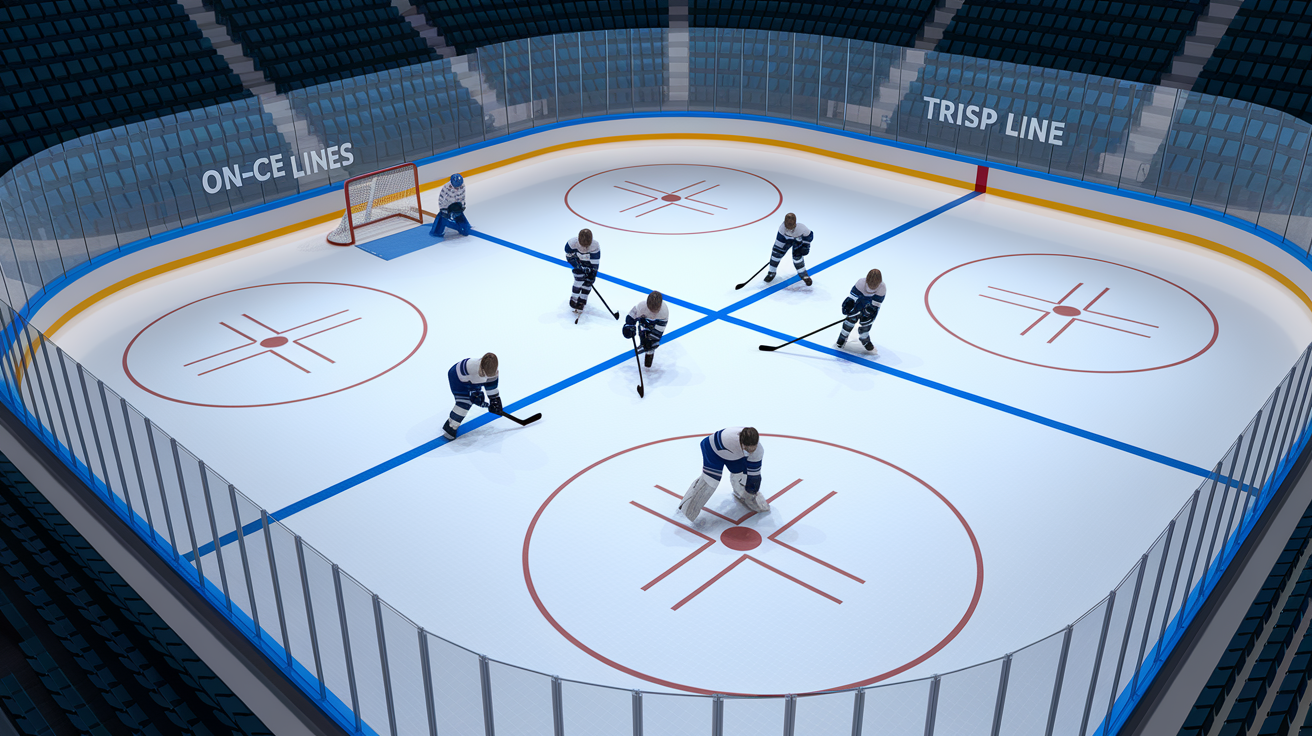
Drilling odd-man creation from the offensive zone requires controlled repetition with clear timing cues and measurable outcomes. Three core drills build the recognition, timing, and execution skills needed to generate 2-on-1, 3-on-2, and 4-on-3 opportunities in live play. Each drill should be run with game-speed intensity, timed sequences, and immediate coach feedback on retrieval speed, pinch timing, and trailer arrival.
Corner Retrieval to 3-on-2 puts six skaters and one goalie in a confined offensive-zone setup. The drill starts with a loose puck in the corner after a simulated rebound. One forward battles to retrieve within 0–3 seconds, a defenseman pinches to support, and a trailer times a run into the high slot. The sequence length is 10–12 seconds, and each group runs 10 reps. Coaches measure controlled retrieval rate (target above 60 percent) and rush entry success (target above 40 percent). The drill teaches immediate puck recognition, support timing, and how to convert a turnover into a clean odd-man chance before defenders reset.
Pinch and Trailer Rotation uses seven skaters starting at the half-wall. The drill begins with a puck on the boards and a defenseman at the point. On predetermined cues (puck below the dots or trailer visible), the defenseman pinches to seal the wall. The trailer times their arrival 0.5–1.5 seconds behind the puck movement and attacks the middle lane. The back defenseman shifts to mid-ice coverage. Run 8–10 reps per group, alternating starting sides. Focus on the timing of the trailer delay and gap control for the back defenseman. Coaches watch for premature pinches and late trailer arrivals, correcting in real time.
Weak-Side Overload and Reverse deploys nine skaters in a full-ice offensive-zone station. The setup starts with a strong-side overload: two or three players cycling on one wall. After 2–3 quick touches (3–6 seconds), the puck carrier rims the puck to the weak side, where a winger has timed their movement to attack the open seam. The target is to create a 2-on-1 on the weak-side inside slot within 4–6 seconds of the rim. Run 6–8 reps, measuring how often the overload forces a defensive slide and how quickly the weak-side attack develops. This drill builds spatial awareness, timing on reversals, and the ability to read when defenders have committed. For more background on building these skills within traditional odd-man-rush frameworks, see Odd-Man Rushes and Breakaways.
Risk-Management Rules for Safe Odd-Man Creation

Aggressive pinching and trailer activation create odd-man rushes, but only if the team manages the turnover risk. First rule: never have more than one player leave the high slot without a designated “safety” in mid-ice coverage. If the pinching defenseman is caught deep and the trailer is also committed, a turnover becomes an automatic odd-man rush the other way. Coaches should assign a “last-back” player on every entry and make that assignment non-negotiable.
Pinch limits are the second layer of risk control. Limit high-risk pinches to a maximum of two attempts per entry. After two failed pins, reset to avoid over-committing and giving up dangerous breakouts. If a defenseman is isolated beyond 10–12 feet and possession is contested, the immediate fallback is a rim to the point or a quick back pass to the non-activating defenseman. The nearest forward has to provide backpressure within 1–2 seconds to slow down the opponent’s transition and allow the defense to recover.
Top 5 risk-management guidelines:
- Assign a “safety” player (usually the non-activating defenseman) to stay in mid-ice on every entry.
- Limit pinches to two attempts per entry; reset after two failures to avoid overexposure.
- Activate only when puck possession quality is high (carrier has control, support is visible, no immediate pressure).
- Use immediate fallback options if the pinch fails: rim the puck, quick back pass, or controlled dump-out to neutral zone.
- Prefer aggressive pinches when the opponent’s cycle ties up 1–2 players or when the goalie’s sight line is obstructed, reducing clean outlet options.
Using Analytics and Film Study to Improve Odd-Man Rush Success

Tracking the right metrics turns odd-man creation from instinct into a repeatable system. The most important numbers are odd-man entry rate (target above 30 percent of offensive-zone possessions), controlled retrieval success (target above 60 percent), and goals per odd-man sequence (benchmark of 10 percent or higher for advanced teams). These metrics tell coaches whether the team is generating enough opportunities, whether puck retrieval is clean, and whether the quality of the chances is high enough to convert.
Film study should focus on four areas: late-trailer usage, pinch timing, weak-side seam development, and turnover-to-transition speed. Coaches should clip every odd-man rush generated from the offensive zone and tag it by trigger type: pinch, cycle reversal, turnover, or defense activation. Review sessions should compare successful sequences to failed attempts, identifying the timing differences and decision errors. Simple overhead diagrams with labeled positions (A1, A2, A3, D1, D2) and arrowed timing ticks (0, 1–3, 4–6 seconds) help players visualize the reads and understand where they were early, late, or out of position.
Expected goals models can quantify the value of odd-man rushes from the offensive zone. A 3-on-2 from the slot typically carries an expected goal value of 0.25 to 0.40, compared to 0.10 to 0.15 for a standard cycle shot. By tracking how many high-value chances the team creates per game and comparing that to league averages, coaches can measure whether their odd-man tactics are working. Zone time and transition events should also be logged: how long the team holds the offensive zone, how many turnovers they force, and how quickly they convert those turnovers into shots.
Top 4 film-study focus points:
- Late-trailer timing: measure arrival delay (target 0.5–1.5 sec) and whether the trailer is marked or unmarked on entry.
- Pinch timing and distance: track how often defensemen pinch when puck is below dots, measure gap closure (target 5–10 ft), and note success rate.
- Weak-side seam development: identify how long overloads are held (target 3–6 sec) and whether reversals create open lanes.
- Turnover-to-transition speed: measure time from loose puck to first outlet pass (target 0–2 sec) and track odd-man conversion rate.
In-Game Adjustments and Bench Management for Generating Odd-Man Rushes
Live game adjustments keep odd-man creation effective when opponents adapt. If the opposing defense is pinching aggressively in the neutral zone, increase pinch frequency to trap them deep and create immediate counterattacks. If they’re playing passive and staying back, shift overload timing to 3–6 seconds and focus on weak-side reversals to pull them out of position. Identifying which opponent defensemen overcommit (those who chase too deep or pinch without support) allows coaches to target specific matchups and exploit poor reads.
Bench-level strategies include using timing slogans to reinforce execution. Common cues like “Get it in 1–3” remind players to retrieve the puck within three seconds, and “Trailer reads the seam” tells late arrivals to time their runs based on puck movement, not on a predetermined route. Line matchups matter: deploying a line with a skilled puck-carrying forward, a fast trailer center, and an activating defenseman increases the odds of generating odd-man chances. Coaches should also track shift-by-shift data: how many odd-man entries each line creates, how many turnovers they concede, and whether the risk-reward balance is favorable.
Top 4 mid-game tactical switches:
- Increase pinch frequency when opponents pinch aggressively in neutral zone. Trap their defensemen deep and create immediate 2-on-1 or 3-on-2 breaks.
- Shift overload timing to 3–6 seconds when opponents play passive. Hold the overload longer to force defensive slides, then attack weak-side seams.
- Target opponent defensemen who overcommit. Identify D who chase too deep or pinch without support, then exploit their positioning with quick reversals.
- Deploy activation-focused lines in favorable matchups. Use lines with skilled carriers, fast trailers, and activating defensemen when facing slower or less-disciplined opponents.
Final Words
In the action, we broke down the exact tools to turn sustained zone possession into quick numbers: fast retrievals, smart pinches, short cycles, late-trailer timing, weak-side overloads, and turnover triggers.
We also covered drill templates, risk-management rules, defense-activation patterns, and how to use film and analytics to measure progress.
Practice the drills, coach the timing, and keep simple rules on pinches and cover.
Keep doing the on-ice reps and film work to sharpen creating odd-man rushes from the offensive zone. More high-quality chances are coming.
FAQ
Q: What are the best drills for odd man rushes?
A: The best drills for odd man rushes are short, high-rep exercises that train quick retrievals, pinches, trailer timing, and weak-side overloads. Try corner-to-3-on-2, pinch-and-trailer rotations, and continuous 3-on-2 sprints.
Q: What is the Gretzky rule?
A: The Gretzky rule is Wayne Gretzky’s famous advice: “skate to where the puck is going to be.” It teaches anticipation, positioning, and timing to create and exploit odd-man and scoring opportunities.
Q: What is an Odd Man Rush?
A: An odd-man rush is an attack where attackers outnumber defenders, like a 2-on-1 or 3-on-2. It forces quick reads, open passing lanes, and higher-quality scoring chances near the net.
Q: Is the number 69 banned in the NHL?
A: The number 69 is not banned in the NHL. Players rarely wear it due to etiquette or team preference, but there is no league rule prohibiting that jersey number.