

Want to handle the puck like your favorite player—or still chasing it in the corner?
This guide shows simple, low-equipment drills youth players and coaches can use tonight to build soft hands, better scanning, and stronger puck protection.
Do 2 to 4 focused segments at practice and 5 to 15 minutes of ball work at home, and you’ll see cleaner touches in 2 to 4 sessions.
Read on for drills, progressions, and what to avoid so practice time actually produces results.
Fast-Start Drills Youth Players Can Use Immediately

You don’t need much. A puck (or ball), a stick, and a few cones or household markers. Players can start tonight at home or in the driveway, and coaches can drop any of these into practice without complex setup. Each drill teaches one core puck control skill and produces visible improvement in 2 to 4 sessions.
Low-equipment, quick-win activities build muscle memory faster than extended explanations because players repeat the same hand motion dozens of times in a short window. A new Mite-level player who stickhandles a tennis ball for five minutes will often see cleaner touches when switching back to a puck the same session. The smaller ball forces precision and quick wrists.
Run 2 to 4 focused puck control segments per week during team practice, and encourage 5 to 15 minutes of off-ice work daily at home. Even a short session before dinner, using a ball on the garage floor, adds up to hundreds of extra touches each week.
-
Obstacle Course – Set 3 to 8 cones or small hurdles in a line. Players stickhandle through at controlled speed, keeping the puck close and their head up.
-
Ball & Puck Switch-Up – Use a tennis ball for 3 to 8 minutes to sharpen hand speed, then switch back to the puck to feel the improved control right away.
-
Mirror Drills – Pair players. One leads with 30 to 60 seconds of stickhandling while the partner mirrors every move to train head-up awareness and quick reactions.
-
Silent Hockey – Run 5 to 10 minutes of practice with no talking. Players must scan and read each other visually, forcing awareness and nonverbal communication.
-
Weighted Stick Practice – Use a slightly heavier stick for brief intervals (30 to 120 seconds per set, 1 to 3 sets) to build wrist strength, then return to a regular stick for clean touches.
-
Target Passing – Tape 2 to 6 marks on the boards or place cones on the ice. Players aim 10 to 20 passes per session to practice accuracy and receiving under pressure.
Fundamentals of Stickhandling Technique for Better Puck Control
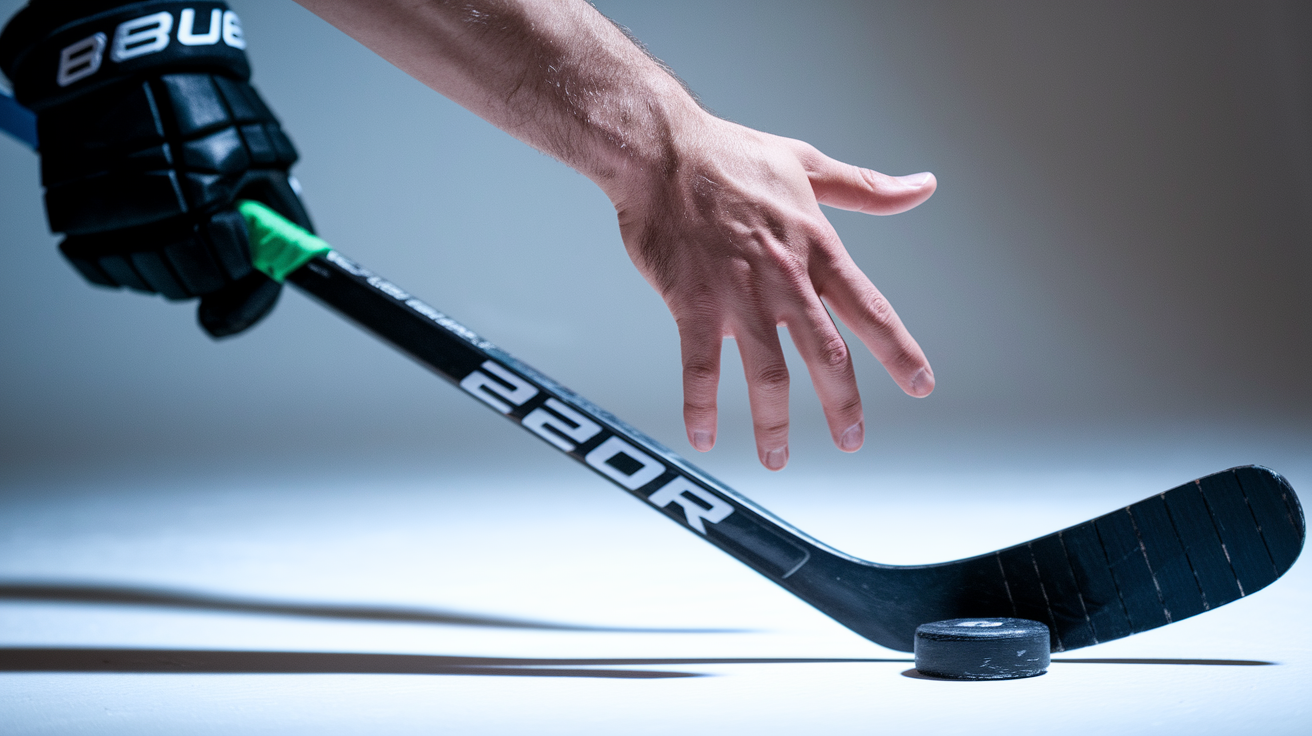
Relaxed wrists and controlled top-hand motion are the foundation of soft hands. The top hand sits at the end of the shaft and guides large movements, pulling the puck side to side or forward and back. The bottom hand provides subtle blade manipulation through gentle wrist rolls and finger pressure. When the bottom hand grips too tightly, the stick loses range of motion and quick touches become choppy.
Smooth stickhandling comes from wrist flexion, not big arm sweeps. Players should feel the motion happening in their forearms and hands rather than their shoulders.
Body position influences every touch. Knees bent, weight slightly forward, and a low center of gravity create balance and allow players to move the puck quickly in any direction. A straight-legged stance forces the stick out in front of the body and makes it harder to protect the puck or change direction. Keeping the head up, even during basic stationary drills, trains awareness and prepares players to scan for teammates, defenders, and open ice the moment they step into a game.
-
Keep the top hand at the end of the shaft. Let the bottom hand stay loose and mobile.
-
Use wrist flicks and small movements instead of wide arm motion for quicker control.
-
Bend your knees, stay low, and keep your eyes up to see the ice while you handle the puck.
On-Ice Drills That Build Progressive Puck Control Skills

Stationary Push-Pull Control
Players stand still and roll the puck side to side in front of their body, focusing on soft wrist motion and feeling contact across the entire blade: toe, middle, and heel. Run 3 sets of 30 to 60 seconds each, with a 15 to 30 second rest between sets. The goal is smooth rhythm and controlled pressure. If the puck starts bouncing or skipping, slow down and relax the grip.
Figure-8 Around Cones or Pucks
Place two cones or pucks on the ice about 1 to 1.5 meters apart. Players stickhandle a figure-8 pattern around both objects, working on pulling the puck in tight turns and keeping their head up to track the path. Complete 3 sets of 10 full loops, alternating the direction you start. This drill builds coordination between hands and feet while forcing players to adjust stick angle on every turn.
Moving Cone Weave (Slow to Game Speed)
Set 4 cones in a straight line, spaced 1 to 1.5 meters apart. Players skate forward through the cones while stickhandling, weaving left and right around each marker. Start at a controlled pace and focus on clean touches. Once players can complete 3 clean laps without losing the puck, increase speed toward game tempo. Run 4 reps in each direction, resting 20 to 30 seconds between reps to maintain quality.
Toe Drag and Pullback Repetitions
Players practice pulling the puck across their body with the toe of the blade (toe drag) or pulling it straight back toward their feet (pullback). Set up a small area or single cone as a reference point, and execute 8 to 12 reps per side in 2 to 3 sets. These moves are game-ready dekes that create separation from defenders, so players should finish each rep with a simulated shot or quick pass to build the habit of moving the puck immediately after the fake.
Small-Area Puck Possession Games
Mark off a 10×10 meter zone (or smaller) and play 1v1 or 2v2 keep-away, with the objective of holding the puck under pressure for 30 to 60 seconds. Rotate matchups every minute to keep intensity high. This drill forces players to use quick hands, body fakes, and awareness simultaneously, bridging the gap between isolated skill work and real game situations.
Off-Ice and At-Home Exercises to Improve Puck Control

Off-ice training accelerates muscle memory because players can repeat hand motions hundreds of times in a short session without waiting for ice time or skating fatigue. A tennis ball or floor puck on carpet, tile, or concrete provides immediate feedback. If the ball bounces away, the touch was too hard. If it sticks to the blade, the wrist control was clean. These sessions also build wrist and forearm strength naturally through repetition, preparing hands for the heavier resistance of an ice puck.
Tennis-ball drills and light resistance training develop hand speed and touch. Switching between a small tennis ball and a regulation puck (or floor puck) within the same session trains the hands to adjust pressure and timing quickly. Adding a taped weight near the blade or using a slightly heavier wooden stick for 30 to 90 seconds per set builds strength without compromising technique, as long as players return to a standard stick immediately afterward to reinforce clean form.
-
Ball-on-floor figure-8s – Use a tennis ball and two markers spaced 1 meter apart. Complete 3 sets of 30 to 60 seconds, focusing on soft wrist rolls and keeping your head up to glance around the room.
-
Quick-hands taps – Tap the ball or puck back and forth as fast as possible for 20 to 30 seconds per set (3 sets), counting total touches to track improvement week over week.
-
Resistance stickhandling – Tape a small weight (start with 0.5 lb / 0.25 kg) above the blade or use a heavier stick for 1 to 2 sets of 45 seconds, then switch back to your regular stick and feel the increased speed and control.
-
Mirror self-check – Stickhandle in front of a mirror or record a short video. Watch to confirm your head stays up, knees stay bent, and bottom hand stays relaxed through every rep.
Week-by-Week Training Progression for Youth Puck Control
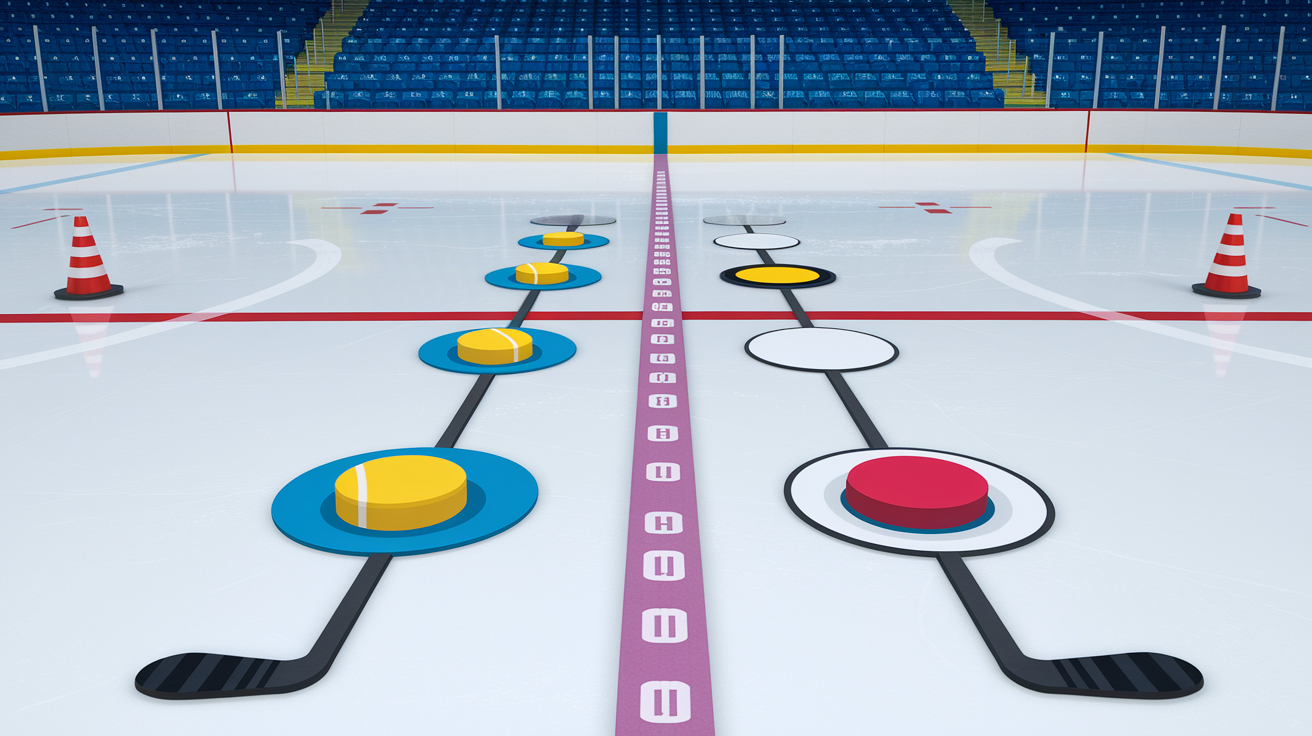
Structured progression prevents boredom and ensures players master each skill before adding complexity. When a new drill or tempo shows up each week, players stay engaged and coaches can measure improvement against clear benchmarks, such as completing a cone weave without a single lost puck, or executing 8 out of 10 clean toe drags at game speed.
Target 30 to 120 minutes of on-ice puck control work per week (split across 2 to 4 practices) and 30 to 100 minutes of off-ice work (spread over 3 to 5 short home sessions). Combined, that gives players 60 to 220 total minutes of focused touch time each week. Aim for 100 to 300 quality stick touches per session. At that rate, players accumulate 1,000 to 3,000 touches weekly, which builds the muscle memory needed for noticeable improvement in 4 to 6 weeks.
| Week | Focus | Example Drills |
|---|---|---|
| 1 | Fundamentals & short obstacle courses | Stationary push-pull (3×45 sec), simple cone weave (slow speed), 5 to 10 min obstacle course with 2 to 4 cones |
| 2 | Add mirror drills and target passing | Partner mirror sequences (3×60 sec), target passing to tape marks (10 to 20 passes), figure-8 around pucks |
| 3 | Introduce tennis-ball switch-ups and silent hockey | Tennis-ball quick-hands (3×30 sec), silent 5-min small-area game, moving cone weave at increased tempo |
| 4 | Brief weighted-stick sets and competitive games | Weighted stick (2×60 sec), toe-drag reps (3×10 each side), 1v1 puck possession in small zone |
Common Mistakes That Prevent Youth Players From Improving Puck Control
The most frequent error is staring at the puck instead of scanning the ice. When a player’s eyes lock on the blade, they miss open teammates, incoming defenders, and scoring chances, even if their hands are technically clean. A second common mistake is gripping the bottom hand too tightly, which reduces the stick’s range of motion and makes quick wrist rolls nearly impossible. Players end up muscling the puck with big arm movements instead of using soft hands.
Stiff wrists and tense shoulders also limit improvement because control comes from relaxed, fast wrist motion, not power. Rushing progression before foundational skills are steady leads to sloppy habits. If a player can’t complete a stationary drill cleanly, adding speed or complexity will only embed errors. And running drills that are too long kills attention and reduces quality. Mite-level players lose focus after 10 to 15 minutes on a single activity, so rotating every 5 to 8 minutes keeps engagement high and repetitions sharp.
-
Looking down at the puck – Corrective fix: run 30 to 60 second drills with eyes-up checkpoints. Have a coach or parent hold up fingers for the player to call out while stickhandling.
-
Bottom hand gripping too hard – Corrective fix: pause mid-drill and shake out the bottom hand. Remind players the bottom hand should feel loose enough to slide up and down the shaft easily.
-
Overdoing weighted-stick work – Corrective fix: limit resistance training to 1 to 3 short sets per week (30 to 120 seconds each). Always return to a regular stick immediately afterward to reinforce clean technique.
-
Running static drills too long without variety – Corrective fix: cap individual drills at 10 minutes for Mites. Rotate between 3 to 4 different activities every practice to maintain focus and energy.
Building Confidence, Awareness, and Game-Ready Puck Control
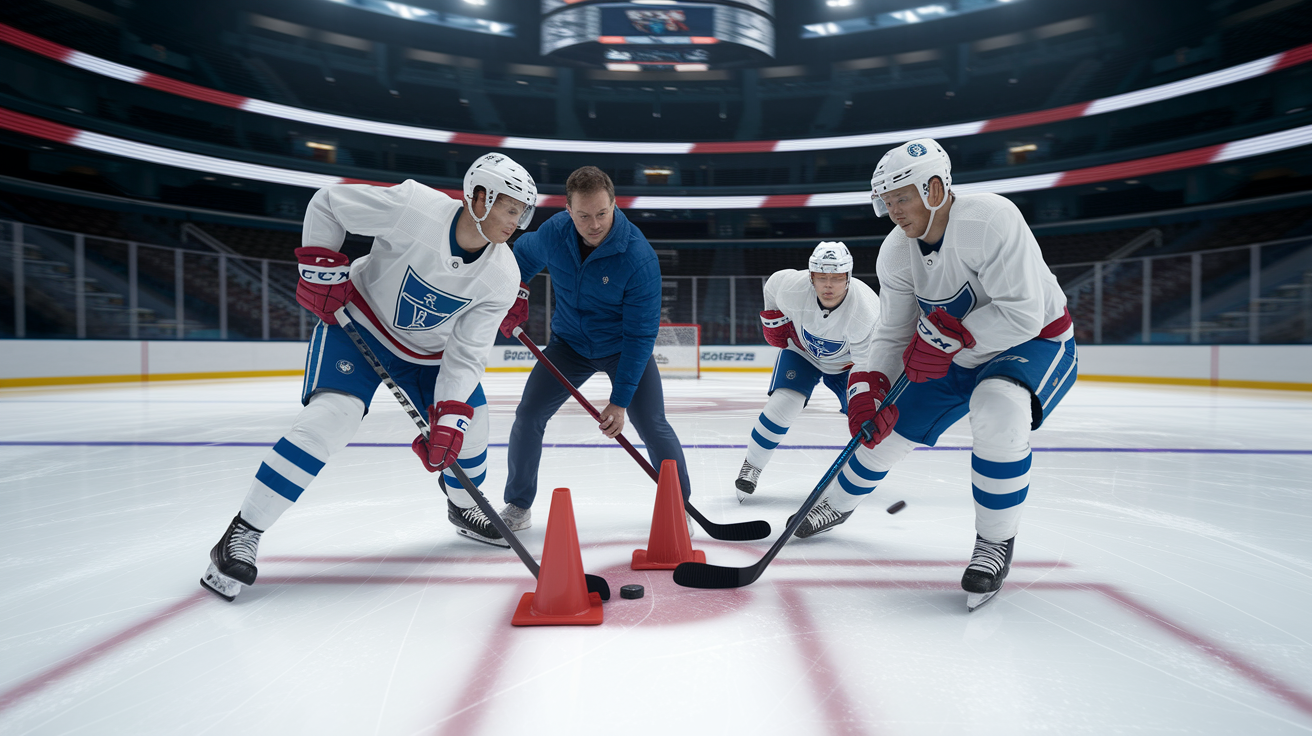
Scanning and reacting under pressure develop through small-area games and partner drills that force decision-making in tight windows. A player stickhandling alone in open ice can build hand speed, but adding a defender, a time limit, or a specific target (pass to a cone, protect the puck for 10 seconds) trains the brain to process visual information and choose the right move while the hands are already working. Silent hockey sequences, where players communicate only through body language and eye contact for 5 to 10 minutes, teach situational reading faster than any verbal instruction.
Confidence grows through measurable micro-goals that players can track session by session. Instead of vague objectives like “get better,” set clear targets: complete 8 out of 10 toe drags without losing the puck, or stickhandle with your head up for 30 consecutive seconds. When a player hits that mark, they know the work is paying off, and the next goal (10 out of 10, or 45 seconds) feels achievable rather than abstract.
-
Partner reaction mirror – One player changes direction or speed every 5 to 10 seconds while the partner mirrors. Both must keep their heads up and adjust in real time.
-
Decision gate drill – Set two cones 2 meters apart. As the player approaches, a coach points left or right, and the player must execute a quick deke through the correct gap.
-
Timed puck-protection challenge – In a small zone, see how long a player can keep possession against one defender. Track the time and try to beat it each session.
Final Words
Take one of the fast-start drills to practice or your driveway today. You’ve got quick, low-equipment drills, core stickhandling mechanics, progressive on-ice work, off-ice carryover, a four-week plan, common mistakes to fix, and confidence-building exercises.
Small, frequent reps build feel and game-ready habits. Keep sessions short and focused.
Follow the plan and cues here and you’ll know how to improve puck control for youth hockey players. Focus on soft hands, head up, and steady weekly volume. Start simple, stay consistent, and you’ll see faster, cleaner puck play.
FAQ
Q: How to improve puck control in hockey?
A: Improving puck control in hockey means training soft hands with short, frequent drills: tennis‑ball stickhandling, cone weaves, weighted‑stick reps, and head‑up silent practice—5–15 minutes daily and 2–4 on‑ice sessions weekly.
Q: Where do you put your weakest player in hockey?
A: You put your weakest player where they’ll learn without high risk: sheltered shifts as a wall winger, fourth‑line minutes, or paired with a steady teammate on the back end to build basics and confidence.
Q: What is a muffin in hockey?
A: A muffin in hockey is slang for a muffed play—a fumble or mishandled pass or clear that hands possession to the opponent; coaches use the term to stress cleaner hands and smarter decisions.
Q: What is the 5 rule in hockey?
A: The 5 rule in hockey usually refers to the five‑hole—the opening between a goalie’s legs you aim for to score; if you meant a league rule, tell me the context and I’ll clarify.