

Think a beep test and a few on-ice sprints can’t separate the players who survive the season from the ones who don’t?
They can.
If you run them right.
The beep test shows aerobic reserve and repeat-shift recovery.
On-ice sprints measure first-step explosion, acceleration, and top-end speed over game-like distances.
Pairing both gives coaches clear numbers to set selection benchmarks, guide individual conditioning, and spot who needs sprint work versus more aerobic volume before puck drop.
Core Overview of the Team Fitness Testing Protocol
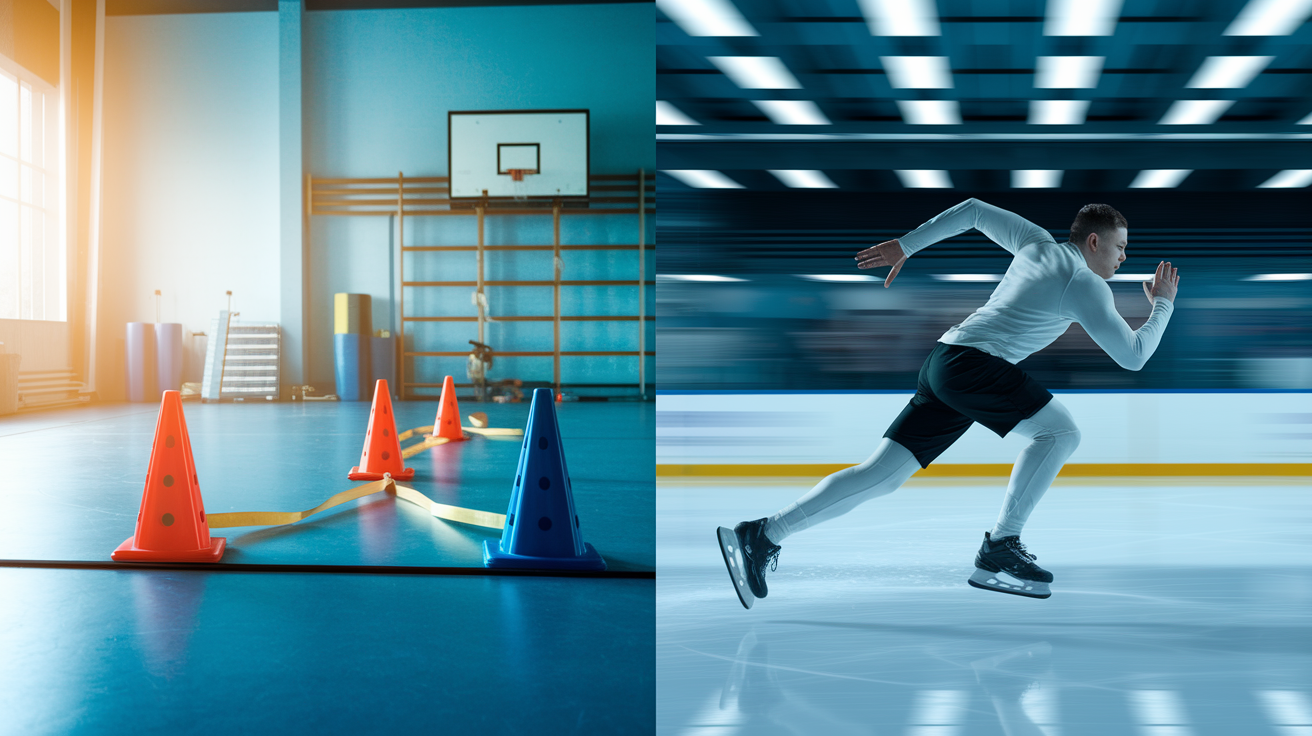
A hockey team fitness testing protocol that pairs the beep test with on-ice sprints gives you a complete picture of aerobic capacity and short-burst speed. The beep test shows how well a player can keep pushing through high-intensity work over several minutes. On-ice sprints measure acceleration and top-end speed across distances that actually matter in games. Together, these assessments hand coaches real numbers on conditioning baselines, point out gaps in aerobic or anaerobic systems, and separate athletes who are ready for game-intensity shifts from those who need work before the season starts.
The beep test runs as a 20-meter shuttle that gets faster until you can’t keep up. Players reach the line before each beep, and the level they hit tells you about maximum aerobic power. On-ice sprints measure explosive starts and straight-line speed over distances like 6.1 meters, 15 meters, or 30 meters. Sprint times show acceleration, stride power, and skating mechanics when you’re fresh. The beep test reveals whether a player has the tank to recover between shifts. The sprint test shows whether they can beat an opponent to a loose puck or close a gap in the neutral zone.
Hockey programs at the junior, collegiate, and pro levels run both tests during preseason camps because they’re time-efficient, sport-specific, and produce reliable benchmark data. The combined protocol supports selection decisions, individual programming, and squad-wide conditioning targets. When coaches track these scores across multiple testing windows, they can see whether summer training actually worked and whether in-season fatigue is dragging numbers down.
Primary performance qualities assessed:
- Aerobic endurance and repeat-sprint recovery (beep test)
- Linear acceleration from a standing start (short on-ice sprint)
- Top skating speed and stride power (longer on-ice sprint)
- Anaerobic tolerance under progressive load (final beep-test stages)
Beep Test Administration for Hockey Athletes

The beep test became a standard hockey conditioning assessment because it forces players to sustain high-intensity running or skating in intervals that mimic shift work. The test speeds up every minute, making athletes work harder until they hit exhaustion. The stage and level they finish at provides a clear marker of aerobic power and the ability to recover between high-demand bursts.
Setup needs a flat, non-slip surface with two lines exactly 20 meters apart. Athletes run back and forth between the lines, keeping pace with a recorded audio track that beeps at timed intervals. Each shuttle must end with the athlete’s foot touching or crossing the line before the next beep. Miss the beep, you get one warning. Miss it twice, you’re done. The final stage and level reached gets recorded as the score.
Exact setup and execution protocol:
- Mark two parallel lines 20 meters apart using cones or tape. Verify distance with a measuring tape.
- Run a 10-minute dynamic warm-up including jogging, skipping, and short acceleration runs.
- Explain test rules to all athletes: touch the line before each beep, one warning for being late, test ends on second miss.
- Start the audio track and have athletes begin on the first beep from behind one of the lines.
- Monitor each athlete for foot position at the line and issue warnings as needed.
- Continue until all athletes reach voluntary exhaustion or fail to make two consecutive beeps.
- Record the stage and level reached for each player immediately after they withdraw.
- Allow cool-down walking and hydration once all athletes have finished.
Elite junior hockey players typically reach stage 10 to 12. Professional athletes often finish between stage 12 and 14. Younger or less-conditioned athletes may stop at stage 8 or 9. Scores below stage 8 in high school or junior programs usually mean structured aerobic development needs to happen before the season starts.
Reliability depends on consistent floor conditions, accurate line spacing, and proper audio calibration. Use a quality speaker system or individual headphones so every athlete hears the beep clearly. Run the test in a climate-controlled environment when possible. Heat and humidity reduce scores and introduce variability. Retesting should happen under identical conditions, at the same time of day, and after similar nutrition and rest protocols to ensure valid comparisons across testing windows.
On-Ice Sprint Testing Protocol

On-ice sprint tests measure how quickly a player accelerates from a standstill and how much top-end speed they can generate before hitting the brakes. Unlike the beep test, which evaluates sustained effort, sprint testing isolates pure speed and power output over short distances that reflect real in-game scenarios. Gap closing, breakaways, first steps to a loose puck.
Primary physical qualities measured:
- First-three-stride acceleration and explosive hip extension
- Stride frequency and length at top speed
- Edge grip and blade efficiency during the drive phase
- Deceleration control and stopping mechanics (when timed to a cone)
- Neuromuscular coordination under maximal effort
Exact sprint protocol from setup to timing:
- Place timing gates or designate hand-timing positions at the start line and at measured distances of 6.1 meters, 15 meters, and 30 meters down the ice.
- Tell athletes to start from a stationary hockey-ready stance, stick on ice, skates parallel and shoulder-width apart, one foot slightly forward.
- Let athletes begin on their own signal with no reaction component. Timer starts when the lead skate crosses the start beam or on the athlete’s first movement if hand-timed.
- Record split times at each distance marker. Make sure the athlete skates through the final gate at full speed.
- Provide 3 to 4 minutes of rest between trials to allow full recovery. Athletes should perform 2 to 3 trials at each distance.
- Rotate starting positions across the ice surface to prevent rut formation and maintain consistent ice hardness.
Reliability requires stable environmental conditions and precise equipment alignment. Timing gates must sit perpendicular to the direction of travel, and the infrared beam height should align with the athlete’s hip or torso to ensure consistent triggering. Ice temperature affects glide and edge bite, so schedule all sprint sessions at the same point in the ice maintenance cycle. Athlete start posture also influences times. Standardize instructions so every player begins from the same ready position with stick contact on the ice and no forward lean or rocking motion before the sprint begins.
Normative times vary by competitive level and age. Elite junior athletes typically complete 6.1 meters in 1.6 to 1.8 seconds, 15 meters in 2.8 to 3.2 seconds, and 30 meters in 4.8 to 5.4 seconds. Professional players often record 6.1-meter times under 1.6 seconds and 30-meter times closer to 4.5 seconds. High school or younger players may fall in the 1.9 to 2.1-second range for 6.1 meters. Slower times at short distances suggest deficits in initial explosive power or first-step mechanics. Slower times at longer distances often point to stride length, top-speed mechanics, or aerobic-anaerobic transition weaknesses.
Integrating Test Results to Guide Conditioning Decisions
Beep test scores reveal how much aerobic reserve a player carries into the season. Athletes who finish at lower stages need more volume in their conditioning program, typically through longer interval sessions at moderate intensity or continuous skating drills that build the aerobic base. A player who stops at stage 8 when the team average is stage 11 will struggle to recover between shifts and may fall apart in the third period. For that athlete, the training adjustment is clear: add two to three aerobic-focused sessions per week with work intervals lasting 90 seconds to 3 minutes at 70 to 85 percent of maximum heart rate.
Sprint data inform acceleration and speed-based training blocks by identifying where mechanical or power deficits exist. If an athlete posts a slow 6.1-meter time but a near-average 30-meter time, the issue is likely first-step explosion or hip-drive mechanics. Programming should emphasize resisted starts, short hill sprints, or sled pushes to build early acceleration. A player who accelerates well over 6.1 meters but fades at 30 meters may lack top-speed strength or stride efficiency. That athlete benefits from longer sprint repetitions, overspeed skating with resistance release, and lower-body power work targeting hip extension and knee drive.
Combined data from both tests also highlight positional differences and individual athlete needs that generic team conditioning can’t address. Defensemen often score higher on the beep test and lower on short sprints compared to forwards, reflecting the positional demands of longer shifts and less reliance on explosive breakaways. A forward who underperforms on both tests is a red flag for overall conditioning. A goalie who struggles with on-ice sprints but doesn’t take the beep test may still need off-ice sprint and agility work to improve lateral push and recovery speed. Tracking these patterns across the roster lets coaches assign individualized conditioning work while maintaining team-wide benchmarks.
Actionable programming adjustments based on combined test results:
- Low beep test, average sprint: add aerobic interval volume and reduce rest intervals in on-ice conditioning drills.
- Average beep test, low sprint: prioritize explosive power work, resisted starts, and max-effort short sprints.
- Low beep test and low sprint: implement concurrent aerobic base building and neuromuscular power development with careful recovery management.
- High scores on both: maintain current fitness with lower-volume, higher-intensity work and monitor for overtraining or staleness.
Equipment, Reliability, and Safety Considerations
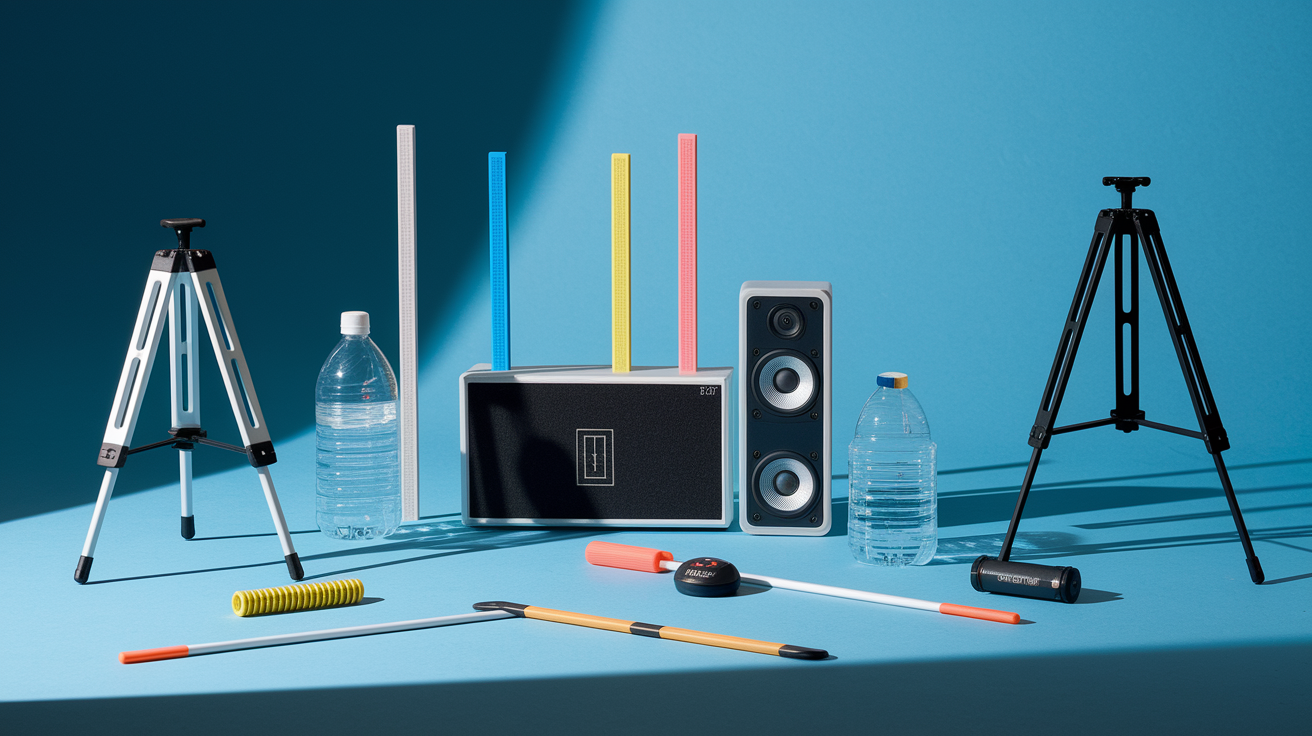
Running a valid beep test requires a calibrated audio track, a measured 20-meter course, and either cones or floor tape to mark the shuttle lines. On-ice sprint testing demands electronic timing gates for accuracy, although hand-held stopwatches can work if gate triggering and operator training are standardized. Timing gates should sit on tripods at consistent heights, with beams set to capture torso movement rather than stick or skate tips. A tape measure, cones for distance marking, and a sound system for group instructions round out the essential equipment list.
Environmental consistency is critical for reliable testing. The beep test surface must be clean, dry, and free of debris that could cause slipping. On-ice sessions should happen when the ice is freshly resurfaced and at a stable temperature. Soft or rutted ice slows sprint times and introduces error. Schedule all testing at the same time of day to control for circadian rhythm effects on performance, and make sure athletes are well-hydrated and have completed a standardized warm-up before any maximal-effort trial.
Repeatability depends on controlling as many variables as possible. Use the same timing equipment, the same test administrator, and the same instructions across all sessions. For the beep test, play the audio at the same volume and verify that the pace matches published standards by counting beeps per stage. For on-ice sprints, photograph or document gate positions so they can be replicated exactly in future tests. Record environmental conditions such as ice temperature, rink humidity, and time since resurfacing so any outlier scores can be contextualized during analysis.
Safety precautions for maximal testing:
- Require medical clearance for all athletes, especially those returning from injury or with known cardiovascular conditions.
- Assign spotters or test administrators to monitor athlete technique and intervene if form breakdown creates injury risk.
- Provide immediate access to water, ice packs, and first-aid supplies, and have an emergency action plan in place for any adverse event during exhaustive testing.
Final Words
You ran the beep test, timed on-ice sprints, and mapped where each player sits on aerobic and speed curves. The post explained how the two tests measure endurance, acceleration, repeat-sprint ability, and position needs.
Use the data to set weekly conditioning volume, design speed blocks, and flag players who need targeted work. Keep timing gates, the audio track, ice conditions, and warm-ups consistent so results stay reliable and safe.
This hockey team fitness testing protocol beep test and on-ice sprints gives coaches clear baselines and practical next steps.
FAQ
Q: What is the beep test for hockey on ice?
A: The beep test for hockey on ice is a 20‑meter shuttle run paced by an audio track that measures skaters’ aerobic capacity; teams use it as a preseason baseline to guide conditioning.
Q: Has a black person ever won the Stanley Cup?
A: A Black person has won the Stanley Cup: Grant Fuhr, a Black goaltender, won four Cups with the Edmonton Oilers in the 1980s, and other Black players have since been Cup champions.
Q: What is the protocol for the sprint test?
A: The protocol for the sprint test is a timed on‑ice series (commonly 6.1m, 15m, 30m) using timing gates, standardized start posture, multiple trials, and full rest between attempts for reliable acceleration and top‑speed data.
Q: Does the Gretzky rule still exist?
A: The “Gretzky rule” is ambiguous: people use it for post‑1988 NHL trade/expansion adjustments or local youth rules named after Wayne Gretzky. It isn’t a single standing rule — which one do you mean?