

Think scouts only judge you by goals and hits?
They watch the shifts, yes. But the interview often decides if film means anything.
Scouts ask about strengths, weaknesses, habits, role, and weird hypotheticals to test honesty, maturity, and fit.
This post breaks down the common questions, why teams ask them, and exactly how to answer so your words match your game.
Read this and walk into your next interview ready, calm, and clear.
Core Hockey Questions Scouts Ask Prospects

NHL scouts use interviews to match what they see on ice with what they hear from a player. The first round of questions usually goes after self-awareness, hockey background, and basic communication. Teams work from standardized draft questionnaires that dig into strengths, weaknesses, player comparisons, interests outside hockey, and agent info. They’re also testing maturity and honesty by checking if a prospect’s self-assessment lines up with what the scout’s already observed.
Most teams follow a predictable structure. But many throw in oddball or hypothetical questions to see how a player reacts when things get weird. Recent examples: “What do you want to be known for at your funeral?”, “Would you rather be better than everyone else or the best?” (Montreal asked that one), and “There’s a 50/50 chance of a 20-foot python who hasn’t eaten in five months is in the hallway. There’s five of us in this room. Which one’s going out there?” The incoming Utah franchise asked prospects for their Uber passenger rating and Snapchat Score. Scouts use these to evaluate communication, composure, and whether a player can pivot when caught off guard.
Question categories scouts lean on during player interviews:
- Strengths and weaknesses – checking if a player’s self-assessment matches what’s on film and whether they understand what needs work.
- Player comparisons – asking which NHL player they model their game after to measure awareness and realism.
- Role and position responsibilities – confirming they understand their place in systems and lineup decisions.
- Interests outside hockey – exploring education, hobbies, and backup plans to measure maturity and life readiness.
- Handling adversity – probing how they respond to setbacks, losses, or coaching criticism.
- Team dynamics – asking about leadership, locker room role, and how they fit into team culture.
- Training and prep habits – assessing discipline, nutrition, sleep, and off-ice dedication.
- Agent and contact info – confirming representation and readiness for the pro process.
- Oddball or hypothetical scenarios – used to test composure, creativity, and behavior under stress, though they don’t predict much.
- Language and communication – especially for European prospects, checking English proficiency and cultural adjustment.
Hockey Knowledge & On-Ice Performance Questions

Scouts spend a lot of interview time testing whether a prospect understands their own game and can explain what they do well and where they need to get better. Questions about strengths and weaknesses aren’t casual conversation starters. They’re used to expose gaps between what a player claims and what film and combine testing show. If a defenseman says his biggest strength is gap control but the scout’s watched shifts where he gets beat wide repeatedly, that disconnect becomes a red flag. Scouts want specificity, not generic answers like “I work hard” or “I’m a team player.”
Player comparisons are another common probe. A prospect might get asked which NHL player they model their game after or which current player they resemble most closely. Scouts use this to check self-awareness and whether a player watches the game intelligently. Comparing yourself to Aaron Ekblad, Filip Forsberg, Johnny Gaudreau, or Mark Stone tells a scout how you view your ceiling and which skills you prioritize. If a winger compares himself to a power forward but plays a finesse style, the scout will follow up to see if the player has a realistic development plan or is chasing the wrong identity.
Teams also ask position-specific questions to measure hockey IQ and decision making. Sample questions:
- “Walk me through your reads on the first forecheck when the puck goes around the wall.”
- “What’s your first look as a breakout winger on the wall?”
- “How do you adjust your gap when the puck carrier has speed versus when they’re standing still?”
- “What do you do when the middle lane isn’t open on the rush?”
- “Describe your net-front responsibilities on the penalty kill.”
Scouts listen for clarity, detail, and whether the player can explain their decision tree in real-game situations. Vague or rehearsed answers signal limited understanding or coaching dependency.
Character & Work-Ethic Questions Scouts Use
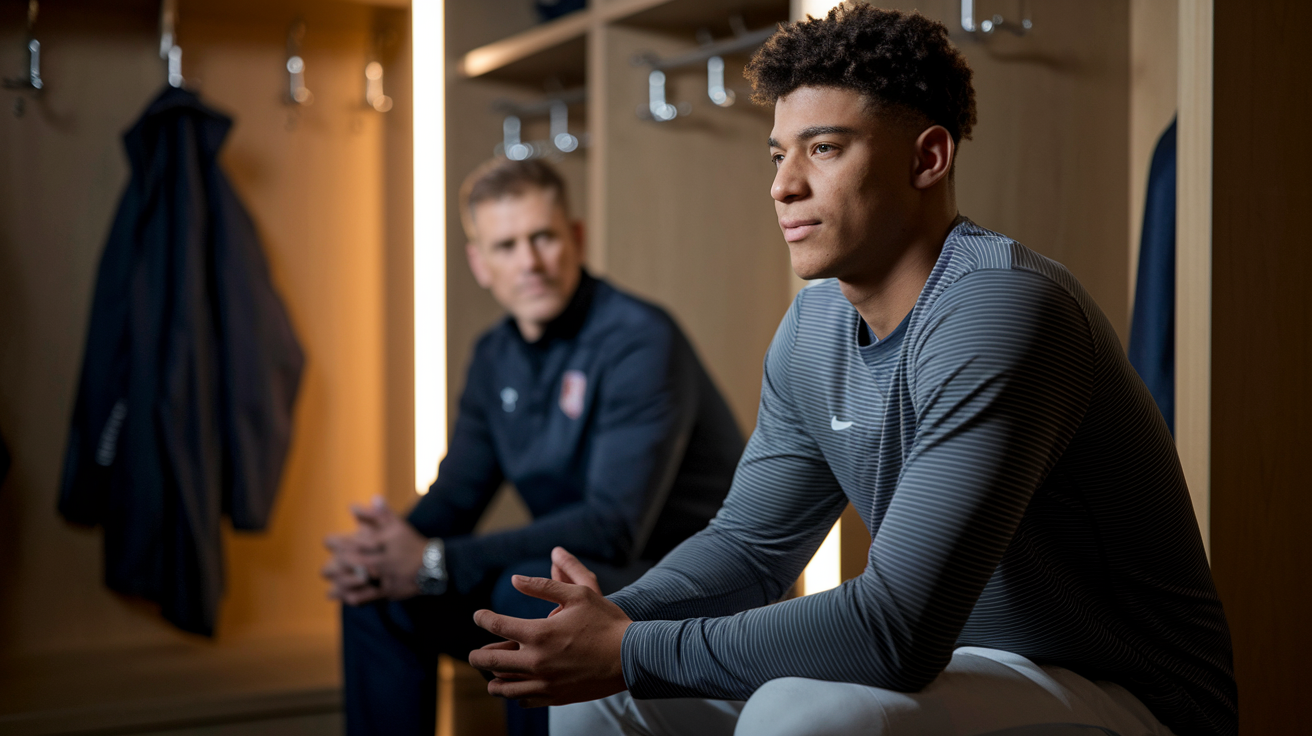
Character evaluation is where scouts try to separate players who’ll develop into reliable pros from those who’ll plateau or create off-ice issues. Questions in this section probe coachability, mental toughness, handling pressure, and response to adversity. Scouts watch body language, tone, and whether answers feel rehearsed or genuine. A player who blames teammates, officials, or bad luck during a question about a tough loss raises immediate concerns. A player who takes ownership, explains what they learned, and describes specific adjustments signals maturity.
Oddball and psychological questions often surface here because scouts want to see how a player handles the unexpected. Some questions are designed to make the prospect uncomfortable or force quick thinking. “What do you want to be known for at your funeral?” tests whether a player can handle an emotionally loaded question with composure. Another one, “Would you rather be better than everyone else or the best?” tries to reveal whether a player values being part of a winning culture or prioritizes individual achievement. The answers themselves matter less than the delivery and reasoning. Scouts know these questions have low predictive value for on-ice performance, but they reveal how a player manages stress, processes abstract ideas, and communicates under pressure. If a player freezes, deflects, or gives a clearly fabricated answer, that behavior gets noted.
Examples of Character-Focused Questions
- “Describe a time a coach criticized you in front of the team. How did you respond?”
- “Tell me about the toughest loss you’ve experienced and what you did the next day.”
- “If your best friend on the team is slacking in practice, what do you do?”
- “How do you stay motivated when you’re not getting ice time?”
- “What’s the hardest conversation you’ve had with a coach or teammate?”
- “There’s a 50/50 chance of a 20-foot python who hasn’t eaten in five months is in the hallway. There’s five of us in this room. Which one’s going out there?”
Off-Ice Habits, Training Routines, and Lifestyle Questions

Scouts understand that what happens between games and practices often determines whether a prospect reaches their ceiling. Questions about training habits, nutrition, sleep, and game prep are used to measure professionalism and readiness for the structure of junior, college, or pro hockey. A player who can’t describe their typical sleep schedule, pre-game meal routine, or off-season training plan signals a lack of discipline or awareness. Scouts are looking for signs that a player treats their body and development like a full-time job, not just something they do when a coach is watching.
European prospects and NCAA-bound players often get asked about education and goals outside of hockey. Past questionnaire responses have ranged from hobbies like fishing and golfing to goals like graduating high school, attending college, or pursuing careers in sports management or kinesiology. Scouts use these answers to gauge maturity, fallback planning, and whether a player has interests and stability outside the rink. A prospect with clear educational goals or structured off-ice commitments is seen as more grounded and less likely to spiral if hockey doesn’t work out.
Teams also ask follow-up questions about recovery practices, injury management, and how a player handles physical setbacks. A prospect who says they push through pain without consulting trainers raises durability and decision-making concerns. A player who describes a structured recovery routine, physiotherapy habits, and communication with medical staff signals professionalism. The goal is to identify players who take ownership of their development and understand that off-ice prep directly impacts on-ice results.
| Category | What Scouts Evaluate |
|---|---|
| Nutrition | Whether the player understands fueling for performance, tracks intake, and avoids poor habits that limit energy or recovery. |
| Sleep Schedule | Consistency, hours per night, and whether the player prioritizes rest as part of training rather than treating it as optional. |
| Academic Responsibility | For NCAA and younger prospects, scouts look for time management, commitment to education, and realistic plans if hockey doesn’t work out. |
| Recovery Practices | Use of stretching, ice baths, physiotherapy, and communication with trainers to manage soreness and prevent injury. |
Red Flags, Oddball Questions, and Psychological Probing

Scouts are trained to watch for behavioral red flags that suggest a prospect may struggle with professionalism, accountability, or team culture. Questions designed to expose these issues often focus on off-ice behavior, social habits, and how a player handles authority. Asking about conflicts with coaches, missed practices, or disciplinary incidents can reveal whether a player takes responsibility or deflects blame. A prospect who consistently frames setbacks as someone else’s fault or can’t identify a single area for improvement raises major concerns about coachability and self-awareness.
Some teams push into oddball or uncomfortable territory trying to provoke genuine reactions. Past examples include inappropriate personal questions like “Are you a virgin” and extreme hypotheticals such as a WWII-related scenario that caused defenseman David Reinbacher to panic during his combine interview. More recently, the incoming Utah franchise asked prospects for their Uber passenger rating and Snapchat Score, treating social metrics as potential insight into character. Scouts also use brainteasers like “How many golf balls can you fit into an airplane?” or “How many gas stations are in Manhattan?” to test problem solving under pressure, but these questions carry little predictive value and often reflect interviewer psychology more than prospect evaluation. Research shows that answers to oddball questions are heavily influenced by stress, guessing, and the desire to say what the interviewer wants to hear.
Common red-flag categories scouts watch for during interviews:
- Blame-shifting – repeatedly pointing to teammates, coaches, officials, or circumstances instead of taking personal accountability.
- Vague or rehearsed answers – inability to provide specific examples or detail when asked about setbacks, weaknesses, or conflicts.
- Inflated self-assessment – claiming strengths that don’t match on-ice observations or exaggerating physical measurements like height and weight.
- Lack of preparation – not knowing basic info about the team asking the question, showing up without a clear sense of development goals, or failing to follow up on questionnaire responses.
- Overreacting to pressure – freezing, becoming defensive, or giving nonsensical answers to unexpected questions, signaling poor composure or fragile confidence.
The risk with oddball questions is that scouts can fall into cognitive biases. Hindsight bias means that after a player succeeds or fails, the same answer can be reinterpreted to fit the outcome. Saying “I want to be the best” can later be framed as ambition if the player thrives or as arrogance if they struggle. Confirmation bias allows scouts to cherry-pick any answer to support a pre-existing opinion, using a single response about dogs versus cats or a hypothetical python scenario to justify a draft decision that should be based on measurable performance.
How Prospects Should Prep for Scout Interviews

Preparation for scout interviews starts with the standardized questionnaire. Every one of the top 100 North American skaters and the top 20 goaltenders complete a two-page form covering agent contact info, self-assessed strengths and weaknesses, player comparisons, and goals outside hockey. Scouts use these forms as a baseline and will probe every claim during face-to-face interviews. If a prospect lists gap control as a strength on the form, they should expect follow-up questions about how they maintain gap, adjust to different puck carriers, and what drills they use to improve it. If they list a weakness, scouts will ask what they’re doing to fix it and how they measure progress.
The most common mistake prospects make is over-reporting height and weight or writing answers they think teams want to hear rather than the truth. Scouts will cross-check questionnaire data against combine measurements and game film, so exaggeration becomes an immediate credibility issue. Better approach: be realistic, specific, and prepared to back up every entry with examples. Instead of listing “work ethic” as a strength, describe the exact off-season training routine, tracking methods, and measurable improvements from year to year. Instead of saying “I need to get stronger,” explain the current lifting program, target weight gain, and timeline for development.
Prospects should also prep for oddball or uncomfortable questions by practicing composure and honesty. There’s no perfect answer to a question about a 20-foot python or a funeral legacy. The goal is to show that you can stay calm, think through the scenario, and communicate clearly without panicking or trying to be clever. If a question feels inappropriate or confusing, it’s acceptable to ask for clarification or to acknowledge that the answer is uncertain. Scouts care more about how you handle the moment than whether you guess the “right” response.
Practical prep steps for prospects facing scout interviews:
- Review your own questionnaire and game film – be ready to explain every strength, weakness, and player comparison with specific on-ice examples.
- Prepare a realistic development plan – know what you need to improve, how you plan to improve it, and what timeline you’re working with.
- Practice articulating hockey decisions – be able to walk through reads, positioning, and responsibilities in real-game situations without vague language.
- Have clear off-ice habits to describe – sleep schedule, nutrition routine, training plan, and recovery practices should all be concrete and structured.
- Identify one or two setbacks and what you learned – be ready to discuss a tough loss, coaching criticism, or injury with ownership and specific adjustments made afterward.
Final Words
In the interview room, this piece walked you through the core categories scouts use: hockey knowledge, character, off-ice habits, red flags, and the oddball questions that test poise.
We showed examples scouts pull from questionnaires and explained how answers reveal realism, maturity, and fit. You also got clear prep steps to avoid common mistakes.
Practice honest, specific replies and align them with your game. Knowing the questions scouts ask during hockey player interviews gives you an edge — go in calm, prepared, and ready to stand out.
FAQ
Q: What do scouts look for in hockey players?
A: Scouts look for on-ice skill (skating, puck skills), hockey IQ and decision-making, position fit and consistency, character and work ethic, coachability, off-ice habits, and realistic development potential.
Q: What are good, common, and tough interview questions to expect?
A: Good, common, and tough interview questions include your strengths and weaknesses; role and position fit; comparisons to NHL players; daily training and nutrition routines; handling pressure or setbacks; and oddball hypothetical or legacy questions.