

Would you hire a coach who puts winning ahead of a kid’s safety?
A polished résumé can’t show how they’ll handle a nine-year-old scared of the boards or a parent demanding double the ice time.
That’s why the interview matters.
This guide lays out the exact questions, scoring criteria, certifications, and red flags to use every time.
Do the interview right and you protect players, build a healthy team culture, and cut drama fast.
Read on to learn the quick, repeatable process that keeps kids safe and helps them get better on the ice.
Essential Interview Questions for Youth Hockey Coach Candidates
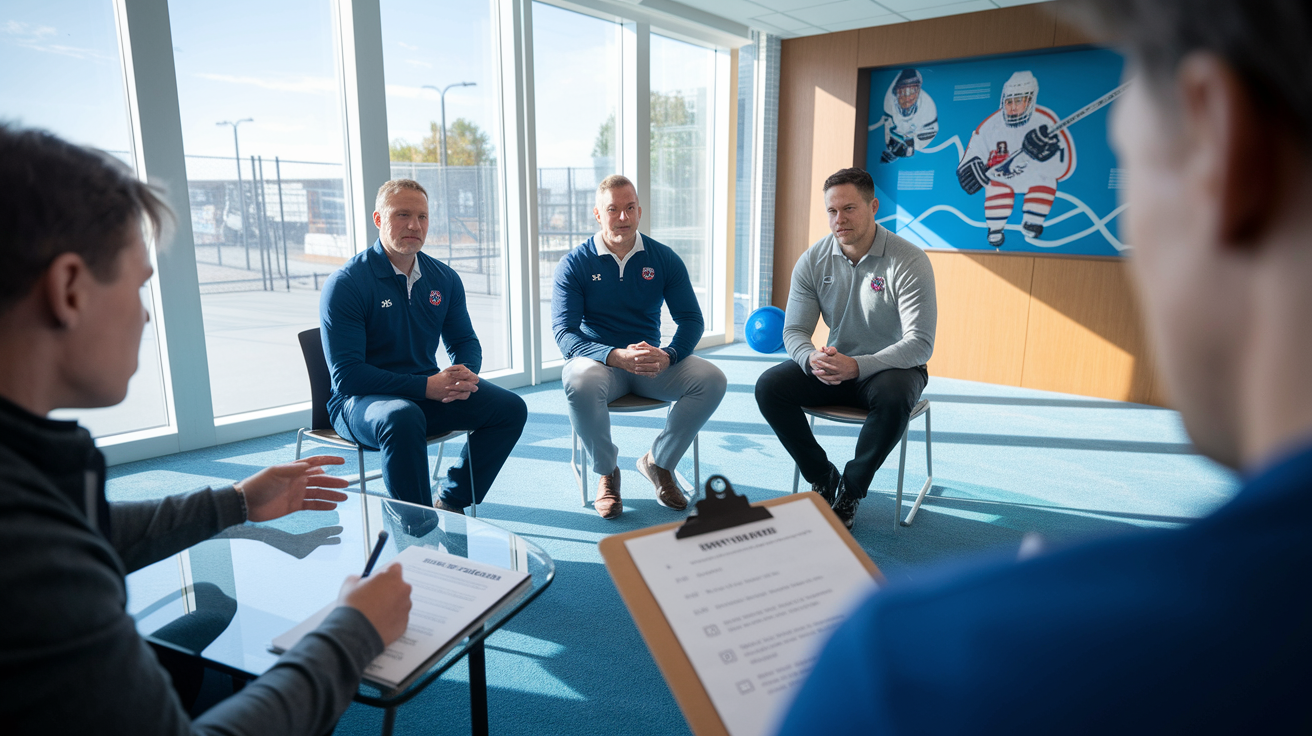
The questions you ask during a coaching interview tell you more than any résumé ever will. A candidate can list championships and certifications, but only structured questions reveal how they’ll actually handle a nine-year-old who’s afraid of the boards or a parent who thinks their kid deserves triple the ice time. The goal is simple: ask questions that force concrete examples, not theory.
Good interview questions do three things fast. They expose the candidate’s real philosophy under pressure. They show how the coach thinks about player development versus winning. And they reveal whether safety and communication are priorities or afterthoughts. If a candidate struggles to give specific examples or defaults to vague sports clichés, you’ve learned what you need to know.
Use these twelve questions in every interview. Write down the answers. Compare candidates side by side using the same criteria.
-
What does a successful season look like for you coaching this age group? The answer should emphasize skill growth, player confidence, and retention. Not trophy count.
-
Describe a time a player lost confidence or struggled emotionally. What did you do? This reveals empathy, patience, and whether the coach can adjust to individual needs.
-
Walk me through your typical 60-minute practice plan for this age group, step by step. You’re looking for structure, age-appropriate drills, skill progression, and time for fun.
-
How do you balance winning games with developing every player on the roster? If the answer leans heavily toward “we develop by winning,” that’s a problem for youth hockey.
-
What are your top three skill priorities for players at this level, and how do you teach them? The coach should name specific skills (edges, puck protection, spatial awareness) and explain drills or progressions.
-
How do you handle playing time decisions, and how do you communicate those to parents? Fair ice time and clear communication prevent most team drama.
-
Describe your approach to discipline when a player breaks a team rule or acts out. Look for consistency, respect, and consequences that teach rather than shame.
-
What is your concussion protocol, and can you give an example of how you’ve used it? Every youth coach must recognize symptoms, remove players immediately, and follow return-to-play steps.
-
How do you communicate progress, expectations, and concerns to parents? Regular updates, accessible tone, and proactive communication matter more than charm.
-
Tell me about a conflict you had with a parent or administrator. How did you resolve it? You want problem-solving and professionalism, not defensiveness or blame.
-
What certifications do you hold, and when were they last updated? USA Hockey coaching certification, SafeSport, concussion training, and CPR should all be current.
-
Are you willing to complete a background check and provide three coaching references? Hesitation here is an automatic disqualifier.
How to Assess and Score Coach Candidate Responses

Structured scoring keeps interviews honest. When every committee member uses the same evaluation framework, personal bias shrinks and the best coach rises to the top based on evidence, not gut feeling. Without a rubric, interviews turn into popularity contests where the smoothest talker wins, regardless of whether they can actually teach a crossover or handle a meltdown at the bench.
Create a simple scoring sheet before the first interview. Rate each candidate on the same six criteria using a 1-to-5 scale, where 1 means the answer missed the mark entirely and 5 means the candidate exceeded expectations with specific examples and depth. Add up the scores after the interview. Compare candidates. Let the numbers guide the discussion.
Six scoring criteria to use for every answer:
Specificity and examples. Does the candidate give concrete stories with names, drills, outcomes, and lessons learned, or do they speak in generalities and theory?
Player-first philosophy. Does the answer prioritize long-term development, safety, and enjoyment over short-term winning or the coach’s ego?
Age-appropriate approach. Does the coach understand what eight-year-olds need versus fifteen-year-olds, and can they explain how practice structure changes?
Communication clarity. Is the candidate’s answer organized, easy to follow, and free of jargon that parents or administrators won’t understand?
Safety and professionalism. Does every relevant answer acknowledge injury prevention, concussion awareness, background checks, or ethical boundaries?
Problem-solving under pressure. When describing conflicts or setbacks, does the coach show accountability, flexibility, and a plan for next time?
Safety, Certification, and Player Well-Being Requirements
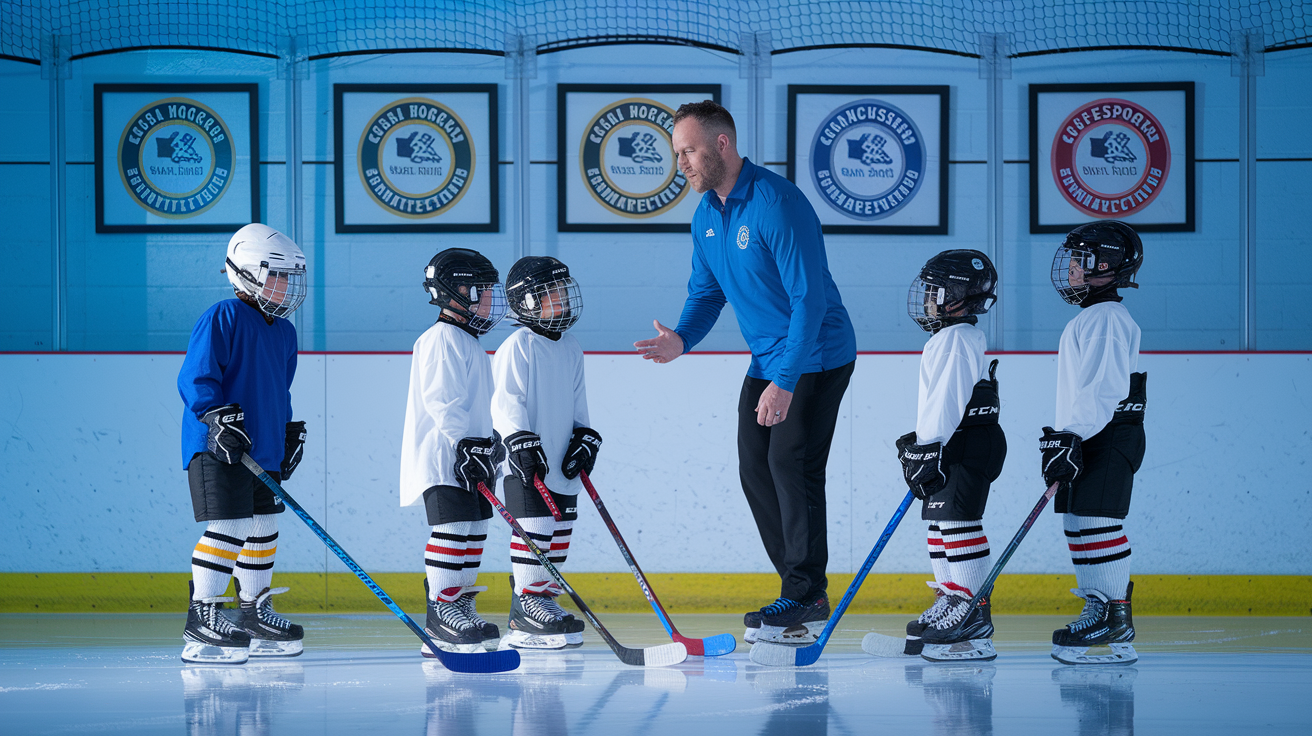
Youth hockey coaches carry serious responsibility the moment they step on the ice. They’re managing sharp blades, hard pucks, high speeds, and kids whose brains are still developing. A coach who dismisses concussion symptoms, skips equipment checks, or doesn’t know how to stop bleeding can cause harm that lasts years. Safety isn’t a bonus skill. It’s the baseline.
Every candidate must hold current certifications before they run a single practice. USA Hockey’s age-specific coaching modules teach the technical and developmental standards for each level. SafeSport training covers abuse prevention, mandatory reporting, and appropriate boundaries with minors. Concussion awareness explains how to recognize symptoms, remove a player immediately, and follow return-to-play protocols. CPR and first aid certification means the coach can respond to cardiac events, lacerations, or airway obstruction until paramedics arrive. If any certification is expired or missing, the candidate doesn’t advance.
Player well-being extends beyond injury response. Coaches set the tone for respect, inclusion, and emotional safety. A coach who yells, plays favorites, or ignores bullying creates an environment where kids quit, even if no one gets physically hurt. The interview should surface how the candidate builds trust, handles anxiety or fear, and makes every player feel they belong on the team.
Five mandatory requirements before hiring:
USA Hockey coaching certification for the relevant age level, completed within the past two years.
SafeSport certification (or equivalent abuse prevention training), current and documented.
Concussion awareness training with a completion certificate dated within the past 24 months.
CPR and first aid certification from a recognized provider, valid and unexpired.
Criminal background check and child abuse registry clearance, completed within the past 12 months and reviewed by the organization before the candidate meets players.
Communication, Culture Setting, and Parent Interaction Expectations

Great youth coaches don’t just teach hockey. They run a small community where kids feel safe, parents stay informed, and everyone knows what to expect next. Clear communication prevents misunderstandings about ice time, addresses concerns before they turn into complaints, and keeps the focus on development instead of drama. A coach who goes silent for weeks or only talks to a few families creates confusion and resentment.
Set the standard during the interview. Ask how the candidate plans to share practice goals, provide individual feedback, and handle tough conversations about playing time or behavior. The best answers include regular updates (weekly emails or a team app), office hours for parent questions, and a willingness to listen before reacting. If the candidate treats parent communication as an annoying chore, problems will follow.
Culture starts with the coach’s tone and priorities. When a coach celebrates effort over outcomes, corrects mistakes without shaming, and models respect in every interaction, players absorb those values fast. A team built on encouragement and accountability will outgrow a team built on fear and favorites, even if the latter wins more games in the short term.
Four communication standards every youth coach must meet:
Weekly practice and game updates shared with all families, covering objectives, schedule changes, and any incidents.
Individual player feedback at least twice per season, delivered in person or via private message.
Clear conflict resolution process where parents know how and when to raise concerns without disrupting practice or games.
Consistent tone and accessibility that treats all families with the same respect, regardless of a player’s skill level or the parent’s involvement.
Red Flags and Deal-Breakers When Interviewing Youth Hockey Coaches
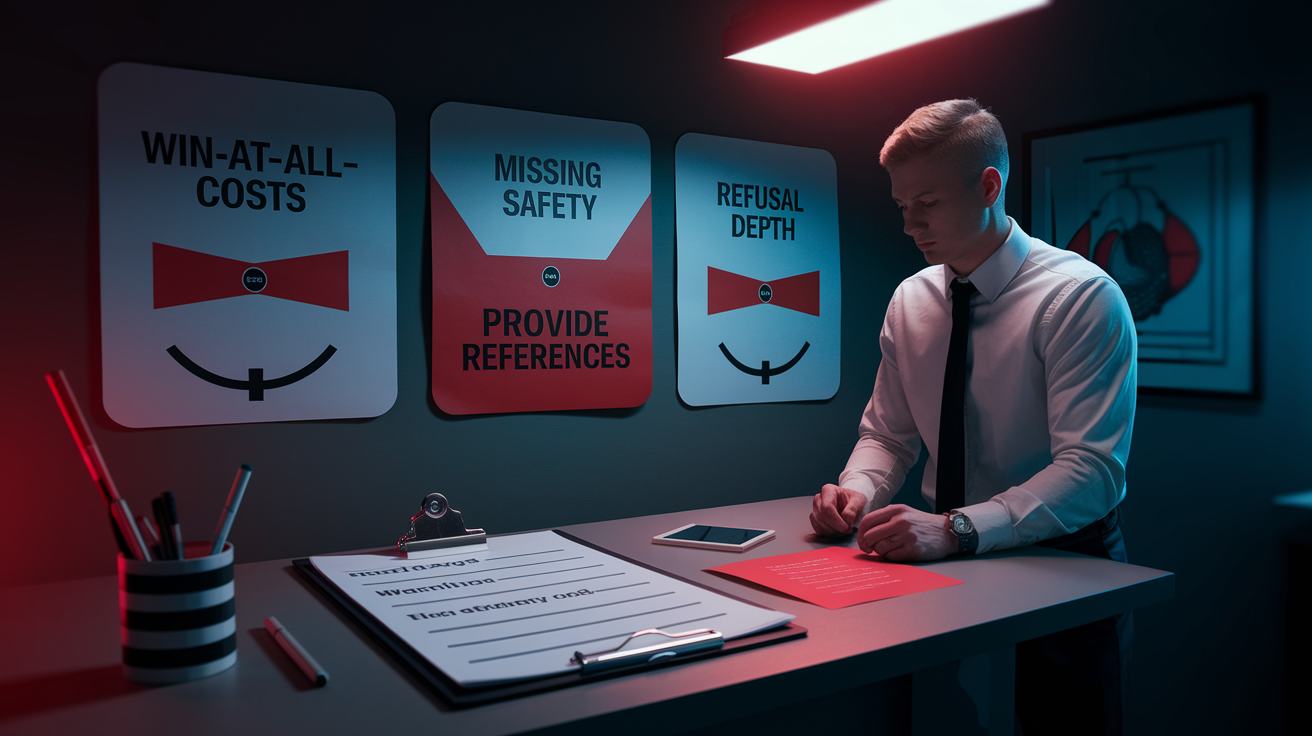
Some warning signs are loud. Others whisper. Either way, pay attention. A single red flag doesn’t automatically disqualify a candidate, but multiple red flags in one interview mean you move on. Youth sports organizations that ignore warning signs often regret it when players quit, parents complain, or worse, when a preventable safety incident occurs.
Red flags reveal misaligned priorities, gaps in judgment, or attitudes that harm kids. A candidate who can’t give concrete examples is unprepared or dishonest. A candidate who dismisses safety protocols thinks rules don’t apply to them. A candidate who bad-mouths former teams or parents will do the same to your organization. Trust the pattern, not the charm.
Seven red flags that should end the interview process:
Win-at-all-costs philosophy. If the candidate says “they’ll have fun when we win” or emphasizes standings over skill growth for youth players, stop there.
Vague or missing safety answers. No clear concussion protocol, no current certifications, or dismissive language about injury prevention.
Refusal or delay on background checks. Any hesitation to complete a criminal background check or provide references is an automatic no.
Negative talk about past players, parents, or organizations. Blaming others without reflection shows poor accountability and professionalism.
No specific examples or measurable outcomes. Answers that stay theoretical or rely on clichés (“I just love the game”) reveal inexperience or dishonesty.
Overemphasis on discipline and control. Coaching youth hockey isn’t boot camp. Excessive focus on obedience over development creates fear, not growth.
Inconsistent availability or unclear commitment. A coach who can’t commit to the full season schedule or misses practices regularly will hurt the team.
Final Words
In the action we walked through 12 targeted youth hockey coach interview questions, a simple scoring approach, required safety and certification items, communication expectations, and clear red flags.
This gives you a practical way to compare candidates on development focus, safety, and how they’ll handle parents and culture. Short answers and examples matter more than slick résumés.
Use these best practices for interviewing youth hockey coaches as your checklist at the next hire. It makes the process cleaner — and helps you hire a coach who puts players first.
FAQ
Q: What are essential interview questions for youth hockey coach candidates?
A: Essential interview questions for youth hockey coach candidates ask about coaching philosophy, age‑appropriate practice plans, player development priorities, discipline style, safety protocols, certifications, past experience, parent communication, and conflict handling.
Q: Which 12 specific interview questions should we use?
A: The 12 questions: describe your coaching philosophy; how you teach skating and skills; practice planning example; player development goals; discipline approach; safety training; concussion handling; emergency plan; parent communication; working with volunteers; experience with age groups; measuring progress.
Q: What should a good answer reveal about coaching philosophy and priorities?
A: A good answer shows a development‑first mindset, clear practice structure, age‑appropriate expectations, emphasis on safety, and simple ways to track player progress rather than win‑at‑all outcomes.
Q: How do we assess and score coach candidate responses objectively?
A: You assess and score coach candidate responses by using a structured rubric, multiple reviewers, anchor answers for each score level, and consistent weighting for safety, communication, and development focus.
Q: What scoring criteria should our rubric include?
A: Scoring criteria: communication clarity (how clearly they explain plans), safety awareness (training and protocols), player development focus (skills and progress), practice organization, discipline and team management, and experience credibility.
Q: Which safety, certification, and player well‑being requirements are mandatory?
A: Mandatory requirements typically include background checks, SafeSport or equivalent training, concussion/first aid certification, up‑to‑date coaching certification, and knowledge of age‑specific USA Hockey guidelines and emergency procedures.
Q: What training should coaches have for injury response and prevention?
A: Coaches should have concussion recognition training, basic first aid and CPR, clear emergency action plans for the rink, and routine protocols for injury prevention and return‑to‑play decisions.
Q: What communication and culture expectations should we set for youth coaches?
A: Communication and culture expectations require clear pre‑season rules, regular parent updates, respectful conflict management, focus on effort and development, and consistent team routines that model respect and safety.
Q: What specific communication standards should be enforced?
A: Communication standards: timely practice and schedule notices, professional and respectful tone, transparent feedback about player progress, and a single channel for teamwide messages to avoid mixed signals.
Q: What red flags and deal‑breakers should disqualify coach candidates?
A: Red flags include a win‑first philosophy that ignores development, dismissing safety or certifications, inconsistent discipline, poor communication, blaming parents or players, unwillingness to follow league rules, and lack of relevant experience.