

Think piling on more conditioning during the season will make your youth team better? Think again.
Most players already get plenty of conditioning from practices and games.
In-season work should protect the gains you built over summer, not bury players in fatigue.
This simple plan shows how two short off-ice sessions, targeted on-ice sprints, and smart timing keep strength, power, and mobility sharp.
Follow the 48-hour rule, keep volume low and quality high, and you’ll boost on-ice performance without burning your team out.
Immediate Conditioning Framework for Youth Hockey Teams During the Season
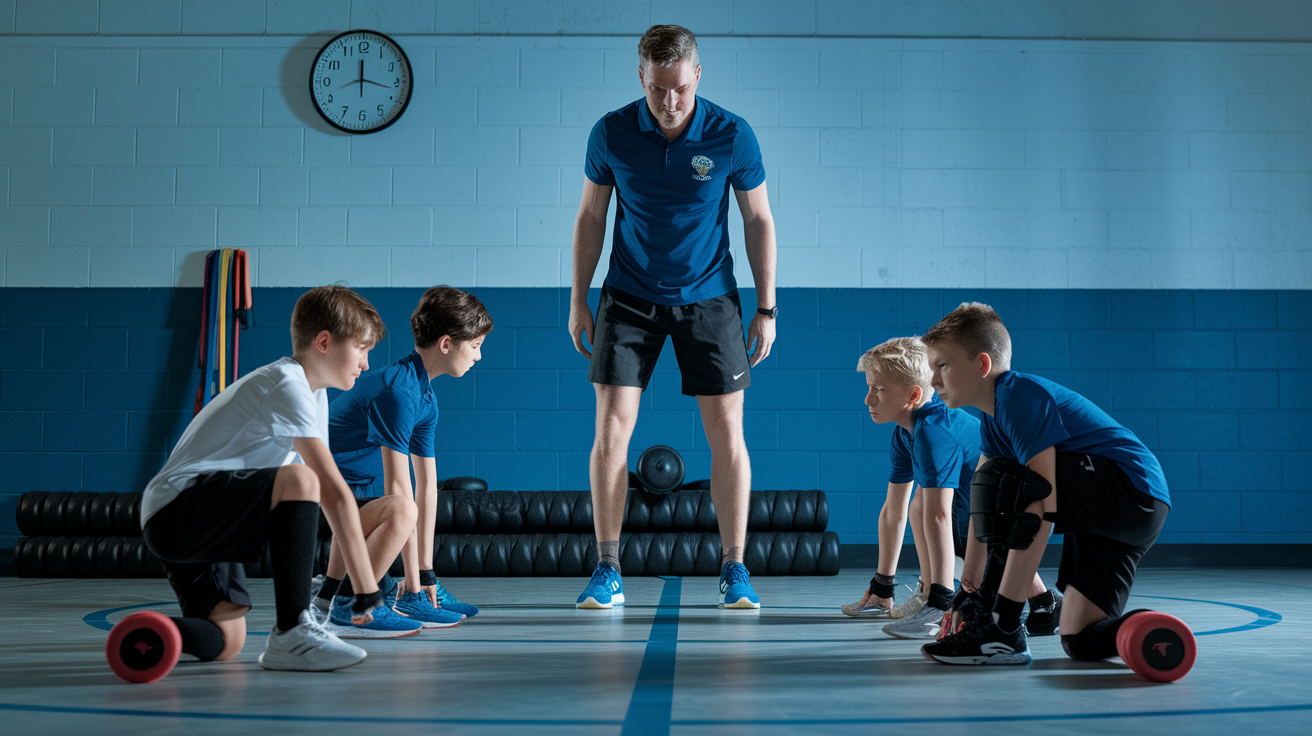
Most youth players skating four or more times per week are already getting solid conditioning on the ice. What you’re doing in-season is keeping what you built over summer, not piling on more volume that’ll bury your team before Thanksgiving.
An in-season conditioning plan needs to deliver just enough to hold onto strength, power, and mobility without creating fatigue that stacks up. If you’re running an off-season program into November, you’re going to overtrain your athletes fast. Especially younger players whose total weekly ice time already sits at 6–8 hours when you count practices and games.
The biggest mistake? Treating in-season conditioning like a watered-down version of summer training. But the ice work you’re already doing is your main conditioning stimulus. Off-ice work needs to be targeted, low in volume, and timed so it supports practice and game demands instead of getting in the way.
Here’s what you can start with this week:
Frequency: Two structured off-ice sessions per week, max. If your team’s skating five or more times weekly, don’t add conditioning volume.
Session length: 30–45 minutes for off-ice strength or power work. 15–20 minutes for movement prep or recovery sessions.
Session types: Strength and power maintenance with low volume and high quality reps, on-ice speed work using short sprints with full recovery, and mobility or movement circuits on light days.
Minimal volume principle: Keep total sets and reps under half of what you programmed in summer. If a summer squat session was 4 sets of 6, in-season should be 2–3 sets of 5.
Practice to game balance: Cut back or skip off-ice sessions during weeks with three or more games. Scale back intensity after back-to-back games.
Major mistakes to avoid: Adding sprint conditioning when practices already include tempo work, scheduling heavy lifting within 48 hours of competition, and ignoring subjective fatigue signals from younger athletes.
Weekly In-Season Conditioning Structure for Youth Hockey Teams

Your week should follow a consistent pattern that respects game timing, practice load, and recovery windows. Most youth teams play one to two games per week, which gives you predictable slots for strength maintenance and speed work.
Use the 48-hour rule for scheduling. Avoid high-intensity or high-volume off-ice sessions within two days of competition. Game day plus one is always a recovery or mobility day, especially for athletes 14 and under. When your team plays back-to-back weekend games, drop all heavy lifting and use short movement prep or low-impact aerobic sessions instead.
Younger athletes (U12 and U14) typically have less dense competitive schedules, so you’ve got a bit more flexibility midweek. Older teams (U16 and U18) often play Tuesday and Friday or Wednesday and Saturday, which leaves narrow training windows. Adjust the weekly template based on your actual calendar, not some idealized seven-day block.
The table below shows a standard in-season microcycle for a team playing Saturday games with practices Tuesday, Thursday, and possibly Sunday.
| Day | Session Type | Intensity Notes |
|---|---|---|
| Sunday | Recovery or light practice | Mobility and movement prep only; low-impact aerobic option (bike, swim) if players are fresh |
| Monday/Tuesday | Off-ice strength session | Full recovery from weekend game; schedule lower-body and power work here |
| Wednesday/Thursday | Primer or on-ice speed | Short, high-quality work; can be done within 48 hours of next game as CNS primer |
| Friday | Game-day warm-up | Dynamic mobility and skating-specific movement; zero resistance training |
| Saturday (game day) | Competition | No off-ice conditioning; focus entirely on game performance |
If your schedule includes midweek games (like Tuesday and Saturday), move the strength session to Sunday or Monday and use Wednesday as a recovery day. Keep primers short. 5–10 minutes of warm-up followed by a handful of sprints or jumps. Always prioritize on-ice performance over hitting every planned off-ice session.
On-Ice Conditioning Drills That Fit an In-Season Plan

On-ice conditioning should be the backbone of your in-season plan. It’s hockey-specific, high-intensity, and built into practice time you’re already using. You just need to structure drills that develop speed and power without adding unnecessary volume or complexity.
Short sprint intervals are the most efficient on-ice conditioning tool during the season. Four to six repetitions of 10–15-yard efforts with full recovery between reps will keep explosiveness and first-step quickness sharp without creating the kind of fatigue that comes from long bag skates. Full recovery means 60–90 seconds between sprints for younger players, longer for older athletes. If you’re running these intervals back-to-back with minimal rest, you’re training a different energy system and undermining the speed work.
Small-area games are another high-value option. They combine conditioning with decision-making and puck skills. A 3-on-3 cross-ice game with 45-second shifts and 90-second rest periods will challenge anaerobic capacity while keeping the athletes engaged and competitive. Tempo skating intervals (where players skate at 80–85% effort for controlled distances) can be useful as active recovery between harder drills, but they shouldn’t replace true sprint work.
Here are five on-ice conditioning drills that work across age groups:
- 10–15 yard sprint starts from the goal line – Explosive first three strides, full recovery between reps (4–6 total).
- Blue-to-blue tempo intervals – Skate at controlled high tempo (80–85%), coast back, repeat 6–8 times with 60-second rest.
- Cross-ice 3-on-3 shifts – 45 seconds on, 90 seconds off. 4–6 shifts per player with live puck.
- Lateral agility ladder (cones or dots) – Quick feet through a 5-cone pattern, explosive crossover recovery. 5 reps with full rest.
- Half-ice transition repeats – Forwards and defense work breakout to regroup pattern at tempo, 30–40 seconds per rep, 4–5 reps with rest.
When practice ice time is limited, prioritize short sprints and small-area games over long skating drills. You’ll get better conditioning outcomes and keep the work hockey-relevant.
Off-Ice Strength and Power Work for Youth Hockey Teams

In-season strength sessions should be short, focused, and built around compound movements that preserve the gains you made in the off-season. The goal is maintenance, not growth. Two to three sessions per week of low-volume, high-quality resistance work is enough to prevent measurable strength declines, which can begin as soon as 30 days without training.
A simple session template pairs an explosive movement with a mobility exercise, then moves into strength supersets that balance lower-body and upper-body work. Example: Olympic lift variation (hang clean, power clean from blocks) paired with a hip mobility drill, followed by a lower-body push (trap bar deadlift, goblet squat) and an upper-body pull (pull-ups, inverted rows). Keep total working sets to 2–3 per exercise, with rep ranges between 4 and 8 for strength movements and 3–5 for power work.
Power exercises should be treated as skill work, not conditioning. Every rep of a hang clean or box jump should look crisp and controlled. If form starts to break down or bar speed slows, the set is over. This isn’t about grinding through fatigue. It’s about reinforcing fast, explosive movement patterns that translate to the ice.
Unilateral lower-body exercises like Bulgarian split squats, rear-foot elevated split squats, and step-ups are particularly valuable in-season. They address the single-leg demands of skating while allowing you to load the athlete with less total weight and less systemic fatigue than bilateral squats. Most youth players will benefit more from split-stance work than from trying to add 10 pounds to their back squat in November.
Here are the major exercise categories to include:
Olympic lift or jump variation (hang clean, box jump, broad jump) – 2–3 sets of 3–5 reps
Lower-body bilateral push or pull (trap bar deadlift, goblet squat) – 2–3 sets of 5–6 reps
Upper-body pull (pull-ups, inverted rows, dumbbell rows) – 2–3 sets of 6–8 reps
Unilateral lower-body exercise (split squat, step-up, lateral lunge) – 2 sets of 4–6 per side
Upper-body push (dumbbell bench press, push-up variation) – 2–3 sets of 6–8 reps
Sessions should take 30–40 minutes, and athletes should leave the weight room feeling warmed up and ready, not exhausted. Save the tough, high-fatigue sessions for team-building days or the occasional deliberate overload week. Most of the time, boring and consistent wins.
Conditioning and Strength Adjustments by Age Group (U12, U14, U16)
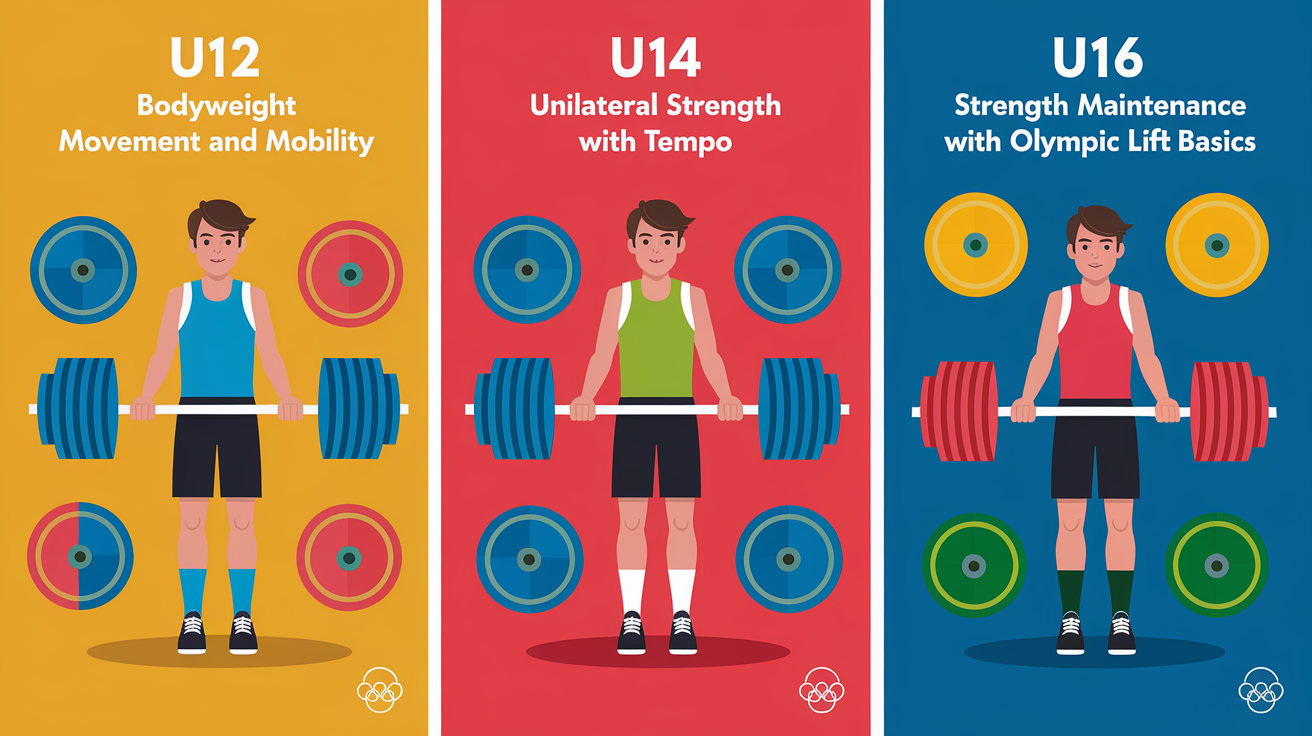
Younger players need less volume, lighter loads, and more emphasis on movement quality than older athletes. A U12 player skating four times per week is already doing plenty of conditioning, and adding heavy strength work or high-volume circuits will create more risk than benefit.
For U12 athletes, the in-season focus should be on bodyweight movement patterns, short sprints, and basic mobility habits. Resistance training should be minimal. One short session per week using light dumbbells, kettlebells, or bodyweight exercises like push-ups, lunges, and planks. Total session time should stay under 30 minutes, and the goal is teaching positions and building coordination, not chasing strength gains.
U14 and U16 players can handle more structured strength work, but the principles of low volume and high quality still apply. Older athletes who have an off-season training base can maintain that strength with two well-designed sessions per week, using moderate loads and controlled tempos. U16 players with two or more years of consistent lifting experience can include Olympic lift variations and heavier bilateral work, while U14 athletes should stay focused on unilateral exercises, controlled eccentrics, and foundational pulling and pushing patterns.
| Age Group | Weekly Off-Ice Frequency | Primary Training Focus |
|---|---|---|
| U12 | 1 session, 20–30 minutes | Bodyweight patterns, coordination, basic mobility; minimal loading |
| U14 | 1–2 sessions, 30–35 minutes | Unilateral strength, controlled tempo, foundational pulling/pushing; light to moderate load |
| U16 | 2 sessions, 35–45 minutes | Strength maintenance with moderate load, Olympic lift basics, power preservation |
Don’t train U12 and U14 players like smaller versions of U16 or junior athletes. Younger players are still developing coordination and body awareness, and overloading them with complex lifts or high-intensity circuits can lead to poor movement habits and increased injury risk. Keep it simple, keep the volume low, and prioritize long-term development over short-term performance bumps.
Goalie-Specific Conditioning and Mobility in the In-Season Plan
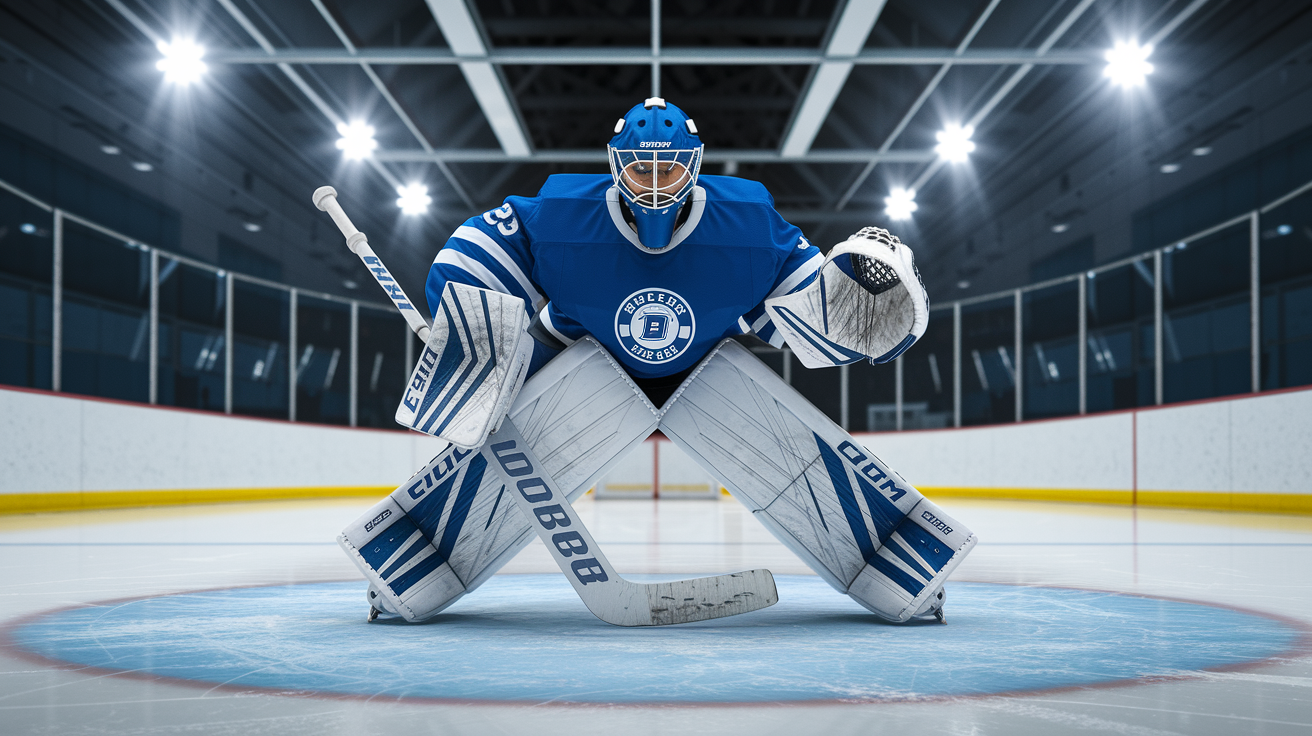
Goalies face different physical demands than skaters, and their in-season conditioning plan should reflect that. The position requires extreme hip mobility, rotational control, and the ability to explode laterally from a deep stance, all while managing high volumes of repetitive movement in a compressed range of motion.
Off-ice work for goalies should emphasize hip and thoracic spine mobility, low-impact aerobic conditioning, and light power exercises that don’t add excessive eccentric load to the lower body. Heavy squatting and high-volume plyometrics can leave goalies feeling stiff and slow in the crease, especially during dense game schedules. Instead, use exercises like lateral bounds, medicine ball throws, and sled pushes that develop power without the soreness that comes from loaded jumps or deep bilateral squatting.
Goalie-specific priorities for in-season work:
Daily hip mobility circuits – Lying knee-to-knee rotations, 90/90 hip switches, wide-stance quadruped rocks (2 sets of 8–10 reps per pattern)
Thoracic rotation and extension drills – Seated rotations, diagonal arm arcs, quadruped thread-the-needle (daily or before every session)
Low-impact aerobic conditioning – 20–30 minute easy bike or swim, 1–2 times per week, to support recovery without joint stress
Light explosive work – Lateral bounds, med ball slams, band-resisted shuffle steps (1–2 sets of 4–6 reps, twice weekly)
Goalies should avoid high-volume rotational core exercises in the weight room. The position already produces hundreds of rotation stresses per week during games and practices, and adding heavy cable chops or Russian twists can overload soft tissue and increase injury risk. Focus instead on anti-rotation exercises like Pallof presses and planks that build stability without adding more rotation volume.
Warm-Up, Mobility, and Injury-Prevention Work for Youth Hockey Players
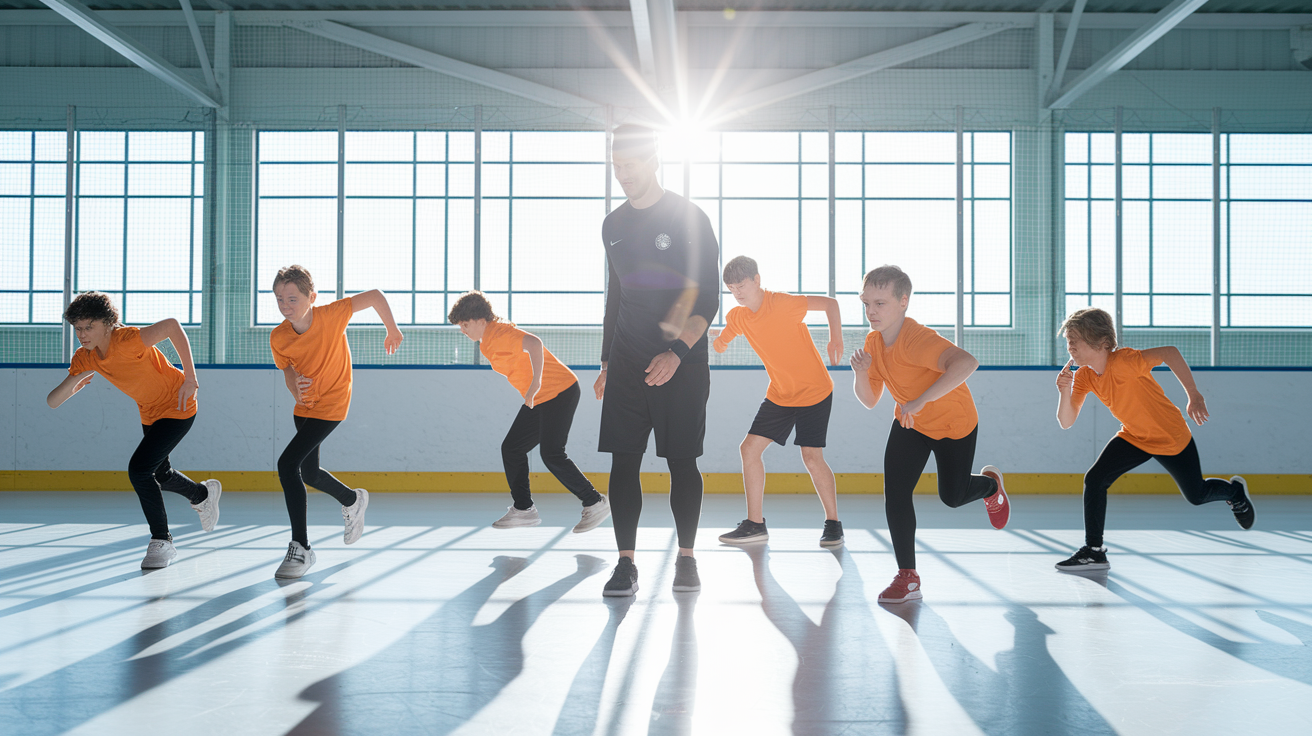
A structured warm-up does more than prepare players for the session. It’s one of the most reliable tools you have to reduce injury risk and reverse the postural stress that hockey creates. Skating posture, repetitive hip flexion, and the rotational demands of shooting and passing all contribute to tightness in the hips, anterior chain, and thoracic spine. Daily mobility work counteracts those patterns and keeps players moving well throughout the season.
Every off-ice session and every practice should start with 5–10 minutes of dynamic movement that includes hip mobility, thoracic rotation, and light aerobic activity to raise core temperature. For younger athletes, this warm-up is also a teaching opportunity. Use it to reinforce movement quality and body awareness that will carry over to the ice.
The warm-up should progress from general to specific. Start with low-intensity aerobic work like a light jog, bike, or skip rope for 2–3 minutes. Then move into dynamic mobility exercises that open the hips, activate the glutes, and mobilize the thoracic spine. Finish with movement-specific drills that mirror the demands of the session. Light jumps before a power day, or tempo skips before a sprint session.
Injury-prevention work is built into the warm-up, not added afterward. Exercises like glute bridges, band walks, and single-leg balance drills prepare the hip stabilizers and reduce the risk of groin strains and hip flexor issues that are common in hockey. Soft-tissue work with a foam roller can be included before or after the dynamic warm-up, but it should never replace movement-based preparation.
Key mobility and warm-up exercises for youth hockey players:
Lying knee-to-knee rotations – 2 sets of 10 reps per side with 2-second holds at end range
Diagonal hip rocks – 8–10 reps per side, controlled tempo, focus on opening the trailing hip
Wide-stance quadruped rocks – 10 reps, push hips back toward heels while keeping chest open
Seated thoracic rotations – 8 reps per side, hands behind head, rotate from mid-back not lower back
Diagonal arm arcs (quadruped thread-the-needle) – 6–8 reps per side, full range rotation
Glute bridge with 2-second hold – 2 sets of 10 reps, squeeze glutes at top
Band lateral walks – 10 steps each direction, mini-band just above knees, athletic stance
Single-leg balance reaches – 6 reaches per leg (front, side, back), slow and controlled
These exercises should be done daily when possible, either as part of practice warm-ups or before off-ice sessions. For teams with limited gym time, send athletes home with a 10-minute mobility routine they can do in their living room. Consistency matters more than volume.
Recovery Protocols for Keeping Youth Players Fresh in Season
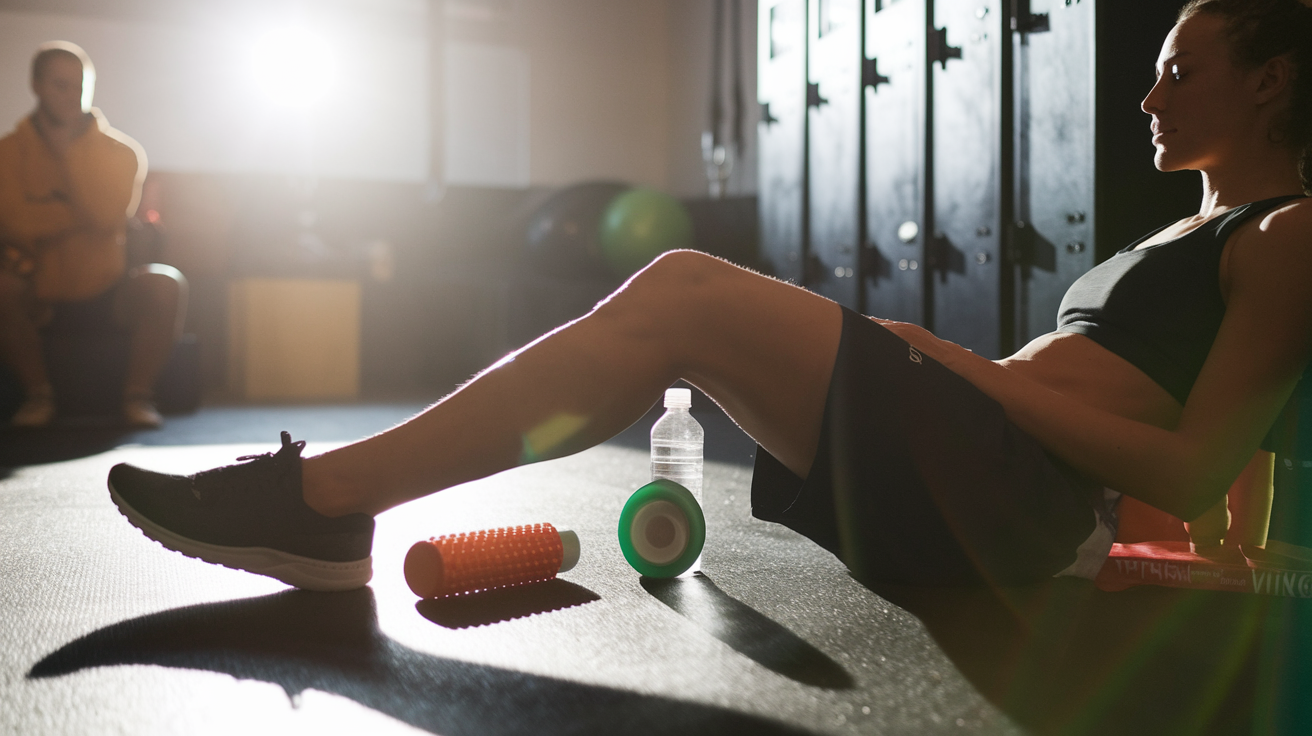
Recovery is not passive rest. It’s an active process that requires intention, structure, and daily habits. Youth athletes who prioritize recovery will stay healthier, perform better in late-season games, and avoid the cumulative fatigue that leads to performance drops and injuries in January and February.
Post-practice and post-game recovery should start immediately. A 5–10 minute cool-down that includes light aerobic activity (easy bike, walk, or slow skate) and static stretching helps lower heart rate, flush metabolic waste, and signal the nervous system to begin the recovery process. Foam rolling and soft-tissue work can be included here, targeting the quads, hip flexors, adductors, and calves. The areas that take the most repetitive load during skating.
Sleep is the most important recovery tool available, and most youth hockey players aren’t getting enough. Athletes 12–16 years old need 8–10 hours of quality sleep per night to support growth, recovery, and cognitive function. Late games, travel, and early morning practices all interfere with sleep, so coaches and parents need to build schedules that protect sleep windows whenever possible. If a player consistently reports feeling tired or sore despite light training loads, poor sleep is usually the first place to look.
Hydration and nutrition are the next layer. Players should begin rehydrating immediately after games and practices, aiming for 16–20 ounces of water or electrolyte drink within 30 minutes of finishing. Post-game meals should include a source of protein (20–30 grams for older athletes, 15–20 grams for younger players) and carbohydrates to replenish glycogen stores. Simple options: chocolate milk, a turkey sandwich, Greek yogurt with fruit, or a protein shake with a banana.
Active recovery sessions are structured, low-intensity movement days that promote blood flow and reduce soreness without adding training stress. These sessions typically involve 20–30 minutes of easy aerobic work (stationary bike, swimming, or a light jog) along with mobility circuits and soft-tissue work. The intensity should be conversational. If the athlete is breathing hard or sweating heavily, it’s too intense to be a true recovery session.
| Recovery Method | Description | Application |
|---|---|---|
| Post-session cool-down | 5–10 minutes light aerobic + static stretching | Immediately after every practice and game |
| Sleep optimization | 8–10 hours per night; consistent sleep/wake times | Daily; protect sleep windows around travel and late games |
| Hydration protocol | 16–20 oz water/electrolyte drink within 30 minutes | Post-practice and post-game; continue throughout evening |
| Post-game nutrition | 20–30g protein + carbohydrates within 60–90 minutes | After every game and hard practice |
| Active recovery session | 20–30 minutes easy bike, swim, or walk + mobility work | Day after games; 1–2 times per week during heavy schedule blocks |
Recovery modalities like ice baths, compression boots, and massage can be useful for older athletes or during playoff runs, but they aren’t necessary for most youth players. Prioritize the basics (sleep, hydration, nutrition, and movement) before adding expensive or complex recovery tools.
Monitoring Player Load and Adjusting the In-Season Conditioning Plan

Monitoring tools help you see what’s happening under the surface. Fatigue accumulation, readiness to train, and early warning signs that a player is heading toward overtraining or injury. For youth teams, simple subjective measures and a few objective tests give you enough information to adjust the plan without needing lab-grade technology.
Start with daily or weekly check-ins that ask players to rate their perceived soreness, energy level, and mood on a 1–10 scale. A player who consistently reports low energy or high soreness despite light training loads is showing early signs of inadequate recovery. These subjective markers are surprisingly reliable, especially when tracked over time, and they help you catch problems before they turn into missed games.
Objective measures like vertical jump height, broad jump distance, or simple reaction drills can provide additional context. A sudden drop in jump performance (5% or more from baseline) usually signals accumulated fatigue or incomplete recovery. You don’t need force plates or fancy software. A piece of tape on the wall and a measurement from standing reach to jump height is enough to track trends over the season.
Here are five practical monitoring tools for in-season youth hockey:
- Subjective wellness questionnaire – Daily or weekly 1–10 ratings for soreness, energy, sleep quality, and mood. Track trends and flag outliers.
- Vertical jump or broad jump test – Weekly or biweekly measurement. Compare to baseline. Drops of 5% or more indicate fatigue.
- Resting heart rate (RHR) – Measured first thing in the morning. Elevated RHR (5–10 bpm above normal) can signal incomplete recovery or illness.
- Rate of Perceived Exertion (RPE) after sessions – Ask players to rate session difficulty 1–10 within 30 minutes of finishing. Helps calibrate training load.
- Reaction time drill – Simple visual or auditory cue with timed response (like coach drops ball, player catches it). Slowed reactions suggest CNS fatigue.
When monitoring data shows declining performance or rising fatigue, the first adjustment is always to reduce volume, not intensity. Drop a set from each exercise, cut a conditioning drill, or move an off-ice session to a recovery day. Most youth athletes respond quickly to small reductions in load, and you’ll see readiness markers return to baseline within a few days.
Printable Templates and Sample In-Season Conditioning Sessions for Youth Hockey

Templates turn principles into action. The session examples below are ready to use. Just adjust the exercise selection and load based on your athletes’ training age and available equipment.
A full-body strength session is scheduled when you have at least 48 hours before the next game. It includes a power movement, lower-body and upper-body strength exercises, and a short conditioning or mobility finish. Total working time is 30–40 minutes. The goal is to maintain strength and power with minimal volume.
A primer session is a short, CNS-activating workout done within 48 hours of competition. It includes a brief warm-up and a handful of explosive efforts (jumps, sprints, or throws) with full recovery between reps. Total time is 15–20 minutes. Primers wake up the nervous system without creating fatigue.
A recovery session is structured movement designed to promote blood flow and mobility without adding training stress. It includes a warm-up, light aerobic work, and mobility circuits. Total time is 20–30 minutes, and the intensity should feel easy. Conversational pace throughout.
| Session Type | Key Exercises | Sets/Reps |
|---|---|---|
| Full-Body Strength | Box jump, trap bar deadlift, pull-ups, Bulgarian split squat, dumbbell bench press, glute bridge | 2–3 sets; 4–8 reps for strength moves, 3–5 for power |
| Primer | Warm-up (5–10 min), broad jumps or 15-meter sprints, med ball slams | 3–5 reps per exercise; full recovery (90+ seconds between efforts) |
| Recovery | Easy bike or swim (20–30 min), hip mobility circuit, foam rolling | Low intensity throughout; 2 sets of 8–10 reps for mobility drills |
| On-Ice Speed | 10–15 yard sprint starts, blue-to-blue tempo skates, 3-on-3 small-area game | 4–6 sprint reps with full recovery; 6–8 tempo intervals; 4–6 shifts in game |
For a sample full-body session, use this sequence: Start with box jumps (3 sets of 4 reps) paired with a hip mobility drill like lying knee-to-knee rotations (2 sets of 10 per side). Move to a lower-body push like trap bar deadlift or goblet squat (3 sets of 5), paired with an upper-body pull like band pull-aparts or inverted rows (3 sets of 10–12). Finish with a unilateral lower-body exercise like Bulgarian split squat or step-up (2 sets of 6 per side) and an upper-body push like dumbbell bench press or push-ups (2–3 sets of 6–8). If time and energy allow, close with a 20–30 minute easy bike ride or a short core circuit.
Primer sessions are even simpler. Warm up for 5–10 minutes with light movement and dynamic stretches. Then perform 3–5 broad jumps or 15-meter sprints with full recovery between each rep. The work should feel fast and clean, not grinding or exhausting. Finish with a few minutes of static stretching or foam rolling, then send the athletes home.
Recovery sessions prioritize movement quality and low intensity. Warm up with 5 minutes of easy walking or slow cycling. Move into a mobility circuit that includes hip openers, thoracic rotations, and glute activation drills (2 sets of 8–10 reps per exercise). Finish with 20–30 minutes of conversational-pace aerobic work on a bike, in a pool, or on a track. The athlete should feel loose and refreshed, not tired.
Final Words
Skate’s on. You’re dialing a fast weekly template: short on-ice intervals, low-volume strength, age-adjusted loads, and goalie-specific tweaks.
This piece walked you through a simple weekly structure, on-ice drill choices, practical off-ice power work, warm-up basics, recovery tips, and how to monitor load. Use the printable session examples and the six quick-start components to keep things clear and safe.
An in-season conditioning plan for youth hockey teams should protect freshness while keeping speed and strength. Start small, measure, and you’ll see steady gains all season.
FAQ
Q: What is the best conditioning exercise for hockey?
The best conditioning exercise for hockey is repeated high-intensity on-ice sprint intervals — short sprints (10–15 yards), full recoveries, 4–6 reps. They mirror shift work, boost speed and recovery.
Q: Where do you put your weakest player in hockey?
You should place your weakest player where risk is lower: sheltered minutes on a third-line winger spot, fewer defensive-zone starts, and paired with a stronger partner while focusing on simple, clear tasks.
Q: How should hockey players train in season?
Hockey players should train in season by keeping workouts short and low-volume: prioritize on-ice intensity, two low-volume strength sessions, one short power or sprint session, and limit extra conditioning to avoid overload.
Q: What is a muffin in hockey?
A muffin in hockey refers to a muffed play — a poor touch, dropped pass, or botched puck-handling that often creates turnovers or immediate scoring chances for the opponent.