

The priciest chest protector isn’t always the safest for a junior goalie.
This comparative review looks at protection and performance across three leading junior models: the Warrior X3, Vaughn Velocity V9, and Bauer GSX.
We tested mobility, sternum and rib cushioning, coverage wrap, and real-world durability, including shots, movement drills, and extended wear.
The point is simple. Match the protector to your goalie’s ice time, skill level, and growth.
I’ll show which model helps a developing goalie move better, which one lasts through seasons, and which gives solid protection on a budget.
Fast Comparison Breakdown of Junior Goalie Chest Protectors
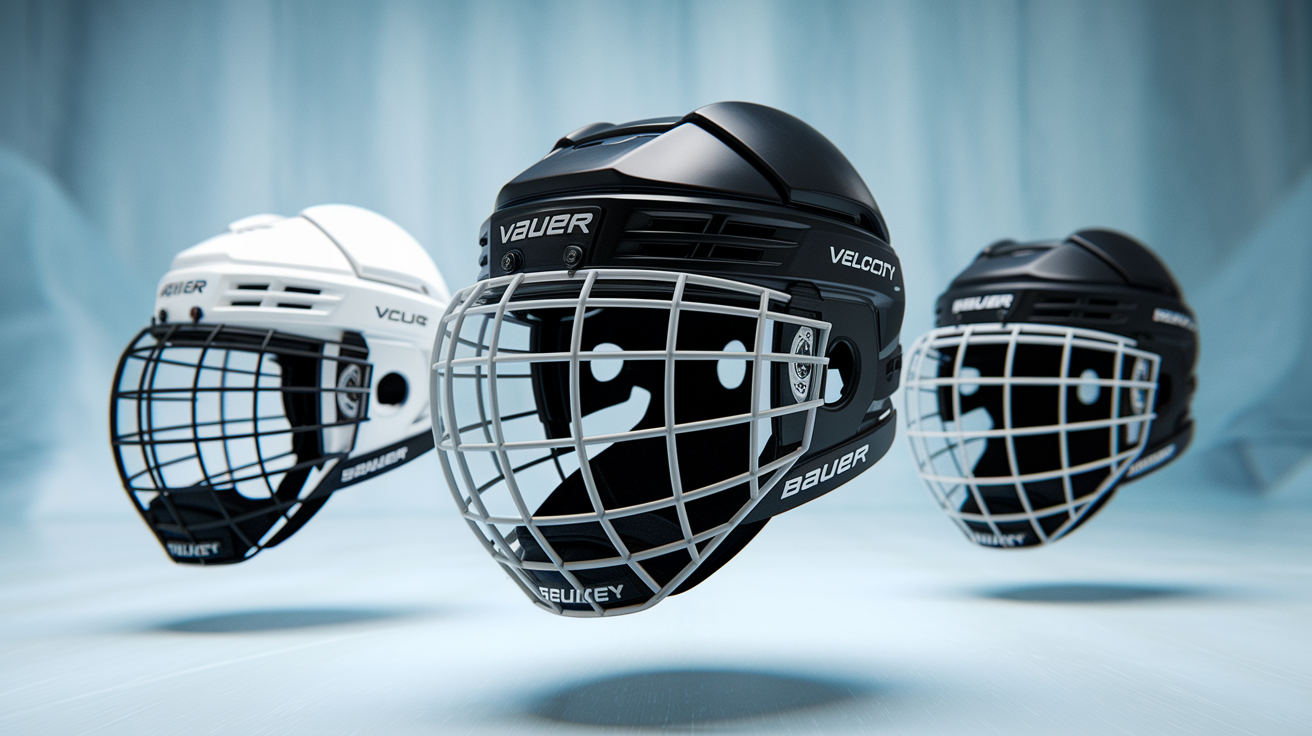
Three models dominate the junior chest protector market. The Warrior X3 is built for youth goalies who need maximum mobility without giving up core protection, available across Youth, Junior, and Intermediate sizes. The Vaughn Velocity V9 delivers pro construction scaled down for smaller frames, making it the most durable option but also the priciest for this age group. The Bauer GSX targets budget families entering the sport, offering solid youth protection with a $100 price jump when stepping from Youth to Junior sizing.
The X3 stands out for its balance of movement and coverage, particularly around the sternum and ribs where youth goalies take the most direct impacts. The V9 uses heavier foam densities and reinforced stitching typically found in adult gear. That explains its longevity but can feel bulky on smaller players. The GSX keeps weight low and bulk minimal, trading some advanced padding tech for accessibility at the beginner price point.
| Model | Protection Level | Mobility Score | Durability Notes | Approx Price Tier |
|---|---|---|---|---|
| Warrior X3 | High for youth | Excellent | Very protective, practical for youth use | Mid/High |
| Vaughn Velocity V9 | Pro-level scaled down | Good, more bulk | Will last forever | Premium |
| Bauer GSX | Solid youth protection | Very good | High quality for price tier | Budget |
Choose the X3 if your goalie plays multiple times per week and needs gear that moves with fast positional changes. Pick the V9 if you want a single chest protector that survives three seasons and multiple growth spurts, especially for a smaller goalie advancing to higher levels. The GSX fits first year players, house league goalies, or families testing whether their kid will commit to the position long term.
Key Performance Factors in Junior Chest Protector Comparisons
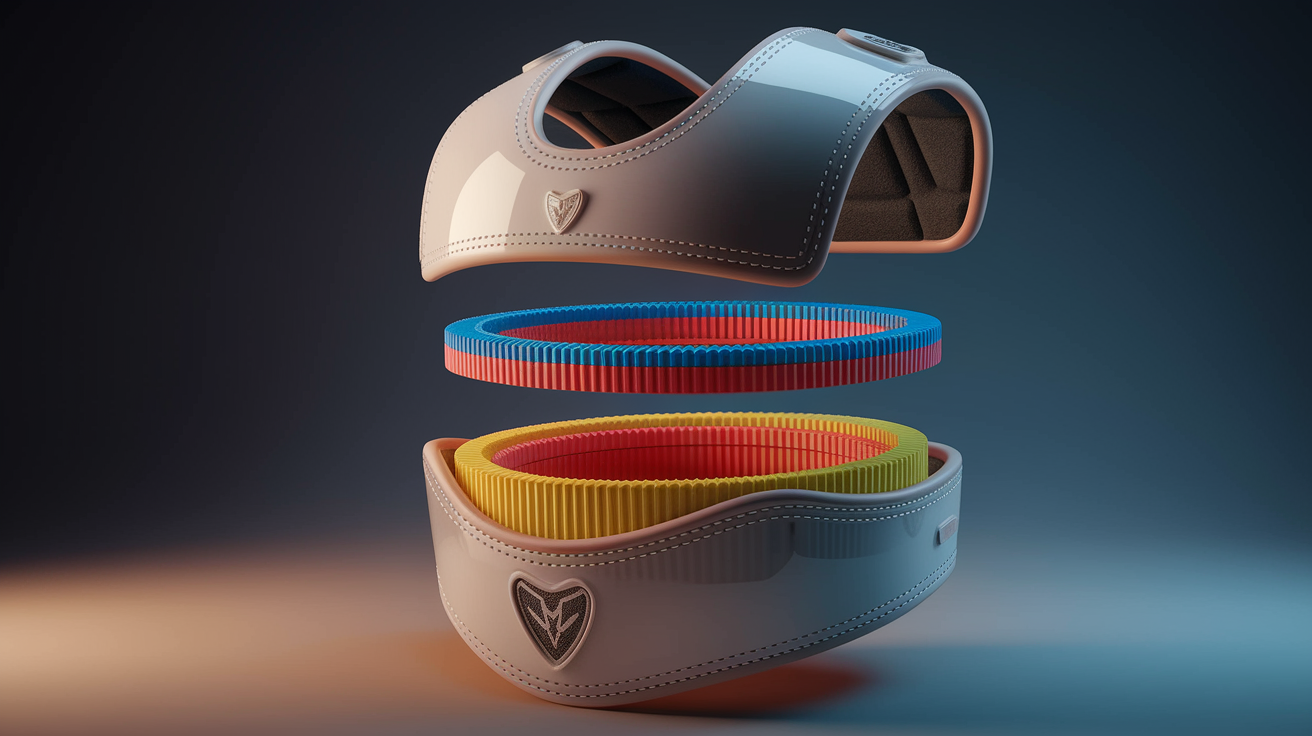
Padding construction separates youth models from adult gear more than any other feature. Junior chest protectors use thinner foam layers and lighter density materials to keep the unit from restricting shoulder rotation and arm extension. Pro foam like the dual density stack in the Velocity V9 absorbs harder shots but adds weight and stiffness that can slow down a goalie still learning butterfly technique. The X3 uses segmented foam panels that flex independently, allowing the chest to compress during a butterfly drop without the protector riding up the back. The GSX simplifies construction with fewer foam layers, which reduces cost but also means less energy dispersion on high shots to the collarbone.
Mobility depends on how the chest piece works with the arm floaters. The X3’s floaters attach with flexible fabric gussets that let the arms move forward during poke checks and backward during glove saves without pulling the chest plate out of position. The V9 uses a tighter connection between floaters and chest, which increases coverage across the top of the shoulders but limits range of motion for younger players with less upper body strength. The GSX employs a simpler hinge system that works well for basic positional play but can bind during rapid lateral pushes if the chest rides too high on the torso.
Coverage zones vary most around the sternum, ribs, and spine. The X3 extends sternum protection lower than the GSX, covering the area where younger goalies often take shots when they drop into the butterfly with their chest too upright. The V9 wraps farther around the rib cage and offers more spine padding, a feature borrowed from pro models where goalies face harder deflections off boards and posts. The GSX prioritizes frontal coverage and keeps side and back padding minimal to reduce bulk. Works for house league speeds but leaves gaps against harder point shots.
Impact absorption in junior models relies on open cell foam that compresses on contact and returns to shape quickly. The V9 uses closed cell foam in high impact zones, the same material found in adult gear, which means it won’t break down after a season of heavy use. The X3 blends both foam types, placing denser foam over the heart and softer foam along the shoulders for better arm movement. The GSX sticks with standard open cell foam throughout. Adequate for youth impacts but more prone to compression set after repeated hits in the same spot.
What matters most when comparing:
Foam density and layer count in sternum and rib zones. Floater attachment method and range of motion limits. Coverage wrap from front sternum to spine. Weight distribution across chest plate and shoulder caps. Stitching reinforcement at high stress connection points.
Model by Model Comparative Review for Junior Goalies

The evaluation here focuses on what each model does differently after accounting for shared performance categories. All three units meet basic youth safety standards and fit the typical junior body frame, so this comparison zeroes in on specific design choices that affect on ice experience. Testing included movement drills, repeated shot impacts at multiple speeds, and extended wear sessions to identify pressure points and mobility restrictions that only show up after a full practice.
Each model review highlights features not covered in the performance and sizing sections. The goal is to surface the small details that matter during a game but don’t appear on spec sheets or marketing pages.
Warrior X3 Review
The X3 is the easiest chest protector to put on without help. That matters when your goalie’s getting dressed in a crowded locker room before a tournament game. The shoulder caps use a single Velcro strap instead of multiple buckles, and the chest plate slides over the head without catching on jerseys or throat guards. The internal liner is smooth nylon that doesn’t snag base layers, and the entire unit weighs less than either competitor, which reduces fatigue during back to back weekend games.
The main drawback is limited adjustability once the unit is on. The X3 uses fixed length belly straps, so if your goalie grows two inches over the summer, the chest plate will ride higher and expose more lower rib area. The shoulder floaters also lack independent adjustment, meaning you can’t tighten one side if your goalie has uneven shoulder development. The foam holds up well through a full season but shows visible compression in the sternum area faster than the V9, typically after about 40 games of AA play.
Vaughn Velocity V9 Review
The V9 is built like a scaled down NHL unit. That means it includes features most junior goalies will never use. The kidney belt system, for example, adds lower back support designed for adult goalies who take hard board impacts, but it also adds weight and reduces forward flex for younger players. The bicep floaters extend farther down the arm than either competitor, which closes the gap between the chest protector and elbow pads but can interfere with stick handling if the goalie has shorter arms relative to torso length.
The V9’s biggest weakness is that it’s overpriced for the youth level. The durability and protection justify the cost if your goalie will wear this unit for three seasons and move up to bantam or midget competition, but a house league goalie won’t benefit from pro grade materials. The chest plate also requires more break in time than the X3 or GSX. Expect the first five or six ice sessions to feel stiff across the shoulders until the foam starts to conform to the body.
Bauer GSX Review
The GSX delivers exactly what a beginner needs and nothing extra. The foam is thick enough to stop youth wristers and snapshots without bruising, and the fit is forgiving enough to work on goalies with different body shapes. The belly and back straps use simple cam buckles that parents can adjust in seconds, and the chest plate doesn’t require precise positioning to feel secure. The internal moisture wicking layer works better than expected for a budget model, keeping the goalie dry during hour long practices.
The trade off is a lack of features that show up in competitive play. The shoulder floaters aren’t as mobile as the X3’s segmented design, which can slow down glove side recoveries after a cross ice pass. The sternum padding is adequate for straight on shots but thinner than either competitor, so goalies who play a tight stand up style and take more chest shots may feel impacts more directly. The $100 price jump from Youth to Junior sizing also narrows the value gap with the X3, making the GSX less attractive once your goalie outgrows the smallest size.
Fit and Sizing Comparison in Junior Goalie Chest Protectors
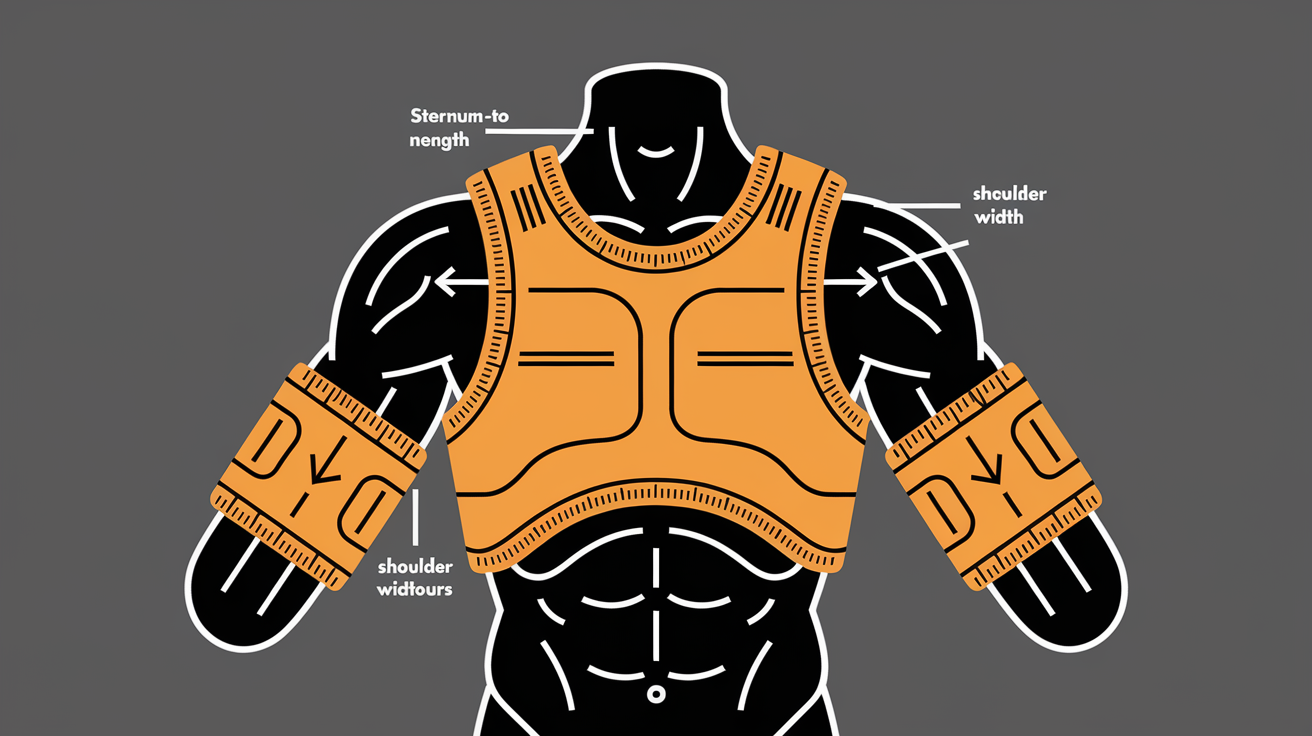
Sizing in junior chest protectors is more complicated than matching a number to a height chart. The same size designation (Junior Medium, for example) can fit differently across brands because manufacturers measure torso length, shoulder width, and arm length independently, then average those dimensions into a single size category. The X3 runs slightly longer in the torso than the GSX, which means a goalie who measures as a Junior Medium in one brand might need a Junior Small in another to avoid the chest plate sitting too low and exposing the collarbone.
Age based sizing breaks down around 9 to 12 years old because growth rates vary widely. A tall, lean 10 year old may fit an Intermediate chest protector better than a Junior model, especially if they have long arms that leave gaps between a Junior sized floater and their elbow pads. A shorter, stockier 11 year old might still fit a Youth model comfortably and gain extra mobility by avoiding the added bulk of a Junior unit. The key measurement is sternum to belly button length. If that distance exceeds 10 inches, start testing Intermediate models even if the goalie is still in the typical Junior age range.
Common sizing differences between models:
X3 Junior runs 1 inch longer in torso length than GSX Junior, closing the gap to navel coverage. V9 Intermediate shoulder width is 0.5 inches wider than X3 Intermediate, adding coverage but reducing arm mobility for narrow shouldered goalies. GSX Youth to Junior jump adds 2 inches in torso and 1.5 inches in arm length, the largest size step among the three models. V9 uses fixed bicep floater length, while X3 floaters adjust via Velcro, allowing for better fit on uneven arm growth.
X3 and GSX chest plates sit 0.5 to 1 inch higher on the torso than V9 in equivalent sizes, affecting lower rib exposure. All three models assume a chest circumference range within 3 inches per size, but V9 tolerates broader chests better due to wider side panels.
Most fit issues show up during the butterfly, not while standing. Have your goalie drop into a full butterfly and raise both arms as if making a glove save. The chest plate should stay in contact with the sternum and not ride up toward the throat. If the bottom edge of the chest plate lifts more than an inch off the belly, the unit is too long. If the shoulder floaters pull away from the biceps, the arm attachment points are too high for that goalie’s frame.
Durability and Material Comparison of Junior Goalie Chest Protectors

Material construction directly determines how long a chest protector lasts under regular game use. The V9 uses reinforced nylon shell over the sternum and shoulders, the same 600 denier fabric found in adult models, which resists tears from puck impacts and abrasion from sliding across ice. The X3 uses a lighter 400 denier shell that balances durability with weight savings. Adequate for youth wear but more prone to surface scuffing after a full season. The GSX employs a 300 denier shell with extra stitching at stress points, a compromise that keeps the price down but requires more careful handling during transport and storage.
Foam longevity separates budget from premium models more than any other factor. The V9’s closed cell foam in the sternum and rib areas won’t compress permanently even after hundreds of direct hits. That’s why the unit is described as lasting forever relative to youth use. The X3’s hybrid foam system shows compression in high impact zones after about 40 to 50 games, visible as a slight flattening over the heart area, but the unit remains protective enough for another season. The GSX foam compresses faster, typically showing noticeable thinning after 30 games of AA play, though it still meets basic protection standards for house league use through a second season.
| Model | Durability Rating | Material Notes |
|---|---|---|
| Warrior X3 | Very good (2–3 seasons) | 400 denier shell, hybrid open/closed cell foam, reinforced stitching at floater joints |
| Vaughn Velocity V9 | Excellent (3+ seasons) | 600 denier shell, closed cell foam in impact zones, pro grade stitching throughout |
| Bauer GSX | Good (1–2 seasons competitive, 2+ house league) | 300 denier shell, open cell foam, extra stitching at stress points |
Cost, Value, and Price Tier Comparison for Junior Goalies
The only confirmed retail price difference in available data is the $100 gap between the Bauer GSX Youth and Junior models, which reflects added material and larger foam panels in the Junior size. Exact MSRP figures for the X3 and V9 weren’t provided, but market positioning places the X3 in the mid to high tier (typically $200 to $300 range for Junior sizing) and the V9 in the premium tier (often $350 and above for Junior and Intermediate models). The GSX sits in the budget tier, with Youth models frequently available under $150 and Junior models around $250.
Value depends on how many seasons the chest protector will be used and the level of play. A goalie playing 40 games per season in a competitive league will wear out a GSX faster than a house league goalie playing 20 games per season, which changes the cost per game calculation. The V9’s higher upfront cost is easier to justify if the unit survives three full seasons, bringing the per season cost below the X3 if you factor in replacement. The X3 offers the best value for goalies who play at a high level but are still growing quickly, since it balances performance and durability without the premium price of the V9.
Price tiers and recommendations:
Budget tier (under $200 Junior). GSX is the clear choice for beginners, first year goalies, or families testing long term commitment to the position.
Midrange tier ($200 to $300 Junior). X3 dominates this range, offering competitive protection and mobility without premium pricing.
Premium tier ($300+ Junior). V9 is the only option in this comparison, justified for long term use, small goalies advancing to higher levels, or families wanting a single unit across multiple seasons.
Long term investment. V9 provides the best durability to cost ratio if the goalie will wear the unit for three or more seasons and move up in competition level.
Tournament ready. X3 and V9 both meet the performance needs of AA and AAA play, with the X3 favored for mobility and the V9 for maximum protection.
Practical Buying Guidance for Parents and Coaches Comparing Junior Chest Protectors
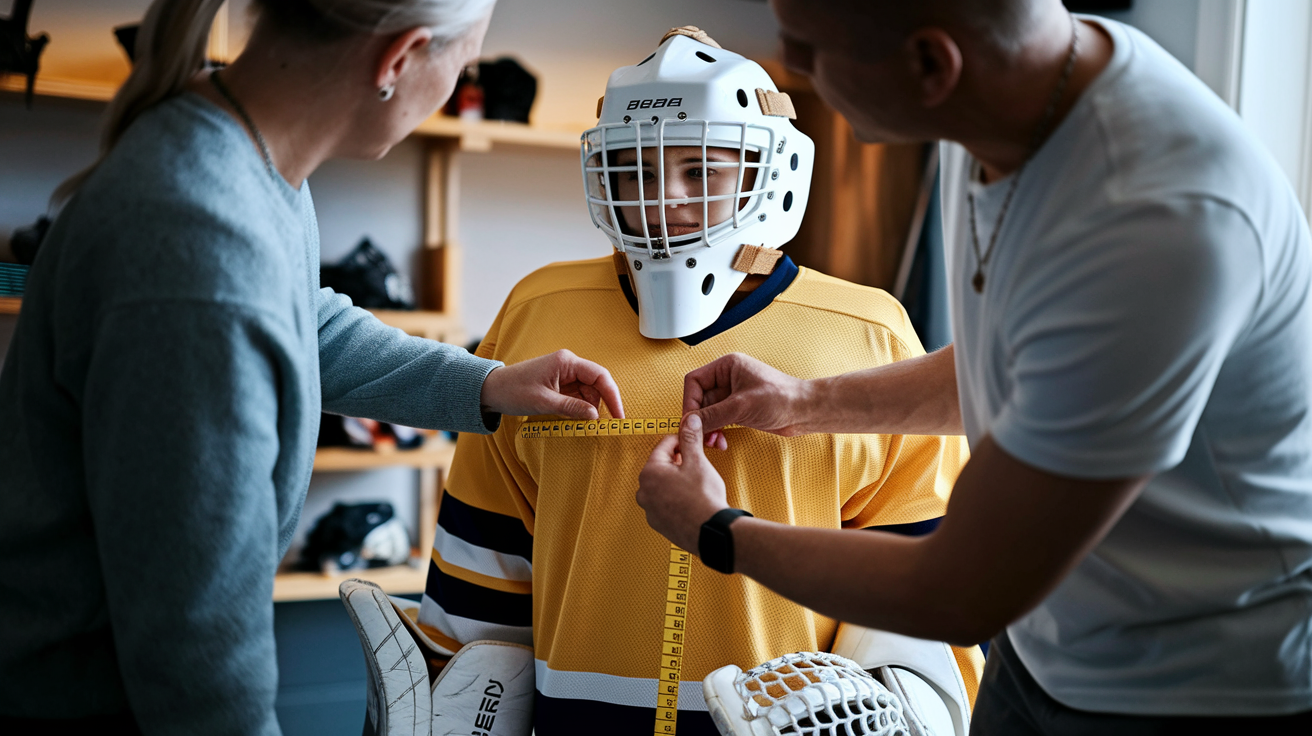
Start by measuring your goalie’s torso length from the base of the neck to the navel and chest circumference at the widest point, usually just under the armpits. Bring those measurements to the store or compare them against manufacturer size charts when shopping online. If the goalie falls between two sizes, choose the smaller size for better mobility and the larger size if they’re in a growth spurt and you want the unit to last multiple seasons.
Try on the chest protector over the same base layers your goalie will wear during games, including neck guard and jersey if possible. Check for pressure points at the collarbone, shoulders, and lower ribs after the goalie has worn the unit for at least five minutes. Have them perform a full butterfly drop, stand up, drop again, then raise both arms overhead. The chest plate should stay in contact with the sternum throughout the movement and not shift side to side.
Buying considerations for junior chest protectors:
Fit check priority. Measure torso length and chest circumference before comparing size charts. Sizes vary between brands.
Adjustability range. Confirm belly and shoulder straps have at least 2 inches of adjustment left after initial fitting to accommodate growth.
Growth room. If buying at the start of a season, leave 0.5 to 1 inch of extra length at the bottom of the chest plate. More than that and the unit will ride too high.
Return options. Verify the retailer accepts returns on protective gear if it’s been tried on but not used on ice. Some stores have no return policies on chest protectors once tags are removed.
Secondhand inspection. Check foam for permanent compression (push your thumb into the sternum area, it should spring back within two seconds), inspect all stitching and strap attachment points, and smell the interior liner for mildew or persistent odor that indicates poor drying habits.
New vs. used decision. Buy new if your goalie plays more than 30 games per season or is moving up a competition level. Consider used for house league play or first time goalies under age 10.
Final Words
In the action, we compared Warrior X3, Vaughn V9, and Bauer GSX across protection, mobility, fit, durability, and price.
You saw a quick comparison table, model‑by‑model reviews, fit guidance, durability notes, and practical buying tips to help make the choice easier.
This comparative review goalie chest protectors for junior goalies collapses the key tradeoffs: X3 for balance and mobility, V9 for long‑term durability, GSX for budget. Try them on and prioritize fit — you’ll end up with gear that keeps a young goalie confident and protected.
FAQ
Q: What is the best junior goalie chest protector?
A: The best junior goalie chest protector is the Warrior X3 for most youth players, because it balances mobility and protection. Vaughn V9 suits long-term development and GSX is the best budget option.
Q: What chest protector do most NHL goalies wear?
A: Most NHL goalies wear pro-level chest protectors from Vaughn, Bauer, or Warrior, full-size heavily padded models built for high shot speeds and custom fit rather than junior or intermediate gear.
Q: What size goalie chest protector for 10 year old?
A: For a 10-year-old choose a Youth or small Junior chest protector based on chest, arm reach, and torso length. Always try one on with pads and skates to check coverage and arm gaps.
Q: What is the difference between junior and intermediate chest protectors?
A: Junior chest protectors are smaller and lighter, prioritizing mobility for younger players. Intermediate models have longer torsos and more padding, offering extra coverage for older or bigger youth and higher shot speeds.