

The real season killer isn’t overtraining, it’s poor fueling.
Teams that skip daily calories and miss carb timing watch conditioning slide, late-game speed fall, and injuries tick up.
This post lays out simple, team-ready strategies, including what to eat and when, how to periodize carbs, steady protein plans, and hydration tactics that travel with you.
Follow these priorities and your team keeps energy, recovers faster, and shows up ready on game day.
Key In‑Season Nutrition Priorities for Optimal Hockey Conditioning
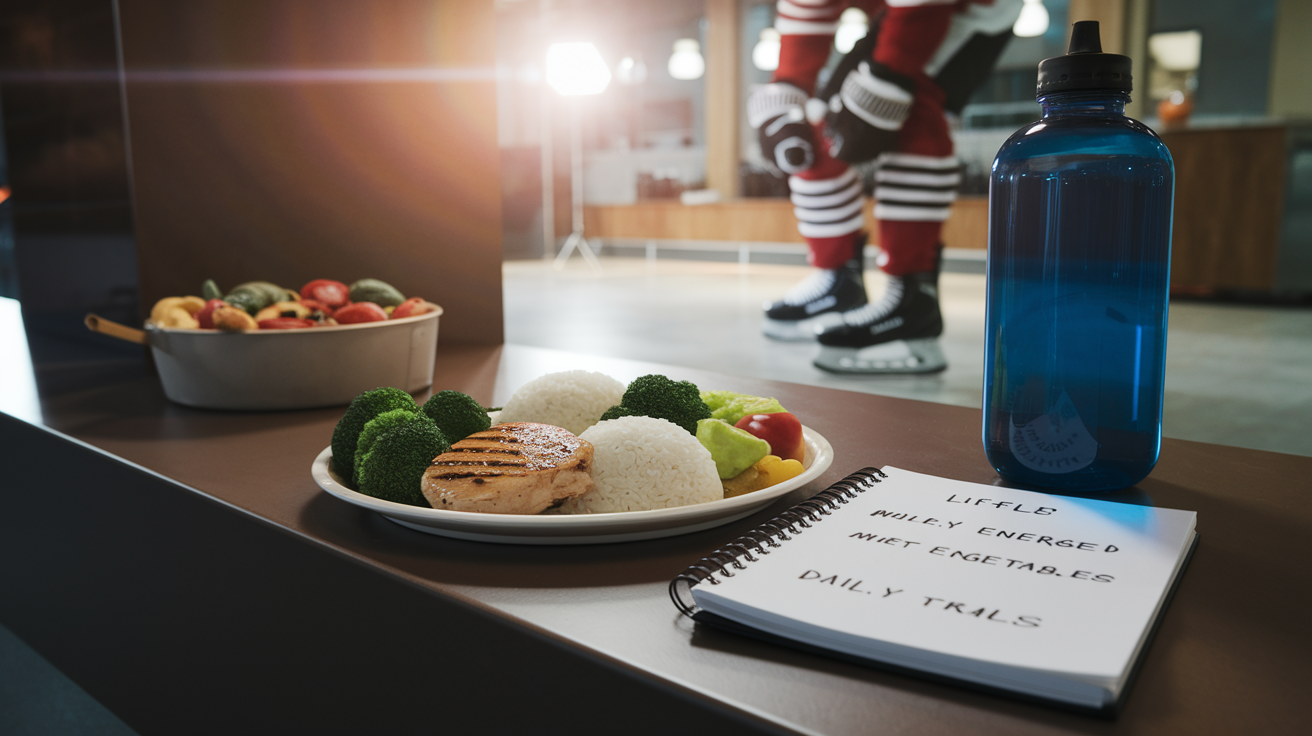
Hockey demands consistent energy across a season that stretches five to seven months. Travel, back-to-back games, reduced training volume compared to the offseason. Daily energy needs for most competitive players sit between 3,000 and 4,500 calories depending on body weight, practice frequency, and game load. The primary risk during the season isn’t overtraining. It’s inconsistent fueling that creates performance drift, poor recovery, and increased injury vulnerability. Maintaining energy intake day after day, meal after meal, is the foundation of in-season conditioning.
Carbohydrate timing becomes critical when training frequency drops but game intensity stays high. Most teams practice two to three times per week during the season and play one to three games, creating uneven energy demands. Carbs need to be concentrated around high-output days (game days and heavy practice days) with intake pulled back slightly on rest or light skill days. Protein intake should stay steady at roughly 1.6 to 2.2 grams per kilogram of body weight, distributed across four to six meals to support muscle repair and minimize the catabolic stress of repeated high-intensity shifts.
Hydration becomes harder to manage during the season because of irregular schedules, travel dehydration, and the false assumption that lower training volume means lower fluid needs. Game-day sweat rates often match or exceed practice rates. Many players arrive at the rink already 1–2 percent dehydrated from travel or poor morning hydration habits. Start hydration protocols early in the day, not an hour before puck drop.
Five must-execute priorities for hockey teams during the season:
Maintain total daily energy intake at or near offseason levels unless body composition is clearly off target. Time the majority of carb intake within four hours of practices and games. Distribute protein evenly across the day in 25–40 gram servings every three to four hours. Begin hydration first thing in the morning and track fluid intake with specific volume targets. Prepare portable, repeatable meals and snacks to avoid relying on arena food or skipping meals during travel.
Structuring Periodized Nutrition Across the Hockey Season
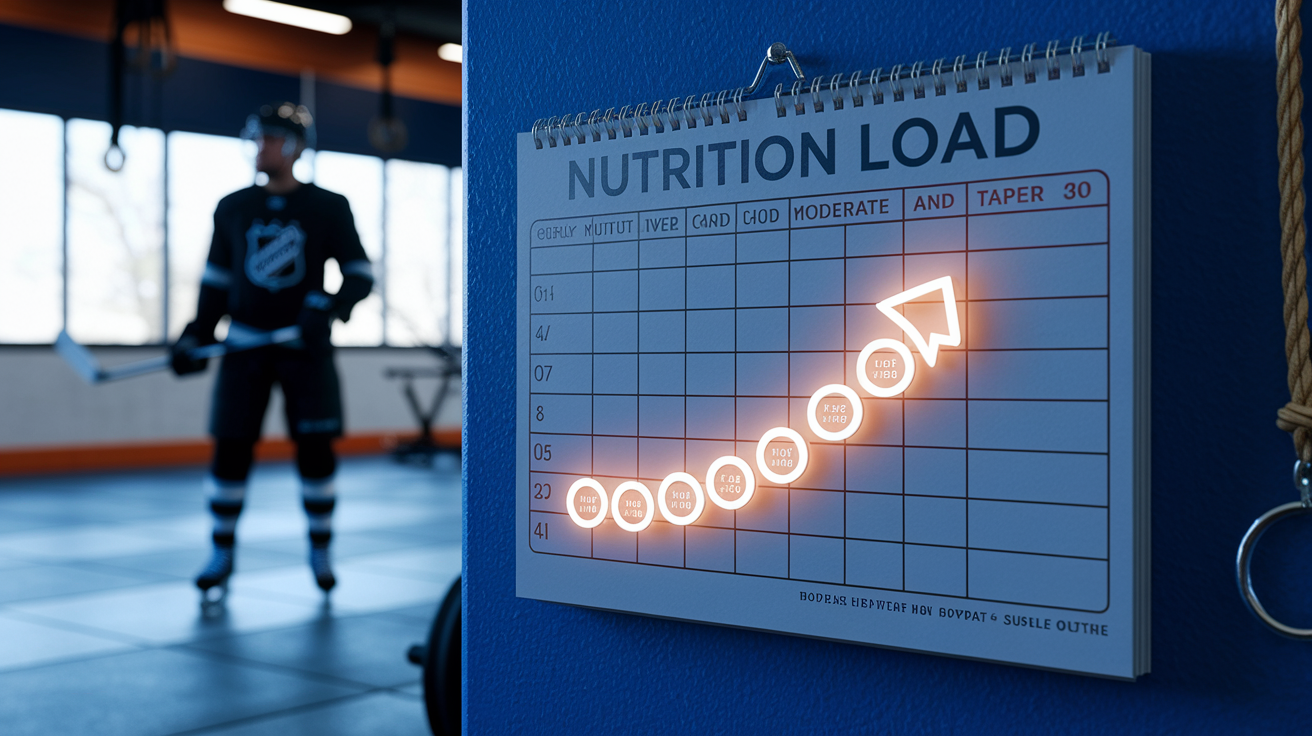
Nutrition periodization means adjusting intake based on what the body’s being asked to do that week. During heavy weeks (early season conditioning blocks, playoff pushes, or tournament weekends) carb needs climb because glycogen depletion is frequent and incomplete recovery between sessions becomes the norm. A player might need 6 to 8 grams of carb per kilogram of body weight during these stretches. During moderate weeks with two practices and one game, intake can drop to 4 to 6 grams per kilogram. Taper weeks before playoffs or during scheduled rest periods allow carb intake to settle near 3 to 5 grams per kilogram while protein and healthy fats take up a slightly larger share of total calories to support hormonal balance and tissue repair.
The mistake most teams make is eating the same way every week regardless of load. That approach either leaves players underfueled during heavy weeks or carrying excess body fat during lighter stretches. Intelligent periodization requires weekly communication between coaching staff, strength coaches, and the athletes themselves about upcoming demands.
Steps for adapting nutrition based on training cycles:
Identify the weekly training and game load at the start of each week (number of practices, games, travel days, and rest days). Adjust total carb intake upward during high-output weeks and downward during recovery or taper weeks. Keep protein intake steady across all cycles to preserve muscle mass and support repair. Monitor body weight and performance markers (energy levels, strength metrics, shift quality) weekly to confirm the plan’s working.
Macronutrient Guidelines for Hockey Performance

Hockey is a high-intensity, intermittent sport that depletes glycogen rapidly during games and hard practices. Carb availability directly impacts repeat-sprint ability, decision-making speed, and late-game conditioning. Most competitive hockey players should target 4 to 7 grams of carb per kilogram of body weight daily, with the upper end reserved for heavy training weeks and the lower end for rest or skill-focused days. A 180-pound (82 kg) player in mid-season would aim for roughly 330 to 575 grams of carb per day depending on that week’s load.
Protein intake supports muscle repair after contact, high-force skating, and resistance training. The evidence-based range for hockey players is 1.6 to 2.2 grams per kilogram of body weight, spread across the day in roughly equal servings. That same 82 kg player needs between 130 and 180 grams of protein daily. Hitting the lower end is fine during lighter weeks. The upper end becomes more important during heavy blocks, injury recovery, or when trying to maintain muscle mass during a calorie deficit.
Healthy fats round out the diet and support hormone production, inflammation control, and sustained energy during lower-intensity periods. Fat intake typically falls between 0.8 and 1.2 grams per kilogram of body weight, or roughly 20 to 35 percent of total daily calories. Prioritize sources like olive oil, nuts, fatty fish, and avocados. Keep fat intake moderate in the hours leading up to games to avoid delayed gastric emptying and GI discomfort.
| Macronutrient | Recommended Range | Primary Role |
|---|---|---|
| Carbohydrate | 4–7 g/kg body weight | Fuel for high-intensity shifts, glycogen replenishment |
| Protein | 1.6–2.2 g/kg body weight | Muscle repair, immune function, lean mass maintenance |
| Fat | 0.8–1.2 g/kg body weight | Hormone production, inflammation control, sustained energy |
Pre‑Game and Pre‑Practice Fueling Strategies
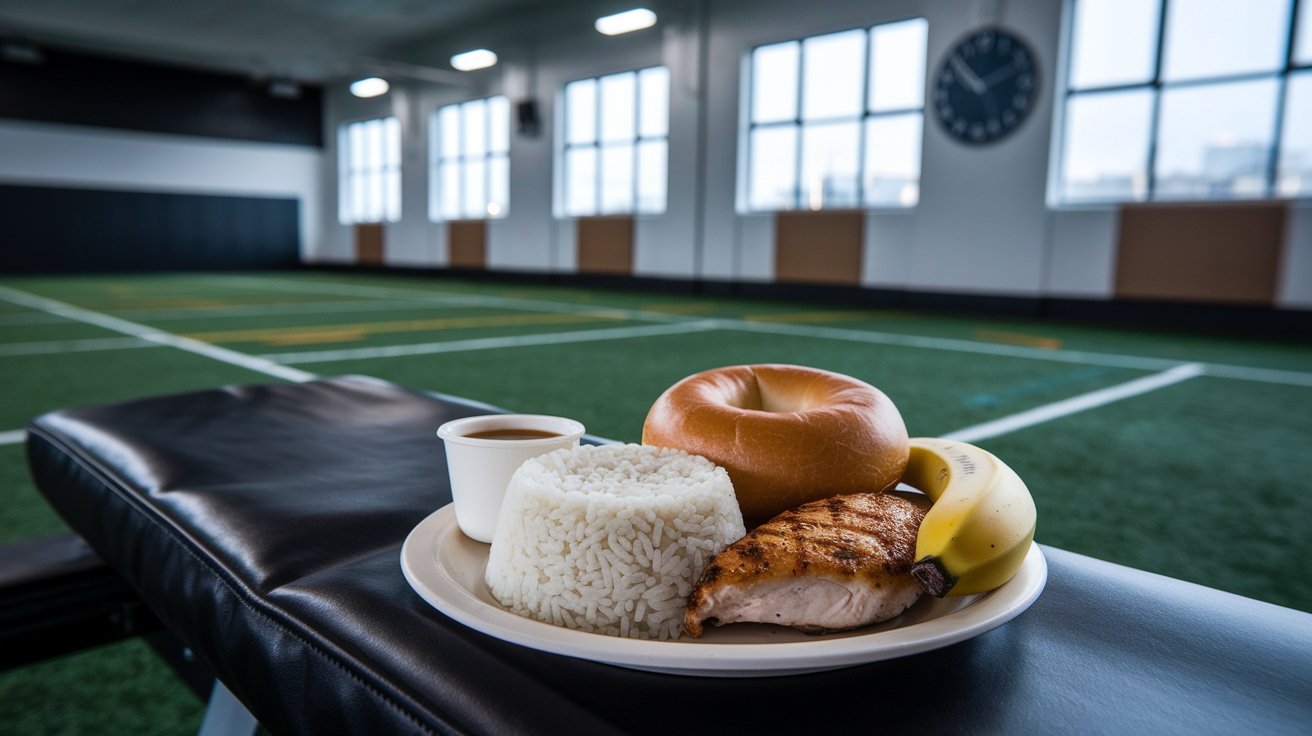
The pre-game meal serves one purpose: deliver readily available carb to top off muscle and liver glycogen without creating GI distress. Timing matters more than the specific food. Aim to finish a full meal two to four hours before puck drop. That window allows digestion to settle while keeping blood glucose stable. A typical pre-game plate includes 4 to 6 ounces of lean protein (grilled chicken, turkey, or white fish) paired with 1 to 1.5 cups of easily digestible carb like white rice, pasta, or a plain bagel. Add a small serving of cooked vegetables if tolerated, and keep fat and fiber minimal.
For players who struggle with nerves or early game times, a lighter snack 60 to 90 minutes before the game can help. This snack should be almost entirely carb. Rice cakes with honey, a banana, a small smoothie, or half a peanut butter and jelly sandwich. Test these options during practice days first. What works in a low-stress practice might not work when adrenaline’s running high before a playoff game.
Ideal pre-game foods:
White rice or jasmine rice with grilled chicken or turkey. Plain pasta with marinara sauce and lean ground turkey. Bagel with a thin spread of peanut butter and sliced banana. Smoothie with banana, berries, yogurt, and a scoop of protein powder. Rice cakes with honey or almond butter. Sports drink or diluted fruit juice for quick-digesting carb in the final hour.
Post‑Game Recovery Nutrition Protocols

The 30 to 60-minute window after the final buzzer is when glycogen resynthesis happens fastest. Muscle cells are primed to pull glucose out of the bloodstream and store it for the next session. Missing this window doesn’t ruin recovery, but it slows it down. The goal is simple: get 1 to 1.5 grams of carb per kilogram of body weight into the body as quickly as possible, paired with 20 to 30 grams of protein to kickstart muscle repair. For that 82 kg player, that means roughly 80 to 120 grams of carb and a palm-sized portion of protein.
Practical post-game options include chocolate milk, a protein shake with a banana, a turkey sandwich on white bread with fruit, or leftover pasta and chicken from the pre-game meal. The format matters less than the macros and the timing. If the team’s traveling or waiting for a post-game meal, pack portable options in a cooler. Shaker bottles, pre-made sandwiches, or even sports drinks paired with protein bars.
The second phase of recovery happens over the next four to six hours. Continue eating balanced meals with carb and protein every two to four hours. Hydration continues during this phase as well. Most players finish games down 1 to 2 percent body weight in fluid, and that needs to be replaced before the next skate.
Recovery window steps:
Consume 20–30 grams of protein and 1–1.5 g/kg of carb within 30–60 minutes of the final whistle. Rehydrate with 16–24 ounces of water or electrolyte drink immediately post-game. Follow up with a full balanced meal within two to three hours if the immediate post-game snack was small. Continue protein and carb intake every three to four hours through the rest of the day.
Hydration and Electrolyte Management for Hockey Teams
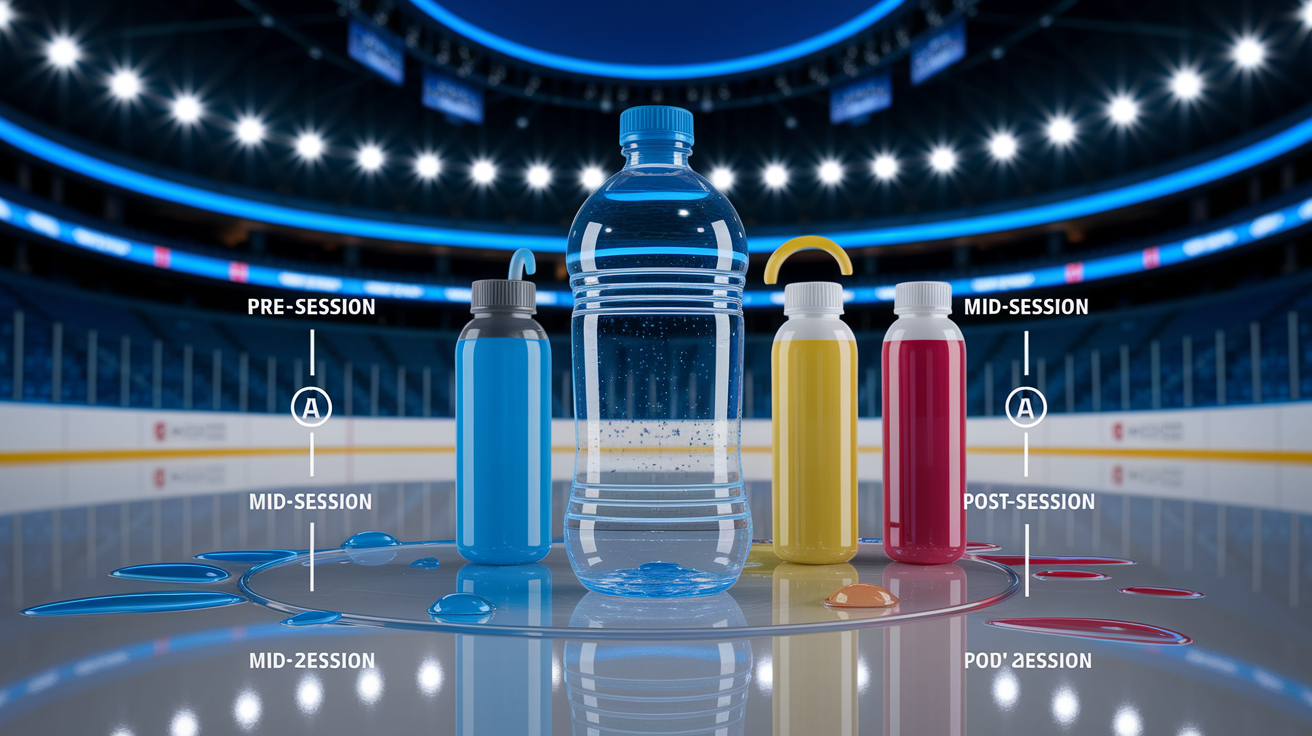
Hockey players can lose 1 to 2 liters of fluid per hour during games, and sweat rates climb even higher during intense practices or in warm rinks. Even a 2 percent drop in body weight from dehydration (roughly 3 to 4 pounds for a 180-pound player) impairs decision-making, skating speed, and recovery between shifts. Most players show up to the rink already slightly dehydrated, especially on early-morning game days or after long travel.
Start hydration the night before. Drink 16 to 20 ounces of water with dinner and another 8 to 12 ounces before bed. On game day, drink another 16 to 20 ounces within an hour of waking up, and continue sipping water throughout the morning. Three to four hours before puck drop, aim for another 16 to 20 ounces of fluid (water or a low-sugar electrolyte drink). In the final hour before the game, sip 8 to 12 ounces slowly. Chugging large volumes right before the game increases the risk of sloshing and GI discomfort.
Hydration checkpoints:
Pre-session: Drink 16–20 oz of water or electrolyte drink 3–4 hours before the game, then sip 8–12 oz in the final hour before puck drop. Mid-session: Sip water or a sports drink between periods. Aim for 6–10 oz per period to offset sweat loss without overloading the stomach. Post-session: Drink 16–24 oz of fluid immediately after the game, then continue rehydrating over the next two to four hours until urine is pale yellow.
Team Meal Planning and Logistics During the Season
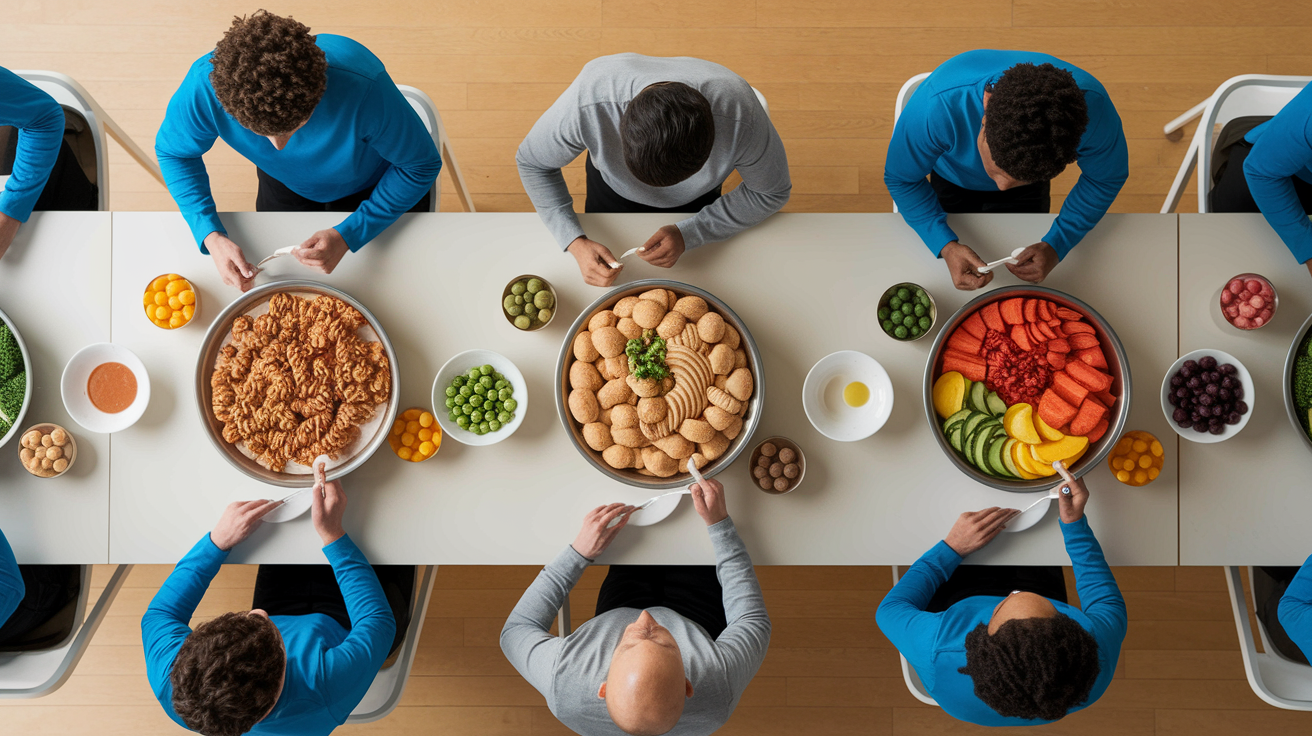
Coordinating team meals during the season removes decision fatigue and ensures every player has access to performance-level nutrition regardless of family budget or cooking skill. The simplest approach is buffet-style meals built around three predictable components: a lean protein, a carb base, and a vegetable or fruit option. Pre-game meals might include grilled chicken breast, white rice, steamed broccoli, and rolls. Post-game meals could be pasta with marinara, ground turkey, a side salad, and fruit.
Consistency matters more than variety. Players perform better when they know what to expect and have tested the food in their system multiple times. Rotating between three or four proven meals is smarter than introducing new foods on game day. Assign a staff member or parent coordinator to handle meal prep, portions, and timing so coaches can focus on tactics and the athletes can focus on playing.
Budget and logistics often dictate whether meals happen at the rink, a team hotel, or a nearby restaurant. When eating out, call ahead and request simple modifications. Plain grilled chicken, pasta with marinara on the side, white rice instead of fried rice. Most restaurants will accommodate if given advance notice. For home games, bulk-prepped meals can be stored in coolers and reheated in a microwave or served cold if the food’s designed for it.
Travel Nutrition Strategies for Hockey Teams

Travel disrupts every part of a nutrition plan. Early flights mean skipped breakfasts. Long bus rides mean reliance on gas station snacks. Hotel breakfast buffets tempt players with pastries and syrup-heavy pancakes when they need protein and whole-food carbs. The best travel nutrition strategy is to remove as much uncertainty as possible by packing known, portable options and setting hydration targets before leaving the rink.
Pre-pack individual snack bags for each player with shelf-stable items that hit macronutrient targets. A typical travel bag might include a protein bar, a pack of trail mix, a bagel, a packet of nut butter, and a piece of fruit. Add a shaker bottle and single-serve protein powder if the team will have access to water. For longer trips, coordinate with the hotel or bus company to provide simple meals. Deli sandwiches, wraps with turkey and veggies, yogurt cups, and fruit.
Recommended travel-friendly foods:
Peanut butter and jelly sandwiches on whole-grain bread. Protein bars with at least 15 grams of protein and minimal added sugar. Mixed nuts or trail mix portioned into single-serving bags. Greek yogurt cups with granola or fruit. Pre-cooked chicken or turkey wraps with minimal sauces.
Budget‑Friendly Nutrition Strategies for Teams
High-performance nutrition doesn’t require expensive supplements or organic specialty foods. The core of any effective team nutrition plan is built on affordable staples available at any grocery store: bulk rice, pasta, oats, eggs, canned tuna, frozen chicken, peanut butter, and seasonal produce. A 10-pound bag of white rice costs less than ten dollars and provides dozens of servings of fast-digesting carb. A flat of eggs delivers high-quality protein for pennies per serving.
Focus spending on the foods that matter most. Carb sources that digest well, lean proteins that are easy to prepare in bulk, and simple snacks that travel without refrigeration. Avoid pre-packaged “athlete” foods marketed at a premium. A homemade peanut butter and jelly sandwich delivers the same macros as many expensive recovery bars at a fraction of the cost. Greek yogurt, bananas, and granola create an effective post-practice snack for under two dollars per serving.
| Food Type | Affordable Options | Notes |
|---|---|---|
| Carbohydrate base | White rice, pasta, oats, bread, potatoes | Buy in bulk; store dry goods long-term |
| Lean protein | Eggs, canned tuna, frozen chicken breast, ground turkey | Frozen protein is often cheaper and just as nutritious as fresh |
| Healthy fats | Peanut butter, mixed nuts, olive oil | Buy store-brand nuts in bulk bins |
| Fruits and vegetables | Bananas, apples, frozen mixed vegetables, canned tomatoes | Frozen and canned options are budget-friendly and nutrient-dense |
| Snacks | Greek yogurt, granola, rice cakes, PB&J | Prepare snacks in bulk and portion into individual bags |
Safe and Effective Supplement Use for Hockey Players

Most hockey players don’t need supplements if they’re eating enough total food and hitting macronutrient targets consistently. That said, a few supplements have strong research backing and practical value for in-season performance. Creatine monohydrate improves repeat-sprint performance and supports strength gains even during lower-volume training phases. The standard dose is 3 to 5 grams per day, taken any time of day with or without food. It’s inexpensive, well-studied, and safe for long-term use.
Caffeine improves reaction time, power output, and perceived effort during games and practices. A dose of 3 to 6 milligrams per kilogram of body weight (roughly 200 to 400 milligrams for most players) taken 30 to 60 minutes before a game can provide a noticeable performance boost. Avoid habitual high-dose use, which can lead to tolerance and sleep disruption. Save caffeine for games and key practices rather than using it daily.
Protein powder is a convenience tool, not a magic solution. It helps players hit daily protein targets when whole-food options are limited. During travel, immediately post-game, or between classes. Choose a product that provides 20 to 30 grams of protein per serving with minimal added sugar. Avoid proprietary blends, unregulated pre-workouts, and any product that makes performance claims without listing specific ingredients and doses. When in doubt, check that the product is third-party tested by NSF Certified for Sport or Informed-Sport to reduce contamination risk.
Nutrition Support for Injury Recovery During the Season
Injured players face a nutrition dilemma: they need enough energy to support tissue repair, but reduced activity means lower total energy expenditure. The instinct is often to cut calories to avoid fat gain, but that approach slows healing and increases the risk of losing muscle mass during rehab. The smarter strategy is to maintain total energy intake at or near pre-injury levels while adjusting macronutrient distribution to prioritize protein and anti-inflammatory nutrients.
Protein needs climb during injury recovery. Target the upper end of the performance range (around 2.0 grams per kilogram of body weight) to provide the amino acids required for collagen synthesis, muscle repair, and immune function. Distribute that protein across four to six meals per day to maintain a steady supply of building blocks. Omega-3 fatty acids from fatty fish, fish oil, or algae supplements help control inflammation without impairing the healing process. Aim for 2 to 3 grams of combined EPA and DHA per day during acute injury phases.
Micronutrients like vitamin D, calcium, zinc, and vitamin C all play roles in bone and soft-tissue healing. Most of these needs can be met through a varied diet that includes dairy or fortified alternatives, colorful vegetables, and citrus fruits. A basic multivitamin provides insurance, but it shouldn’t replace whole-food sources. Sleep remains the primary recovery tool. Prioritize 8 to 9 hours per night and consider an afternoon nap if pain or rehabilitation workload is disrupting overnight sleep quality.
Recovery nutrition priorities during injury:
Maintain total daily energy intake at or near pre-injury levels to support tissue repair and minimize muscle loss. Increase protein intake to approximately 2.0 g/kg of body weight, distributed evenly across the day. Include omega-3 fats from fatty fish or supplements to manage inflammation without slowing healing. Ensure adequate intake of vitamin D, calcium, zinc, and vitamin C through whole foods and consider a basic multivitamin if dietary variety is limited.
Final Words
in the action, we ran through in-season priorities, periodized plans, macronutrient targets, pre- and post-session fueling, hydration checks, team meal logistics, travel tips, budget options, supplements, and rehab nutrition.
Takeaway: keep carbs timed around activity, hit daily protein targets, monitor fluids and electrolytes, and plan simple team meals so players stay fueled and recovered.
Use these nutrition strategies for team conditioning during hockey season as a checklist and start small—consistent habits add up. You’ll keep the team sharp and ready.
FAQ
Q: What are the key in-season nutrition priorities for hockey teams?
A: The key in-season nutrition priorities are steady daily energy to match heavy workloads, timely carbs and protein around sessions for performance and recovery, plus consistent hydration and electrolyte replacement during long seasons.
Q: How should teams structure periodized nutrition across the season?
A: Teams should structure periodized nutrition by matching intake to training load: increase carbs on high-volume weeks, maintain balanced macros during moderate weeks, and reduce calories slightly during tapers for recovery.
Q: What macronutrient targets support hockey performance?
A: Recommended macronutrient targets for hockey are high carbohydrates for sprint work, protein at roughly 1.6–2.2 g/kg to support recovery, and healthy fats to aid energy and hormones in moderation each day.
Q: What are practical pre-game and pre-practice fueling strategies?
A: Practical pre-game fueling includes digestible carbohydrates 2–4 hours before activity, a small carb snack 30–60 minutes pre-ice if needed, and low-fat, easy-to-digest foods to avoid stomach upset.
Q: What should post-game recovery nutrition include and when?
A: Post-game recovery should include quick carbs within 30–60 minutes to restore glycogen and 20–30 g of protein to support muscle repair, followed by a balanced meal within two hours.
Q: How much should hockey players drink and when for proper hydration?
A: Players should drink to replace sweat losses—often 1–2 liters per hour—by hydrating before practice, sipping fluids during activity with electrolytes, and rehydrating fully after sessions based on body weight changes.
Q: How can staff coordinate team meals during the season?
A: Staff should coordinate team meals by planning buffet-style options with predictable carbs, proteins, and veggies, scheduling meal times around practice, and keeping portions consistent to meet each player’s energy needs.
Q: What travel nutrition strategies keep teams fueled on the road?
A: Effective travel nutrition uses pre-packed snacks, set hydration targets, and planned stops to avoid low-quality food, plus predictable meal timing to maintain energy and recovery across travel days.
Q: What are budget-friendly nutrition strategies for teams?
A: Budget-friendly strategies rely on bulk carbs like rice and pasta, affordable lean proteins such as canned tuna or chicken, seasonal fruit, yogurt, and simple snacks to meet team energy needs without high costs.
Q: Which supplements are safe and effective for hockey players?
A: Creatine and caffeine are evidence-backed supplements for power and focus; use third-party-tested products, follow dosing guidelines, and avoid unregulated or multi-ingredient mixes without professional oversight.
Q: What nutrition helps injured players recover during the season?
A: Injury recovery nutrition emphasizes adequate calories, higher protein (around 2.0 g/kg), omega-3s and vitamin-rich foods for healing, and maintaining energy availability to prevent muscle loss during rehab.