

Soft hands beat raw power every time.
Too many players see a hard pass and tense up, then watch the puck ricochet away.
This piece cuts through the noise and gives clear, practice-ready steps for stick position and cushioning so you can receive heavy passes cleanly.
You’ll learn how to set your body, present the blade, and time the give, plus simple drills to fix bad habits.
Read on and stop losing puck battles on first touch.
Core Techniques for Receiving Hard Hockey Passes
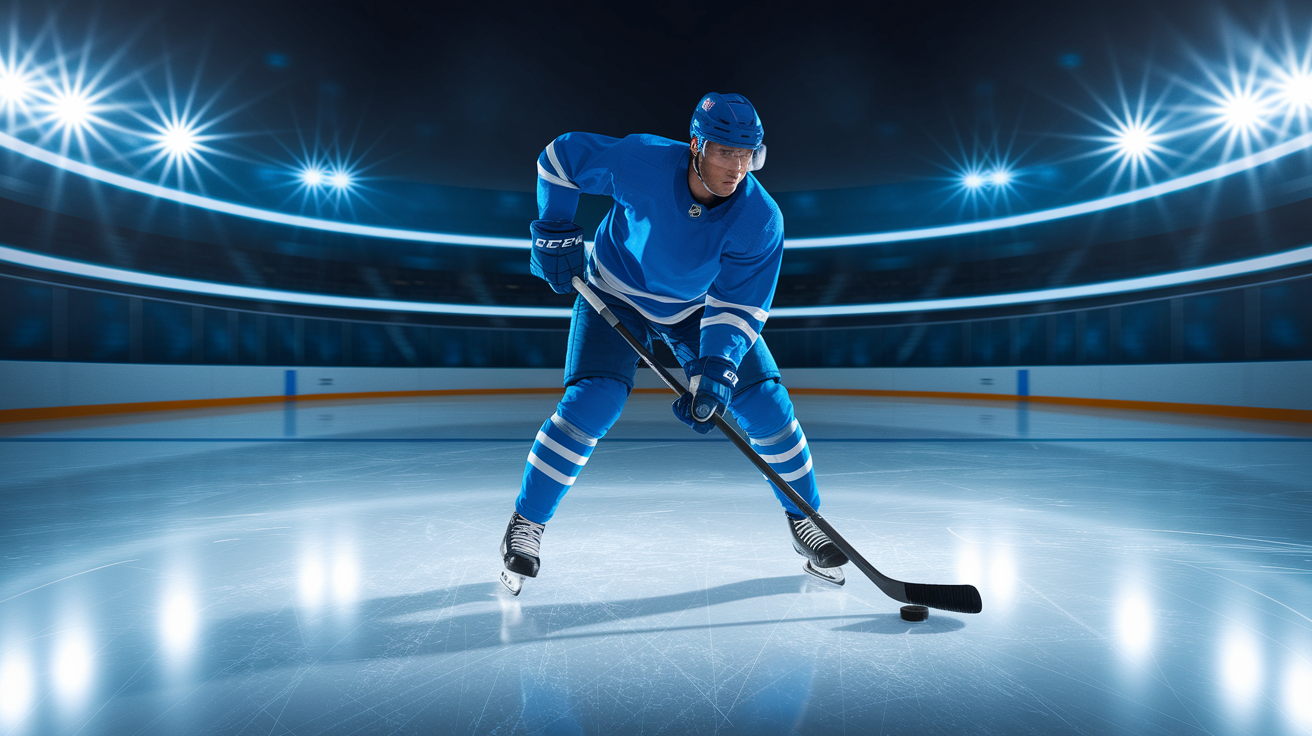
Receiving a hard pass starts with your body position. Before the puck gets there, square your hips and shoulders toward the pass lane. You’re creating a stable platform. Keep your feet shoulder-width apart and bend your knees about 15 to 30 degrees. Drop your center of gravity. This athletic stance lets you absorb energy through your legs instead of forcing your hands and wrists to do everything. When your body’s aligned with the incoming puck, shift your weight slightly forward or backward to cushion the impact and keep control.
Your stick angle determines how much blade surface actually meets the puck. Hold your top hand near the top of the shaft for maximum leverage, bottom hand 6 to 8 inches below it. Present the blade at a slight cup, around 5 to 15 degrees open on the forehand. That way the puck hits the center of the blade rather than bouncing off the toe or heel. As the puck makes contact, give with your wrists and arms. Allow 2 to 6 inches of controlled rearward blade travel. This cushioning motion absorbs the pass’s velocity and settles the puck onto your tape instead of letting it ricochet away.
Timing your give is everything. Most players need 0.3 to 1.0 seconds to fully absorb a hard pass and transition into their next move. Rush that window and the puck bounces. Hold the blade rigid and you lose control.
Here’s the step-by-step sequence for receiving a hard pass:
- Read the pass early and move your feet to align your body with the incoming puck line, positioning yourself so the pass arrives between your skates and mid-thigh.
- Set your grip with your top hand at the top of the shaft and your bottom hand 6 to 8 inches down. Loosen your top-hand grip slightly to prepare for absorption.
- Present the blade flush on the ice (or at the right height for elevated passes), opened 5 to 15 degrees to create a pocket that cups the puck.
- Cushion on contact by flexing your wrists and elbows backward 2 to 6 inches as the puck strikes the blade. You’re converting hard energy into controlled deceleration.
- Secure and transition by settling the puck onto the sweet spot of your blade, then immediately shift into your next action. Skating, shooting, or passing.
Techniques for Forehand, Backhand, and Aerial Pass Reception

Forehand reception gives you the most blade control because the natural curve of your stick creates a pocket for the puck. When a hard pass comes to your forehand side, present the toe of your blade slightly forward and keep the face cupped at 5 to 15 degrees. As the puck arrives, rotate your top wrist inward to absorb impact and guide the puck toward the heel of your blade. That’s where you’ve got the most stability. Your bottom hand should stay relaxed, letting the shaft flex slightly and dampen the pass. Aim to absorb the energy within 0.3 to 0.6 seconds, then immediately move the puck into shooting or passing position. Most players find forehand receptions easier because the blade naturally faces the direction of play. Transitions are faster and more intuitive.
Backhand reception requires softer hands and a different blade presentation. Because the backhand side offers less surface area and less natural curve support, you’ve got to compensate by rotating your hips 10 to 30 degrees toward the pass and opening your blade face 10 to 30 degrees to create a receiving angle. Let the puck contact the inside heel of your blade rather than the center or toe. That reduces deflections and gives you a stable platform for control. Your top hand needs to pronate slightly, rolling forward so the blade stays vertical and doesn’t turn the puck away. Expect to give more with your wrists on backhand receptions. Allow 4 to 8 inches of controlled rearward travel and use your knee flex to help absorb vertical momentum. Once you secure the puck, keep it close to your body and transition to your forehand for shooting, or execute a quick backhand pass if that lane’s open.
Aerial passes require timing and a two-handed blade adjustment. When the puck arrives between waist and chest height, frame it with your forearms and meet it with both hands on the stick. That maximizes control and absorbs the downward force. Tilt your blade face slightly upward, about 20 to 40 degrees, so the puck lands in the pocket rather than bouncing off the flat surface. As contact happens, pull the blade down and back in one smooth motion to guide the puck toward the ice. You’re using gravity and your wrist action to settle it quickly. If the pass comes above shoulder height, trap it against your stick shaft first. Then let it drop to the blade and settle it on the ice in a controlled second touch. Practice receiving elevated passes at different heights so you develop the muscle memory to adjust blade angle and hand position without thinking.
Common Mistakes Players Make When Receiving Hard Passes
Most reception errors come from stiff wrists and locked elbows. When you hold your stick rigidly, the puck has nowhere to go except bouncing off the blade. Often back toward the passer or into an opponent’s lane. New players especially tend to tense up when they see a hard pass coming. That makes the problem worse. The fix is simple: consciously soften your top-hand grip as the puck arrives and allow your wrists and forearms to flex backward. That small adjustment turns your stick into a shock absorber instead of a trampoline.
Poor foot positioning is the second major issue. If your feet are too close together or pointing the wrong direction, you can’t transfer weight properly and your body can’t help absorb the pass. Players also make the mistake of reaching across their body to receive a pass instead of moving their feet to get square. That cross-body reach reduces blade control and increases turnovers because your hands are stretched and your weight is off-balance.
Here are the four most common reception mistakes to avoid:
- Slapping at the puck instead of cushioning it, which causes immediate loss of control and gives possession away
- Watching the shooter or intended target instead of tracking the puck all the way to your blade, leading to mistimed receptions and missed passes
- Keeping shoulders and hips rotated away from the pass, which limits your ability to present a stable blade angle and forces awkward reaches
- Using a grip that’s too narrow or too wide, preventing proper wrist rotation and reducing your ability to give with the stick on contact
Skill-Building Drills to Improve Pass Reception

Here are four drills that directly improve your ability to receive and control hard passes:
-
Stationary partner drill: Stand 10 to 20 feet from a partner and exchange hard passes, focusing entirely on clean absorption. Complete 3 sets of 30 passes with 60 seconds of rest between sets. Start at moderate speed and increase velocity every third session. The goal is to settle 85 percent of passes with a single touch by week four.
-
Wall rebound drill: Fire the puck at the boards from 10 to 15 feet away and receive the hard rebound on your backhand. Complete 4 sets of 25 reps, alternating between forehand strikes and backhand receptions. This drill trains you to read unpredictable angles and speeds, simulating the chaos of in-game passing.
-
Moving pickup drill: Skate laterally along a 10 to 20 foot arc while a stationary partner delivers 40 hard passes to different spots in your path. Focus on adjusting your feet, squaring your body, and cushioning each pass without breaking stride. Track your first-touch control percentage and aim for 75 to 85 percent success by week four.
-
2v1 small-area game: Set up a confined zone and play eight rounds of 90 seconds each, where two offensive players must complete three consecutive passes under defensive pressure before shooting. This drill forces you to receive hard passes while scanning for threats and making immediate decisions. It replicates real game conditions.
Practice these drills 2 to 4 times per week in focused 15 to 30 minute sessions, separate from team practice if possible. Repetition builds the muscle memory and hand-eye coordination needed to receive hard passes without thinking. Most players see noticeable improvement within four weeks and achieve reliable first-touch control (70 to 85 percent in drill scenarios) after six to eight weeks of consistent work. The difference between average and excellent pass reception is volume. Treat every rep as a chance to refine your cushioning timing and blade angle, and your hands will learn to absorb speed automatically.
Equipment Factors That Affect Pass Control
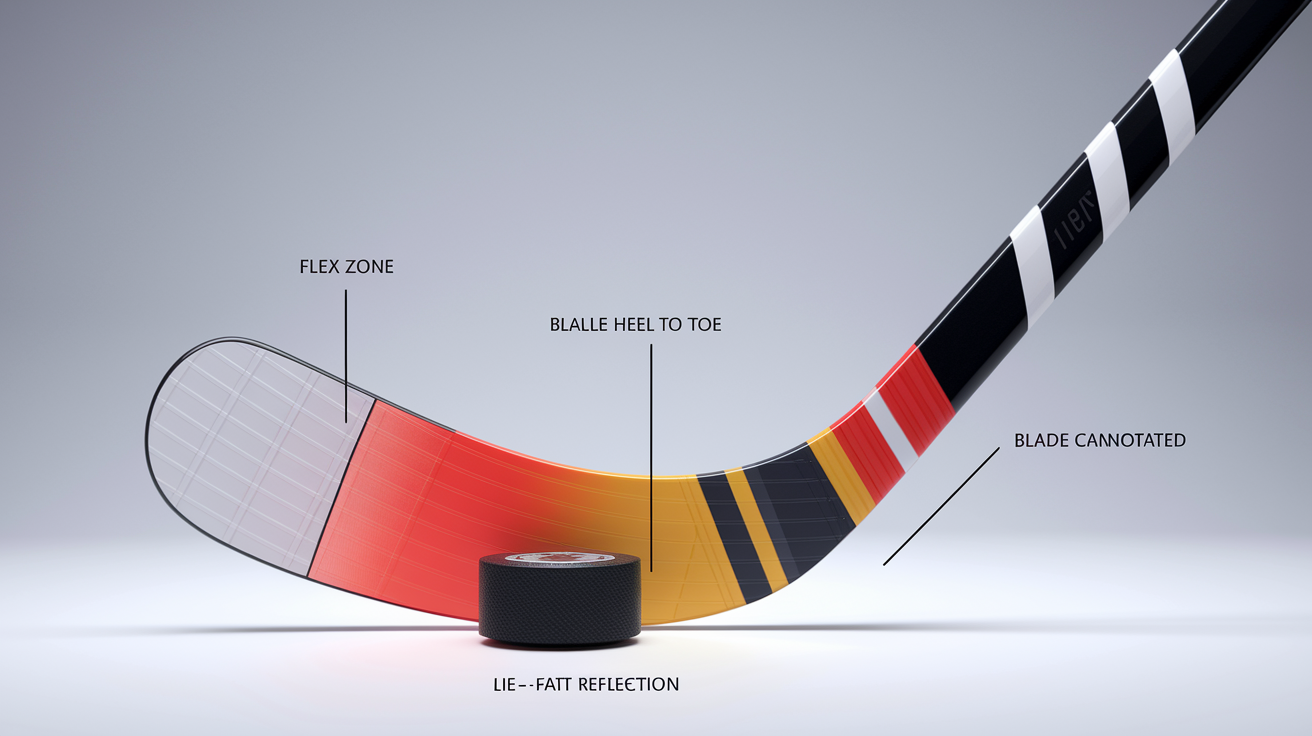
Your stick’s specifications directly influence how well you can absorb and control hard passes. Flex rating determines how much the shaft bends under pressure, which affects your ability to cushion incoming pucks. A lower flex (65 to 75) gives younger or lighter players more natural give. That makes it easier to absorb energy without perfect technique. Stronger players using an 85 to 100 flex stick need to compensate with more deliberate wrist and arm movement because the stiffer shaft won’t bend as easily on contact. Blade curve also matters. A mid or mid-toe curve provides better backhand control and a more predictable pocket for cupping passes, while aggressive heel or toe curves can cause hard passes to skip off the blade if your angle is even slightly off.
Stick lie and tape pattern play smaller but still meaningful roles. Lie angle determines how much of your blade sits flat on the ice when you’re in your natural skating stance. If your lie is too upright or too flat, only part of your blade will make solid contact with the puck. That shrinks your effective receiving surface and increases the chance of bobbles. Most players use a lie between 5 and 6, but it’s worth testing on-ice to confirm your blade sits flush during receptions. Tape pattern affects grip more than control. A full blade wrap gives slightly more friction for securing loose pucks, while a minimal tape job on the toe and heel keeps weight down and can help with feel on soft touches.
| Feature | Influence on Pass Control |
|---|---|
| Flex (65–100) | Lower flex bends more easily, absorbing hard passes with less manual give; higher flex requires stronger wrist action to cushion effectively |
| Blade Curve | Mid/mid-toe curves create a stable pocket for cupping; aggressive curves can deflect pucks if blade angle is off by even a few degrees |
| Lie Angle | Correct lie ensures full blade contact with the ice during reception; wrong lie reduces usable blade area and causes puck bobbles |
| Tape Pattern | Full wrap adds friction for securing loose pucks; minimal tape improves feel and reduces weight, helping with quick adjustments |
Visual and Mental Cues for Better Pass Anticipation

Reading a pass before it leaves your teammate’s stick gives you a critical half-second advantage. Watch the passer’s shoulders and blade angle as they load up. Shoulders square to you usually mean a direct pass, while open hips suggest a cross-ice feed. The blade angle at release tells you trajectory. A cupped blade with follow-through aimed low delivers a tape-to-tape pass, while an open blade with upward follow-through signals an elevated or bouncing pass. If you can read these cues early, you’ll already be adjusting your feet and stick position before the puck is halfway to you. That turns a difficult reception into a routine one. Most turnovers happen because players react to the puck in flight rather than anticipating the pass type during the windup.
Mental preparation is just as important as visual tracking. Before the puck is passed, scan your surroundings to know where pressure is coming from and where your next play will go. If you’re expecting a hard pass in traffic, pre-plan whether you’ll absorb and shoot, absorb and skate, or one-touch it to a teammate. That decision-making process should happen before the puck arrives, not after. When you know your next move in advance, your hands and feet execute the reception without you thinking because your brain isn’t splitting attention between controlling the puck and figuring out what to do next. Players who receive passes cleanly under pressure almost always have a plan before the puck reaches them.
Final Words
On the ice, when a hard pass arrives you need hand placement, blade angle, and body alignment to absorb it. Cushion with soft wrists, open the blade a bit, and move your feet to align with the puck.
We covered forehand, backhand, and aerial receptions, common mistakes like stiff wrists and poor footwork, plus drills to build soft hands. Stick flex, blade curve, and reading the passer’s blade matter too.
Use these cues in practice and games. With steady reps you’ll learn how to receive and control hard passes in hockey.
FAQ
Q: How to receive hard passes in hockey?
A: Receiving hard passes in hockey is about cushioning the puck with soft hands, proper hand placement, blade slightly open, and aligning your body to the pass for better control.
Q: Is number 69 banned in the NHL?
A: The number 69 is not banned in the NHL; it’s allowed but rarely used. Teams or players usually avoid it for image or locker-room reasons, but there’s no official league prohibition.
Q: Where do you put your weakest player in hockey?
A: You place your weakest player on low-leverage shifts—third or fourth line, limited minutes, and sheltered zones. Pair them with a veteran or stronger teammate and avoid critical penalty-kill or late-game defensive assignments.
Q: What is the Gretzky rule in hockey?
A: The Gretzky rule is the NHL’s league-wide retirement of number 99 in honor of Wayne Gretzky, meaning no player may wear 99 in NHL games; it was retired in 2000.