

The blue line isn’t a finish line.
It’s a timing meter.
If you rush it, you’ll go offside.
If you wait too long, the defender kills your rush.
This post shows how to sync your skating to the puck, read defender cues like hips, stick and weight, and use curves, micro-glides and smart passes so you cross exactly when the puck does.
Read this and you’ll know what to watch on the ice and what drills to practice to beat the offside trap more often.
Mastering Blue‑Line Timing to Beat the Offside Trap

Beating an offside trap comes down to syncing your skating speed with puck arrival. Don’t just stand there waiting for the pass. Move toward the puck carrier while tracking where the defender is. The puck crosses the line, you cross with it. Not before. You need to read when the puck carrier’s releasing and adjust your approach so you hit the line exactly when the puck does.
Defenders running a trap step forward together right before the pass goes. Watch for hip rotation, shoulder drops, weight shifting onto the lead skate. When you see a defender’s outside shoulder turn toward center or their stick blade angle change, the trap’s starting. That split second creates a tiny timing window. Too early? Offside. Too late? The defender closes the gap and kills your rush.
Speed control and curved approaches let you delay entry without losing momentum. A straight sprint toward the blue line makes timing rigid. Try skating a slight arc or using controlled glides in your last few strides. You’re covering less space while staying ready to explode forward the instant the puck clears.
Key timing cues attackers need to read:
- Defender weight shift – Watch the lead foot. When it pushes forward, the trap’s starting.
- Puck‑carrier body angle – If the carrier opens their hips toward you, pass is coming soon.
- Gap closing speed – How fast the defender steps tells you how tight your window is.
- Stick positioning – A defender’s stick moving from ice to angled up signals they’re preparing to step.
- Trap trigger moment – The instant multiple defenders move together, not just one.
Trap Structures and Timing Windows
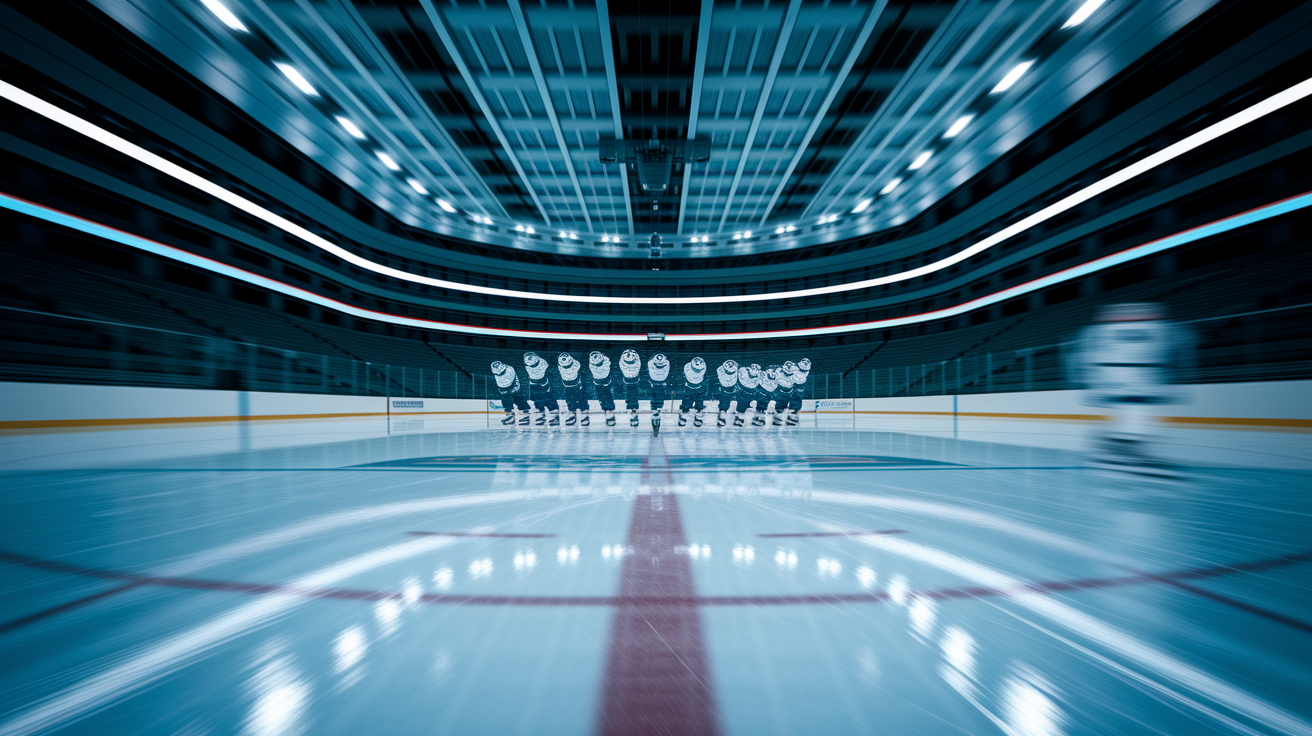
A high line trap compresses the neutral zone and shrinks your reaction time. Defenders stand near the blue line and step forward as a unit when they read pass cues. This coordinated step can freeze attackers who haven’t timed their approach, turning a clean entry into an offside whistle. The tighter the defensive line stays to the blue line, the smaller your margin for error.
Staggered defender lines, where one defenseman hangs slightly deeper, mess with your read. You see what looks like open ice behind the higher defender, but the deeper player can recover if you mistime your entry or the puck carrier holds too long. Staggered setups force you to process two different depths at once and adjust your speed twice: once for the high defender’s step, once for the deeper player’s recovery angle.
| Formation Type | Impact on Timing |
|---|---|
| Aggressive high line (both defenders at blue) | Narrow window; requires precise puck and skater sync and immediate burst |
| Staggered line (one high, one 5–8 feet deeper) | Two timing reads; delayed entry works if you read the deeper defender’s angle |
| Passive mid gap (defenders 10+ feet inside blue line) | Larger window; you can carry speed and delay only slightly before crossing |
| Late step trap (defenders hold position until pass release) | Requires reading stick and hip pre cues; smallest reaction window |
| Single defender press (one steps, one holds) | Creates split timing: fast entry on press side, controlled on hold side |
| Full line squeeze (all five defenders step together) | Rare but extreme; only chip and chase or very late delay works |
Skating Patterns, Speed Control, and Angled Delay Mechanics
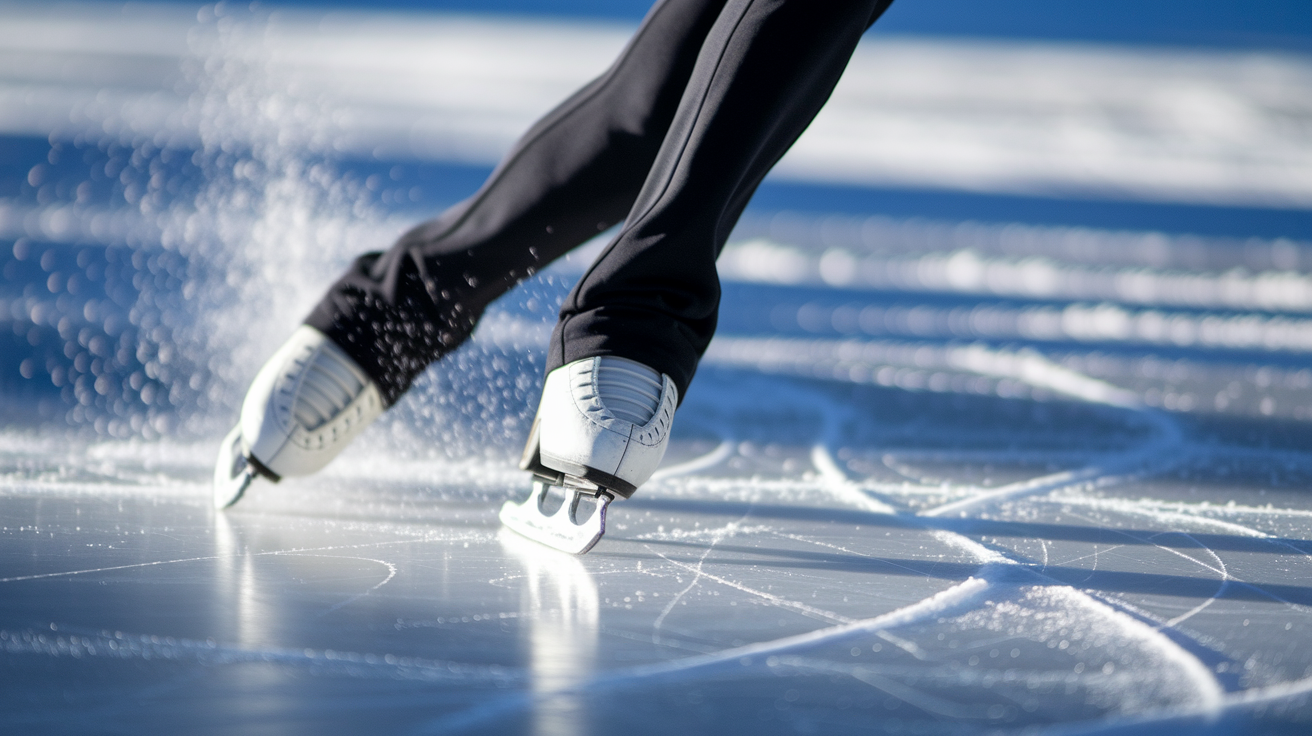
Stride modulation is how you fine tune arrival at the blue line. In the last 10 feet of the neutral zone, shorten your strides, use C cuts to maintain forward progress without full acceleration, or add a controlled glide on one edge. A micro stop, where you check your speed for half a second without losing balance, lets you hang back just long enough for the puck to clear first. These adjustments keep you moving and ready to explode, but they stop you from crossing too early.
Using angles and curved approaches adds another control layer. Instead of skating straight toward the blue line, take a path that arcs slightly toward the boards or toward middle ice. The curve gives you extra distance to cover in the same time, effectively slowing your approach without killing speed. Strong edge work, inside edges for tight turns, outside edges for wider arcs, lets you change direction smoothly and adjust if the puck carrier delays the pass or a defender steps early.
Body alignment matters as much as foot placement. Keep your knees bent at roughly 45 degrees and your hips square to the play, not leaning toward the puck. A side on stance, shoulders angled to track both the puck carrier and the defender, lets you read cues from both without committing your weight in one direction. When the puck crosses, you’re already loaded on your edges and ready to accelerate in a single stride, not wasting time correcting your posture or taking a false step backward.
Using Deception to Manipulate Trap Timing

Deceptive movement pulls defenders into stepping too early or holding too long. One tactic is the “facing backwards” approach: skate toward your own end as if you’re coming back for support, then pivot and time your entry as the puck arrives. Defenders see you moving away from their line and relax or step less aggressively, opening a bigger window when you turn and cross. The key is selling the retreat convincingly, then changing direction sharply the moment the pass is released.
Staggered defender lines are vulnerable to late angled runs. If one defender is deeper, aim your initial path at the higher defender to freeze them, then cut inside or outside at the last second to exploit the gap the deeper player can’t cover in time. The deeper defender reads your first move and commits their angle. Your second move, the cut, happens after they’ve started moving, leaving them too far out of position to recover.
Deceptive entry tactics:
- False retreat – Skate back 5–10 feet, then turn and time your entry as the puck crosses.
- Board delay – Drift wide toward the boards to force the far side defender to hold, then cut middle as the puck arrives.
- Fake drag – Show a move to receive a pass in the neutral zone, then let it slide past you and time your cross with the puck.
- Double move – Shift your weight as if you’re going wide, then cut back inside just before the line.
- Late shoulder fake – Turn your shoulders one direction, plant your outside foot, and drive the opposite way as the pass is released.
Passing Coordination to Beat Offside Timing Pressure

The puck carrier controls the trap’s success or failure. If they release the pass while you’re still three strides from the blue line, you either rush and go offside or you slow down and let the defender close the gap. A well timed lead pass, aimed at a spot 5–10 feet inside the offensive zone, lets you cross the line at full speed without waiting. The carrier watches your approach, reads the defender’s step, and delays the release until your timing and the defender’s commitment align.
Give and go sequences create automatic timing. You skate toward the puck carrier, receive a short pass in the neutral zone, then immediately return it as you both cross the blue line together. The first pass draws the defender’s attention and forces them to step. The return pass exploits the space they just vacated. The rhythm, one touch, return, cross, happens faster than the defender can recover, and both players enter onside because the puck crossed first on the return feed.
Communication signals for timed entries:
- Verbal cue – “Now!” called by the crossing forward when they’re ready for the pass.
- Stick tap rhythm – Two taps on the ice, second tap equals pass release.
- Lane change gesture – Raising the off hand to signal a shift from boards to middle, cueing the carrier to adjust pass angle.
- Delayed support signal – Pointing backward with the stick blade to tell the carrier “hold one more second.”
Practical Drills for Timing the Blue Line Against a Trap
Lane‑Based Blue‑Line Timing Drill
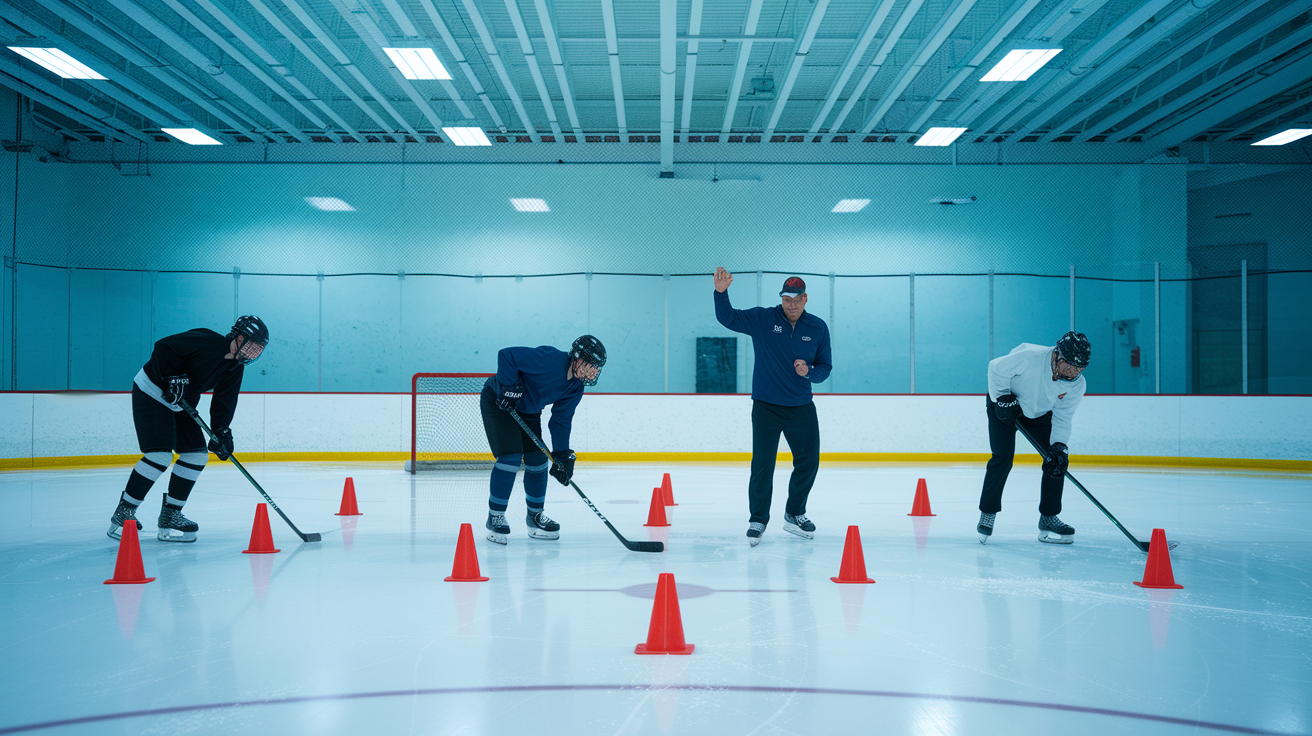
Set up three vertical lanes in the neutral zone using cones or lines. Place two defenders at the blue line, one in each outside lane. Position a puck carrier at center ice with two attacking forwards, one in each outside lane. The puck carrier skates forward and must pass to one forward. The forwards time their approach so they cross the blue line the instant the puck does. Defenders step forward together when they see the carrier’s stick load for the pass. Award one point to attackers for a successful onside entry, one point to defenders for catching an offside. Run 8–12 reps per session, rotating roles every four reps. Adjust by varying the defender’s starting depth, blue line vs. 5 feet inside, to change timing windows.
Bent‑Entry Timing Circuit
Mark three stations across the neutral zone. At each station, place one defender and one cone 10 feet in front of the blue line. Forwards start from the far blue line, receive a pass from a stationary carrier at center, and must curve their approach around the cone before crossing. The curve forces them to cover extra distance, delaying their entry. Defenders step forward when the pass is released. Forwards score by crossing onside and shooting within two seconds. Rotate every six reps. Progress by adding a second defender or by having the puck carrier skate and pass on the move.
Reactive Trap‑Reading Drill
Use half ice. Place four defenders in a line 5 feet inside the offensive blue line. Three attackers start from the far end and carry the puck up ice in a 3v4. A coach stands at center and signals the defenders to either step, aggressive trap, or hold, passive gap. Attackers must read the defender movement and adjust their timing. If defenders step, delay and curve. If defenders hold, attack with speed. Play out every rush to a shot or turnover. Run 10–12 rushes per session. Track success rate: onside entries with shots vs. offside calls or turnovers.
Six coaching cues:
- “Watch hips, not sticks.” Hips turn before sticks move.
- “Curve, don’t sprint.” Straight lines reduce timing options.
- “Cross with the puck, not before.” Obvious but essential to repeat.
- “Read the gap close.” How fast they step tells you how tight your window is.
- “Short strides at the line.” Control beats panic.
- “One false step kills it.” Any backward step before accelerating wastes half a second.
Video Analysis and Tracking Tools for Timing Improvement

Video review isolates the micro decisions that separate onside from offside. Tag every zone entry in practice or games, then filter for entries against a stepping defense. Clip the five seconds before each entry: watch the attacker’s skating path, the defender’s hip and shoulder angles, and the exact frame when the puck crosses the line. Overlay these clips side by side, successful timing vs. offside, and the differences become obvious. Successful entries show curved approaches, controlled strides, and puck crossing first by one to three frames. Offside entries show straight sprints, early weight commitment, or puck carriers holding too long.
Tracking tools that measure entry completion rate give you a baseline. If a forward is offside on 30 percent of trap entries, you know timing work is the priority. After two weeks of drilling, re measure. If the rate drops to 15 percent, the work is paying off. Tag entries by trap type, aggressive high line, staggered, passive, to see where specific patterns need more reps.
| Error Type | Correction Focus |
|---|---|
| Crossing 0.5–1 second early | Add controlled glides in final strides; practice delayed cuts |
| Losing speed while waiting | Use angled approach and edge work to maintain momentum |
| Missing defender step cue | Drill hip watching in isolation; add reactive start drills |
| Puck carrier releasing too late | Practice communication signals and lead pass timing circuits |
Conditioning and Skill Development for Elite Timing Execution

Repeated timed bursts require explosive conditioning that mirrors game demands. Structure off ice work around 10 second sprints with varied starting positions, standing, half squat, single leg balance, then explode forward on a whistle. This builds the neuromuscular timing needed to accelerate from a controlled glide or angled stance in a single stride. Add resistance bands or weighted vests for three sets, then remove them and repeat the same drill at game speed to feel the difference.
Footwork drills for last second acceleration focus on the first three steps. Set up a line of cones 3 feet apart. Start in a hockey ready position, then sprint through the cones using only inside edge cuts, then only outside edge cuts, then alternating. The drill trains quick pivot mechanics and reinforces the knee angle, roughly 45 degrees, that optimizes first step power. Thirty seconds on, thirty seconds rest, six rounds per session.
Ankle strength directly affects your ability to execute micro stops and edge changes under pressure. Single leg hops, lateral bounds, and resistance band dorsiflexion exercises build stability. Stronger ankles let you control speed in the final strides without losing balance or wasting energy on corrective steps. Two to three sessions per week, 15 minutes each, layered into regular strength work.
Coaching Framework: Progressions for Teaching Blue‑Line Timing
Start with stationary timing in a controlled environment. Place a single defender at the blue line and a puck carrier at the hash marks. One forward skates from the far blue line, times their approach, and crosses as the puck is passed. The defender does not move. Repeat 10 times until the forward crosses onside on eight of ten attempts. This builds the baseline coordination between skating speed and puck movement without the pressure of a live trap.
Progress to reactive defender steps. The defender now steps forward when the pass is released. The forward must read the step and adjust their approach, curve, glide, or accelerate, to stay onside. Add a second forward to create passing options and force the puck carrier to choose timing and target simultaneously. Run this phase for two weeks before adding deception or multi defender traps.
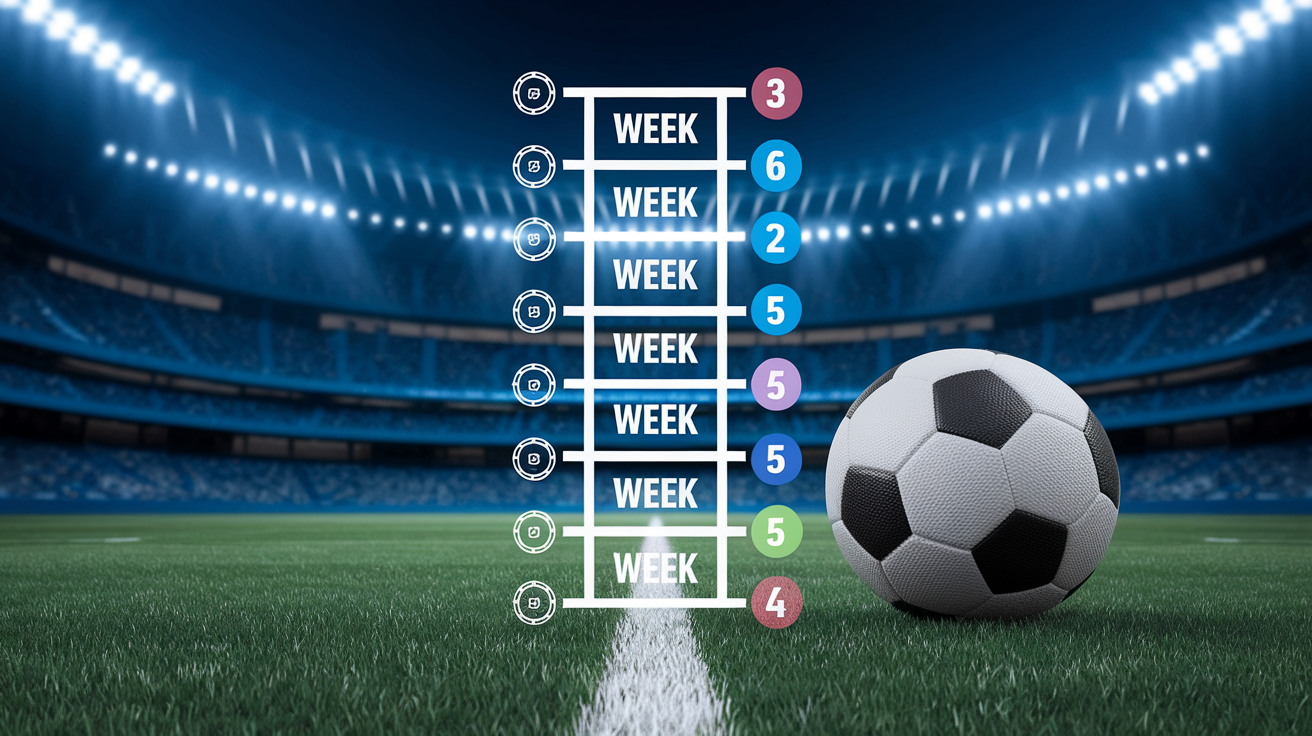
Week by week progression:
- Week 1 – Stationary defender, single forward, onside success target 80 percent.
- Week 2 – Defender steps on pass release, single forward, introduce curved approaches.
- Week 3 – Add second forward and passing options; defender steps remain predictable.
- Week 4 – Introduce staggered defender lines; forwards practice angled delays and late cuts.
- Week 5 – Full reactive trap with random step timing; add deceptive moves and communication signals.
Final Words
Hit the blue line with the puck’s timing, not your skate. Use curved approaches, glide delays, and stride modulation so you cross when the puck does and stay onside.
Watch defender cues, like weight shifts, hip and shoulder rotation, and stepped triggers. Use deception, late passes, and coordinated reads to open timing windows. Drill these situations and use short video clips to track progress.
Practice the drills and signals until they’re second nature. That’s how to time the blue line to beat the offside trap. You’ll make cleaner entries and create more scoring chances.
FAQ
Q: What is the most effective way to beat the offside trap?
A: The most effective way to beat the offside trap is timing your blue-line entry with the puck, using curved delayed runs, speed changes, and coordinated passes so you cross after the puck.
Q: What is the offside trap technique?
A: The offside trap technique is a defensive tactic where defenders step up together at the blue line to force attackers offside by closing the timing window with coordinated steps and gap compression.
Q: Why do Linesmen take so long to flag offside?
A: Linesmen take longer to flag offside because they must confirm the puck fully crosses the blue line before any attacker and get a clear angle, delaying to avoid incorrect stoppages and missed calls.