

Which is worse: a defender jumping the gun or an offensive lineman flinching before the snap?
Both are 5-yard penalties, but they work very differently and change the game in opposite ways.
Offsides is a defensive foul judged at the snap that usually keeps the play live and can give the offense a “free play.”
False start is an offensive movement before the snap that stops the play dead and forces a 5-yard pushback.
This post explains who commits each, when officials call them, and how that live-versus-dead-ball split shapes strategy.
Core Differences Between Offsides and False Start (Clear Rule Breakdown)

Offsides is a defensive penalty. It happens when a defensive player enters or positions himself in the neutral zone at the moment the ball is snapped. False start is an offensive penalty that occurs when an offensive player makes an illegal movement before the snap that simulates the beginning of the play. The difference is simple: offsides is committed by the defense, false start by the offense.
Both penalties cost the team 5 yards. But the real difference is in what happens next. When a defender goes offsides, the play typically continues. This creates what’s called a “free play” where the offense can attempt a risky downfield throw knowing they have the penalty as a safety net. When an offensive player commits a false start, officials blow the whistle immediately. The snap never happens. The play is dead before it starts. This dead ball versus live ball distinction shapes how these penalties affect game strategy and momentum.
You’ll see both penalties enforced the same way across NFL, college, and high school levels. The basic rule definitions and 5 yard consequences remain consistent, though minor differences exist in how officials signal and manage certain edge cases. The neutral zone itself is defined as the length of the football, roughly 11 inches. It creates a thin space between the offense and defense that nobody can occupy at the snap.
Picture the line of scrimmage as two parallel chalk lines with the football lying between them. That football length gap is the neutral zone. For offsides, imagine a defensive lineman’s helmet crossing the offense’s line just as the center touches the ball. Defensive lineman in position 54 has his facemask one inch across the line when the ball moves. That’s offsides. For false start, picture an offensive guard rocking backward or jerking his shoulders forward a split second early. Left guard 67 flinches before the snap. The whistle blows immediately, and the play never happens.
Offsides Explained Through Rule Details and Game Mechanics

Officials judge offsides at the exact moment of the snap. If a defensive player’s body, hand, or helmet breaks the plane of the neutral zone when the center moves the ball, that’s offsides. Even if the player pulls back immediately after. The “airspace” rule matters here. A defender doesn’t need to step across the line with their feet. Leaning forward so that any body part hovers over the neutral zone at the snap triggers the penalty.
Offsides is usually a live ball foul, meaning the play continues and the offense can accept the result of the play or take the 5 yard penalty. If it’s 2nd and 10 at your own 30 and the defense jumps offsides but you complete a 15 yard pass, you can decline the penalty and keep the completion. The ball would move to your 45 for a new first down instead of staying at the 35 for 2nd and 5. The exception to live ball enforcement is when a defender goes “unabated to the quarterback.” Running free with no blocker between him and the QB. Officials blow that dead immediately for safety, treating it as a dead ball foul even though it’s still offsides.
Common defensive movements that trigger offsides:
- Edge rusher’s helmet crossing the line as the ball is snapped
- Defensive tackle’s hand touching the ground in the neutral zone at the snap
- Linebacker timing the snap count wrong and stepping forward just as the center moves
- Any defender leaning so far forward that their body breaks the plane over the ball
False Start Explained and Why It Stops the Play Immediately

A false start happens when an offensive player makes sudden movement that simulates the start of the play before the snap actually occurs. The most common scenario is an offensive lineman flinching, rocking backward, or lifting his hand off the ground in a way that looks like he’s reacting to the snap. Officials watch for any movement that could cause the defense to jump early or that suggests the play has begun when it hasn’t.
The offense must be set for at least one full second before the snap in most situations. During that set period, players in a three point stance can’t move their hands, shift their feet, or change their body position. Skill players who go in motion must be moving parallel to or away from the line of scrimmage and can’t move forward at the snap. Any violation of these set requirements results in a dead ball false start.
Officials blow the whistle the instant they see a false start, and the snap never happens. This immediate dead ball enforcement protects players from unnecessary contact on a play that won’t count. The offense is penalized 5 yards, and the down is replayed from the new spot. If you’re on 1st and 10 at the opponent’s 40 and your right tackle false starts, the ball moves back to the 45 and it’s still 1st down. Now 1st and 15.
Typical false start movements officials watch for:
- Offensive tackle rocking back on his heels or pulling his hand off the ground before the snap
- Wide receiver or tight end taking a short step forward at the snap (different from legal motion)
- Interior lineman jerking his head or shoulders as if reacting to a snap count when the ball hasn’t moved
Penalty Enforcement Breakdown: Live Ball vs Dead Ball in Offsides vs False Start

The live ball nature of offsides creates the “free play” opportunity that quarterbacks love. When a QB sees a defender jump across early and notices the official reach for a flag, he knows the worst outcome is replaying the down from 5 yards closer to the goal. That allows him to take a shot downfield with zero real risk. If the pass is intercepted, the penalty wipes it out and you replay the down with better field position. If it’s complete for a big gain or touchdown, you decline the penalty and keep the result.
False start’s dead ball enforcement removes all strategy options because nothing happens. The whistle kills the play immediately, the offense loses 5 yards, and everyone resets for the same down with worse field position. There’s no opportunity to decline because there’s no play result to evaluate. The penalty is automatic and absolute. Both penalties assess 5 yards from the previous spot, meaning the line of scrimmage before the play. Neither penalty includes an automatic first down, so the down count stays the same and only the distance changes.
| Penalty | Live or Dead Ball | Team at Fault | Can Play Continue? |
|---|---|---|---|
| Offsides | Live ball (usually) | Defense | Yes, offense can accept play result or penalty |
| False Start | Dead ball | Offense | No, whistle blows immediately, snap never happens |
| Offsides (Unabated to QB) | Dead ball (safety exception) | Defense | No, officials protect QB from free rusher |
| Neutral Zone Infraction | Dead ball | Defense | No, defender caused offensive reaction |
Real Game Examples Showing Offsides vs False Start in Action
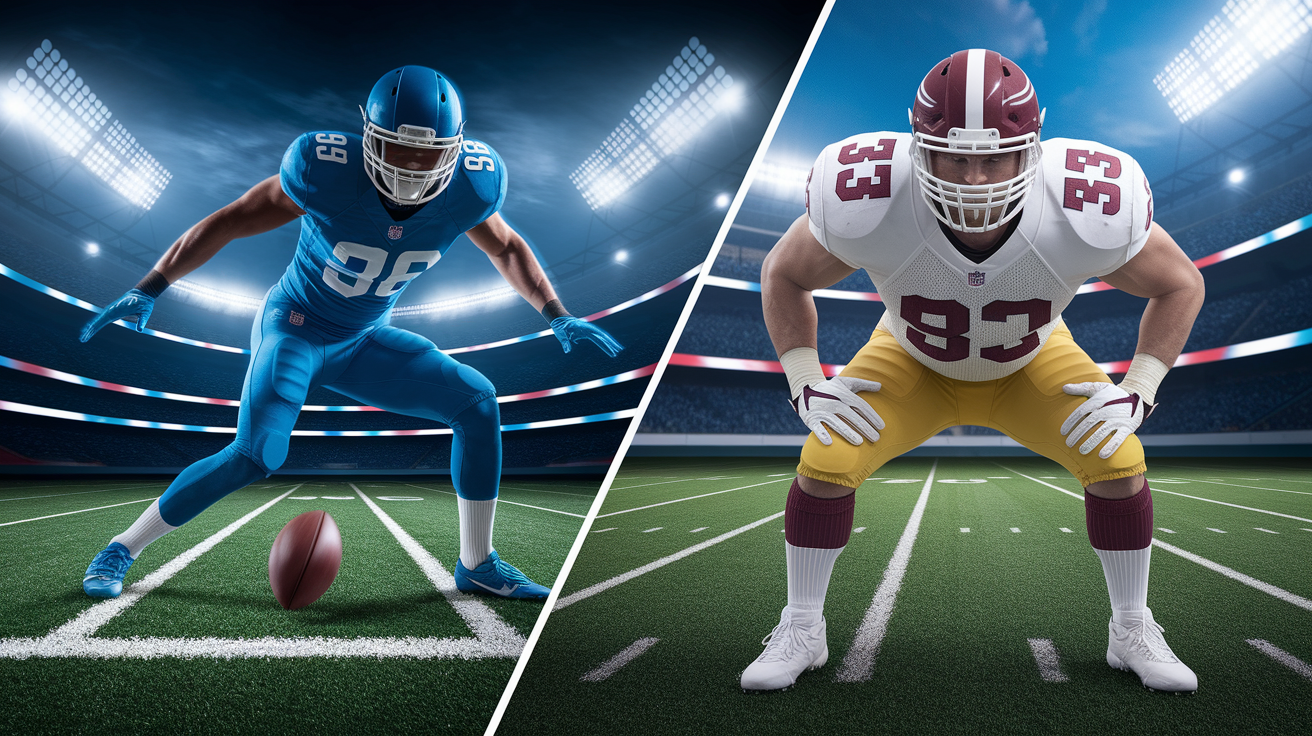
Example A: It’s 3rd and 5 at the opponent’s 30 yard line. Your left guard shifts his weight and lifts his hand off the ground a split second before the snap. The official immediately blows the whistle for false start. The offense is penalized 5 yards, moving the ball back to the 35. The down stays the same because the play never happened. You now face 3rd and 10 from the 35, a significantly harder conversion situation.
Example B: It’s 1st and 10 at your own 20 yard line. The defensive end times the snap count wrong and crosses into the neutral zone just as the ball is snapped. The play continues. Your running back gains 3 yards on the carry. After the play, you have two options: accept the 3 yard gain and face 2nd and 7 from your 23, or accept the 5 yard offsides penalty and face 1st and 5 from your 25. Most teams accept the penalty because keeping 1st down with shorter distance is more valuable than gaining 3 yards and burning a down.
Example C: It’s 2nd and 10 at midfield. The linebacker jumps offsides and the quarterback sees the flag before the snap. The ball is snapped anyway. The QB launches a deep throw down the sideline that’s intercepted at the opponent’s 10 yard line. The offense accepts the 5 yard penalty, wiping out the interception. The ball moves to the defense’s 45 for 2nd and 5. If that same deep throw had been complete for a touchdown, the offense would decline the penalty and keep the score. This is the “free play” every offense wants.
Yard line changes summary:
- False start on 3rd and 5 at opponent’s 30: Ball moves to 35, now 3rd and 10
- Defensive offsides on 1st and 10 at own 20: Ball moves to 25, now 1st and 5 (if penalty accepted)
- Free play on 2nd and 10 at midfield: Penalty wipes bad result, ball moves to defense’s 45 for 2nd and 5
Visualizing Offsides vs False Start (Text Based Diagrams)
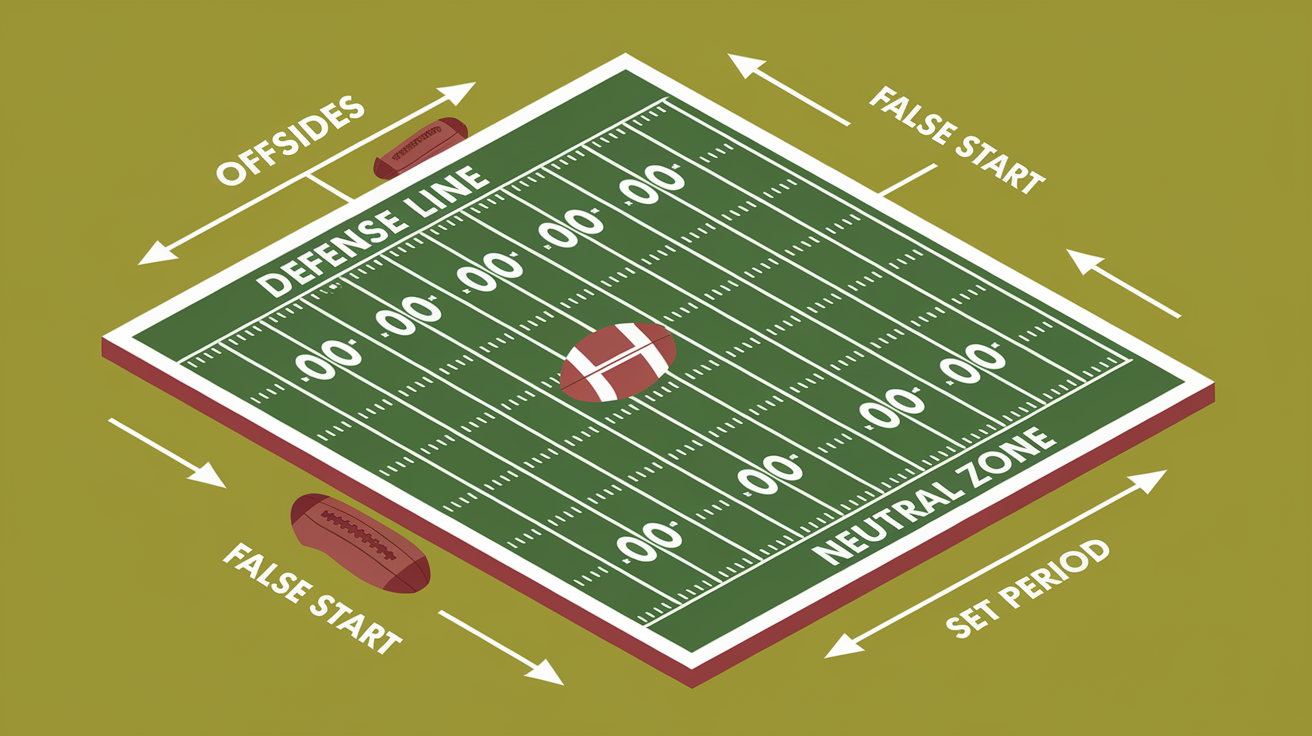
The neutral zone is the width of the football, about 11 inches. Picture it as a no man’s land between the two teams. The offense has a line of scrimmage on one side of the ball, the defense has a line of scrimmage on the other side. When you see a defender’s helmet, hand, or body cross into that 11 inch space at the moment the center touches the ball, that’s offsides. When you see an offensive lineman move his hand, rock backward, or shift his feet during the set period before the snap, that’s false start.
The visual difference comes down to timing and which team moves illegally. Offsides is judged at the snap. Did the defender have any part of his body in or across the neutral zone when the ball moved? False start is judged during the set period before the snap. Did an offensive player make sudden movement that simulates the start? The diagram below shows both violations using a simple overhead view:
OFFENSE SIDE (line of scrimmage)
    ↓
--[O][O][O][C][O][O][O]--  ← offensive line (set)
    ║  (football)  ║
    ╠══════════════╣  ← neutral zone (11 inches)
    ║              ║
--[D][D][D][D][D][D]----  ← defensive line

Offsides: [D] player crosses into neutral zone before snap
          (body part in shaded area when ball moves)

False Start: [O] player moves suddenly before snap
             (hand lifts, body rocks, feet shift during set period)
Related Penalties Often Confused With Offsides and False Start

Neutral Zone Infraction
A neutral zone infraction happens when a defensive player enters the neutral zone before the snap and causes an offensive player to react. The key difference from offsides is that the offensive movement happens first, but the penalty is charged to the defense because the defender triggered it. Picture a defensive tackle jumping across the line early. The offensive guard sees him coming and flinches. Officials blow the whistle immediately for neutral zone infraction on the defense. The offense didn’t commit false start even though they moved, because the defender caused the reaction. This is a dead ball foul, so the snap never happens and the ball moves 5 yards in the offense’s favor.
The distinction between neutral zone infraction and offsides comes down to whether the offense reacted. If the defender crosses early but nobody on offense moves and the ball is snapped anyway, that’s offsides and the play continues. If the defender’s movement causes an offensive player to flinch before the snap, it’s a neutral zone infraction and the play is whistled dead. Both are 5 yard penalties on the defense, but the enforcement timing changes everything. Neutral zone infraction protects the offense from being penalized for a natural reaction to defensive aggression.
Encroachment
Encroachment occurs when a defensive player makes contact with an offensive player before the snap. The defining element is physical contact. A linebacker who crosses the line and touches the center’s leg before the ball is snapped commits encroachment. This is always a dead ball foul. Officials blow the whistle immediately, the snap doesn’t happen, and the defense is penalized 5 yards. Encroachment differs from offsides because offsides requires the snap to occur and doesn’t require contact. It differs from neutral zone infraction because encroachment is about touching an opponent, not about causing offensive movement.
Illegal Motion
Illegal motion is an offensive penalty that involves a player moving illegally at the snap, but it’s distinct from false start. Illegal motion usually applies to skill players. A receiver or running back who is moving forward at the snap when only one player is allowed to be in motion, or who is moving in an illegal direction. False start is about sudden movement simulating the snap during the set period. Illegal motion is about being in the wrong type of motion when the snap actually happens. Both are 5 yard offensive penalties, but illegal motion is typically a live ball foul where the play continues and the offense can decline if the result is favorable.
Differences Across NFL, College, and High School Offsides/False Start Rules

The 5 yard penalty and basic definitions of offsides and false start remain consistent across NFL, NCAA, and high school rulebooks. A defender in the neutral zone at the snap is offsides at every level. An offensive player who moves illegally before the snap commits false start at every level. The enforcement spot and yardage consequences don’t change. What does vary slightly is how officials handle borderline situations, how they signal certain related penalties like neutral zone infractions, and when they choose to blow plays dead for safety.
High school rules tend to enforce dead ball fouls more strictly. Officials at the high school level often blow the whistle sooner when a defender crosses into the neutral zone, especially if they judge the movement could lead to a dangerous unblocked hit. College and NFL officials allow more live ball continuation on offsides, giving offenses the “free play” opportunity more consistently. The NCAA and NFL also have more detailed language around what constitutes a set position and legal motion for offensive players, creating slightly different thresholds for calling false start on motion related violations.
Level by level rule differences:
- NFL: Most liberal with live ball offsides continuation. “Unabated to QB” exceptions clearly defined. Officials allow more pre snap defender movement before calling neutral zone infractions.
- NCAA: Similar to NFL but with stricter offensive formation rules. Motion violations sometimes treated as illegal motion instead of false start. Enforcement mirrors NFL for offsides.
- High school: Dead ball enforcement more common on defensive pre snap fouls. Officials prioritize player safety over free play advantages. Simplified language in rulebook leads to more conservative whistle timing.
Final Words
Offsides and false start share the same five-yard cost, but the live-ball versus dead-ball difference changes everything.
A defender crossing early might give the offense a free downfield shot. An offensive lineman flinching kills the play before it starts.
Once you understand offsides vs false start, you’ll catch these calls faster than the ref’s whistle. Next time you see a flag before the snap, watch where it came from and who moved first.
The difference is simple once you see it in real time.
FAQ
Q: What is the difference between offsides and a false start?
A: The difference between offsides and a false start is offsides is defensive—defender enters the neutral zone before the snap (live‑ball, can create a free play). False start is offensive—illegal pre‑snap move, dead‑ball. Both cost 5 yards.
Q: What is the toughest NFL position?
A: The toughest NFL position is widely considered the quarterback, due to fast decision‑making, accuracy, and leadership demands. Offensive tackle is a close second because they face elite pass rushers every snap.
Q: What is the rarest penalty in football?
A: The rarest penalty in football is the “palpably unfair act,” a referee judgment used only for extreme, unsportsmanlike situations; it’s rarely enforced and decided case‑by‑case by officials.
Q: What is the difference between false start and encroachment?
A: The difference between false start and encroachment is false start is an offensive player’s illegal pre‑snap movement (dead‑ball). Encroachment is a defensive player entering and contacting the line before the snap (dead‑ball). Both usually cost 5 yards.